
Pet Store Employee Retention: 2026 Guide | JustForPetStore
Pet store employee retention comes down to three things in 2026: pay that matches the local retail market, a schedule your team can plan a life around, and a visible path from trainee to specialist. The U.S. Bureau of Labor Statistics (BLS) reported retail trade separations of 686,000 in July 2026 against 753,000 hires, and retail salesperson openings come almost entirely from replacement rather than growth — which means keeping one good associate is cheaper than hiring two.
Why does pet store employee retention matter more in 2026?
The pet industry is still growing, but the growth is uneven, and that makes your team the deciding variable. In its 2026 State of the Industry report, the American Pet Products Association (APPA) put U.S. pet spending at $158 billion in 2025 and projects $165 billion in 2026, while noting that 22% of pet owners spent less last year than the year before.
Ownership is also shifting in ways that reward expertise on the floor. APPA counts 95 million pet-owning households, including 71 million dog households and 53 million cat households, and cat-owning homes grew about 5% while small-dog adoptions climbed 6% in the first half of last year even as large-dog adoptions fell 9%.
New cat owners and small-breed owners are the customers most likely to ask questions about food transitions, litter, scratching, enrichment, and joint care — questions a marketplace listing cannot answer. That is the entire case for retention. An associate who knows which litter suits a long-haired cat, or which harness fits a nervous dachshund, is a competitive asset that compounds. A store that turns its floor team over twice a year never accumulates that knowledge, and regulars notice.
What does the data say about retail turnover in 2026?
The macro picture confirms what every owner already feels at the counter. In its Retail Trade statistics, the U.S. Bureau of Labor Statistics (BLS) reported retail trade employment of 15.44 million in July 2026, with 810,000 job openings, 753,000 hires, and 686,000 separations that month. The separations figure is the one that matters for a small store: it means roughly nine in ten hires are simply replacing someone who left.
The BLS Job Openings and Labor Turnover Survey shows the same pattern nationally, with total job openings of 7.6 million and separations driven by voluntary quits rather than layoffs. Workers are not being let go; they are choosing to go, usually to another retailer that offers more money or a schedule that fits their life.
The long-run projection is even more pointed. BLS occupational forecasts put employment growth for retail salespersons at roughly flat through 2034, yet the occupation still generates about 556,000 openings a year, because nearly all of those openings are replacements for people who leave rather than newly created jobs. In a category where openings are manufactured by turnover, retention is not a soft human-resources topic. It is the operating system of the business.
How much does replacing a pet store employee actually cost?
Start with the wage itself, because it sets the scale of every other number. BLS occupational wage data put the median annual wage for retail salespersons at $35,422, about $17.03 an hour, with the top quarter of the occupation earning $38,667 and the top 10% earning $47,882. Retail trade wages are also still rising faster than in most sectors, up roughly 3.4% year over year in the second quarter of 2026.
Now add what a departure actually costs. You pay to advertise and screen. You lose two to four weeks of productivity while a new hire learns the register, the receiving process, and the product wall. And then there is the expensive part: you lose the relationships. The regular who trusts one associate with her senior dog’s diet is a customer who simply stops coming when that associate leaves.
Run a simple comparison. If a replacement costs even 20% of a $35,000 wage in recruiting and lost productivity, that is about $7,000 per departure. A raise of roughly $1,300 a year — under 4% — recovers that cost in a single hire, before you count the second replacement. For most independent stores, paying in the upper half of the local retail range is not generosity. It is the cheaper line item.
How do you hire pet store staff who actually stay?
Retention starts with the hire. Most stores lose people they should never have hired, because the job was advertised as a love of animals rather than a set of working conditions.
Write the posting honestly. Say that the role is on your feet, that weekends and holidays are the busiest days, that an eight-hour shift includes cleaning and lifting 40-pound bags, and that you need someone who can work a published schedule. The applicants you lose were never going to stay. The ones who reply have already accepted the job you actually have.
Interview for reliability and coachability, then teach the product. Two conversations and a paid two-hour trial shift will tell you more than any answer about breed knowledge. Ask candidates to describe a time they handled an upset customer, and watch how they behave around a real dog during the trial.
Then onboard like it determines the outcome, because it does. Give every new hire a written 30-day checklist — register and returns, receiving, opening and closing routines, pet food basics, litter basics, flea and tick basics — and sign off on each item. An associate who knows exactly what good looks like in week three is far less likely to drift away in week six.
What keeps a small pet store team from leaving?
Once people are through the door, three things do most of the work.
The first is a schedule people can plan around. Publish at least two to three weeks ahead, keep shift patterns stable, and avoid the closing-then-opening rotation that pushes retail workers to start browsing job listings. A predictable schedule is often worth more to a parent or a student than an extra dollar an hour.
The second is visible progression, even in a store with five employees. Create levels — associate, senior associate, keyholder, shift lead — with defined responsibilities and a pay bump attached to each step. BLS projections show there is almost no upward volume in the retail salesperson occupation nationally, which means the ladder has to be something you build locally rather than something the industry hands you.
The third is training that transfers. Free vendor training, manufacturer certifications, and paid attendance at a local nutrition or grooming seminar cost little and signal that the job leads somewhere. Pair that with specific recognition — not “great job,” but “the way you handled that anxious rescue dog’s first harness fitting was exactly right” — and the same feedback loop that keeps customers coming back also keeps staff.
How do you keep good staff when you cannot pay top dollar?
Every independent store loses the pure pay comparison to a supercenter, and that is fine — you win elsewhere. BLS data show retail trade wages rising roughly 3.4% year over year in the second quarter of 2026, which means a competitor’s base pay advantage grows slowly, while the things you can offer immediately cost very little cash: a fixed weekly schedule, a say in which brands the store carries, a staff discount that makes owning a pet cheaper, and a share of the profit when the month goes well.
Structure matters more than generosity here. A written review rhythm at 90 days and annually, with a defined raise attached to each, beats an occasional surprise bonus, because people can plan around it. So does transparency about how raises get calculated; most retail workers assume the answer is favoritism unless you tell them otherwise. And when someone does leave for more money, run an honest exit conversation — the pattern across a few of those is usually the cheapest operational audit you will ever get.
How do you schedule a lean team without burning them out?
Turnover usually starts as an exhaustion problem. With in-store traffic soft and shopping trips fewer but more deliberate, you rarely need more bodies — you need the right bodies in the right hours.
Track two-hour traffic blocks for a month and match your schedule to the curve instead of spreading hours evenly across the week. Staff the late-afternoon and weekend peaks with your strongest advisor, then move stocking, receiving, and online-order packing into the quiet hours. Cross-train everyone on the register, the receiving workflow, and basic product advice so that a single absence never becomes a crisis.
Finally, protect the routine. Written opening and closing checklists mean the store runs the same way whoever is on the clock, which reduces the invisible overtime your most reliable person is quietly absorbing. The associate who is never surprised by their own week is the associate who is still there next year.
Building a team is one half of running a small store; assortment is the other. If you want staff who can recommend with confidence, keep a tight pet supplies core range, stock dog treats and cat supplies in sizes that actually turn, and use low-MOQ sourcing so you can test a new line without tying up cash. Our guide to cross-selling and upselling shows how the same product knowledge that keeps your team also lifts the average basket.
Ready to stock these ideas? Browse wholesale pet KITs →
Shop these pet categories
Wholesale pricing, no minimum order.
Related wholesale collections
Products mentioned here
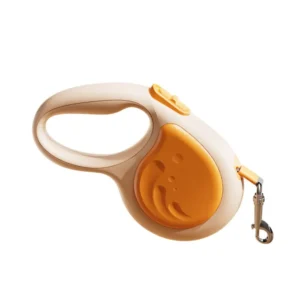 19.6 ft Outdoor Nylon Automatic Retractable Dog Leash – Heavy-Duty Pet Leash for Large and Small DogsMSRP $8.99Login for wholesale pricing
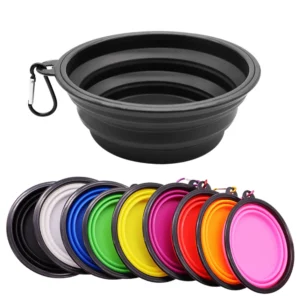 2 Pack Collapsible Silicone Dog Bowls – Portable Pet Food & Water Travel Bowl with CarabinerMSRP $1.78Login for wholesale pricing
 2-in-1 Dog Training Whistle & Clicker – Outdoor Pet Training Device, Factory-Direct Wholesale (MOQ 50)MSRP $2.18Login for wholesale pricing
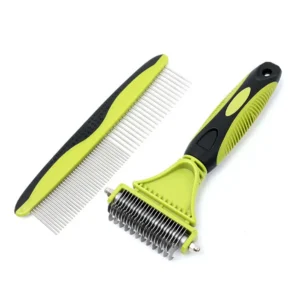 2-in-1 Pet Grooming Comb Set – Dual-Sided Deshedding & Dematting Tools for Dogs and CatsMSRP $6.29Login for wholesale pricing