
Clear Slow-Moving Pet Store Inventory | JustForPetStore
Slow-moving inventory quietly drains cash from independent pet stores. Every shelf of dead stock is money you cannot reinvest in products that actually sell. In 2026, the stakes are higher: NielsenIQ (NIQ) reports U.S. in-store pet sales fell 1.4% over the past year while online grew 14.1%, so holding the wrong products costs more than ever. Here is a four-step plan to spot slow movers, clear them without wrecking margins, and stop them from returning.
Why does slow-moving inventory hurt an independent pet store?
Slow-moving pet store inventory is a quiet cash-flow problem. Every unit sitting unsold is capital that could be funding fast sellers, rent, or payroll. The cost is not just the wholesale price you paid — it compounds as shelf space, storage, insurance, and, for food and treats, spoilage and expiration. A bag of treats that expires on your shelf is a total write-off, not a discounted sale.
Think of it in dollars. If you hold $10,000 in slow-moving stock, that is $10,000 you cannot use to reorder your best-selling food, fund payroll, or front a profitable seasonal display. The longer a product sits, the more it costs you in storage, insurance, and the risk of damage or expiration — and for food and treats, the clock is always running toward a total write-off.
The financial pressure is growing. The American Pet Products Association (APPA) reports total U.S. pet spending reached $158 billion in 2025 and is projected to hit $165 billion in 2026 — but growth is concentrating, not spreading evenly. APPA also found that 22% of pet owners spent less on their pets in 2025, a 10% jump from the year before, as value-seeking shoppers traded down. That means the products customers still buy are chosen more carefully, and the ones they skip sit longer.
The channel shift makes slow stock even riskier. According to NielsenIQ (NIQ), in-store pet sales declined 1.4% over the past year while online sales surged 14.1%, and in-store share of the category dropped to 52%. Exclusive in-store shoppers now represent just 9.6% of dollars spent. For an independent store, that means fewer walk-in buyers to absorb a marginal product — so a slow mover that used to eventually sell through may now simply never move.
How do I identify slow-moving stock in my pet store?
You cannot fix what you do not measure. The first step is to stop guessing and start reading your point-of-sale data. Three simple metrics will flag slow-moving pet store inventory before it becomes a problem:
First, use a sell-through rate. For any SKU, divide units sold by units received over a set window. A sell-through below 60% over 90 days is a strong warning sign; below 40% means you are accumulating stock faster than you can move it.
Second, track days of inventory on hand. Multiply your average daily unit sales for a product by the stock you hold. If a toy is selling one unit a week and you have 48 on hand, you are carrying a year of supply — capital tied up for twelve months to sell one shelf of toys.
Third, run an ABC analysis. Sort your SKUs by revenue contribution. Typically the top 20% of products (your “A” items) generate most of your margin, while the bottom tier (your “C” items) produces little revenue and eats shelf space. The “C” list is where most slow movers hide.
Apply the same lens to seasonal stock. A Halloween costume that did not sell by November 1 is not going to sell at full price in January, so flag seasonal items the moment their season closes and move them to clearance before they become year-round dead stock. The goal is to catch a slow mover in its first 90 days, while a modest markdown or a bundle can still recover most of your cost, rather than discovering it six months later when you are taking pennies on the dollar.
NIQ’s 2026 outlook reinforces why this matters now: buyer trips are still soft and basket sizes are softening, so every visit has to work harder. Inventory accuracy is no longer optional — a manual count that misses a shelf of dead stock means you keep reordering around a hole in your data. If you are still tracking stock on spreadsheets, move to a cloud point-of-sale built for pet stores so your reorder alerts reflect reality.
What are the fastest ways to clear dead stock without killing margin?
Once you have found the slow movers, move them with a tiered plan that protects margin instead of slashing it all at once.
Start with a modest discount and escalate. A 25% markdown clears the product for customers who were already on the fence; a deeper 40–50% markdown later only captures the price-driven shoppers. Staging the discount protects margin on the units that would have sold anyway.
Bundle slow movers with bestsellers. Pair an underperforming treat or toy with a product customers already buy, and price the bundle below the sum of its parts. You clear the dead stock while introducing customers to a brand they would not have tried at full price.
Build a clearly signed clearance section. Dedicated clearance space trains your regulars to check it first and gives you a place to rotate discontinued and seasonal products out of prime real estate. Keep signage honest — “final clearance, discontinued” moves more units than a vague “sale.”
Protect your endcaps and impulse zones for the fast movers. Dead stock tends to drift toward the front of the store or the checkout counter, where it blocks higher-margin items. Move slow movers to the clearance section and give prime real estate back to your bestsellers. A simple endcap reset — swapping three dead SKUs for three proven sellers — can lift daily sales without a single new product, because you are finally giving shoppers what they already want.
Give loyalty members early access. Email your best customers a members-only preview of the clearance rack before it hits the floor. This rewards the people who already spend with you and clears stock at a higher average price than a public markdown.
Donate what will not sell. Shelters and rescues accept clean, unexpired food, treats, and supplies. Donating slow movers builds community goodwill and can carry a tax benefit; consult your accountant. It also frees the shelf space faster than waiting for a liquidation buyer.
One more tactic that works especially well in pet retail: reposition before you discount. A slow-selling treat can become a hot item when you place it beside the training supplies or pair it with a new-puppy welcome kit, because shoppers buy context, not just items. Before you mark something down, ask whether a better spot on the shelf would sell it at full price — sometimes the product was never the problem, only the placement.
Finally, ask your vendor for help. Many suppliers offer return allowances or will credit you for unsold seasonal stock. Before you discount, call your rep and ask what they can take back or credit — a supplier buyback costs you nothing and keeps the relationship healthy.
How do I stop slow movers from piling up again?
Clearing slow-moving pet store inventory is a one-time fix; preventing it is the real win. The root cause is almost always buying too deep, too early.
Buy smaller quantities to start. When you are testing a new product, order a trial quantity instead of committing to a full case pack. Low-minimum wholesale suppliers make this possible — you can reorder a winner quickly without holding a loser for months. This is exactly the buying model behind low-MOQ wholesale suppliers and it protects your cash flow.
Set a reorder rule based on velocity, not habit. Reorder “A” items on a schedule, but only reorder “C” items when you are actually low. Automate this in your POS so a slow mover cannot creep back onto a purchase order out of routine.
Negotiate return allowances before you buy. Ask every supplier whether they accept returns on unsold seasonal or trial items, and get it in writing. A 10–15% return allowance on seasonal product can protect you through a slow holiday.
Diversify your supplier mix. Keep about 60% of inventory from reliable primary suppliers, 30% from secondary backups, and 10% for niche or trial products. That structure keeps you from being locked into a deep buy you cannot unwind.
Build an open-to-buy budget. Before each buying season, set a dollar ceiling for new inventory based on expected sales, and subtract any unsold stock you are already carrying. When your open-to-buy for a category is zero, do not order more of it, no matter how good the wholesale price looks. This single habit keeps you from funding next season’s dead stock with this season’s margin.
Finally, review your category performance monthly, not yearly. A quick look at what sold and what sat lets you course-correct before a slow mover becomes a year of dead stock. When you pair disciplined buying with faster turns, your pet store profit margins improve because every shelf foot is earning instead of waiting.
The same discipline applies across categories — whether you are stocking pet toys, bowls and feeders, or seasonal gear. Slow-moving inventory is not a storage problem; it is a buying problem. Fix the buying, and the cash flow takes care of itself.
Ready to stock these ideas? Browse wholesale pet KITs →
Shop these pet categories
Wholesale pricing, no minimum order.
Products mentioned here
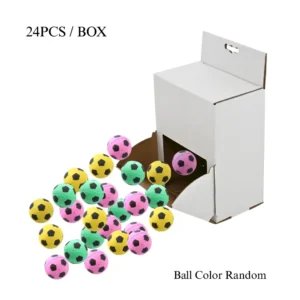 24-Pack Cat Toy Balls – Soft Latex Foam Soccer Ball Toys for Cats, Interactive Chase & Self-Play, Wholesale Pet SuppliesMSRP $8.89Login for wholesale pricing
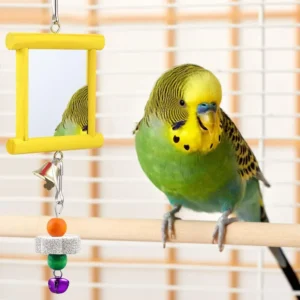 4-Pack Acrylic Parrot Toys with Mirror & Beak Grinding Accessories – Colorful Bird Cage Toys for Parrots and CockatielsMSRP $5.89Login for wholesale pricing
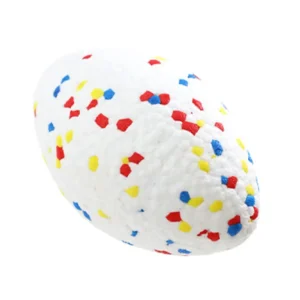 5 Inch Durable Rugby Floating Dog Ball – Chew & Fetch Water Toy for DogsMSRP $4.29Login for wholesale pricing
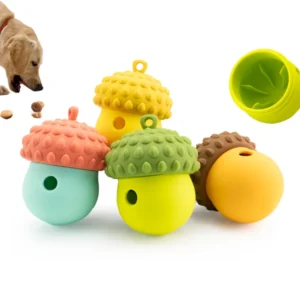 Berry-Shaped Silicone Dog Treat Dispensing Slow Feeder Toy – Durable Chew & Interactive Training Ball(MOQ 24)MSRP $3.56Login for wholesale pricing