How to Vet a Pet Product Supplier (2026) | JustForPetStore
How to vet a pet product supplier in 2026 starts with documentation before you ever see a product: verify the business and export licenses, confirm every certification is current and issued by a real lab, test a pre-production sample yourself, and make sure the supplier can produce the compliance data that new U.S. import rules now require. Get this right and you protect your margin, your cash flow and your store’s reputation.
Why does supplier vetting matter more in 2026?
Because the compliance bar just moved, and the cost of a bad supplier got more expensive. On July 8, 2026, the U.S. Consumer Product Safety Commission (CPSC) made electronic filing mandatory: importers of regulated consumer products must now submit the data from their Certificate of Compliance through U.S. Customs at the time of entry, rather than simply keeping a paper certificate on file. If that data is missing or inaccurate, the shipment can be delayed, examined, or refused clearance — which for a small shop means inventory stuck at the port during your busiest season.
The change does not add new safety tests, but it changes who is on the hook and when. The Importer of Record — that is you, if you import under your own name — is ultimately responsible for the accuracy of that filing, even though the underlying test data comes from the factory. CPSC also confirmed there is no low-value or direct-to-consumer exemption, so this applies to small orders, not just container loads.
In other words, in 2026 you cannot vet a supplier after the goods arrive. The paperwork has to be right before the goods ship, which means vetting is now a pre-order discipline, not a post-purchase audit.
What documents should you ask a pet product supplier for?
Start with identity and legal standing, then move to quality and compliance. Ask for, and independently verify, these:
- Business license and registration. A legitimate manufacturer has a government-issued business license. Cross-check the legal name, registered capital and founding year in the official business registry, and confirm the company’s scope actually includes manufacturing your category — not just trading.
- Export license. A factory that exports directly has an export license; one that routes through a trading agent is not automatically a red flag, but it adds cost and paperwork, and you should know upfront.
- Quality system certifications. ISO 9001 is the baseline, but verify the certificate is current, scoped to your product category, and issued by a credible certifying body — not just a stamp on a PDF.
- Product-specific compliance certificates. For pet food, treats and supplements, U.S. requirements include FDA facility registration and, for importers, a Foreign Supplier Verification Program (FSVP) importer. For pet food that makes a “complete and balanced” claim, the formula should align with Association of American Feed Control Officials (AAFCO) nutrient profiles. For food-contact products like bowls and feeders, you need FDA food-contact material compliance. For textiles, toys and electronic devices, you need the relevant CPSC, FCC or battery certifications.
- Test reports from an accredited lab. Ask for the actual report from a lab such as SGS, Bureau Veritas, Intertek or TÜV, and verify the certificate number on the lab’s own site. A “certified” logo without a real report is the most common shortcut in the industry.
The rule of thumb: a serious supplier answers a document request quickly and completely. One that dodges, delays or sends stock images instead of real paperwork is telling you something about how the order will go.
How do you verify a supplier’s certifications are real?
Assume nothing; verify everything. Three checks catch most problems. First, verify the company itself in the official registry using the exact legal name from the license — mismatched names, “revoked” status or a scope that does not include manufacturing are immediate red flags. Second, confirm each certification with the issuing body: a real ISO 9001 certificate has a number you can look up, and a real test report can be validated on the lab’s website. Third, cross-check the sample against the paperwork — the model number, materials and construction in your hand should match what the certificate and test report describe.
Watch for the two classic shortcuts: trading companies posing as factories, and recycled or expired certificates. A factory is happy to send real production photos, a video walk-through of the line, and answers about capacity and lead times; a trading company typically will not. If a supplier cannot or will not produce a live look at production, treat the “factory” claim as unverified and price the risk accordingly.
Do you need a factory audit for a small order?
Not always, but you should never skip the sample. The sample is the single most informative step in the whole process: order a pre-production sample, use it yourself for a week, take it apart, and compare it to the spec sheet and to competing samples. It tells you more about the factory’s real capability than any certificate.
The sample round is where most bad deals get caught. A factory that over-promises in the quote will under-deliver in the sample, and testing it side by side against a rival’s sample usually exposes which supplier is actually capable. Treat the sample cost — typically $50 to $500 with shipping — as the cheapest insurance you will ever buy on a supplier relationship.
A formal third-party audit — typically $400 to $800 for an inspection by a lab such as SGS, Bureau Veritas, TÜV or QIMA — is the right call when the stakes are higher: a first order above roughly $50,000, a long-term commitment, or a product with serious safety implications. Below that, a structured video review plus a pre-shipment inspection on the first order is a reasonable middle path. For most small shops, the sequence that matters is: verify paperwork, test the sample, then inspect before shipment — and escalate to a full audit when the order size or product risk justifies it.
What are the 2026 compliance rules for imported pet products?
The headline change is CPSC eFiling, but it sits inside a wider compliance picture. For a shop importing pet products into the U.S., the main requirements are:
- CPSC certification and eFiling. Products subject to a CPSC rule — including many toys, textiles, and certain children’s or general-use consumer products — require a Certificate of Compliance, and from July 8, 2026 that certificate data must be filed electronically at entry. The filing needs seven data elements, including the product identifier, the safety rules certified against, manufacture date and location, the most recent test date, the testing lab, and the party maintaining records.
- FDA requirements for food and food-contact products. Pet food facilities must register with the FDA, and importers of food products must comply with FSVP, which makes the importer responsible for verifying the foreign supplier meets U.S. safety standards. Food-contact products like bowls and feeders must comply with FDA food-contact material rules.
- AAFCO-aligned nutrition. If your private-label food claims “complete and balanced,” it should meet AAFCO nutrient profiles for the labeled life stage — a claim you want documented from the manufacturer, not assumed.
- USDA and wildlife rules for animal-derived materials. Products containing animal by-products, or materials like feathers, seashell or certain hides, can require USDA permits or U.S. Fish and Wildlife Service (CITES) licenses. Ask early, because these can take time.
The practical point for a small shop is to make compliance a condition of the order, in writing, before you commit. A supplier who can produce the data elements CPSC now requires — manufacture location, test dates, accredited lab, record-keeper — is a supplier you can import from without gambling on clearance.
How do you turn vetting into a repeatable process?
Build a short, fixed checklist and run it on every candidate, every time. A working version: verify the business and export license in the official registry; confirm every certification is current and lab-verifiable; order and test a pre-production sample; agree in writing on specs, lead times, packaging and the compliance documents you need; and schedule a pre-shipment inspection for the first order. Keep a one-page record per supplier so you can compare them against each other rather than against a vague memory.
The payoff is compounding. A supplier that passes a real vetting process is one you can reorder from with confidence, build a private-label line on, and scale without re-learning everything each time. If you are sourcing through a wholesale partner rather than going direct to a factory, the same discipline applies — you want a partner whose low-MOQ terms let you start small while still providing the documentation you need. When you are ready to put your own name on products, a private-label program that hands you the compliance paperwork alongside the goods is worth more than a slightly lower unit price. And whether you build your own range or stock everyday pet supplies and pet food, the shops that sleep well at night are the ones that vetted the supplier before the first container was booked.
Sources: U.S. Consumer Product Safety Commission (CPSC eFiling guidance, effective July 8, 2026); U.S. Food and Drug Administration (facility registration, FSVP and food-contact requirements); Association of American Feed Control Officials (AAFCO nutrient profiles).
Ready to stock these ideas? Browse wholesale pet KITs →
Shop these pet categories
Wholesale pricing, no minimum order.
Related wholesale collections
Products mentioned here
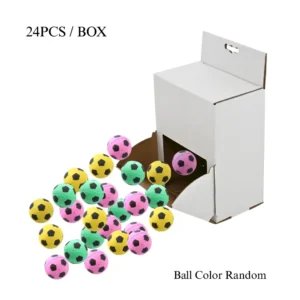 24-Pack Cat Toy Balls – Soft Latex Foam Soccer Ball Toys for Cats, Interactive Chase & Self-Play, Wholesale Pet SuppliesMSRP $8.89Login for wholesale pricing
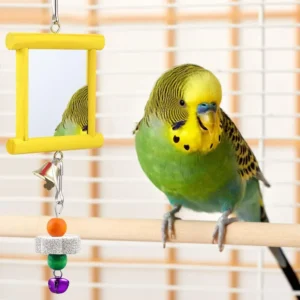 4-Pack Acrylic Parrot Toys with Mirror & Beak Grinding Accessories – Colorful Bird Cage Toys for Parrots and CockatielsMSRP $5.89Login for wholesale pricing
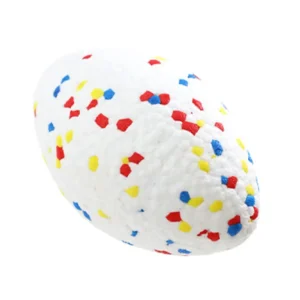 5 Inch Durable Rugby Floating Dog Ball – Chew & Fetch Water Toy for DogsMSRP $4.29Login for wholesale pricing
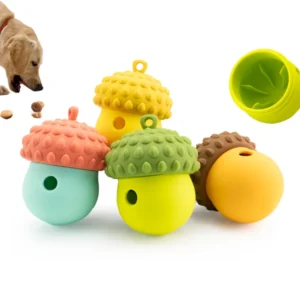 Berry-Shaped Silicone Dog Treat Dispensing Slow Feeder Toy – Durable Chew & Interactive Training Ball(MOQ 24)MSRP $3.56Login for wholesale pricing