Import Pet Products to the US in 2026 | JustForPetStore
Import pet products to the US in 2026 and you are stacking four federal regimes — FDA registration, FSVP, CBP customs duties, and a forced-labor screen — and any missed step can hold a shipment at the port. Per FDA’s import guidance, facility registration, FSVP, labeling, and Prior Notice all get verified at the time of import.
What FDA Requirements Apply to Imported Pet Food and Treats?
Pet food and pet treats are regulated by FDA as animal food under section 201(f) and 201(w) of the Federal Food, Drug & Cosmetic Act, which means they fall under the same food import regime as any other edible product. Per FDA, four filings and verifications are mandatory at the time of import: Food Facility Registration of the foreign manufacturer (renewed biennially in even-numbered years), the FSVP importer’s DUNS number and verification program, labeling compliance under 21 CFR Part 101, and Prior Notice filed before the shipment arrives at the U.S. port. A failure at any one of these is enough to put the lot on detention without physical examination under Import Alert 71-04 or 72-03.
The label is its own audit pass. Per FDA’s food labeling guide, imported pet food labels must include a statement of identity, an ingredient declaration in descending order of predominance by weight, a guaranteed analysis, nutritional adequacy statement (for complete and balanced foods), feeding directions, the manufacturer’s name and address, and a country-of-origin marking under CBP rules. Labels that are compliant in your home country are very often not compliant here without changes. All mandatory information must be in English, appear prominently, and meet minimum type-size requirements. Sesame was added as a major allergen under the FASTER Act and must be declared if present.
Special products carry their own additional rules. Per FDA, low-acid canned pet foods and acidified foods require a separate FDA FCE (Food Canning Establishment) registration and SID process filing per product and per container size, in addition to standard facility registration. Medicated feeds need a Medicated Feed Mill License and Veterinary Feed Directives. Skipping a product-specific requirement is one of the most common reasons a shipment gets flagged even after the facility itself is properly registered, and it is where the broker earns the fee.
What Is FSVP and Why Does It Matter for a Small Store?
FSVP — Foreign Supplier Verification Program — is the importer’s own due-diligence program, and per FDA’s FSVP final rule, the FSVP importer is defined as the U.S. owner or consignee at the time of entry. If there is no U.S. owner or consignee, the FSVP importer is the U.S. agent or representative of the foreign owner. This is critical for small stores working through a trading company or a U.S. warehouse — whichever entity is named as the importer of record on the entry is the FSVP-importer, and FDA holds that entity accountable.
The FSVP importer must, for each food and each foreign supplier, conduct a hazard analysis, verify that the supplier controls those hazards adequately (through on-site audits, sampling and testing, or record review), and re-evaluate every three years or whenever new information comes in. Records must be kept and be available on FDA’s request. There is no single “FSVP form” — it is a written program you build, maintain, and produce. In a recent FDA warning letter, a California-based importer was placed on Import Alert 71-04 after six Salmonella-positive samples were collected from pet treats between October 2024 and April 2025, and the inspection found the importer had not developed or maintained an FSVP at all. The lesson for a small store: even if your volumes are tiny, your FSVP binder cannot be tiny.
Practical implementation: a small store running a 12-SKU import program can outsource the FSVP build to a food-safety consultant for a few thousand dollars, and re-evaluate once a year. The consultant reviews your supplier’s HACCP plan, signs off on a written hazard analysis, and certifies the program against 21 CFR Part 1 Subpart L. You keep the records at the warehouse. This is the line item that protects your store from a hundred-thousand-dollar detention event more reliably than any other step on this checklist.
How Much Tariff Do You Pay on Imported Pet Products in 2026?
The tariff you pay depends on the HTS classification and country of origin, and the layers stack. As of mid-2026, the average effective tariff on Chinese-origin goods sits near 24 percent per industry tariff trackers. The typical stack on a Chinese-origin pet product: base HTS duty (often 0–7 percent for most pet toys, collars, harnesses, beds, and litter accessories), plus Section 301 List 3 or 4A at 25 percent (or 7.5 percent for List 4A items), plus Section 232 if the product contains significant steel or aluminum content (50 percent on the metal content itself), plus MPF (0.3464 percent of customs value, min $31.67 / max $614.35 per entry) and HMF (0.125 percent of cargo value for ocean imports).
Three deadlines matter for planning. First, the 178 active Section 301 product exclusions were extended to November 10, 2026 per the November 2025 US–China trade agreement, and no new exclusion process is currently open — if your product rides one of these exclusions, that date is your planning horizon. Second, the 10 percent Section 122 global surcharge expired by statute on July 24, 2026 with no congressional extension, though the Court of International Trade had already invalidated the underlying authority. Third, a new Section 301 forced-labor investigation was opened in mid-2026, with proposed rates around 12.5 percent and final action anticipated in the July–August 2026 window per the Customs Broker USA tariff primer. The right way to model landed cost is to give your broker your 10-digit HTS code, your country of origin, your declared value, and your freight and insurance, and ask for the all-in number before you wire the deposit.
Worked example on a $10,000 commercial shipment of rubber toys from China to a Los Angeles distribution center: Base HTS duty (typically 0–5.8 percent for pet toys under HTS 4014 or Chapter 95), plus Section 301 List 4A at 7.5 percent, plus MPF and HMF, gives roughly $400 to $1,200 of total federal duty on a $10,000 commercial invoice depending on the exact HTS code. Add ocean freight, customs broker fees ($125 to $250 per entry), ISF (Importer Security Filing, $25 to $50), and warehouse handling, and your landed cost typically adds 12 to 18 percent above the FOB price. A small store can model this in an hour with a broker’s quote and a spreadsheet — the discipline is doing it before every reorder, not after.
What Forced-Labor Screen Do You Need to Run in 2026?
Per the U.S. Customs and Border Protection Withhold Release Orders (WROs) database and the Uyghur Forced Labor Prevention Act, every shipment into the U.S. is presumed to involve forced labor if any part of the supply chain touches Xinjiang. CBP issues WROs against specific entities, but the rebuttable presumption under UFLPA extends the duty to importers to demonstrate that their goods are not produced with Xinjiang-origin labor. The screen is two parts: map your supplier’s raw-material inputs (especially cotton, textiles, polysilicon, tomatoes, and certain industrial chemicals), and retain the documentation CBP asks for — supplier maps, mill certificates, chain-of-custody attestations — for every shipment.
Practical implementation for a small store: ask your supplier for an explicit UFLPA compliance attestation, in writing, and update it annually. Ask for the address of every factory that touches the finished good, including the address of any sub-assembly facility. Store the documents in your FSVP binder so the records live in one place. A new Section 301 forced-labor investigation is targeting broader supply-chain exposure with a proposed 12.5 percent rate per the Customs Broker USA tariff primer, so the documentation that protects you from UFLPA detention today also prepares you for the broader regime likely to land in 2027.
What Should a Small Store Do the Day a Container Lands?
Four moves, in order, none of which you can delegate once you are the importer of record. One: pull the Prior Notice confirmation from FDA’s PNSI or ABI/ACE system and keep it accessible at the warehouse in case FDA wants to verify timing. Two: physically receive the container against the purchase order, line by line, and document damage, mis-counts, and SKU substitutions before the truck leaves the bonded yard — claims against the supplier or freight carrier are much harder after the truck rolls. Three: store the FSVP binder copy, the customs entry (CBP Form 7501), the commercial invoice, the packing list, the bill of lading, and the UFLPA attestation in the same folder, and back the folder up off-site monthly. Four: file a HazMat (HMR) registration if your product contains a regulated chemical (certain battery-powered toys, certain cleaning sprays, some rawhide chews), and check whether your state requires anything additional — California’s Prop 65, for instance, lists ingredients that trigger warning-label requirements independent of FDA.
Once the container is in the warehouse and the import record is sealed, your store-side work begins: cycle count every SKU, run the 60-day zero-velocity review on your existing stock before placing the next PO, and price the landed cost back into the shelf sticker. That last step is where most small stores lose margin — they price at FOB and never recover the freight, duty, broker fee, and warehouse time. The right operating model is to price at landed cost, mark up on margin, and watch the unit economics like a hawk. Our low-MOQ sourcing page explains how small stores run weekly small-lot purchases that keep landed-cost models honest, our pet supplies catalogue lists the categories where smaller containers actually work, and our pet food and private-label pages show how to plan around imported staples without over-buying.
What Is the Cheapest Way to Get Compliance Right the First Time?
Hire a licensed customs broker (typically $125 to $250 per entry) and a food-safety consultant (typically $2,000 to $5,000 for an FSVP build, then $1,000 to $2,000 per annual review). Combined, this is the cheapest line item on your import P&L, and it is the line item that prevents the four-figure detention events that put a small importer out of business. Your broker handles HTS classification, Section 301/232 application, MPF/HMF, customs bonds, and any CBP inquiries. Your consultant handles FDA facility registration renewal (biennial, October–December of even years), Prior Notice timing rules (water: 8 hours before arrival; air or rail: 4 hours; road: 2 hours), FSVP documentation, and UFLPA attestation templates. The two roles together turn import compliance from a once-a-quarter scramble into a once-a-month review.
A small store that imports a single 40-foot container per quarter can run the full program for under $10,000 a year in professional fees, plus the actual duty and freight. That is roughly the cost of one quarter-page ad in a regional pet magazine, and it protects every dollar of inventory you bring across the border. If you are weighing whether to import direct versus partner with a U.S. wholesaler, the answer is direct if your volume supports a full container, and wholesale if it does not — but either way, your customer will end up asking whether your supply chain is FDA-compliant and forced-labor-free, and you want the answer on a single page in your binder. Document once, ship many, and the next container is faster than the last.
Ready to stock these ideas? Browse wholesale pet KITs →
Shop these pet categories
Wholesale pricing, no minimum order.
Related wholesale collections
Products mentioned here
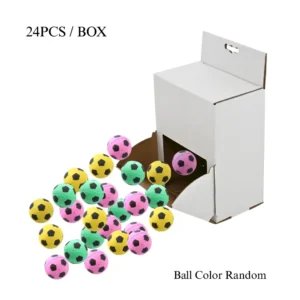 24-Pack Cat Toy Balls – Soft Latex Foam Soccer Ball Toys for Cats, Interactive Chase & Self-Play, Wholesale Pet SuppliesMSRP $8.89Login for wholesale pricing
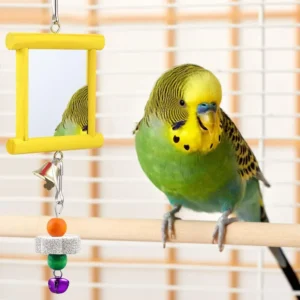 4-Pack Acrylic Parrot Toys with Mirror & Beak Grinding Accessories – Colorful Bird Cage Toys for Parrots and CockatielsMSRP $5.89Login for wholesale pricing
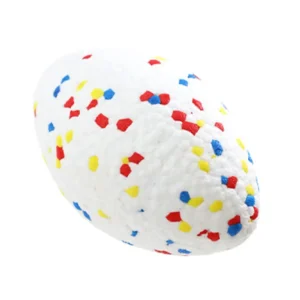 5 Inch Durable Rugby Floating Dog Ball – Chew & Fetch Water Toy for DogsMSRP $4.29Login for wholesale pricing
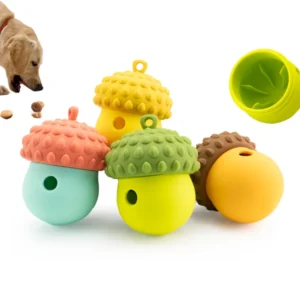 Berry-Shaped Silicone Dog Treat Dispensing Slow Feeder Toy – Durable Chew & Interactive Training Ball(MOQ 24)MSRP $3.56Login for wholesale pricing