Small-Batch vs Bulk: Controlling Inventory Risk for Independent Pet Retailers
The Quiet Threat to Every New Pet Store
Most first-time pet store owners worry about rent, foot traffic, and competition. The threat that actually kills small retailers, though, is quieter: inventory risk. Buy too much of the wrong thing and your cash is frozen on shelves that do not move. Buy too little and you miss sales and look unreliable. The single biggest lever you control on day one is how much you buy at once — small-batch or bulk. This article breaks down both, shows the cash-flow math, and explains how curated KITs let you run small-batch even when traditional wholesalers demand bulk.
What Bulk Buying Really Costs
Bulk buying looks rational: lower unit price, fewer reorders, “economies of scale.” But for an independent pet store the hidden costs are brutal:
- Tied-up cash. A $5,000 bulk order is $5,000 you cannot spend on rent, marketing, or the next opportunity.
- Slow feedback. If the product flops, you learn it slowly, surrounded by dead stock.
- Storage pressure. Small shops pay rent per square foot; bulk inventory eats selling space.
- Obsolescence. Pet trends shift; bulk buys can age before they sell.
Bulk only pays off when you already know an item sells fast and forever. New stores rarely know that yet.
What Small-Batch Buying Offers
Small-batch means ordering the minimum viable quantity to test and serve demand. Its advantages for independents are exactly the inverse of bulk’s risks:
- Protected cash flow. Money stays liquid for surprises and opportunities.
- Fast learning. A small test tells you in weeks whether an item works.
- Low storage cost. Inventory stays lean and selling-focused.
- Agility. You can pivot to a trend without drowning in the old one.
The downside is a higher unit price — but for a store still learning its market, that premium is cheap insurance against a warehouse of mistakes.
The Cash-Flow Math
Imagine a new store choosing between two paths for a dog-chew category:
- Bulk path: $5,000 upfront, 500 units at $10 cost, sold at $16. If 30% sits unsold, you have $1,500 frozen and only realize profit as the rest sells — over months.
- Small-batch path: $800 upfront, 80 units at $12 cost, sold at $16. Even if 20% sits unsold, only $192 is at risk, and you reorder the winners weekly. Your $4,200 remaining cash funds other categories and rent.
The bulk store “saves” $2 per unit but risks 6x the capital on an unproven bet. The small-batch store sacrifices margin to buy information — and information is what a new store lacks most.
When Bulk Actually Makes Sense
Bulk is right for proven, fast, stable commodities: a litter tier your data shows sells weekly, a collar size that never sits. Once a product has six months of sell-through proof, bulk can improve margin. The mistake is bulk-ordering before proof. Small-batch is the learning phase; bulk is the scaling phase. Confusing the two is how new stores go broke.
How KITs Make Small-Batch Easy
Here is the catch: many wholesalers set minimum order quantities (MOQs) so high that “small-batch” is impossible — you must buy 500 of one SKU to get the price. Curated KITs solve this structurally. Because the bundle is the order unit, the effective minimum is a single KIT, not 500 singles. You get a small-batch, validated, margin-checked assortment without negotiating MOQs or betting on one product. A Retail Starter KIT is, in effect, small-batch sourcing with none of the usual minimums.
A Simple Decision Framework
Before any order, ask:
- Do I have six months of proof this sells? If no → small-batch (or a KIT).
- Is the cash tied up survivable if it flops? If no → small-batch.
- Does the supplier force a bulk MOQ on an unproven item? If yes → prefer a KIT that bundles it small.
- Is it a stable commodity with proven turn? If yes → bulk may be justified.
Most new-store decisions land on small-batch or KIT. That is healthy.
A Real Store’s Small-Batch Turnaround
Consider a store that opened with a $6,000 bulk order of assorted chews and toys based on the owner’s favorites. Two months in, half sat unsold, cash was tight, and morale sagged. The owner pivoted: returned what the supplier allowed, then switched to a Dog KIT plus weekly small-batch reorders of only the top three sellers. Within a quarter the dead stock cleared, cash freed up, and the shelf finally reflected what local dogs actually wanted. The lesson was not “bulk is bad” — it was “bulk before proof is a bet you usually lose.”
Common Inventory Risk Mistakes
New owners repeat the same errors. The first is falling for the per-unit discount and ignoring total capital at risk. The second is ordering variety instead of depth, spreading cash across a hundred unknowns. The third is fear of small reorders, thinking weekly buying is “inefficient” when it is actually the safest teacher. The fourth is skipping the scorecard, so they never learn which items earn bulk treatment. Small-batch and KIT sourcing neutralize most of these by default — leaving you to focus on customers, not a supplier spreadsheet.
Protect the Business, Not the Discount
The allure of bulk is a lower unit price. The job of a small retailer is survival and learning, not chasing discounts on unproven bets. Small-batch buying — and the KIT model that makes it practical — keeps your cash free, your shelf honest, and your store ready to pounce on what actually sells. Start lean with a Retail Starter KIT, prove your winners, and graduate to bulk only where the data earns it.
Ready to stock these ideas? Browse wholesale pet KITs →
Shop these pet categories
Wholesale pricing, no minimum order.
Related wholesale collections
Products mentioned here
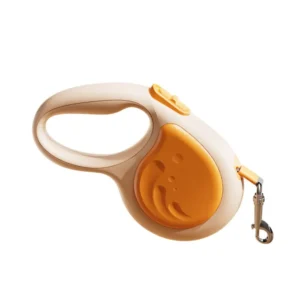 19.6 ft Outdoor Nylon Automatic Retractable Dog Leash – Heavy-Duty Pet Leash for Large and Small DogsMSRP $8.99Login for wholesale pricing
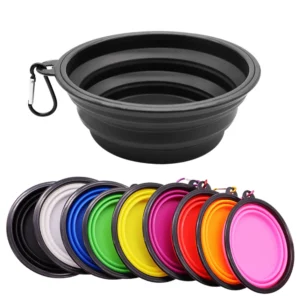 2 Pack Collapsible Silicone Dog Bowls – Portable Pet Food & Water Travel Bowl with CarabinerMSRP $1.78Login for wholesale pricing
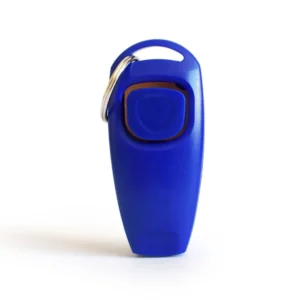 2-in-1 Dog Training Whistle & Clicker – Outdoor Pet Training Device, Factory-Direct Wholesale (MOQ 50)MSRP $2.18Login for wholesale pricing
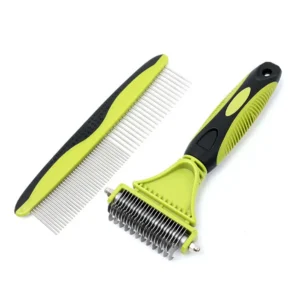 2-in-1 Pet Grooming Comb Set – Dual-Sided Deshedding & Dematting Tools for Dogs and CatsMSRP $6.29Login for wholesale pricing