
Understanding MOQs: Why Low Minimums Matter for New Pet Stores
The Three Letters That Decide Your Fate
MOQ — minimum order quantity — sounds like dull procurement jargon. In reality it is one of the most consequential numbers a new pet store owner meets. It determines how much cash you must commit before you have sold a single item, how much risk you carry on an unproven product, and whether direct sourcing is even open to you. Understand MOQs and you protect your store; ignore them and you can strangle your cash flow on day one. This article explains what MOQs are, why low minimums matter for new retailers, and how curated KITs deliver small effective minimums without negotiation.
What MOQ Actually Means
A minimum order quantity is the smallest amount a supplier will sell in one order. It might be “100 units per SKU,” “$500 per order,” or “mix any 10 SKUs to reach 1,000 total.” MOQs exist because suppliers have setup, labor, and shipping costs that only make sense above a threshold. The factory’s efficiency is your constraint — and for a new, small store, that constraint can be brutal.
Why High MOQs Hurt New Stores
For an established chain, a 1,000-unit MOQ is routine. For a first-time independent, it is a wall:
- Capital trap. Meeting one MOQ can consume a large slice of opening budget on a single bet.
- Unproven risk. You commit to 1,000 of a product you have never sold. If it flops, you own a warehouse.
- Assortment poverty. High MOQs force you to concentrate spend, leaving your shelf narrow.
- Agility loss. Tied-up cash means you cannot pivot when a trend appears.
High MOQs reward the proven and punish the learning — exactly backwards for a new store that needs to learn fast.
Why Low Minimums Matter
Low minimums flip every one of those risks into an advantage:
- Capital freed. Small orders keep cash available for rent, marketing, and surprises.
- Fast feedback. A 50-unit test tells you in weeks whether an item works.
- Assortment breadth. Small minimums let you stock a wide, credible shelf across categories.
- Agility. You can chase a trend without drowning in the old one.
Low minimums are not about buying less forever — they are about buying less until you know. They are the learning phase of a healthy store.
How to Negotiate Lower MOQs
You are not powerless against a high MOQ. Tactics that work:
- Ask for a trial order at a slightly higher unit price — suppliers often accept to win a new client.
- Combine SKUs to hit a total MOQ across a range rather than per item.
- Offer a forecast — commit to recurring orders in exchange for a lower first minimum.
- Start with stock items (no customization) which usually carry lower minimums than made-to-order.
Even so, many factories will not budge below a threshold. That is where an alternative matters.
How KITs Deliver Low Effective MOQs
Curated KITs solve the MOQ wall structurally. Because the bundle is the order unit, the effective minimum is one KIT — not 1,000 of a single leash. A Retail Starter KIT might contain dozens of individual products, each in small quantity, assembled into one sensible, small-batch order. You get manufacturer-direct thinking (validated assortment, margin control, small minimums) without negotiating ten factories or clearing a per-SKU gate. For a new store, a KIT is low-MOQ sourcing made effortless.
MOQ by Product Type
Minimums vary by category, and knowing the pattern helps you plan:
- Commodities (litter, waste bags): high per-unit MOQs but low risk if proven — start small via KIT.
- Accessories (collars, leashes): moderate MOQs; customization raises them.
- Toys: often low MOQs and great for testing trends small.
- Custom or branded goods: highest MOQs — avoid until you have proof.
Matching your order size to product risk is the art of MOQ management.
A MOQ Mistake That Cost a Store
One owner fell for a “premium leash” with a 1,200-unit MOQ at a tempting price. He drained his opening budget to hit it, certain the leash would sell. It did not — the buckle style was wrong for his neighborhood. Twelve hundred leashes sat in a back room for two seasons while rent and marketing went unfunded. Had he tested 60 units first (or opened with a Dog KIT that included a proven leash small), he would have learned in weeks and kept his cash. The MOQ did not save him money; it magnified his ignorance.
Your MOQ Decision Checklist
Before accepting any minimum, run it: Is this a proven, fast commodity? If no, insist on a trial or a KIT. Does the total capital survive a flop? If no, walk away. Can I combine SKUs to reach the MOQ across a range? If yes, do it. Is customization forcing the minimum up? If yes, delay custom until proof exists. Most new-store answers point to small-batch or KIT — and that is the disciplined, survivable choice.
Buy Small Until You Know
MOQ is not the enemy; a mismatched MOQ is. High minimums belong to proven, fast commodities — not to a store still discovering its market. Low minimums, and the KIT model that delivers them, keep your cash free, your shelf honest, and your store ready to scale on proof. Open lean with a Retail Starter KIT, and let real sales — not a supplier’s minimum — decide when you go big.
Ready to stock these ideas? Browse wholesale pet KITs →
Shop these pet categories
Wholesale pricing, no minimum order.
Related wholesale collections
Products mentioned here
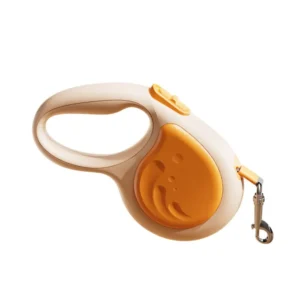 19.6 ft Outdoor Nylon Automatic Retractable Dog Leash – Heavy-Duty Pet Leash for Large and Small DogsMSRP $8.99Login for wholesale pricing
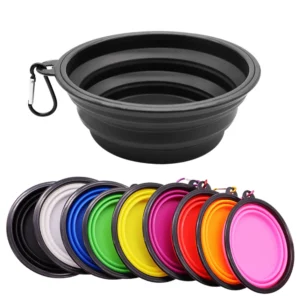 2 Pack Collapsible Silicone Dog Bowls – Portable Pet Food & Water Travel Bowl with CarabinerMSRP $1.78Login for wholesale pricing
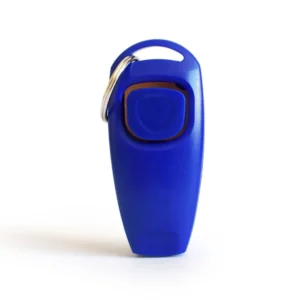 2-in-1 Dog Training Whistle & Clicker – Outdoor Pet Training Device, Factory-Direct Wholesale (MOQ 50)MSRP $2.18Login for wholesale pricing
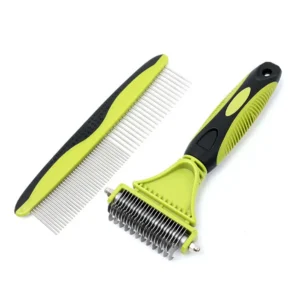 2-in-1 Pet Grooming Comb Set – Dual-Sided Deshedding & Dematting Tools for Dogs and CatsMSRP $6.29Login for wholesale pricing