FDA Pet Food Import Requirements 2026 | JustForPetStore
If you import pet food into the United States, three agencies and one industry standard decide whether your shipment clears customs. The FDA requires facility registration, prior notice, and a Foreign Supplier Verification Program (FSVP); the USDA’s APHIS requires permits for animal-derived ingredients; and AAFCO sets the labeling and nutrient standards most states enforce. Missing the FDA’s December 31, 2026 registration renewal can leave your goods held at the port. Here is the full checklist.
What are the FDA pet food import requirements in 2026?
The U.S. Food and Drug Administration’s Center for Veterinary Medicine (CVM) regulates all animal food, including pet food and treats, under the Federal Food, Drug, and Cosmetic Act and the Food Safety Modernization Act (FSMA). When a shipment of pet food arrives at a U.S. port, the FDA verifies compliance on several fronts.
First, facility registration. Every foreign facility that manufactures, processes, packs, or holds animal food destined for the United States must register with the FDA and obtain a facility registration number. If the FDA finds an unregistered facility, the shipment is held at the port until the facility registers. Registrations expire every two years, and importers should confirm their supplier’s registration is current before ordering.
Second, prior notice. Before a shipment arrives, the FDA requires a prior notice submitted through its Prior Notice System Interface or through U.S. Customs via the ACE system. The timing depends on transport: at least two hours before arrival by road, four hours by air or rail, and eight hours by water. A shipment without a valid prior notice is refused entry.
Third, ingredient compliance. Every ingredient must be an approved food additive under 21 CFR 573, generally recognized as safe (GRAS) under 21 CFR 582, or listed in the AAFCO Official Publication. Importers should know that ingredients approved for human food are not automatically safe for pets, and that the FDA treats salmonella-contaminated pet food as adulterated — meaning it can be detained and refused.
The practical takeaway for a small importer is to treat compliance as a pre-shipment checklist, not a post-arrival problem. Before you book a container, confirm the factory’s registration number is current, file your prior notice in the right window, verify every ingredient against the AAFCO list, and confirm the label will meet both federal and state rules. If any one of those is missing, the most likely outcome is a hold at the port, storage and detention fees, and a shipment you cannot sell until the issue is fixed — which can take weeks.
One common myth trips up first-time importers: the FDA does not issue a general “FDA certificate” or “FDA approval” for pet food. What matters is that the facility is registered and the product itself is compliant. Any seller claiming to hold a blanket “FDA certification” is waving a red flag, not a credential. Ask for the facility registration number, ingredient documentation, and a valid prior notice, and verify each one rather than relying on a paper certificate.
Finally, understand that the FDA treats adulterated food seriously. Pet food contaminated with salmonella is considered adulterated under the law and can be refused, detained, or destroyed at your expense. That is why third-party microbial testing and a documented kill step matter — they are not just quality control, they are your clearance protection.
A quick distinction helps here: these FDA requirements apply to pet food, treats, and anything ingestible — not to non-food supplies like leashes, bowls, or toys, which face different rules around materials and labeling. If your first import is accessories rather than food, your FDA burden is lighter, but the moment you add a treat or supplement to the container, the full food-compliance framework kicks in. Know which bucket each SKU falls into before you book freight, because mixing compliant and non-compliant items in one shipment can delay the entire container. And remember that a single mislabeled bag of treats can trigger a hold on the whole load — the cheapest item in your mix can become the most expensive if it is the one that fails inspection.
What is FSVP, and who is responsible for it?
The Foreign Supplier Verification Program (FSVP) is the part of FSMA that makes the U.S. importer the first line of defense on food safety. Under FSVP, the U.S. owner or consignee of the food at the time of entry — not the foreign supplier — is responsible for verifying that the imported pet food meets the same safety standards as domestically produced food.
In practice, FSVP requires you to designate a Qualified Individual who has the education, training, or experience to carry out the program. That person must identify reasonably foreseeable hazards for the product, verify that the foreign supplier controls those hazards (through audits, testing, or review of the supplier’s food-safety records), and document corrective actions when something goes wrong. You must also ensure you only import from approved suppliers and that your FSVP is updated regularly.
Plan for FSVP before you place your first order. That means gathering your supplier’s food-safety documentation — HACCP or equivalent plans, third-party test results, and their FDA registration — and documenting your hazard analysis for each product. Smaller importers often outsource the Qualified Individual role to a food-safety consultant or broker, which is fine as long as that person is genuinely qualified and your records are kept current. The FDA can inspect your FSVP records at any time, and “I didn’t know I needed it” is not a defense.
This is the requirement small importers most often miss. If you do not have an FSVP in place, your product can be considered non-compliant even if the factory is registered and the food is safe. It is also the strongest reason to vet a pet product supplier before you send money overseas — the FDA holds you accountable for what your supplier does.
Do I need USDA APHIS permits for pet food?
If your pet food contains animal-derived ingredients — meat, poultry, dairy, eggs, or animal by-products — the answer is generally yes. The USDA’s Animal and Plant Health Inspection Service (APHIS) regulates these products to prevent animal diseases from entering the country.
Importers of animal-derived pet food typically need to apply for an import permit (commonly on APHIS Form VS 16-3) before the product ships. The permit specifies the permitted source materials, processing requirements, and heat-treatment parameters. Each shipment must also be accompanied by the appropriate veterinary health certificate from the exporting country, certifying the product was safely processed and is free of pathogens such as salmonella. Ruminant-derived ingredients may require additional documentation tied to bovine spongiform encephalopathy (BSE) controls.
The details vary by ingredient and by country of origin. Products from countries with diseases not present in the U.S. face tighter scrutiny, and ruminant-derived materials face BSE-related restrictions that can add documentation and time. Because APHIS permits are issued before shipment and can take weeks, this is the step to start first — not last. If you are unsure whether your formula triggers APHIS review, check the ingredient list for any meat, poultry, dairy, or egg, and assume yes until an import specialist tells you otherwise.
The lesson for small importers: do not assume a product is “just food.” If it contains any animal-origin material, budget time to secure APHIS permits and health certificates before the cargo is even booked, because these documents are often the slowest part of the process.
When is the FDA facility registration renewal deadline?
The deadline matters right now. FDA food facility registrations must be renewed every two years, and renewal is only accepted during the open window from October 1 through December 31 of every even-numbered year. 2026 is an even-numbered year, so the next renewal window closes on December 31, 2026.
If a facility misses the deadline, its registration is cancelled. That means shipments from that facility can be held at the port, and unregistered product is refused until the registration is restored. If you import on an ongoing basis, confirm with every supplier that their FDA registration is renewed during the October–December 2026 window, and get their registration number on file before you commit to new orders.
What makes this urgent is the even-year calendar. If you miss the December 31, 2026 window, there is no quick online fix — the facility must re-register, and product shipped in the gap can be refused. Set a calendar reminder now for October 2026, and make registration renewal a standing item in your supplier onboarding checklist. A supplier who cannot produce a current registration number on request is not ready to ship to the U.S.
The same discipline applies across the board: facility registration, FSVP, prior notice, APHIS permits, and AAFCO-compliant labeling all have to be in place before the container leaves the factory, not after it arrives. Beyond the U.S. agencies, keep AAFCO in mind even though it is not a federal regulator — its model regulations have been adopted by the states, so a label that fails AAFCO’s format can be rejected at the state level even after it clears federal entry. For a broader view of the costs and duties that affect your landed price, see our guide to 2026 pet product tariffs. And when you are ready to source compliant product, start with our pet sourcing guides and sourcing and supply chain resources to build a supply base you can actually verify.
Ready to stock these ideas? Browse wholesale pet KITs →
Shop these pet categories
Wholesale pricing, no minimum order.
Products mentioned here
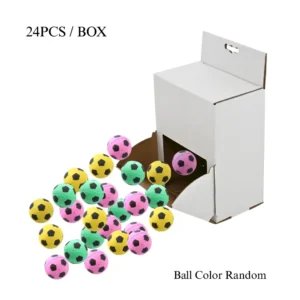 24-Pack Cat Toy Balls – Soft Latex Foam Soccer Ball Toys for Cats, Interactive Chase & Self-Play, Wholesale Pet SuppliesMSRP $8.89Login for wholesale pricing
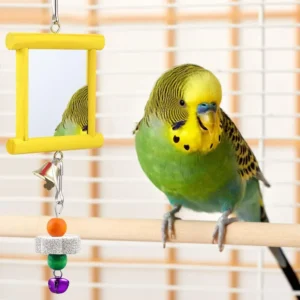 4-Pack Acrylic Parrot Toys with Mirror & Beak Grinding Accessories – Colorful Bird Cage Toys for Parrots and CockatielsMSRP $5.89Login for wholesale pricing
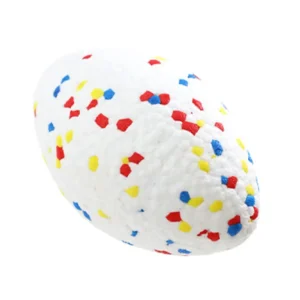 5 Inch Durable Rugby Floating Dog Ball – Chew & Fetch Water Toy for DogsMSRP $4.29Login for wholesale pricing
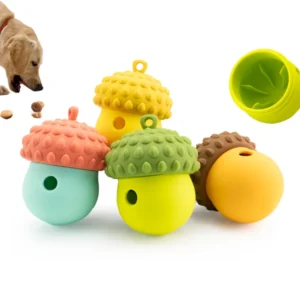 Berry-Shaped Silicone Dog Treat Dispensing Slow Feeder Toy – Durable Chew & Interactive Training Ball(MOQ 24)MSRP $3.56Login for wholesale pricing