Pet Product Supplier Audit: 2026 Checklist | JustForPetStore
A pet product supplier audit in 2026 is the difference between a stable 12-month supply line and a freight claim you eat in cash. Per SourcifyChina’s 2026 supplier risk data, 34% of procurement managers report supplier misrepresentation in China’s packaging sector alone, and 62% of disguised trading companies now claim “integrated manufacturing.” A six-step checklist, three AQL rules, and four 2026 red flags let an indie audit a pet supplier in 12 to 18 hours without ever boarding a plane.
Why Does a Pet Product Supplier Audit Matter More in 2026 Than It Did in 2022?
Three forces have changed the risk profile since 2022. First, supplier misrepresentation has compounded—SourcifyChina’s 2025 audit database shows the rate of trading companies posing as factories has roughly doubled in three years, and AI-generated “real-time” production videos now let a bad supplier pass a virtual walk-through. Second, regulatory pressure on pet imports is rising in the buyer’s market, with the FDA tightening enforcement on label claims and the FASTER Act expanding sesame as a major US allergen. Third, freight and tariff volatility means a hidden middleman that adds 15 to 30 percent markup can erase the margin an indie was counting on. The supplier audit is now the cheapest insurance a small pet store can buy in 2026.
What Are the Six Steps of a 2026 Pet Product Supplier Audit?
The six steps below are drawn from SourcifyChina’s 2026 B2B sourcing report and refined for pet products by category. Allocate 12 to 18 hours per supplier.
Step 1: Legal Entity Validation. Cross-check the business registration on China’s National Enterprise Credit Information Publicity System and request the original business license, not a screenshot. Per SourcifyChina’s 2,147 supplier audits in 2025, the supplier who refuses to share the original license is the one most likely to misrepresent ownership. This is a Critical step.
Step 2: Facility Ownership Proof. Demand utility bills (electricity and water) in the company name and a notarized land lease contract if the facility is rented. 78% of non-compliant pet suppliers fail this step alone. A video tour is not evidence; a utility bill in the company name is.
Step 3: Production Capability Audit. Require machine purchase invoices and a real-time production video showing resin, fabric, or steel input on one end and finished product on the other. For pet product categories with moving parts (self-cleaning litter boxes, treat-dispensing cameras, electronic toys), insist on a live video call showing the specific mold or tooling number from your RFQ, with a current-date newspaper in frame, to defeat the AI-generated factory tour.
Step 4: Material Traceability. Insist on raw-material supplier contracts and Certificates of Analysis (COA) for virgin or recycled inputs. Per SourcifyChina, factories that control resin input reduce defect rates by 41% versus trading-company middlemen. For pet food and treats, also ask for an AAFCO nutrient profile sheet and the most recent third-party lab panel.
Step 5: Quality Control Systems. Audit the Incoming Quality Control (IQC), In-Process Quality Control (IPQC), and Outgoing Quality Control (OQC) logs. Demand AQL 1.0 inspection reports (see below) and at least one round of third-party lab records (SGS, Bureau Veritas, or QIMA) for the last three shipments. The supplier that cannot produce a third-party lab report almost certainly has not had one.
Step 6: ESG and Sustainability Compliance. Demand the Global Recycled Standard (GRS) certificate if recycled inputs are claimed, plus a wastewater treatment permit (mandatory in China for PET molding since 2024) and energy consumption data. This is a Medium-High priority step, but skipping it is how an indie ends up on the wrong side of a US Customs and Border Protection seizure.
What Are the Four 2026 Red Flags That Should Disqualify a Pet Supplier?
Per SourcifyChina’s 2026 Supplier Risk Index, four signals are immediate disqualifiers and a fifth should trigger a deeper dive.
Red Flag 1: Refuses to provide utility bills or machine invoices. The data says 98% of suppliers who refuse these documents are misrepresenting their facility. Walk away.
Red Flag 2: The “factory” address matches an industrial-park leasing office rather than a production zone. 95% fraud probability. Real factories in China, Vietnam, and Bangladesh have power meters, loading docks, and visible production lines, not a single suite in a shared business center.
Red Flag 3: COAs and material certificates lack the accreditation body logo. 87% fraud probability. A “SGS” letterhead without the SGS accreditation mark in the corner is a fake.
Red Flag 4: Insists on 100% upfront payment for “mold development.” 79% fraud probability. The legitimate mold-fee structure is 50% upfront and 50% against first-article samples, with the mold owned by the buyer.
Watch For: A website or social media profile that shows identical factory photos as other suppliers. 61% fraud probability. Reverse-image search the photos before signing a PO.
The emerging 2026 threat is the AI-generated “real-time” production video. Countermeasure: require a live video call showing the specific mold number from your RFQ and a current-date newspaper in the frame.
How Should an Indie Use AQL 1.0 Inspection on a Pet Order?
AQL 1.0 (Acceptable Quality Level) is the inspection standard that lets an indie catch defects before they ship, and it costs about $300 to $500 per man-day through a third-party inspector. For a 5,000-unit pet product order, plan on one full inspection day plus a 10% final random inspection. The AQL sampling tables (ISO 2859-1) tell the inspector how many units to pull from each lot and how many defects are tolerable. For most pet product categories, AQL 1.0 for major defects and AQL 2.5 for minor defects is the working standard. Major defects include broken zippers, sharp edges, choking-hazard small parts on dog toys, and incorrect labeling (a frequent FDA trigger). Minor defects include cosmetic scuffs and minor color variation.
For a first order, the right cadence is pre-shipment inspection on 100% of lot, with a re-inspection if defect rate exceeds 2%. For repeat orders, drop to a 10% final random inspection if the supplier has hit AQL 1.0 clean for three consecutive shipments. Per industry data, factories that hit AQL 1.0 clean for three rounds have a less than 5% chance of failing the fourth; factories that fail the first round have a 60% chance of failing the second.
What Does an On-Site Pet Factory Walk-Through Look Like?
For a first-time pet supplier, an on-site audit through a third party is worth the $850 to $1,200 it costs, especially for self-cleaning litter boxes, electronic feeders, or any product with moving parts and firmware. The audit list below is a working subset of the Petrust 5-System pet product audit, which separates a normal factory audit from a category-specific one.
First, identity: business license, factory area, worker count, production line count, warehouse condition, equipment list, certifications, fire-control systems, and a written quality procedure. The supplier that cannot show you a one-page quality procedure has no quality system.
Second, category-specific evidence. For a self-cleaning litter box, the audit must prove the motor stops predictably under load, that the infrared sensor still detects cat presence when the dust accumulation is high, and that the firmware on the shipped unit matches the firmware on the approved sample. For an electronic feeder, prove the firmware rejects a Wi-Fi outage by entering a safe local schedule, that the backup battery actually works, and that the food hopper seals after 100 cycles. A supplier that passes the general audit and fails the category audit is the rule, not the exception.
Third, complaint records. Ask to see the last 12 months of customer complaints and the Corrective and Preventive Actions (CAPA) log. The factory that refuses to share CAPA is hiding a real issue; the factory that shares it is showing you how it improves.
How Do You Verify a Pet Supplier Is a Real Factory and Not a Trader?
Per SourcifyChina’s evidence-based differentiation matrix, six indicators separate a true factory from a trading company posing as one. The first is documentation: a true factory shows an original business license with a Manufacturing scope, while a trader shows a Trading or Import/Export scope. The second is facility access: a true factory allows unannounced audits and shows raw-material storage; a trader restricts access to a “showroom” and cites “confidentiality” for the production areas. The third is pricing: a factory quotes per ton of resin or per kilogram of fabric plus a separate mold-amortization line; a trader quotes a single FOB price and avoids the cost breakdown. The fourth is technical depth: a factory’s engineers discuss injection-molding temperature, pressure, and cycle time; a trader’s staff references “factory partners” and lacks process knowledge. The fifth is supply chain proof: a factory shows resin purchase invoices and waste-recycling records; a trader provides a generic “supplier list” without transaction evidence. The sixth is lead time: a factory specifies mold changeover time and production slots; a trader cites “factory availability” as a variable factor.
A 62% misrepresentation rate means the “integrated manufacturer” claim on a supplier’s website is now a starting point for verification, not a conclusion.
What Should Be in the First Purchase Order With a New Pet Supplier?
Five clauses are non-negotiable on a first PO with a new pet supplier. First, the proof-of-origin clause: the supplier must attach the resin, fabric, or steel mill name and the COA to every shipment. Second, the AQL clause: the order is subject to AQL 1.0 inspection by a third-party inspector of the buyer’s choice, with the inspector’s fee split if the defect rate exceeds 2%. Third, the label clause: for pet food, treats, or supplements, the supplier warrants that labels comply with FDA 21 CFR Part 101 and AAFCO nutrient profiles, with the supplier bearing the cost of any relabeling. Fourth, the mold-ownership clause: any mold, die, or tooling developed for the buyer’s product is the buyer’s property and must be returned or destroyed at the buyer’s written request. Fifth, the payment-cadence clause: 30% deposit, 40% against pre-shipment inspection photos, 30% net 30 against BOL or airway bill. A supplier that refuses any of these five clauses is signaling exactly the risk your audit just uncovered.
How Often Should an Indie Re-Audit an Existing Pet Supplier?
For an indie buying 4 to 12 containers a year, the right cadence is one full third-party audit per year plus quarterly remote video walk-throughs. Skip the full audit only if the supplier has hit AQL 1.0 clean for the last four shipments and has no open CAPA. Add an unscheduled re-audit the moment a shipment exceeds the agreed defect rate, a competitor files a complaint about IP, or a regulatory change hits the category (a new FDA label rule, a new EU REACH substance, a Section 301 reinstatement). Per industry data, suppliers that pass an unscheduled re-audit have a 90% retention rate over the following year; suppliers that refuse an unscheduled re-audit have a 70% chance of being swapped out by the buyer within twelve months.
A 2026 supplier audit is not a one-time event. It is a 12-month discipline that costs an indie roughly 0.4 percent of annual COGS and saves the same store the 4 to 8 percent margin it would otherwise lose to a bad shipment. Run the six steps, watch the four red flags, hold the AQL 1.0 line, and the indie store can buy direct from the same factories the big chains buy from—without paying the big-chain premium.
For the supplier side, our low-MOQ sourcing page explains how small stores run weekly small-lot purchases without piling up a back room. To plan a tight inventory routine once the orders start landing, our inventory and reorder playbook breaks down the math in plain English. And if you are weighing a private-label line, our private label guide walks through the OEM paperwork and the unit economics. The factory that survives your six-step audit is the one worth building a multi-year relationship with.
Ready to stock these ideas? Browse wholesale pet KITs →
Shop these pet categories
Wholesale pricing, no minimum order.
Related wholesale collections
Products mentioned here
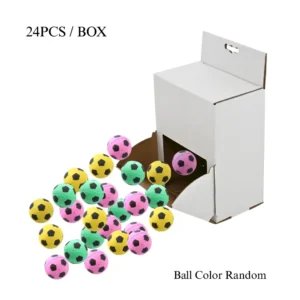 24-Pack Cat Toy Balls – Soft Latex Foam Soccer Ball Toys for Cats, Interactive Chase & Self-Play, Wholesale Pet SuppliesMSRP $8.89Login for wholesale pricing
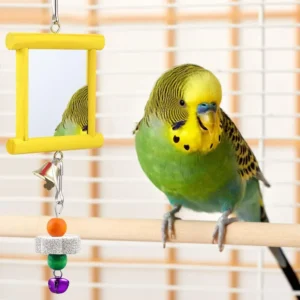 4-Pack Acrylic Parrot Toys with Mirror & Beak Grinding Accessories – Colorful Bird Cage Toys for Parrots and CockatielsMSRP $5.89Login for wholesale pricing
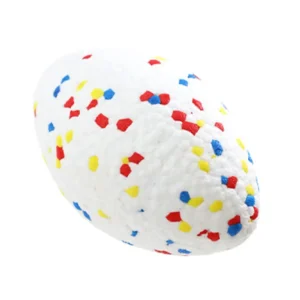 5 Inch Durable Rugby Floating Dog Ball – Chew & Fetch Water Toy for DogsMSRP $4.29Login for wholesale pricing
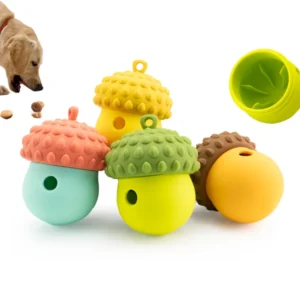 Berry-Shaped Silicone Dog Treat Dispensing Slow Feeder Toy – Durable Chew & Interactive Training Ball(MOQ 24)MSRP $3.56Login for wholesale pricing