Quality, Safety, and Compliance: Navigating Pet Product Standards (CE, REACH, FDA, CPSIA, LFGB) When Sourcing from China
For an independent pet retailer importing from China, a single non-compliant SKU is not a paperwork problem — it is a recall problem, a chargeback problem, and potentially a brand-ending problem. The good news: the global pet regulatory map is far more predictable than it looks. Every major market has a defined set of standards, each standard maps cleanly to a product category, and most reputable Chinese manufacturers already hold the certificates you need. This guide breaks down exactly which standard applies to which product type, the documentation you must collect, how to write compliance into a purchase order, and how to turn a manufacturer’s existing certifications into a competitive advantage rather than a gamble.
Why Compliance Is a Buying Decision, Not a Back-Office Task
Most retailers treat compliance as something the freight forwarder or customs broker handles at the border. That mindset is the single most expensive mistake in pet importing. Customs clearance is the last checkpoint, not the first. By the time a container is detained, you have already paid for tooling, production, ocean freight, and warehouse space — and you are now staring at demurrage fees while your goods sit in a bonded warehouse.
Compliance should be decided at the supplier qualification stage, written into the purchase order, verified by third-party testing before shipment, and archived in a compliance file per SKU. The retailers who scale import volume safely are the ones who treat standards as a spec sheet, identical in importance to color, material, and unit cost.
Consider the cost asymmetry: a pre-shipment test report from SGS or Intertek typically costs USD 150–600 per material family. A voluntary recall of a single toy line in the EU or US can run into five or six figures once you account for logistics, notification, destruction or rework, and lost sales. The test is 1–2% of the downside. There is no rational argument for skipping it.
The Four Markets and Their Regulatory Posture
Before diving into product-specific standards, anchor on the four destination markets that matter most for independent pet retailers:
- United States — FDA oversight for food contact and edible items, CPSIA for toys and children’s products (which pet toys frequently fall under by analogy), and FTC truth-in-labeling rules. State-level rules (e.g., California Prop 65) add a layer on top.
- European Union — CE marking as the gateway, REACH as the chemical backbone, and specific directives for toys (EN71) and food contact materials (EC 1935/2004).
- United Kingdom — UKCA marking post-Brexit, largely mirroring CE, plus UK REACH.
- Germany / DACH region — LFGB for food-contact items, stricter and more frequently tested than the general EU framework.
- Australia & Canada — ACCC and Health Canada oversight, generally referencing or accepting international standards (e.g., AS/NZS, CSA) and often recognizing CE/FDA equivalence for many categories.
The practical takeaway: if your manufacturer can produce valid CE, REACH, FDA, CPSIA, and LFGB documentation, you are clearing the highest bars in the world. Everything else tends to fall into place.
Standard-by-Standard: Which Rule Governs Which Product
The fastest way to internalize pet compliance is to map it by product type. Below is the working matrix we use when qualifying products for JustForPetStore curated kits.
Pet Toys → EN71, CE, CPSIA
Pet toys are the highest-litigation category in pet retail because they combine choking hazards, chemical exposure (dogs chew and salivate on them), and, in many jurisdictions, are assessed against children’s-product logic.
| Standard | Market | What it covers | Key test points |
|---|---|---|---|
| EN71-1/2/3 | EU / UK | Mechanical-physical safety, flammability, migration of heavy metals | Small parts, tensile strength, 19 heavy metals migration limits |
| CE (Toy Safety Directive 2009/48/EC) | EU | Declaration of Conformity gateway | Technical file, DoC, identified testing |
| CPSIA (16 CFR 1100+) | US | Lead limit (100 ppm), phthalates (8 banned, <0.1%) | Total lead, phthalate content, tracking labels |
For plush toys, squeakers must survive a specified pull force. For rubber and nylon chews, the heavy-metal migration and phthalate screens dominate. For rope toys, fiber integrity and dye fastness matter. The point is not to memorize every limit — it is to require a test report that names the exact standard and passes it, per material and per SKU.
This is precisely why we assemble toy-led assortments such as the Dog Toy Collection Kit and the Best-Selling Pet Toy Kit only from manufacturers whose test files already cover EN71 and CPSIA for the specific materials in the kit.
Food-Contact & Chew Items → FDA, LFGB, EU Food-Grade
Slow feeders, lick mats, bowl inserts, and edible chews sit in the highest-scrutiny zone because they contact a consumable or a pet’s mouth directly. A “chew toy” that is not a food but spends hours in a dog’s mouth is assessed for food-contact safety by most buyers and regulators.
- FDA (US, 21 CFR) — Food contact substances must be “generally recognized as safe” for their intended use. For plastics and silicones, this means conformance to FDA food-contact material rules and absence of regulated contaminants.
- LFGB (Germany, §30/31) — The strictest food-contact law in the EU bloc. It bans offensive odors/tastes and limits specific migratable substances far tighter than the baseline EU framework. German buyers and many EU distributors will ask for LFGB specifically.
- EU Food Contact Materials Regulation (EC 1935/2004) — The baseline: materials must be “safe” and not transfer constituents in quantities that endanger health.
Slow-feeding bowls are a perfect example. A ceramic or melamine slow feeder that leaches formaldehyde or melamine monomer fails EU food-grade instantly. That is why the Slow Feeding Wellness Kit is built only around FDA- and LFGB-verified bowls and mats — the compliance file ships with the product, not after the fact.
Textiles → REACH (SVHC, Phthalates, Azo Dyes)
Beds, blankets, apparel, and harness padding are cloth — and cloth is a chemical surface. The governing standard is REACH (EC 1907/2006), specifically:
- SVHC (Substances of Very High Concern) — the candidate list, currently 240+ substances. Importers into the EU must declare any SVHC above 0.1% w/w in an article.
- Azo dyes — certain aromatic amines released from azo colorants are restricted/carcinogenic. Textiles in direct skin contact are screened.
- Phthalates & formaldehyde — restricted in textile applications, especially for items a pet lies on for hours.
A common trap: a bed passes REACH at the fabric level but the printed logo ink or the zipper coating introduces a banned plasticizer. Require component-level declarations, not just a finished-good pass.
Electronics → CE, RoHS, WEEE
Clippers, nail grinders, water fountains, heated beds, and automatic feeders contain motors, boards, and batteries. These are regulated as electronics:
- CE (EMC + LVD directives) — electromagnetic compatibility and low-voltage safety. A fountain pump that emits radio interference can fail CE even if the plastic is perfect.
- RoHS (2011/65/EU) — restricts lead, mercury, cadmium, hexavalent chromium, and brominated flame retardants in electrical equipment.
- WEEE — waste electrical and electronic equipment registration; many EU countries require producer registration before you can import.
- Battery directives — lithium cells need UN38.3 transport certification and, increasingly, EU battery regulation compliance.
Grooming electronics are where many first-time importers get burned because they assume “it’s just a clipper.” The Professional Grooming Kit is sourced only from factories holding CE + RoHS + WEEE files for the exact motor and battery configuration in the box.
The Documentation Package You Must Collect
A certificate is only as useful as the file around it. For every SKU you import, build a compliance folder containing the following. Missing any one of these is a red flag.
1. Declaration of Conformity (DoC)
The manufacturer’s signed statement that the product meets the relevant directive. It must name the specific standard (e.g., “Toy Safety Directive 2009/48/EC, EN71-1/2/3”), the product/model, and the issuer. A DoC that says only “CE compliant” with no standard reference is effectively worthless.
2. Third-Party Test Reports
Issued by an accredited lab — SGS, Intertek, Bureau Veritas (BV), TÜV, or equivalent. The report must:
- Reference the exact standard and version (standards update; a 2019 EN71 pass does not cover a 2023 revision).
- Identify the sample by material, color, and SKU — not just “rubber toy.”
- Show pass/fail per parameter, not just a summary “compliant” stamp.
- Be recent — most buyers and marketplaces accept reports no older than 12–24 months for ongoing production.
3. Material Traceability
You need a bill of materials and, for critical components, a material certificate from the raw supplier. If a chew toy uses “TPE from Supplier X,” your file should trace that TPE lot to a test. This protects you when a regulator asks “where did this plastic come from?”
4. Age-Grading & Intended-Use Statement
Even pet products benefit from an age-grading and use statement (“not for puppies under 12 weeks,” “supervised chewing only”). It shifts liability appropriately and supports your CPSIA tracking-label language. For products that could be mistaken for children’s items, explicit “pet use only” labeling is essential.
5. Production Consistency Evidence
A test on the first article (golden sample) does not guarantee the 5,000th unit. Require either periodic retesting (e.g., one batch per quarter) or a factory process audit (ISO 9001 / BSCI / ICTI) that demonstrates controlled production. This is where working with a vetted partner such as a reliable China pet supply-chain partner pays for itself — their audits are already done.
Writing Compliance Into the Purchase Order
The purchase order (PO) is your legally enforceable contract. Vague POs produce vague compliance. Below is the clause structure we recommend embedding directly into every PO for China-sourced pet goods.
PO Compliance Clause Template
Compliance & Documentation Requirements. Supplier warrants that all goods conform to the following applicable standards for the destination market(s): [list: EN71 / CE / CPSIA / REACH / FDA / LFGB / RoHS / WEEE]. Supplier shall provide, prior to shipment, (a) a signed Declaration of Conformity naming the exact standard and version, (b) third-party test reports from an ISO/IEC 17025-accredited laboratory (SGS/Intertek/BV/TÜV) no older than 24 months covering each material and color in the order, and (c) a material traceability statement.
Non-Conformance Remedy. If goods fail destination-market compliance or the required documentation is not provided before shipment, Supplier bears the cost of return, rework, or destruction, plus any detention, demurrage, and recall costs incurred by Buyer. Payment is withheld until compliant documentation is received.
Indemnification. Supplier indemnifies Buyer against regulatory fines, recall costs, and third-party claims arising from non-compliant materials or misstated documentation.
Three mechanics make this clause work in practice:
- Withhold payment on docs, not just on goods. Tie a portion (e.g., 15–20%) of payment to receipt of compliant test reports. Manufacturers respond to payment leverage faster than to polite emails.
- Name the lab. Specifying accredited labs prevents “factory in-house test” substitutes that carry no weight at customs.
- Version-pin the standard. “EN71-3:2019” not “EN71.” Standards revise; your file must match the current edition enforced at import.
Pair this clause with the logistics discipline covered in our guide to importing pet products from China — logistics and costs, because compliance documents travel with the shipment and must arrive at the border ahead of or with the goods.
Special Focus: Dental & Wellness Products
Products that go in a pet’s mouth for health purposes — dental chews, enzymatic toys, joint-supplement treats — sit at the intersection of food-contact and wellness claims. Two extra requirements apply:
- Structure/function claim discipline. If you label a product “supports joint health,” you are making a claim that some markets treat as therapeutic. Keep claims substantiated and avoid disease-language (“treats arthritis”). The Dental & Joint Wellness Kit is curated so every claim on the label is defensible and every edible component is food-grade certified.
- Edible vs. non-edible boundary. A “dental chew toy” that is not food must still pass food-contact safety because of mouth contact, while an edible dental treat must additionally meet feed/food safety for the destination. Confusing the two is a frequent cause of border rejection.
Recall Risk and How to Mitigate It
Recalls in pet products usually trace to one of four root causes. Knowing them lets you design them out:
| Root cause | Typical trigger | Mitigation |
|---|---|---|
| Chemical exceedance | Phthalates, lead, azo dyes, SVHC | Component-level REACH/CPSIA testing, material traceability |
| Physical hazard | Detached small parts, sharp edges, choking | EN71-1 mechanical tests, pull/torque on attachments |
| Contamination | Pathogens or foreign material in edibles | FDA/LFGB food-contact cert + supplier hygiene audit |
| Electrical fault | Motor overheating, battery failure | CE LVD/EMC, RoHS, UN38.3 for batteries |
Mitigation is not theoretical. The control loop is: (1) qualify the factory on certs, (2) test the golden sample, (3) pre-shipment inspection on a statistically valid sample (AQL 2.5 is a common retail baseline), (4) retain a batch sample for 12–24 months in case of field complaints, and (5) keep the compliance file accessible for instant recall traceability.
Speed of response is itself a compliance asset. Retailers who can produce a full material trace and batch record within 24 hours of a complaint contain the blast radius. Those who cannot are the ones who end up in the recall bulletin.
Working With Manufacturers Who Already Hold Certs
The cheapest compliance is the compliance you did not have to commission. Many vetted Chinese pet factories already hold CE, REACH, FDA, and LFGB files for their standard materials because they export to these markets daily. Your job is to verify, not assume:
- Ask for the cert by material, not by factory. “We are CE certified” means little. “Our TPE compound batch #X has an EN71-3:2019 pass from SGS, report #Y” means everything.
- Confirm the cert covers YOUR SKU configuration. A factory may have CE for a 5V fountain but not for the 12V version you want. Match the exact model and voltage.
- Request the raw lab report, not a summary. Summary certificates can be edited; the original lab PDF with the accreditation mark cannot easily be faked and is what customs wants.
- Build a certified-material library. Over time, maintain a spreadsheet of approved materials + their cert numbers. New product? Check the library first. This turns compliance from a per-order fire drill into a reusable asset.
This is the operational core of a curated-kit model. Instead of you qualifying 40 individual SKUs, a platform like JustForPetStore pre-qualifies the manufacturer, pre-collects the certs, and ships the compliance file with the kit — so your PO to us inherits a documentation chain you would otherwise spend months building.
Compliance Checklist for Your Next Import
Before you issue the next PO, run this 10-point check:
- Destination markets identified (US / EU / UK / DE / AU / CA)?
- Product-to-standard matrix completed for every SKU?
- Manufacturer holds certs for the EXACT material and model?
- Third-party test report <24 months old and version-pinned?
- Declaration of Conformity names the specific standard?
- Material traceability statement on file?
- Age-grading / “pet use only” labeling present?
- PO compliance clause with payment-withholding leverage included?
- Pre-shipment inspection (AQL) booked?
- Compliance folder archived per SKU and retrievable in <24h?
If any box is unchecked, the order is not ready to ship. Compliance is not a tax on growth — it is the operating system that lets growth happen without blowing up the business.
Ready to stock these ideas? Browse wholesale pet KITs →
Shop these pet categories
Wholesale pricing, no minimum order.
Related wholesale collections
Products mentioned here
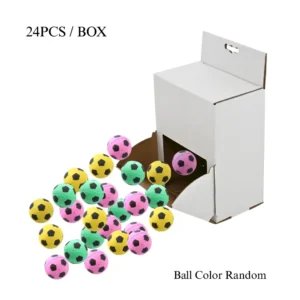 24-Pack Cat Toy Balls – Soft Latex Foam Soccer Ball Toys for Cats, Interactive Chase & Self-Play, Wholesale Pet SuppliesMSRP $8.89Login for wholesale pricing
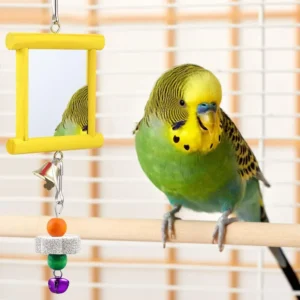 4-Pack Acrylic Parrot Toys with Mirror & Beak Grinding Accessories – Colorful Bird Cage Toys for Parrots and CockatielsMSRP $5.89Login for wholesale pricing
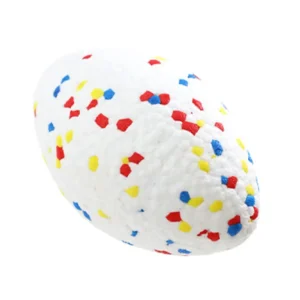 5 Inch Durable Rugby Floating Dog Ball – Chew & Fetch Water Toy for DogsMSRP $4.29Login for wholesale pricing
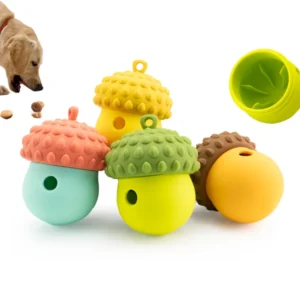 Berry-Shaped Silicone Dog Treat Dispensing Slow Feeder Toy – Durable Chew & Interactive Training Ball(MOQ 24)MSRP $3.56Login for wholesale pricing