How European and American Pet Store Owners Can Choose a Reliable Supply Chain Partner in China
For an independent pet retailer in Berlin, Manchester, or Austin, the single most consequential decision you make is rarely about which toys to stock — it is who you buy them from. A dependable China supply-chain partner protects your margins, your shelf availability, and your customers’ trust. A weak one quietly erodes all three through late shipments, inconsistent quality, and compliance gaps that can get a container seized at your port. This article gives you a concrete, repeatable framework — a seven-dimension capability matrix, three partner archetypes, a red-flag checklist, a pilot-order playbook, and a printable scorecard — so you can evaluate and select a China partner with the same rigor you apply to your own store’s inventory planning. If you are still sourcing piecemeal from marketplaces, start with our guide to scenario-based one-stop procurement from China manufacturers, then come back here to pressure-test any partner you are considering.
Why the Partner, Not the Product, Is Your Real Risk
Most first-time importers focus obsessively on unit price. Price is the easiest variable to compare and the least important to your business’s health. Consider what actually breaks a small retailer: a 6-week delay that empties your best-selling dog-lead shelf during the holiday run-up; a batch of chew toys that fails an EU REACH check and gets held at Rotterdam; a supplier that disappears after one order because their workshop was a shell operation. None of these show up in a per-unit quote.
A supply-chain partner is your operational extension in a country where you cannot easily walk the floor. The right partner absorbs complexity — consolidating dozens of factory relationships, running inspections, handling documentation, and smoothing the reorder cycle — so your store runs as if you had a buying office in Shenzhen. The wrong partner offloads that complexity onto you, disguised as a “low price.”
The framework below separates signal from noise. It is built for the realities of B2B pet wholesale: low-to-mid MOQs, mixed-category assortments, and strict destination-market compliance (EU, UK, US, AU, CA).
The Seven-Dimension Capability Matrix
Score every prospective partner across these seven dimensions on a 1–5 scale (1 = unacceptable, 3 = adequate, 5 = best-in-class). Weight them by what matters most to your store. A partner weak on compliance or financial stability should be disqualified regardless of price; a perfect price from an unstable supplier is the most expensive mistake you can make.
1. Production Capacity & Scalability
Can they handle your current order volume and grow with you? Ask for: monthly output by product category, number of production lines, in-house vs. outsourced processes, and peak-season staffing. A workshop that runs 20 people may quote beautifully for a 500-unit pilot but choke at 5,000 units — and choke precisely when you need them most, before Q4.
Practical check: request their busiest-month capacity vs. your projected 12-month volume. If your year-two forecast exceeds 60% of their stated capacity for a category, you are a hostage to their bottleneck. Look for partners with documented headcount growth and backup lines.
2. Quality Control (QC) System
Price-per-unit is meaningless if 8% of units are defective and you eat the returns. A serious partner has a written QC protocol: incoming material inspection (IQC), in-process checks (IPQC), and final random inspection (FQC/OQC) with Acceptable Quality Limit (AQL) levels stated explicitly (e.g., AQL 2.5 for major defects). They should offer third-party inspection (SGS, TÜV, Bureau Veritas) at your cost and welcome it.
Red-flag inverse: if a supplier resists naming an AQL, calls inspection “unnecessary,” or refuses third-party involvement, assume their defect rate is unknown and possibly high.
3. Compliance Certifications
This is non-negotiable for pet products entering regulated markets. Require documentation mapped to your destination:
- EU/UK: REACH (chemicals/phthalates), CE where applicable, EN 71 for toys, and GPSD (General Product Safety Directive) conformity.
- US: CPSIA, FDA registration for anything contacting food/water, ASTM F963 for toys, and Prop 65 awareness for California.
- AU: ACCC safety standards and AS/NZS toy standards.
- Universal: ISO 9001 (quality management) and, ideally, BSCI/SEDEX (social compliance) for your own ESG due diligence.
For a deep dive on the exact standards per product type, see our pet product compliance & safety standards guide for China sourcing. A partner who keeps certification libraries current and renews them on schedule is worth a premium over one who “has a PDF somewhere.”
4. Communication & English Proficiency
Miscommunication is the silent killer of import projects. A reliable partner staffs native or fluent English speakers who understand commercial terms, Incoterms, and your category. Test this early: send a detailed spec sheet and ask clarifying questions. If replies are vague, delayed beyond 24–48 hours, or riddled with misread requirements, multiply your expected coordination cost by three.
Communication quality also signals organizational maturity. A partner with a dedicated account manager (not a rotating WhatsApp contact) gives you a single point of accountability — critical when a shipment goes wrong.
5. Financial Stability
You are extending trust (and often deposits) to a foreign entity. Red flags: a company incorporated less than two years ago with no verifiable track record, refusal to provide a business license, or pressure for 100% upfront payment on a first order. Green flags: multi-year operating history, audited financials on request, trade-assurance membership (e.g., verified supplier status), and willingness to use secure escrow-style payment for pilot orders.
Tools: run a credit check via a China-focused agency, verify their export license, and search for litigation records. A partner who is financially fragile may vanish exactly when a raw-material price spike hits — leaving your reorder unfilled.
6. IP Protection
If you plan private-label or custom products, IP leakage is a real risk. A trustworthy partner signs an NNN agreement (Non-disclosure, Non-use, Non-circumvention) under Chinese law, not just an NDA. They should demonstrate controlled access to your designs and a policy against selling your custom molds to your competitors. Ask directly: “Will you sell this mold or design to other overseas buyers?” A hesitant answer is your answer.
For standardized (non-custom) goods this matters less, but the principle holds — a partner who respects IP respects your business.
7. After-Sales & Reorder Reliability
The relationship begins after delivery, not before. Evaluate: do they track batch/lot numbers for traceability recalls? What is their policy on defective units (replacement, credit, or refund)? How stable is their reorder lead time — does it swing from 15 to 45 days unpredictably? A partner with a documented reorder SLA and a standing inventory buffer for your fast movers is worth more than a cheaper one that treats every order as a brand-new negotiation.
Three Partner Archetypes: Raw Factory, Trading Company, One-Stop Partner
Not all “China suppliers” are the same. Understanding the archetype clarifies what you are actually buying.
| Dimension | Raw Factory | Trading Company | One-Stop Partner (e.g., JustForPetStore) |
|---|---|---|---|
| Product range | 1–3 narrow categories they make | Broad, but assembled from many factories | Curated multi-category KIT bundles |
| MOQ | Often high per SKU (they want full runs) | Medium; can mix, but markup added | Low, blended across the kit |
| QC ownership | Theirs only, for their items | Variable; they coordinate, not control | Centralized across all kit components |
| Compliance | You must verify per factory | Partial; depends on sub-suppliers | Unified, pre-vetted per destination |
| Communication | Factory English often weak | Dedicated sales team, decent | Dedicated English account manager |
| Logistics | You arrange everything | They arrange, add margin | Consolidated, transparent landed cost |
| Best for | High-volume single-category buyers | Buyers wanting variety, accept markup | Independent retailers wanting one relationship |
The raw factory gives you the lowest ex-works price but pushes every other dimension’s burden onto you — certifications, consolidation, logistics, and QC across suppliers if you need more than their niche. The trading company absorbs some coordination but layers margin and often lacks control over upstream quality. A one-stop partner like JustForPetStore sits at the intersection: vetted manufacturers, scenario-based KIT bundles, unified compliance, and a single accountable relationship — at a transparent price that reflects coordination value, not hidden arbitrage.
For example, a retailer building a walking category can source a complete walking essentials kit from one partner, rather than negotiating leashes from Factory A, harnesses from Factory B, and waste-bag dispensers from Factory C — three relationships, three QC regimes, three shipments. The same logic applies to a training & enrichment kit or a slow-feeding wellness kit, where components must work together as a coherent retail story.
Red Flags: What Should Disqualify a Partner
Use this checklist as a hard filter. Any single “yes” to a disqualifying item should stop the conversation.
- Refuses to provide a business license or export license. Non-negotiable.
- No verifiable address or factory (only a trading postbox). Ask for a video walkthrough or a third-party audit.
- Pressure for 100% T/T upfront on a first order. Use escrow or a deposit/balance split.
- Cannot produce current compliance certificates for your destination market.
- Quotes a price far below market with no explanation — likely a bait for mid-production “material increase” surcharges.
- Evades questions about QC and AQL or refuses third-party inspection.
- No English-speaking accountability owner; only a generic sales inbox.
- Reluctance to sign an NNN for custom/private-label work.
- Vague or shifting lead times with no written SLA.
Trust, but verify. The cost of one bad container — seized, returned, or full of defects — dwarfs any saving from a suspiciously cheap quote.
Running a Low-Risk Pilot Purchase Order
Never go from zero to a full container on a new partner. Run a pilot that tests every dimension above at small scale, where failure is survivable. Follow this sequence:
- Spec sheet first. Send a precise specification (materials, dimensions, colors, packaging, barcode requirements). Ambiguity here is your fault later.
- Request a quote with breakdown. Ex-works price, tooling (if any), packaging cost, and estimated lead time. Compare against market.
- Ask for samples. Order 2–3 paid samples. Evaluate build quality, label accuracy, and whether they match the spec. This alone reveals 70% of a partner’s competence.
- Negotiate a small MOQ pilot. Aim for the minimum that gives you sellable stock and a real production run — e.g., 100–300 units per SKU, or one curated kit at low quantity.
- Use secure payment. Deposit (30%) + balance against bill of lading, or a platform trade-assurance order. Never full upfront on a first deal.
- Pre-shipment inspection. Hire a third-party inspector (cost ~$200–$400) to check AQL before you release balance payment. This is the cheapest insurance in importing.
- Measure the whole experience. Log communication responsiveness, documentation accuracy, actual vs. promised lead time, and defect rate on arrival. Feed these into your scorecard.
- Reorder test. Place a second, slightly larger order and confirm lead time stability and consistency with the pilot batch.
A partner that performs on a pilot but degrades at reorder is the most dangerous — they optimized for the honeymoon. The reorder test catches it.
Your Printable Partner Scorecard Template
Copy this table into a spreadsheet and score each candidate 1–5. Compute a weighted total. Set a pass threshold (e.g., ≥3.5 overall, with no dimension below 2 on compliance or financial stability).
| Dimension | Weight | Score (1–5) | Weighted | Evidence / Notes |
|---|---|---|---|---|
| Production capacity & scalability | 15% | __ | __ | Capacity vs. 12-mo forecast |
| QC system (AQL, 3rd-party) | 15% | __ | __ | AQL stated? Inspection accepted? |
| Compliance certifications | 20% | __ | __ | REACH/CE/CPSIA current? |
| Communication & English | 10% | __ | __ | Response time, clarity |
| Financial stability | 15% | __ | __ | License, credit check, tenure |
| IP protection (NNN) | 10% | __ | __ | NNN signed? Mold policy? |
| After-sales & reorder | 15% | __ | __ | SLA, defect policy, buffer stock |
| Total | 100% | __ | Pass ≥ 3.5; no sub-2 on compliance/finance |
Pair this scorecard with the pilot-order workflow above. Together they convert “gut feel” into a defensible vendor decision you can show your accountant or business partner.
If you are still deciding between building your own factory network and working with a curated partner, our article on how to find China pet manufacturers for direct import lays out the direct-sourcing route and its true hidden costs — useful context before you commit.
Total Landed Cost Beats Ex-Works Price
A common error is ranking partners on ex-works price alone. Ex-works is the cost of the goods at the factory gate; it excludes everything that actually determines your store cost: international freight, insurance, destination handling, duties, brokerage, and the inland leg to your warehouse. Two partners can quote identical ex-works prices while delivering wildly different landed costs because one consolidates efficiently and pre-clears compliance, and the other ships fragmented, triggers multiple customs entries, and surprises you with chargeable discrepancies.
Always demand a landed-cost breakdown — the all-in cost per unit delivered to your door, by Incoterm (DDP removes your risk; FOB or EXW shifts it to you). A transparent partner quotes landed cost willingly and shows the math; a reluctant one is hiding margin in the gaps. This single discipline eliminates most “cheap quote” traps.
Managing the Partner Relationship for the Long Term
Selection is half the job. The other half is managing the relationship so it improves year over year rather than degrading. Treat your China partner like a department of your own company.
Quarterly Business Reviews (QBRs)
Run a 30-minute review each quarter covering: on-time-delivery rate, defect rate vs. AQL, lead-time stability, any compliance renewals due, and upcoming seasonal demand. A partner who engages seriously with a QBR is invested; one who dodges it is coasting. Use the review to plan your next two quarters of kits — for example, ramping the walking essentials kit ahead of spring and the slow-feeding wellness kit ahead of the New Year health push.
Buffer Stock and Reorder Cadence
Agree on a standing buffer for your top three SKUs/kits so a reorder never starts from zero. Define a reorder point tied to your sell-through (e.g., reorder when 30 days of cover remain) and a fixed replenishment cadence. This converts a fragile per-order negotiation into a predictable supply rhythm — the single biggest operational upgrade most small retailers make.
Escalation Paths and Accountability
Document who to call when something breaks: the account manager for commercial issues, a QC lead for defects, and a principal contact for escalations. A partner with a named escalation tree resolves problems in days; one with only a generic inbox resolves them never. Put the SLA in writing — target response within one business day, root-cause within three.
The One-Page Selection Checklist
When you are standing in a trade-show booth or reading a quote, run this compressed version of the matrix:
- Can they show a current business license, export license, and at least two years of operating history? (If no, walk away.)
- Do they hold compliance certificates mapped to your destination market, and will they renew them on schedule?
- Will they state an AQL and accept third-party pre-shipment inspection?
- Is there a fluent English account manager — a named person, not a generic inbox?
- Will they sign an NNN for any custom or private-label work?
- Can they quote a transparent landed cost, not just ex-works?
- Will they agree a reorder SLA and a buffer for your fast movers?
Seven yeses, weighted by the scorecard, is your green light to a low-risk pilot. Anything less is a reason to keep looking — because the cost of one failed container dwarfs every saving from a rushed “yes.”
Ready to stock these ideas? Browse wholesale pet KITs →
Shop these pet categories
Wholesale pricing, no minimum order.
Products mentioned here
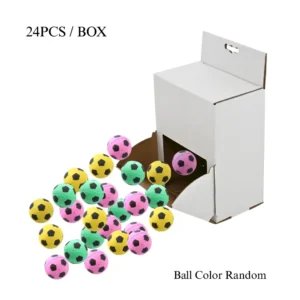 24-Pack Cat Toy Balls – Soft Latex Foam Soccer Ball Toys for Cats, Interactive Chase & Self-Play, Wholesale Pet SuppliesMSRP $8.89Login for wholesale pricing
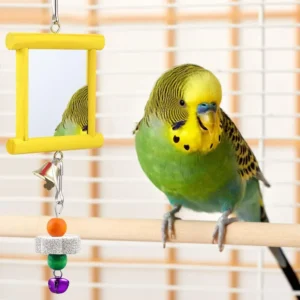 4-Pack Acrylic Parrot Toys with Mirror & Beak Grinding Accessories – Colorful Bird Cage Toys for Parrots and CockatielsMSRP $5.89Login for wholesale pricing
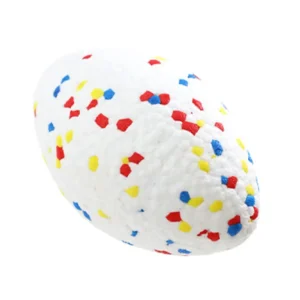 5 Inch Durable Rugby Floating Dog Ball – Chew & Fetch Water Toy for DogsMSRP $4.29Login for wholesale pricing
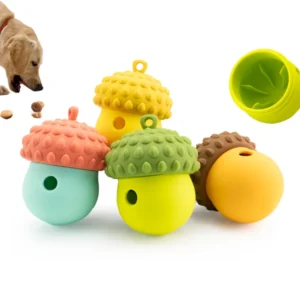 Berry-Shaped Silicone Dog Treat Dispensing Slow Feeder Toy – Durable Chew & Interactive Training Ball(MOQ 24)MSRP $3.56Login for wholesale pricing