
Importing Pet Products from China: A Practical Guide to Shipping, Customs, Duties, and Landed Cost for Pet Retailers
Once you have negotiated a workable MOQ, the next wall is logistics: how does a pallet of chew toys in Shenzhen become a box on your shelf in Ohio, Manchester, or Sydney — and what does it actually cost? For independent pet retailers, the gap between a factory’s ex-works price and the real cost of a sellable unit is where margins quietly die. This guide walks through Incoterms in plain language, sea versus air, LCL versus FCL, customs clearance and HS codes, US and EU duty realities, import VAT, last-mile delivery, and a live landed-cost formula you can reuse on every quote. We close with the pitfalls that trap first-time importers and a look at how one-stop KIT consolidation flattens the whole problem.
Incoterms Explained Simply
Incoterms are the internationally standardized rules that decide who pays for and bears risk at each handoff in a shipment. You do not need all eleven — for pet retail importing, four cover 95% of cases. The rule of thumb: the further the term pushes responsibility onto the seller, the less logistics work you do, but the higher the quoted price.
EXW — Ex Works
The factory makes the goods available at its gate. You arrange pickup, export clearance, freight, insurance, import, and delivery. EXW gives the lowest headline price but the most work and the most places to lose money if you are inexperienced. Best for buyers with a trusted freight forwarder.
FOB — Free On Board
The seller delivers goods loaded onto the vessel at the named port (e.g., FOB Ningbo). The seller handles export clearance and origin costs; you own ocean freight, insurance, and everything after. This is the most common, most transparent term for pet retailers and the one we recommend learning first.
CIF — Cost, Insurance, and Freight
The seller pays ocean freight and insurance to your destination port. You still handle import clearance, duties, and delivery. Convenient, but the seller often books the cheapest freight, so you trade control for simplicity.
DDP — Delivered Duty Paid
The seller handles everything including duties and delivery to your door. Highest price, lowest effort, and the safest for beginners — but you sacrifice visibility into the true freight and duty cost, which hurts your landed-cost math. For a turnkey option, many retailers start with a consolidated Pet Store Starter Essentials Kit shipped under a managed term.
Sea vs Air, and LCL vs FCL
Two independent decisions shape your freight cost: the mode (sea or air) and the container strategy (LCL or FCL).
Sea or Air?
Sea freight is dramatically cheaper per kilo but slow — typical trans-Pacific transit is 18–35 days plus clearance; to the EU similar; to Australia longer. Air is 3–7 days but often 4–8× the cost per kg. Rule of thumb for pet retail: use sea for replenishment and seasonal stock; use air only for urgent, high-value, lightweight items (premium collars, small electronics-like grooming tools) where stockout cost exceeds the freight premium. Bulky, low-value items like beds and bulk toys almost never justify air.
LCL vs FCL
LCL (Less than Container Load) means your goods share a container with other importers’. You pay per cubic meter or per ton, whichever is greater, plus consolidation fees. LCL is the natural choice for a first order or a small retailer — a few cubic meters of a Walking Essentials Kit fits easily. FCL (Full Container Load) — typically 20ft (~28 CBM) or 40ft (~58–68 CBM) — is cheaper per unit once you fill it, but you bear the whole container’s cost and the risk of under-filling. The crossover is usually around 15+ CBM: below that, LCL; above that, get quotes for both.
Customs Clearance and HS Codes
Every product crossing a border needs a harmonized tariff code — the HS (Harmonized System) code — that determines the duty rate. Misclassification is the single most common (and most penalized) error in pet-product importing.
Common HS Codes for Pet Products
| Product type | Typical HS heading | Notes |
|---|---|---|
| Pet toys (rubber/plastic) | 9503.00 | Toys; verify material subheading |
| Pet toys (textile/plush) | 9503.00 | May be classed as toy, not textile |
| Collars, leashes, harnesses | 4201.00 | Animal equipment, not apparel |
| Pet feeding bowls (plastic) | 3924.10 | Plastics tableware category |
| Pet feeding bowls (ceramic) | 6911 / 6912 | Ceramic tableware |
| Pet beds (textile stuffed) | 9404.90 | Often classed as bedding |
| Grooming brushes/combs | 9615.90 | Toilet/ grooming articles |
| Pet apparel | 4201.00 or 6100/6200 | Depends on construction |
Always confirm the code with your customs broker, not the factory. The factory wants the shipment to move and may default to the lowest-rate plausible code; that is your liability, not theirs. A broker’s opinion is worth the small fee.
US HTS, EU TARIC, and Import VAT
Duty is calculated on the customs value (usually FOB or CIF value, depending on the country), not on your retail price.
United States (HTS)
The US uses the Harmonized Tariff Schedule (HTS). Many pet toys and accessories land at 0% or low rates (often 0–4.5%), but rates vary and Section 301 tariffs have, at times, added surcharges to Chinese-origin goods across broad categories. Treat any “China-specific” surcharge as a live variable you must price in — check the current HTS subheading and any applicable additional duties before quoting to your customers. There is no federal import VAT in the US; you pay state sales tax only on the retail sale, not at the border.
European Union (TARIC)
The EU uses TARIC. Pet products commonly face low Most-Favored-Nation rates, but again, China-specific trade measures can apply. Critically, the EU charges import VAT at the border — typically 19–21% depending on member state — calculated on (customs value + freight to port + duty). This VAT is usually recoverable if you are a VAT-registered business, but it is cash you must advance. Budget for it as working capital, not as a permanent cost.
UK, Canada, Australia
The UK applies its own tariff schedule plus 20% import VAT. Canada uses the HS-based schedule with GST/HST applied at import. Australia applies duties plus a 10% GST on the landed value. Each recovers differently for registered businesses, so coordinate with a local accountant.
The Live Landed-Cost Formula (with a Worked Example)
This is the equation that protects your margin. Compute it on every quote before you commit a cent:
Landed Unit Cost =
[ (Ex-Works Unit Price)
+ (Ocean/Air Freight per Unit)
+ (Insurance per Unit)
+ (Customs Duty per Unit)
+ (Import VAT per Unit, if non-recoverable)
+ (Drayage / Port Handling per Unit)
+ (Last-Mile Delivery per Unit) ]
÷ (1 − expected defect/damage allowance)
Worked Example: A Container of Slow-Feeder Bowls
Assume you import 5,000 plastic slow-feeder bowls (HS 3924.10) under FOB Ningbo:
- Ex-works unit price: US$1.20 → FOB adds US$0.10 handling = US$1.30 FOB/unit
- Ocean freight (LCL, allocated): US$0.25/unit
- Insurance: US$0.02/unit
- Customs duty (assume 3% on FOB value US$1.30): US$0.039/unit
- Import VAT (assume 20% on US$1.30 + US$0.25 + duty; recoverable, treat as US$0.00 if registered): US$0.00/unit (or ~US$0.32 if non-recoverable)
- Drayage / port handling: US$0.06/unit
- Last-mile delivery to your warehouse: US$0.08/unit
- Defect allowance 2%: divide by 0.98
Recoverable-VAT scenario: (1.30 + 0.25 + 0.02 + 0.039 + 0.06 + 0.08) = US$1.749 ÷ 0.98 = US$1.78 landed unit cost. Compare that to your planned retail and category margin before ordering.
Non-recoverable-VAT scenario: add the ~US$0.32 VAT → US$2.069 ÷ 0.98 = US$2.11 landed unit cost. The VAT alone moved the number by 19%. This is exactly why importers must know their VAT recovery status cold.
Common Pitfalls That Trap First-Time Importers
Demurrage and Detention
Demurrage is the charge for containers sitting in the port past free time; detention is for containers you hold past the return deadline. Both accrue daily and can erase a shipment’s profit. Mitigation: pre-book inland transport, clear customs early, and never let your warehouse receiving date slip without telling the forwarder.
Misclassification
Using the wrong HS code — often because the factory “helped” — invites penalties, shipment holds, and back-duty assessments. Always have your broker confirm. See Pet Product Compliance & Safety Standards for China Sourcing for the compliance side of this risk.
Under-Declaration
Deliberately lowering the declared value to dodge duty is illegal, exposes you to fines and seizure, and voids insurance. Declare the true transaction value. The correct lever is legal duty optimization (correct classification, legitimate trade programs), not fraud.
Ignoring the Consolidation Advantage
Shipping many small parcels or multiple LCL shipments separately multiplies handling, clearance, and last-mile fees. Consolidating into one shipment — especially a curated KIT — collapses those fixed costs. A single consolidated Outdoor Adventure Kit arriving as one cleared shipment beats five separate vendor drops every time on total cost.
Why One-Stop Consolidation Cuts Cost
The deepest logistics saving for small retailers is structural: instead of managing five suppliers, five pickups, five customs entries, and five last-mile runs, a one-stop partner consolidates everything into a single coordinated shipment. You pay one consolidation fee, clear one customs entry, and receive one delivery. The fixed costs that kill small orders — entry fees, broker minimums, drayage minimums — are amortized across the whole bundle. This is the logistical twin of the MOQ argument in our MOQ negotiation guide, and together they explain why curated KITs beat piecemeal importing on both fronts. The margin math behind this is laid out in The Economics of Curated Pet Store Kits.
Choosing and Briefing a Freight Forwarder
Your freight forwarder is the single most influential partner in your import chain after the factory. A good one saves more than they cost; a bad one creates the demurrage and misclassification disasters above.
What a Forwarder Actually Does
They book space with the carrier, prepare the bill of lading or air waybill, arrange origin pickup, coordinate export clearance, file arrival paperwork, and hand off to your customs broker and inland carrier. For LCL, they also manage the consolidation warehouse where your goods join others in the container.
How to Brief Them Properly
Send the commercial invoice, packing list, HS codes (broker-confirmed), Incoterm, and desired destination. Tell them the commodity, weight, and volume precisely — underestimating volume is the classic error that triggers re-quotes and delays at the port. Ask for an all-in quote that separates ocean/air freight, documentation fees, and destination charges so you can drop those numbers straight into your landed-cost formula.
Red Flags When Selecting
Avoid forwarders who will not itemize charges, who push you toward a term (like CIF) that hides the freight, or who cannot name a licensed broker for your destination country. The cheapest headline quote is often the one with the most surprise fees at delivery.
The Import Documentation Checklist
Missing or sloppy paperwork is the most avoidable cause of a held shipment. Keep this checklist for every order:
- Commercial Invoice — true transaction value, buyer/seller, Incoterm, HS per line.
- Packing List — carton count, dimensions, gross/net weight, per-SKU quantities.
- Bill of Lading / Air Waybill — the contract of carriage; confirm it matches the invoice exactly.
- Certificate of Origin — may affect duty rates; some programs require it.
- Test Reports / Compliance Docs — especially for toys and anything with chemicals; link to safety and compliance standards.
- Import License (if required) — category-dependent by country.
File these before the vessel sails, not after it arrives. A broker working from complete docs clears cargo in hours; one chasing missing papers costs you demurrage by the day.
Lead Times and Planning Your Calendar
Logistics is a scheduling problem as much as a cost problem. Build your calendar backward from the sell date.
The Standard Timeline
Typical sequence: quotation and sample (5–10 days) → deposit and production (15–35 days by product) → origin consolidation and export (3–7 days) → ocean transit (18–35 days) → destination clearance and drayage (3–10 days) → last mile to warehouse (1–3 days). Total door-to-door often runs 45–90 days by sea. Air compresses transit to roughly 10–20 days end-to-end but at the freight premium described earlier.
Plan for Seasons, Not Just Shelves
Pet retail peaks around holidays and spring/summer outdoor seasons. Because ocean lead times are long, place seasonal orders (e.g., a Holiday Celebration Kit or Outdoor Adventure Kit) at least one full transit cycle before the sell window. The off-season production-slot tactic from our MOQ guide pairs perfectly here: order off-season, ship early, and arrive before the rush without paying air-freight rates.
Defects, Returns, and Reverse Logistics
A landed-cost formula that ignores defects is optimistic. Build quality reality into your plan from the start rather than after a bad container arrives.
Build a Defect Allowance Into the Math
The 2% defect allowance in our worked example is a floor, not a ceiling — for soft goods and complex assemblies, 3–5% is realistic on a first order. Negotiate a clear quality standard (AQL level) into the contract and photograph the pre-shipment inspection. The allowance in your formula converts “a few bad units” from a surprise into a budgeted cost.
Who Pays for a Bad Shipment?
Under EXW/FOB, risk transfers to you at the port of loading, so in-transit damage is your insurance claim, not the factory’s problem — another reason to buy cargo insurance on every sea shipment. For quality defects visible before shipment, a pre-shipment inspection (often arranged via a third-party QC service for a few hundred dollars) is the cheapest insurance you will ever buy. Catching 8% defective plush at the factory costs a rework fee; catching it after it reaches your shelf costs a refund, a review, and a customer.
Reverse Logistics Is Rarely Worth It
Physically returning defective goods to China almost never makes economic sense — freight both ways exceeds the goods’ value. The standard practice is to negotiate a credit note or replacement allocation on the next order, or a partial refund, and dispose of/ donate the defective units locally per your country’s rules. Price this into your margin model so a 3% defect rate is a known line item, not a crisis.
Which Incoterm should a first-time pet retailer choose?
For learning the process, FOB is the sweet spot: the seller handles origin and export, you control the ocean freight and import, and you gain visibility into real costs. Once confident, DDP is the lowest-effort option (seller handles everything including duty), ideal when you prioritize simplicity over cost transparency. Avoid EXW until you have a reliable freight forwarder, since you own every leg from the factory gate.
Sea or air — how do I decide for pet products?
Use sea for the bulk of your assortment (toys, beds, bowls, leads) where weight and volume are high and speed is not urgent; reserve air for urgent, high-value, lightweight items where a stockout costs more than the freight premium. A practical test: if air freight exceeds 25–30% of the product’s landed cost, sea is almost always correct.
What is the difference between LCL and FCL, and when do I switch?
LCL (Less than Container Load) shares a container and charges per volume/weight plus fees — right for small orders. FCL (Full Container Load) is cheaper per unit once you fill roughly 15+ cubic meters. Get quotes for both around that threshold; below it, LCL usually wins, above it, FCL typically does.
How do I avoid HS code mistakes that trigger penalties?
Never rely solely on the factory’s suggested code. Engage a licensed customs broker to confirm the correct HS heading for each product type (toys 9503, collars/leashes 4201, plastic bowls 3924.10, etc.) before shipping. Correct classification is your legal responsibility, and a broker’s fee is negligible against the cost of a hold, penalty, or back-duty assessment.
Is import VAT a permanent cost or can I recover it?
In the EU, UK, Canada, and Australia, import VAT/GST is generally recoverable for VAT- or GST-registered businesses, meaning it is working capital you advance and later reclaim — not a permanent loss. In the US there is no federal import VAT. Always confirm your registration status with a local accountant, because if you cannot recover it, your landed cost rises materially (as the worked example shows, by roughly 19% on that shipment).
What is the single most useful formula for protecting my margin?
The landed-cost formula: ex-works + freight + insurance + duty + (non-recoverable VAT) + drayage + last-mile, divided by (1 − defect allowance). Run it on every quote before ordering. It converts a seductive factory price into the real per-unit cost you must beat with your retail price, and it exposes hidden killers like non-recoverable VAT and demurrage risk.
How does KIT consolidation actually lower my shipping cost?
Consolidation collapses the fixed costs of importing — separate customs entries, broker minimums, drayage minimums, and last-mile runs — into one coordinated shipment. Instead of five small vendor drops each carrying their own fixed fees, a single curated Kit arrives as one cleared delivery, spreading those fixed costs across the whole bundle. This is the logistical complement to the MOQ relief described in our negotiation guide.
Ready to stock these ideas? Browse wholesale pet KITs →
Shop these pet categories
Wholesale pricing, no minimum order.
Related wholesale collections
Products mentioned here
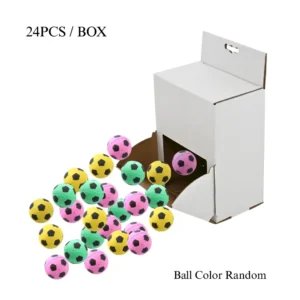 24-Pack Cat Toy Balls – Soft Latex Foam Soccer Ball Toys for Cats, Interactive Chase & Self-Play, Wholesale Pet SuppliesMSRP $8.89Login for wholesale pricing
 4-Pack Acrylic Parrot Toys with Mirror & Beak Grinding Accessories – Colorful Bird Cage Toys for Parrots and CockatielsMSRP $5.89Login for wholesale pricing
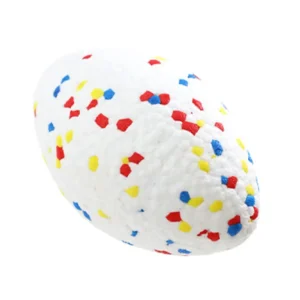 5 Inch Durable Rugby Floating Dog Ball – Chew & Fetch Water Toy for DogsMSRP $4.29Login for wholesale pricing
 Berry-Shaped Silicone Dog Treat Dispensing Slow Feeder Toy – Durable Chew & Interactive Training Ball(MOQ 24)MSRP $3.56Login for wholesale pricing