

Aquarium Breeding Accessories Dropshipping: The Fry-First Shelf
GlobalPetIndex now counts 113,447 pet businesses across 156 countries and 16 regions — 26,468 manufacturers and 3,941 brands selling against 4,734 retailers, with 1,587 pet food manufacturers, 1,452 dog-product manufacturers and 1,175 cat-product manufacturers behind them. Its market intelligence board still reads USD 1.4B a month of US pet category sales in the twelve months to 11 August 2026, up 32.6% year on year, with Amazon third-party pet brands up 108% and more than 54M pet units a year moving on that platform (Source: GlobalPetIndex). At 5.6 suppliers for every retailer, nobody is short of product. What is short is somebody who can answer a question.
Walk the aquatics wall of an average independent store and count the SKUs that need a conversation before purchase. Heaters, filters, conditioners and air pumps all sell on a spec sheet. Breeding does not. A customer who wants to spawn Corydoras is not comparing prices; she is asking whether a hang-on box will hold fry that graze on biofilm, whether a sponge filter will pull fry into the intake, and how long a catappa leaf takes to tint 40 litres of water. That is the gap where aquarium breeding accessories dropshipping earns a place in an independent store: the shelf is small, the questions are specific, and the marketplace listing cannot answer any of them.
What 26,468 manufacturers against 4,734 retailers changes on this shelf
Three readings for your open-to-buy:
- Supply is deep, so the leverage is in specification. A breeder box is a moulded acrylic box with a lid and a lip; dozens of factories can quote one by Friday. Spend that leverage on wall thickness and lid fit, not on cents.
- 3,941 brands is a labelling problem. Most buy the same three hatchery cones and the same sponge block. The shopper cannot tell which one leaks at the seam, and neither can you until you fill one.
- +108% third-party brand growth is a price floor falling. Anything describable in four words gets undercut in a week. Anything that needs a species name or a hatch rate does not.
Why aquarium breeding accessories dropshipping survives the price floor
The instinct is to treat aquatics as a hardware category, which is why the wall is a row of boxes with cords. Breeding is the opposite: almost everything on it is cord-free, light and consumable. That combination is rare here, and it is the whole argument.
- No cord, no certification queue. A heater drags you into UL/ETL, LVD, EMC and IP ratings. A breeder box, a sponge filter and a spawning mop drag you into none of it; the load drops to labelling and materials.
- The consumable is the product. Catappa leaves, fry food and sponge media are re-bought every four to ten weeks by anyone actively breeding. The box is bought once; the leaf is bought forever.
- The buyer is the highest-information customer in the store. Breeders run four to twelve tanks, brief every new hobbyist who walks in, and will drive 30 minutes for a store that stocks what they need.
- Nobody in the mass channel wants the SKU. A 20-leaf pack at $7.99 has no shelf position in a 40,000 sq ft store. It has one on your wall, next to the test strips.
One boundary: this is a shelf for equipment and consumables, not livestock. Do not dropship live fish, shrimp or snails — banned-species lists and live-arrival guarantees turn a $12 order into a liability.
The breeder basket: five purchases, one customer
A breeding customer does not buy one item; she buys a sequence, and the sequence is predictable:
- Conditioning — catappa leaves, spawning mops, a conditioning food. The trigger purchase, made before any fry exist.
- Spawning — a hang-on breeder box plus a lid, because fry climb.
- Hatching — a brine shrimp cone, air line, a valve and salt. Where the repeat cycle starts.
- Rearing — fry food in three particle sizes, a sponge filter so fry are not sucked into a power filter, a specimen container for counting.
- Growing out — a second sponge filter, more leaves, then the cycle restarts with the next species.
A $7.99 leaf pack is the ticket to a $90 basket that repeats. Stores that stock only step two sell one box and lose the annuity.
Margin math per peg
Gross margin percentage flatters a shelf with small tickets. What decides peg space is GMROI — annual gross profit over average stock at cost, or GM% ÷ (1 − GM%) × turns. Six SKUs, same retail either way, carton turns 2.6, mixed-carton dropship 6.0, dropship cost 10% higher:
| Product | Carton qty | Unit cost (carton) | Unit cost (dropship) | Retail | GM% (dropship) | GMROI (carton) | GMROI (dropship) |
|---|---|---|---|---|---|---|---|
| Hang-on acrylic breeder box, large | 12 | $3.20 | $3.52 | $14.99 | 77% | 9.58 | 19.55 |
| Air-driven sponge filter, 3-pack | 24 | $2.40 | $2.64 | $11.99 | 78% | 10.39 | 21.25 |
| Brine shrimp hatchery kit, cone + stand | 12 | $5.10 | $5.61 | $24.99 | 78% | 10.14 | 20.73 |
| Catappa leaves, 20-pack | 40 | $1.30 | $1.43 | $7.99 | 82% | 13.38 | 27.52 |
| Spawning mop, pair | 30 | $1.10 | $1.21 | $6.49 | 81% | 12.74 | 26.18 |
| Fry food, 50 g | 36 | $2.10 | $2.31 | $9.99 | 77% | 9.77 | 19.95 |
Three conclusions. The dropship premium costs about two points of gross margin, and two and a half extra turns erase it. The leaf pack is the best peg in the store: 82% margin, cheapest to test, fastest to repeat. The hatchery kit carries the only real support burden, because a kit that does not hatch is a refund and a review, not a reorder.
Box, leaf pack and fry food together are a USD 33 sale at 78% blended margin, off three pegs under 30 cm of wall.
The freight test: cube beats weight
One ratio decides what enters a dropship feed: volumetric weight ÷ actual weight, at the 1:5,000 divisor most parcel carriers use (1 m³ = 200 kg).
- Fry food, 50 g jar: 0.0006 m³, 0.11 kg, 0.12 kg — 1.1. Built for parcel.
- Sponge filter, 3-pack: 0.0018 m³, 0.22 kg, 0.36 kg — 1.6. Fine.
- Breeder box, large: 0.0026 m³, 0.30 kg, 0.52 kg — 1.7. Fine, but a 12-pack carton is not: ship it on a pallet.
- Hatchery kit: 0.0035 m³, 0.40 kg, 0.70 kg — 1.8. Fine.
- Catappa leaves, 20-pack: 0.0009 m³, 0.09 kg, 0.18 kg — 2.0. Borderline; best inside a mixed carton.
- Spawning mop, pair: 0.0012 m³, 0.06 kg, 0.24 kg — 4.0. Yarn is air. Never alone.
- 20 L glass tank: 0.05 m³, 6 kg, 10 kg — 1.7 plus breakage. Never.
So the feed carries jars, boxes, cones and filters; mops and leaf packs ride inside a mixed carton. The tank stays local stock.
Import compliance checklist, US and EU
Confirm each line in writing before the deposit:
- HTS in writing. Plastic boxes, containers and cones usually land in 3926.90; air-driven sponge filters in 8421.21; dried catappa leaves in 1404.90; brine shrimp cysts in 0511.99; fry food in 2309.90. A kit shipped with cysts and salt can be reclassified as a set — confirm the ten-digit line with your broker, not the factory.
- Dried botanicals are plant material. Leaves must arrive free of soil, live insects and viable seed; expect a Lacey Act declaration and, on larger consignments, APHIS PPQ scrutiny. Ask for the species (Terminalia catappa) on the invoice, not “almond leaves”.
- Fry food is animal feed. That means a guaranteed analysis panel and, in a number of US states, feed registration before you can sell it. A 50 g jar with a blank label is a stop-sale.
- No drug claims. “Cures ich” or “treats fin rot” makes a product an unapproved animal drug in the US and a veterinary medicine in the EU under Regulation 2019/6. Sell botanicals as water chemistry, not medicine.
- Cysts are a live product in a dormant shell. Specify hatch rate (≥80% at 24 hours, 25 °C, 25 ppt) and packing humidity; cysts that spent a month in a hot container hatch at 40% and generate the returns.
- Plastics and Prop 65. Two recurring findings here: DEHP in soft PVC air line and lead in brass gang valves. Ask for a material declaration per part, not for the finished kit.
- EU: GPSR 2023/988. Since 13 December 2024 an EU-established responsible operator must be named on the product or listing, with traceability to the manufacturer. A drop-shipped parcel with no EU address is a compliance failure, not a paperwork gap.
- Origin marking and drop test. 19 CFR 134 requires origin marking on the retail carton, not just the master. Every carton should survive a 1.2 m drop; acrylic cracks at the lip, where the lid clips.
How to start at 150 units, not a pallet
- Build the carton around the leaf pack. Sixty leaf packs, thirty-six fry food jars, twenty-four sponge filters, twelve breeder boxes, twelve hatchery kits, six mop pairs.
- Specify the boring numbers. Acrylic wall 2.5 mm minimum, a lid lip that clicks, 20 ppi sponge, 1 L cone, 4/6 mm air line, 12 g leaf pack. A supplier who cannot quote a wall thickness is reselling, not moulding.
- Fill and float every breeder box. Water-test the seam and lid clip before it reaches the wall. It is the highest-return failure on this shelf and costs an afternoon.
- Hatch one cone from every dozen. Salt, water, air, 24 hours. Under 80% and the batch is suspect — the failure is nearly always storage heat, not the strain.
- Reorder by breeding season, not by SKU. Corydoras and livebearer demand peaks in late winter; cichlid and betta spawning runs through spring. One reorder point hides both curves.
This week’s action list
- Put a handwritten species card next to the leaf packs. Sell the outcome, not the leaf.
- Bundle leaf pack, sponge filter and fry food at $29.99 instead of three singles at $29.97. Same money, one decision.
- Move breeding stock forward to January–April. It is the only seasonal curve on this wall.
- Ask two suppliers for FOB and DDP on 150 mixed units of aquarium breeding accessories. The gap sits in the breeder box carton, not the leaf price.
- Delete any listing that promises to cure a disease. It is the fastest way to lose the whole shelf.
FAQ
Can I dropship live fish or shrimp alongside the breeding shelf?
No. Live animals bring banned-species lists, carrier live-animal rules and a 24-hour arrival guarantee into a $12 order. Keep livestock local and equipment in the parcel feed.
What is a realistic minimum order for a private-label catappa leaf pack?
Five hundred to one thousand retail packs. Leaves are a grading and bagging operation rather than a moulding one, so tooling is near zero and the MOQ follows labour batches. Expect $0.45–0.60 per 20-leaf pack at 1,000 units, header card included.
Are brine shrimp cysts restricted at import?
They are a dried animal product, not a live animal, and most consignments clear on a plain tariff line — but confirm the ten-digit code and any APHIS requirement with your broker first. The commercial risk is not the border; it is hatch rate after a hot month in a container.
Do I need a licence to sell fry food in the US?
It is animal feed, so several states require product registration and a guaranteed analysis before sale. Start with a supplier that already holds state registrations and prints a compliant panel; retrofitting a blank jar costs more than the margin on the first order.
The dropship application covers the equipment half of this wall, wholesale inquiry prices it at unit level, and wholesale kits bundle a starter range without a container. Behind it, 26,468 manufacturers indexed on GlobalPetIndex — with leaderboards on the rankings hub — is why a 150-unit carton is negotiable at all. Sourcing windows are close: Saudi Pet & Vet on 9 November, CIPS on 12 November, London Vet Show on 19 November.
This article’s industry signals are cited from GlobalPetIndex public industry data, for procurement decision reference only; specific compliance is subject to the latest regulations of the destination country.
Ready to stock these ideas? Browse wholesale pet KITs →
Shop these pet categories
Wholesale pricing, no minimum order.
Related wholesale collections
Products mentioned here
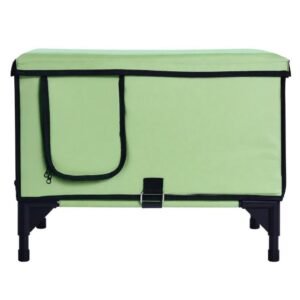 Elevated Heated Outdoor Cat House with 30W Waterproof Heating PadMSRP $128.99Apply for wholesale pricing
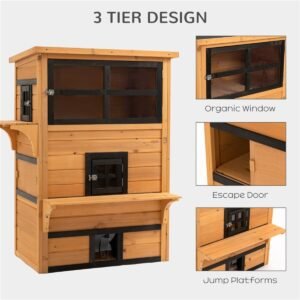 Three-Tier Outdoor Cat Condo with Asphalt Roof and Five Access DoorsMSRP $284.99Apply for wholesale pricing
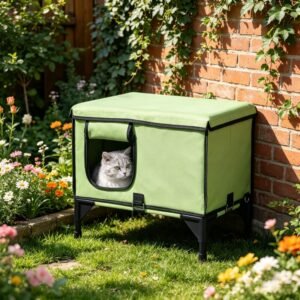 Large Elevated Heated Cat House with Waterproof Pad and Insulated LiningMSRP $124.99Apply for wholesale pricing
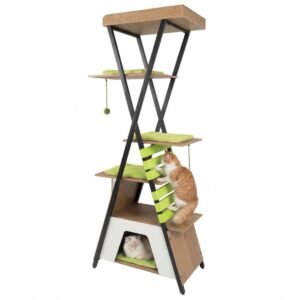 73″ Multi-Level Cat Tree with Condo, Top Perch and Scratching PadMSRP $228.99Apply for wholesale pricing
Stock it as a wholesale KIT
Pre-bundled assortments built from this guide’s categories — one PO, one shipment, wholesale pricing.