

Aquarium Water Conditioners Dropshipping: The Repeat Bottle
GlobalPetIndex indexes 113,311 pet businesses in 156 countries, and the number on its market intelligence board that matters to an aquatics shelf is this: US pet category sales are running at USD 1.4B a month over the twelve months to 11 August 2026, up 32.6% year on year, with Amazon third-party pet brands growing 108% and more than 54M units shipped (Source: GlobalPetIndex). Growth of that size in a mature category does not come from buying more tanks, which turn over every three to five years; it comes from consumables. The aquarium aisle is the clearest case in the store: the tank is bought once, the bottle every four to eight weeks.
That is the argument for aquarium water conditioners dropshipping rather than chasing hardware. A 250 ml dechlorinator costs you about USD 2.80, retails at USD 8.99, and comes back on a clock you can predict from the customer’s tank volume. It is also the one aquatics category where a person behind a counter still beats a search result, because dosing depends on the water coming out of that customer’s tap.
What the growth number says about consumables
Four readings, four consequences:
- 32.6% is category growth, not store growth. The GPI figure covers all seller types, online included. A store whose aquatics sales grew 4% did not hold its ground; it lost share to a channel growing eight times faster.
- Third-party brands at +108% means generics arrive faster than brands. Amazon shipped over 54M pet units in the period. Every unremarkable bottle on your shelf will be price-checked in the aisle within a week of being listed.
- Supply is not the constraint; shelf is. GPI indexes 26,351 manufacturers across 156 countries. There is no shortage of factories that will fill a bottle for you. There is a shortage of stores willing to explain how to dose it.
- Premium lines are hunting for export shelf space. H&H’s pet supplements did RMB 1.19B (USD 177.9M) in the first nine months of FY2026, up 3.5% reported and 8.1% like-for-like, while its mainland China pet revenue fell 36.3% (GPI). More brands will knock on your door this winter; take the ones with a repeat clock, not the ones with a launch discount.
The shelf that survives the next two years has a reorder interval on every facing, not a story.
Why aquarium water conditioners dropshipping beats selling tanks
A 40 litre glass tank is USD 120–250 at retail, 15–22% margin, heavy, fragile, and replaced roughly every three to five years. A 250 ml conditioner is USD 8.99, 65–70% margin, 300 grams, and replaced every four to eight weeks by exactly the same customer. One of those two products is inventory; the other is an annuity, and that asymmetry is the whole trade behind aquarium water conditioners dropshipping.
Four structural reasons the bottle wins the slot:
- Freight and handling favour local stock, not marketplaces. Many liquid formulations carry a UN number and ship as limited quantity or regulated goods. That is a real barrier for a cross-border dropship parcel and almost none for a domestic carton. Ask for the SDS and UN number before you assume a supplier can ship it at all.
- Dosing is local. Chlorine versus chloramine, GH and KH, tank volume, stocking density, whether the customer does 10% or 50% water changes. A product page cannot ask any of that; a two-minute conversation can, and it converts at a rate no listing matches.
- It attaches to the tank sale. A new tank buyer needs dechlorinator, a bacteria starter and test strips on day one. That is a USD 35–45 basket hanging off a USD 150 sale, and it is the difference between a hardware sale and a customer.
- The failure mode is a conversation, not a return. Cloudy water, a stalled cycle, a spike after overfeeding — the customer comes back to the store that sold the bottle. That visit is the cheapest traffic you will ever get.
It is also the simplest line to test without inventory: three sizes, one concentrate, one test strip. Start through the dropship application if you want to try it order by order, or take a mixed carton from the top wholesale products list if you would rather hold stock and control the shelf.
The margin math per shelf slot
Gross margin percentage hides the difference between a bottle that sells twelve times a year and one that sells twice. Gross margin return on inventory investment (GMROI) is annual gross profit divided by average stock at cost, which equals GM% ÷ (1 − GM%) × annual turns. Six representative SKUs at the same retail, carton turns at 2.6 and mixed-carton dropship turns at 7.0, dropship unit cost 10% above carton cost:
| Product | Carton qty | Unit cost (carton) | Unit cost (dropship) | Retail | GM% (dropship) | GMROI (carton) | GMROI (dropship) |
|---|---|---|---|---|---|---|---|
| Dechlorinator, 250 ml | 24 | $2.55 | $2.81 | $8.99 | 69% | 6.57 | 15.43 |
| Dechlorinator, 500 ml | 12 | $3.95 | $4.35 | $13.99 | 69% | 6.61 | 15.54 |
| Bacteria starter, 250 ml | 12 | $4.20 | $4.62 | $14.99 | 69% | 6.68 | 15.71 |
| Ammonia neutraliser, 250 ml | 12 | $4.45 | $4.90 | $15.99 | 69% | 6.74 | 15.87 |
| pH buffer, 250 ml | 12 | $3.60 | $3.96 | $12.99 | 70% | 6.78 | 15.96 |
| 6-in-1 test strips, 25 ct | 24 | $3.10 | $3.41 | $11.99 | 72% | 7.46 | 17.61 |
Two readings. First, a 10% cost premium costs roughly three points of margin on a bottle that already carries 65%, and the extra turns pay for it several times over — which is why a mixed carton of 12 is a better first order than a case of 48. Second, the test strips are the quiet winner: 61% margin, the fastest repeat on the table, and the product that makes the customer trust your dosing advice.
Watch the trap: a 500 ml dechlorinator looks like the better value per litre and is the worst slot for a small store. It turns at half the rate of the 250 ml, ties up twice the cash, and the customer with a 20 litre tank does not need it.
Import and label compliance, EU and US
Liquids are the one pet category where the label is the regulated object. Confirm each line in writing before the deposit, and keep the paperwork per SKU:
- HTS classification in writing. A dechlorinator usually lands in 3824.99 as a chemical preparation; the moment the label claims disinfection it moves toward 3808, which changes both duty and Section 301 exposure. Classification follows the claim, so write the claim first and classify second.
- Transport status. Get the UN number and SDS for every formulation. Limited-quantity ground shipping is workable; a Class 8 or 9 entry means no air freight and a much shorter list of suppliers who can serve you.
- EU CLP labelling. Hazard pictograms, signal word, hazard and precautionary statements, and — for the hazard categories that require them — child-resistant fastenings and tactile warning triangles. The label must be in the language of the member state you sell into.
- PPPA, 16 CFR 1700 (US). Child-resistant packaging obligations follow the toxicity category of the substance, not the product type. If your formulation sits in a covered category, the closure is a compliance item, not a packaging preference.
- The animal drug line. “Cures ich”, “treats fin rot”, “stops fungus” makes the product an animal drug, and unapproved animal drugs are not yours to sell. Conditioners may claim to neutralise chlorine and chloramine, support the nitrogen cycle, or protect slime coat; they may not claim to treat disease.
- No pesticidal claims. “Kills bacteria” pulls a water treatment into FIFRA registration in the US and biocidal product rules in the EU. Describe the mechanism instead.
- GPSR 2023/988 (EU). In force since 13 December 2024: name an EU-established responsible operator on the label or listing, traceable to the manufacturer. No operator, no sale.
- Prop 65 (California). Formaldehyde releasers and methylene blue are the recurring findings in this category. Reformulate or label; do not discover it from a notice.
- Stability and freezing. Ask for a 24-month shelf life in writing, a freeze test, and a winter shipping instruction. A frozen bottle separates, and a separated bottle is a refund plus a dead tank.
Starting at 150 units, not a pallet
- Three sizes, one chemistry. 100 ml for nano tanks, 250 ml as the volume seller, 500 ml for the multi-tank customer. Do not launch a full range.
- Decide concentrate or ready-to-use. Concentrate cuts freight per dose by three to five times and is the reason a 150-unit order can be economic at all.
- Buy blank bottles and label domestically. It costs a few cents more per unit and puts the CLP wording, the responsible-operator block and the claims under your control instead of a factory’s.
- Negotiate 150–300 units mixed across the three sizes, with a curve of roughly 30/90/40. Enough for a factory to schedule, small enough to be a test.
- Run a dosing test before you approve. One 40 litre tank, your local tap water, a chlorine test before and after. Photograph it: that image is your counter card and your QC standard.
- Set the reorder trigger at four weeks of supply per size. The 250 ml runs dry first; a shared reorder point hides that until you are out.
This week’s action list
- Count aquatics transactions for 90 days and multiply by 1.6 — the average number of bottles a new tank buyer takes in the first month. That is your real consumable demand.
- Move the conditioner to the tank shelf, not the chemical aisle. Attachment happens at the point of the tank decision.
- Price the 250 ml at USD 8.99–9.99 and never discount the strips; they are the traffic driver, not the margin driver.
- Ask two suppliers for FOB and DDP on 150 mixed units, plus the UN number and SDS. The supplier who cannot produce the SDS is not a supplier.
- Write the three claims you will allow on your own label, in one sentence each, and refuse every other claim a factory offer includes.
- Check the shipping terms for liquids before promising two-day delivery; restricted goods move on a different calendar.
If you want the sourcing side handled in one account, the reseller programme covers stock and dropship together, and the aquatics supplier depth behind it is visible on GlobalPetIndex. The next buying windows are close: Saudi Pet & Vet on 9 November, CIPS on 12 November, London Vet Show on 19 November.
FAQ
Do water conditioners really repeat often enough to matter?
Yes, and more predictably than most of the store. A 250 ml bottle treats roughly 1,000 litres, which is 20 water changes on a 50 litre tank — four to eight weeks at normal maintenance. Multi-tank households run through it faster. The repeat is driven by water changes, and water changes are driven by habit, which is why the reminder matters more than the price.
Is private label realistic at 150 units?
For liquids, yes, because the bottle is generic and the label is local. Order blank 250 ml bottles with a standard 24/410 neck, print labels domestically, and apply them yourself for the first run. You will spend more per unit than a 5,000-unit factory order and far less than a compliance mistake on a pre-printed foreign label.
What margin should I expect compared with tanks?
Sixty to seventy per cent on a bottle against fifteen to twenty-two on a tank, with a fraction of the freight and damage risk. The tank still earns its place as the anchor purchase; it just should not be the only thing on the shelf that carries the category.
Can liquids be dropshipped at all?
Domestically, usually, in limited quantities with the right paperwork. Cross-border, often not: a formulation with a UN number may be barred from air freight, which removes most parcel routes. That restriction is also your protection, because it keeps the marketplace from undercutting a product it cannot ship cheaply.
This article’s industry signals are cited from GlobalPetIndex public industry data, for procurement decision reference only; specific compliance is subject to the latest regulations of the destination country.
Ready to stock these ideas? Browse wholesale pet KITs →
Shop these pet categories
Wholesale pricing, no minimum order.
Products mentioned here
 Hidden Cat Litter Box Cabinet with Elevated Cat Lounge, Natural and WhiteMSRP $137.99Login for wholesale pricing
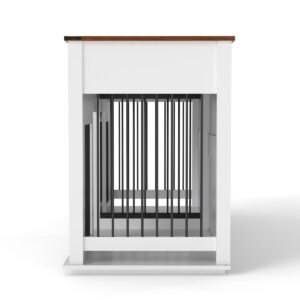 63″ Double Dog Crate Furniture with Two Drawers and Sliding DoorsMSRP $459.99Login for wholesale pricing
 Woven Water Hyacinth Cat Pod Bed on Metal Tripod Base, BeigeMSRP $152.99Login for wholesale pricing
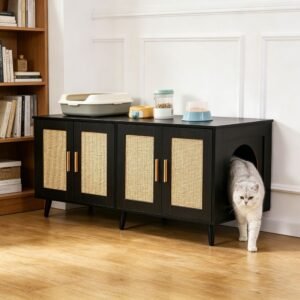 Rattan-Door Cat Litter Box Cabinet, 47″ Sideboard StyleMSRP $237.99Login for wholesale pricing
Stock it as a wholesale KIT
Pre-bundled assortments built from this guide’s categories — one PO, one shipment, wholesale pricing.