

Cat Beds: A Stocking Guide for Pet Stores | JustForPetStore
Cat beds are the soft-goods half of a category most independent stores only stock in hard goods. Grand View Research puts pet furniture at $1.8 billion in 2026 and says beds and sofas took 40% of 2025 revenue, with the cat segment the single largest application at 35%. That is a larger share of the shelf than trees and scratchers usually get. Here is how to buy cat beds without tying up cash in foam.
How big is the cat bed opportunity in 2026?
Bigger than the shelf space most stores give it, and growing at a rate that suits a small buyer. Grand View Research values the global pet furniture market at $1.7 billion in 2025, $1.8 billion in 2026, and $2.6 billion by 2033, a 5.5% compound annual rate. Beds and sofas were the largest product segment in 2025 at 40.0% of revenue, and the cat application segment led all applications at 35.0%.
North America accounted for 40.0% of that revenue in 2025, which is why the category feels crowded in U.S. wholesale catalogs and thin everywhere else. The same report notes that supermarkets and hypermarkets still hold 45.0% of distribution, which is the number a specialty store should read as an opening rather than a threat. Mass channels carry two or three round beds in gray; they cannot carry a washable igloo in three sizes.
The demand base is not in question either. The American Pet Products Association (APPA) counts 95 million U.S. households with a pet and projects $165 billion in total pet spending for 2026, including $35.6 billion on supplies, live animals, and OTC medicine. Cat owners are a smaller slice of that base than dog owners, but a bed is the one accessory every cat household ends up buying, whether or not the owner thinks of it as furniture.
Why do the two market estimates disagree?
Because research houses scope the category differently, and the gap is large enough that you should not build a buying plan on either number alone. Verified Market Reports sizes the cat bed market at $1.23 billion in 2025 rising to $2.45 billion by 2034 at an 8.5% compound rate, which is faster and narrower than Grand View’s furniture-wide 5.5%.
Read them as two views of the same shelf. Verified Market Reports is counting beds specifically and finds a steeper curve, driven by heated and covered formats; Grand View Research is counting all pet furniture and finds a flatter, steadier curve in which beds are still the biggest single piece. For a store placing a 200-unit order, the direction matters more than the decimal: soft bedding is growing, and it is growing faster than the hard goods beside it.
Which cat bed styles actually earn shelf space?
Five formats cover the practical range: a round or donut bed, a covered igloo, an elevated cot, an orthopedic pad for older cats, and a heated mat for cold rooms. Verified Market Reports lists round, covered, and heated beds as the three primary types, which matches what sells at retail.
The round donut is the entry product and the easiest to reorder. It is also the most price-shopped, so treat it as a traffic item rather than a margin item. Covered and igloo beds sell to multi-cat households and to anyone with a nervous cat, and they hold price better because the shape is harder to compare online. Elevated cots solve a specific problem for cats that run hot or live in humid rooms. Orthopedic pads are the highest-ticket soft good and the one customers ask about by name once a cat turns twelve. Heated mats are seasonal and should never be a year-round facing.
What price bands work in an independent store?
Three bands do the work: $19 to $29 for entry, $39 to $59 for the core, and $79 to $129 for orthopedic and covered formats. Verified Market Reports splits the category at budget under $50 and mid-range at $50 to $100, which is roughly the same structure seen from the manufacturer’s side.
The mistake is stocking the middle only. Entry beds bring in first-time cat owners and gift buyers, and they are the reason someone walks to your bedding corner at all. Core beds are where the margin lives, because the customer has already decided a $24 bed is too thin. Premium beds exist to make the core look reasonable, and they sell in small numbers to the owners who ask about foam density. Carry two entry, four core, and two premium units per size run, and let the sell-through decide the next order.
How many cat bed SKUs should a small store carry?
Eight to twelve active SKUs, not thirty. Three form factors times three price points is nine, plus one seasonal item, and that is a full bedding wall for a store under 4,000 square feet. Anything beyond that is duplicate space.
The constraint is cubic volume, not shelf length. Beds ship bulky and compress poorly unless the factory vacuums them, so twelve SKUs of three sizes each is thirty-six boxes in the back room. Most small stores do better with one size per style and a single large size for the covered bed. If a customer wants an odd size, order it, and use the special order as a reason to collect an email address.
What do cat owners check before they buy?
Four things, in this order: whether the cover comes off, whether the base stays flat after washing, how big the sleeping area is for a cat that sprawls, and whether the bed smells like anything. A bed that fails the wash test comes back, and a returned bed costs more than the margin it earned.
Sell the wash story at the shelf. A removable zip cover with a real zipper pull, not a hidden one, converts more shoppers than a fabric upgrade they cannot feel through packaging. For size, print the interior dimensions on the tag, because the exterior footprint on a round bed is always larger than the space inside it. And keep one bed out of its bag on the floor, slightly used-looking, so the cat can test it while the owner reads the label.
Fill weight is the second specification worth printing. A 38-inch round bed stuffed with 600 grams of fiber flattens in a season; the same shell at 1,000 grams holds its shape through a year of washing and looks like the bed the customer thought they bought. Most factories will quote both weights on the same cover, and the heavier fill usually costs a few dollars more at wholesale while supporting a $15 higher retail. Ask for the number, and put it on the tag next to the interior dimensions. Customers who compare two beds in your store will pick the heavier one every time if you make the comparison possible.
How does cat bedding sell across the year?
Two peaks and one long plateau. The plateau is replacement buying, which runs all year and is the reason a bedding corner should never be emptied out. The first peak lands in late fall, when heated mats and covered beds move; the second lands in early spring, when owners replace wash-worn beds and buy for a new kitten.
Build the fall order in September, not November, because the freight lead time on compressed bedding is longer than most store owners expect and the shelf looks empty exactly when demand peaks. Spring is the better time to test a new colorway, since the customer is already replacing rather than adding. Holiday gifting is a third, smaller wave that favors the $25 to $35 boxed set over the $99 orthopedic pad.
How do cat beds fit beside trees and scratchers?
They are an attachment, not a competitor. A customer buying a cat tree or scratcher has just made a $90 to $250 decision about where the cat will spend its day, and a $39 bed placed at the pickup counter catches that decision while it is still warm. Stores that merchandise beds next to trees report the attachment; stores that put bedding in a separate soft-goods aisle do not.
The same logic works in reverse. A shopper who buys a bed for a new kitten is a candidate for a cat toy and a grooming brush, and both are small enough to add without a second trip. The whole cat bedding and furniture section should sit within one sightline of the litter aisle, because that is the route most cat owners already walk.
How do you source cat beds at a low minimum?
Start with compressed, single-size runs and ask three questions before the first order. Can the factory vacuum-pack, what is the mixed-color minimum per style, and what does a replacement cover cost if the zipper fails? Those three answers separate a supplier you can reorder from one you will regret.
Compression is the whole economics of the category. A vacuum-packed bed ships at a fraction of its expanded volume, which is the only way a 150-unit order makes sense for a store that sells twelve a month. Mixed-color minimums matter just as much: a supplier who will let you split a 150-unit run across three colors lets you test without betting the back room. Ask for the cover as a separate SKU, because a replaceable cover turns a one-time sale into a repeat purchase and gives you something to sell to the customer whose cat destroyed the original. When you are ready to test, the low-MOQ wholesale program exists for exactly this size of order.
Sources: Grand View Research, Pet Furniture Market Size, Share and Trends Analysis Report, 2026-2033; Verified Market Reports, Pet Cat Bed Market, 7th edition (updated May 21, 2026); American Pet Products Association, 2026 State of the Industry.
Ready to stock these ideas? Browse wholesale pet KITs →
Shop these pet categories
Wholesale pricing, no minimum order.
Related wholesale collections
Products mentioned here
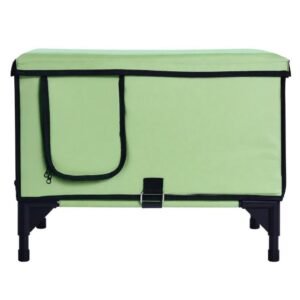 Elevated Heated Outdoor Cat House with 30W Waterproof Heating PadMSRP $128.99Apply for wholesale pricing
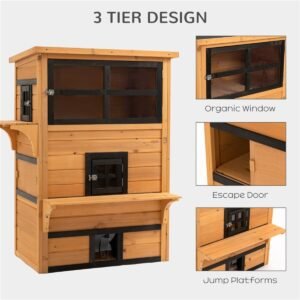 Three-Tier Outdoor Cat Condo with Asphalt Roof and Five Access DoorsMSRP $284.99Apply for wholesale pricing
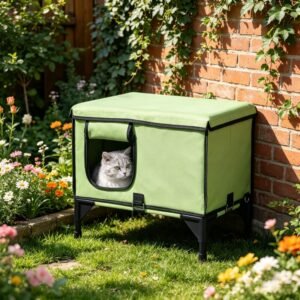 Large Elevated Heated Cat House with Waterproof Pad and Insulated LiningMSRP $124.99Apply for wholesale pricing
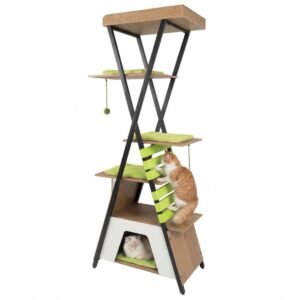 73″ Multi-Level Cat Tree with Condo, Top Perch and Scratching PadMSRP $228.99Apply for wholesale pricing
Stock it as a wholesale KIT
Pre-bundled assortments built from this guide’s categories — one PO, one shipment, wholesale pricing.