

Cat Harnesses Dropship Supplier: The Aisle Where Fit Beats Price
GlobalPetIndex now indexes 113,319 pet businesses across 156 countries, and its market intelligence board carries the number that should reset how you buy accessories: US pet category sales are running at USD 1.4B a month in the twelve months to 11 August 2026, up 32.6% year on year, while Amazon third-party pet brands grew 108% and the platform moved more than 54M pet units in the year (Source: GlobalPetIndex). Read those three together and the shelf says something uncomfortable: the growth is real, but it is not earned by the SKU. It is earned by whoever gets a generic item in front of a buyer fastest.
That is the case for a cat harnesses dropship supplier account. A cat harness is not a purchase. It is a measurement, a desensitisation schedule and a safety decision, and none of those survive a product page. The aisle that cannot be price-checked in eight seconds is the aisle worth defending — and this one has been sitting half-empty next to the dog leads for a decade.
What the 32.6% actually tells a buyer
Four readings, four different consequences for your open-to-buy:
- 32.6% is channel growth, not store growth. The GPI figure covers all seller types, online included. A shop whose accessory sales grew 4% did not underperform itself; it lost share to a channel growing eight times faster. The response is not more SKUs. It is fewer SKUs with a reason to exist offline.
- Third-party brands at +108% means an accessory flood. Anyone with a moulding supplier can now reach a customer directly. Anything a shopper can describe in four words — cat collar, cat toy, cat bed — gets price-checked in the aisle within a week of you setting it.
- 54M units a year is a re-pricing cadence, not a market size. At that volume the marketplace resets the reference price on generic accessories continuously.
- 26,357 manufacturers against 4,730 retailers is buyer power. A 5.6-to-1 ratio on the supply side means you can ask for a size curve, a mixed carton and a fit-specific spec without being laughed at. Spend that leverage where spec matters.
Stop spending open-to-buy on things a search result can answer. Spend it where freight, fit or immediacy protects the margin — a fitted harness is all three.
Why a cat harnesses dropship supplier beats a peg of generic leads
Walk into most independent stores and the cat section has a wall of dog leads, two collars and one dusty harness in a bag. That is a fitting failure: nobody on the floor knows how to size a cat, so nobody buys the range.
Four structural reasons the harness is the better slot:
- It fails loudly when it is wrong. A dog in an ill-fitting harness looks awkward. A cat in one backs out of it in a car park. The downside of buying online is not disappointment, it is a lost animal, and owners know it.
- Three measurements, not one. Chest girth behind the front legs, neck girth, and body length between them. Weight is a bad proxy — a 4.5 kg oriental and a 4.5 kg British shorthair take different sizes. A product page shows a table; a person with a tape solves it in ninety seconds.
- Freight is honest. A padded harness is 120–200 g and packs flat — cheap to ship, hold and correct, which suits a dropship line rather than a container.
- The attachment chain is real. Harness, then a lightweight lead (a dog lead is too heavy for a cat), then an ID tag, then a carrier for the vet trip. One fitting, four units.
It is also the cleanest first line for a store that has never run dropship: test it without inventory through the dropship application, or start from a mixed carton on the top wholesale products list and add the dropship line once you know your size curve.
The margin math per peg
Gross margin percentage flatters this category and hides the real problem: how much cash sits behind each size. GMROI is annual gross profit divided by average stock at cost — GM% ÷ (1 − GM%) × turns. Six SKUs, same retail either way, carton turns 2.1, mixed-carton dropship 4.8, dropship unit cost 10% higher:
| Product | Carton qty | Unit cost (carton) | Unit cost (dropship) | Retail | GM% (dropship) | GMROI (carton) | GMROI (dropship) |
|---|---|---|---|---|---|---|---|
| H-style padded harness, 3 sizes | 24 | $5.40 | $5.94 | $22.99 | 74% | 6.03 | 13.78 |
| Reflective vest harness | 18 | $6.80 | $7.48 | $27.99 | 73% | 5.76 | 13.16 |
| Step-in harness, 4 sizes | 24 | $4.60 | $5.06 | $19.99 | 75% | 6.20 | 14.16 |
| Harness + 1.5 m leash set | 12 | $8.90 | $9.79 | $34.99 | 72% | 5.41 | 12.36 |
| Replacement 10 mm leash | 30 | $3.20 | $3.52 | $12.99 | 73% | 5.65 | 12.91 |
| ID tag + bell card, 6-pack | 50 | $1.10 | $1.21 | $5.99 | 80% | 8.30 | 18.96 |
Three things fall out of that table. First, the dropship premium is small in margin terms: 10% more per unit costs about 2.5 points of gross margin, and roughly 5% more turns clears it on GMROI. Almost any harness clears that in the first month because you are no longer buying twenty-four to sell six. Second, the set is the SKU that defends the peg — 72% margin at the highest ticket, and the only row where a marketplace must charge real freight for a 1.5 m lead. Third, watch the last row: the ID tag card has the best GMROI on paper and the worst real estate, because nobody walks in to buy a bell. Buy it in fifties and treat it as an add-on.
The margin is not made on the harness; it is made on the second visit. A customer who returns for the lead set and the tag is a USD 42 basket at 74% blended margin.
Import compliance checklist, EU and US
Cheap stock is only cheap if it clears entry and survives a claim. Confirm each line in writing before the deposit, and keep the paperwork per SKU:
- HTS classification in writing. Pet harnesses, collars and leads normally sit in 4201.00 (saddlery and harness for any animal). Confirm the ten-digit line with your broker before approving the sample; a webbing item described as “textile strap” can be pushed elsewhere, and the duty gap is real.
- No CPSIA, and say so out loud. Pet products are not children’s products, so CPSIA testing is not legally required — but marketplaces and EU retailers ask for a lead and phthalate screen anyway. Treat it as a commercial requirement, not a legal one.
- Prop 65 (California). Two recurring findings: lead in plated hardware (D-rings, snap hooks) and DEHP in PVC-coated webbing. Ask for the alloy spec and the coating plasticiser in writing.
- REACH Annex XVII (EU). Azo dyes on webbing (entry 43) and phthalates in plasticised parts (entries 51 and 52). Nickel release (entry 27) is written for prolonged human skin contact; for pet hardware, treat it as a retailer spec, not a settled legal obligation.
- GPSR 2023/988 (EU). In force since 13 December 2024: name an EU-established responsible operator on the product or listing, and keep traceability to the manufacturer.
- Tensile and escape testing. Specify a static pull test at three times the largest stated body weight on the D-ring and every buckle, plus a bar-tack at the stress point. Ask for the method, not a pass mark.
- Breakaway buckles: decide deliberately. Breakaway belongs on a collar, where the risk is strangulation on a branch. On a harness it is a release mechanism your customer did not ask for. Do not let a supplier substitute one to save cost.
- Origin marking and honest claims. 19 CFR 134 requires a permanent country-of-origin mark on US imports — a sewn label, not a polybag sticker. And “escape-proof”, “no-pull” and “vet approved” are claims you must substantiate; “escape-resistant when fitted to the chest-girth chart” is one you can defend.
How to start at 120 units, not a container
- Choose three sizes, not six. Chest girth bands of 25–30 cm, 30–38 cm and 38–46 cm cover most of the pet cat population. Anything outside that is a special order.
- Specify webbing and hardware in writing. 15–20 mm webbing, acetal side-release buckles, a welded or forged D-ring. Below that, a determined cat finds the failure point within a month and you pay twice.
- Negotiate a mixed carton of 120–240 units across three sizes with a curve of roughly 30/50/40 per 120. Small enough to be a test, large enough for a factory to schedule.
- Run the car-park test before you approve. Fit the sample to a real cat, lift the cat by the D-ring with a hand under the chest, and watch whether the straps rotate. Photograph it: that image is your fitting guide, your QC standard and your supplier argument at once.
- Skip retail packaging. Blank kraft sleeve, your SKU code on a hangtag, a chest-girth chart on the reverse. Printed master cartons add cost and compliance surface for no shelf benefit.
- Set the reorder trigger per size. Medium runs dry first because it covers the most cats; a shared reorder point hides that and you end up out of the only size that sells.
This week’s action list
- Count cat-owning customers in your loyalty data and multiply by 0.03–0.06. That is your annual harness demand, usually larger than the peg you gave it.
- Put a tape measure, a mirror and a printed chest-girth chart at the cat shelf. Fitting tools sell harnesses; signage does not.
- Price the harness-and-lead set at no more than 1.6× the harness alone. Wider than that and the customer buys the harness online and the lead nowhere.
- Request FOB and DDP quotes on 120 mixed units from two suppliers. The gap is usually in the carton cube and buckle spec, not the unit price.
- Cut any size that has not turned 1.5 times in 60 days and move that open-to-buy into the medium.
- Stand at the cat shelf and ask whether a first-time cat owner could pick a size unaided. If not, neither can your staff.
The reseller programme runs both models on one account, and the category depth behind it — 1,175 cat product manufacturers on GlobalPetIndex, with country and category leaderboards on the rankings hub — is why a three-size curve is negotiable at 120 units. Sourcing windows are close: Saudi Pet & Vet on 9 November, CIPS on 12 November, London Vet Show on 19 November.
FAQ
Do cats actually walk on a leash, or is this a novelty?
They walk on their terms, which is not the same as not walking. Most cats accept a harness in four to eight weeks if you build it in stages: harness on for two minutes indoors with food, then the lead clipped on indoors, then a doorway, then the yard. Adults never handled as kittens take longer. That is a sales conversation, not a product defect.
Should a cat harness have a breakaway buckle?
No. Breakaway is a collar feature designed to release under load so a cat does not hang. On a harness, the same mechanism becomes an escape route under exactly the tension you are trying to control. Buy breakaway collars, non-breakaway harnesses.
What sizes should a store stock for cat harnesses?
Three chest-girth bands: 25–30 cm, 30–38 cm and 38–46 cm, each with at least 8 cm of adjustment. Weight charts are unreliable across breeds. Stock 30/50/40 per 120 units and reorder the medium first.
How do I price a cat harnesses dropship supplier line against Amazon?
Price the set, not the harness. A USD 34.99 harness-and-lead set at 72% margin beats a USD 22.99 harness at 74% every time, because the online alternative for the set carries real freight and a sizing return the shopper has already been burned by. Never match a single harness on unit price; match the basket and win on the fitting.
This article’s industry signals are cited from GlobalPetIndex public industry data, for procurement decision reference only; specific compliance is subject to the latest regulations of the destination country.
Ready to stock these ideas? Browse wholesale pet KITs →
Shop these pet categories
Wholesale pricing, no minimum order.
Related wholesale collections
Products mentioned here
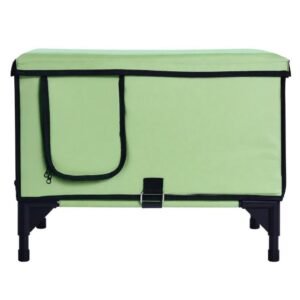 Elevated Heated Outdoor Cat House with 30W Waterproof Heating PadMSRP $128.99Apply for wholesale pricing
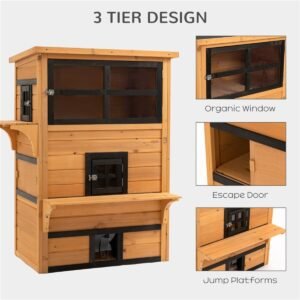 Three-Tier Outdoor Cat Condo with Asphalt Roof and Five Access DoorsMSRP $284.99Apply for wholesale pricing
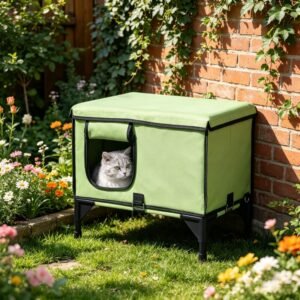 Large Elevated Heated Cat House with Waterproof Pad and Insulated LiningMSRP $124.99Apply for wholesale pricing
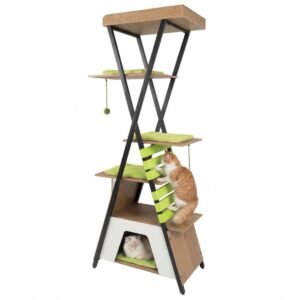 73″ Multi-Level Cat Tree with Condo, Top Perch and Scratching PadMSRP $228.99Apply for wholesale pricing
Stock it as a wholesale KIT
Pre-bundled assortments built from this guide’s categories — one PO, one shipment, wholesale pricing.