

Cat Litter Mats Dropship Supplier: Stocking the Recurring Cat-Household Accessory Aisle in 2026
Cat litter mats are the least glamorous SKU on a cat shelf — and, at the moment, one of the most reliable for any independent retailer that works with a cat litter mats dropship supplier. GlobalPetIndex’s Market Intelligence feed has been tracking the Whisker Litter-Robot installed base past 2.5 million units, a figure the index itself flags as a “recurring-consumable engine.” Every one of those machines, plus the tens of millions of conventional litter boxes still in service, sits on a mat that traps tracked litter, absorbs odor, and wears out. That is a replacement cycle, not a one-time purchase.
The signal sits inside a larger number: US pet spending is projected at roughly $165 billion in 2026, up about 4.4% year over year, according to the APPA figures published on GlobalPetIndex. When household spending grows while budgets tighten, the categories that hold up are consumables and accessories with a short reorder clock. For an independent retailer sourcing a cat litter mats dropship supplier, that combination — steady demand, low shipping weight, no cold chain, no expiry date — is close to ideal.
Why the GlobalPetIndex Signal Points at the Litter Aisle
Read the index two ways and the same conclusion appears. First, the automated-litter category has crossed from novelty to installed base: 2.5 million self-cleaning units is a population that generates recurring accessory demand every month, not every year. Second, the directory data behind GlobalPetIndex now spans 23,770 manufacturers and more than 98,000 companies across 185 countries — which means the sourcing side is deep and competitive, and buyers can shop for factories rather than settle for whichever importer happens to call. On the Market Intelligence feed, the Freshpet build-out (39,347 branded fridges installed) tells the same story from a different angle: the money in modern pet retail is shifting from one-off purchases toward infrastructure that keeps pulling consumables through it.
Litter mats fit that logic almost too neatly. They are the “flooring” of the litter routine. A cat owner does not replace a mat because it is fashionable; they replace it because the mesh fills with clay dust, the foam flattens, the grid cracks, or the smell finally wins. In a household with two cats the cycle can be as short as three to six months. Multiply that by a growing installed base of boxes and you get an accessory with grocery-aisle rhythm and boutique-level margins.
The Four Litter-Mat Formats (and Who Each One Sells To)
Before you pick a supplier, decide which formats earn shelf or catalogue space. Running all four without discipline is how small stores end up with dead stock; running two well is how they build a reorder base.
- Grid / trap mats. The classic two-layer design: a textured top grid drops tracked litter through to a lower tray you pour back into the box. Highest perceived value, strongest “saves you litter” story, best for premium positioning.
- Mesh / honeycomb mats. Softer PVC or TPR webs that are cheap to ship, easy to rinse, and the natural entry price point. The volume driver for most independents.
- Foam / comfort mats. Plush textile or memory-foam pads marketed on comfort and odor absorption. Best paired with senior cats and with the design-led shopper who buys the bed and the mat together.
- Silicone / waterproof mats. Flat, wipe-clean surfaces that catch urine and water spills, popular around automated boxes and for multi-cat homes. The easiest to private-label with a colour story.
Vetting a Cat Litter Mats Dropship Supplier: Six Questions That Separate a Partner From a Packer
- Is the stated MOQ the reorder MOQ or just the first order? Ask both. A low opening MOQ means little if every restock forces a full container.
- Which resin or compound is actually used? Recycled TPR, virgin PVC, and silicone behave differently under cat claws and cleaning. Get the spec sheet in writing.
- Can they hold a private-label run at low volume? Ask for a printed-colour or woven-label option and the smallest quantity that triggers it.
- What are the packed dimensions and weight per unit? Mat economics live and die on dimensional weight. A mat that prices well per unit can still lose money on freight.
- Do they provide test reports? Migration, heavy metals, and phthalate reports are the difference between a clean import and a customs hold.
- How fast can they ship a reorder? The whole point of the category is the reorder. Lead time is the product.
Margin Calculator: Six Litter-Mat SKUs on One Shelf
The table below models a realistic opening assortment using typical landed costs and mainstream street prices. Numbers are illustrative and will move with your freight lane and currency — but the shape holds: the accessory beats most food and toy categories on margin, and the cheapest-to-ship formats carry the highest percentages.
| SKU | Landed unit cost | Typical retail | Gross margin | Reorder rhythm |
|---|---|---|---|---|
| Mesh / honeycomb mat, standard | $6.40 | $24.99 | 74% | 4–6 months |
| Two-layer grid trap mat | $9.10 | $34.99 | 74% | 6–9 months |
| Large grid mat, XL | $11.80 | $44.99 | 74% | 9–12 months |
| Foam comfort mat with washable cover | $12.50 | $44.99 | 72% | 6–9 months |
| Silicone waterproof spill mat | $7.20 | $27.99 | 74% | 4–6 months |
| Mat liner / replacement tray kit (consumable) | $3.90 | $14.99 | 74% | 2–4 months |
Notice the last row. The replacement tray and the washable cover are the true recurring SKUs — they carry the shortest reorder rhythm and the best attach rate, because a customer who already owns the mat has an obvious reason to buy the consumable next. Treating them as throwaway accessories instead of a subscription-style line is the most common error in this niche.
Import Compliance Checklist for Cat Litter Accessories (EU & US)
Mats look low-risk, but they touch the floor, the cat, and sometimes the mouth of a curious kitten, so both major markets treat them as regulated consumer goods. Confirm the following before you place a first order.
- EU GPSR: a responsible person established in the EU, plus traceability and a compliant label, is now mandatory for consumer products sold into the union.
- EU REACH: confirm the plasticiser and additive package — phthalate and SVHC status must be documented, not assumed.
- Heavy-metal migration: if the mat, or any part of it, could be chewed, request migration testing (EN 71-3 is the common reference) and keep the report on file.
- US Prop 65: California requires a warning unless you can demonstrate exposure is below the safe-harbour level; a factory test report is your evidence.
- US textile & fibre labelling: any foam or fabric mat falls under fibre-content and care-labelling rules — get the composition from the supplier.
- Honest claims: “antibacterial,” “odor-eliminating,” and “litter-saving” only stand up with substantiation. Soften what you cannot prove.
- Records: keep the spec sheet, test reports, and supplier declarations together per SKU; that is what saves you during an audit or a customs query.
How to Start With Low MOQ and Private Label
- Pick two formats, not four. Start with one mesh entry SKU and one grid premium SKU, each in the single best-selling size.
- Order a sample before anything else. Wash it, weigh it, and drop it on a hard floor; a mat that curls or smells is a return you will eat.
- Negotiate the reorder terms, not just the opening price. A slightly higher unit cost with a flexible restock MOQ is usually the better deal.
- Ask for the smallest private-label trigger. A woven label or a printed colour band is enough to make a generic mat yours without a full custom tool.
- Bundle with the litter and the box. Merchandise the mat beside the litter and the box, and price a “litter corner” kit that lifts average order value.
- Set a reorder reminder before launch. The category only pays if the shelves never go empty, so treat restock as a calendar event, not an impulse.
If you would rather not assemble this pipeline from a dozen factory emails, JustForPetStore exists to compress it: a supplier base that lets you apply for dropship, buy in small quantities, and start with a reseller account instead of a warehouse. When the opening range is dialled in, the natural next step is a wholesale inquiry for the formats that sell.
This Week’s Action List
- Shortlist two litter-mat formats and request packed dimensions and unit weights for each.
- Ask every candidate for migration, phthalate, and heavy-metal reports before discussing price.
- Model freight on the mesh and grid SKUs using your real lane, not the factory’s best-case number.
- Build one “litter corner” bundle in your store or catalogue and price it against the single-SKU price.
- Check the GlobalPetIndex Market Intelligence feed for the next signal before you commit to a larger buy.
FAQ
Is there really enough demand for cat litter mats to give them shelf space?
Yes — because the demand is recurring, not one-off. GlobalPetIndex’s tracking of the 2.5 million-plus installed self-cleaning boxes describes a population that replaces accessories on a cycle, and conventional boxes add tens of millions more households on top. A mat is a wear item, so the addressable market refreshes itself every few months rather than once every several years.
What MOQ should I expect from a litter-mat factory?
It varies widely, from a few hundred units for a stock mesh mat to several thousand for a custom-moulded grid. The number to negotiate hardest is the reorder MOQ: an opening order you can live with is worth less than a restock quantity you can actually afford every quarter, so treat flexible replenishment as part of the price.
Do litter mats ship well for dropshipping?
They are close to ideal. Matted or rolled, a litter mat is light, flat, low-value enough to clear de-minimis thresholds in many markets, and immune to the cold-chain and expiry problems that make food hard to dropship. The one metric to watch is dimensional weight on larger XL sizes, which can quietly erase the margin on an otherwise healthy SKU.
How do I handle claims like “odor control” or “antibacterial”?
Only make claims you can document. “Traps tracked litter” is a mechanical fact you can demonstrate; “antibacterial” and “odor-eliminating” are regulated assertions that require test data in both the EU and the US. Ask your supplier for the supporting report, and if it does not exist, rewrite the copy to describe what the mat physically does.
This article’s industry signals are cited from GlobalPetIndex public industry data, for procurement decision reference only; specific compliance is subject to the latest regulations of the destination country.
Ready to stock these ideas? Browse wholesale pet KITs →
Shop these pet categories
Wholesale pricing, no minimum order.
Related wholesale collections
Products mentioned here
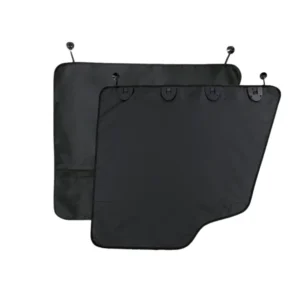 2 Pack Scratch-Proof Durable Oxford Car Door Cover for Dogs | Wholesale Dog Car Door ProtectorsMSRP $26.09Login for wholesale pricing
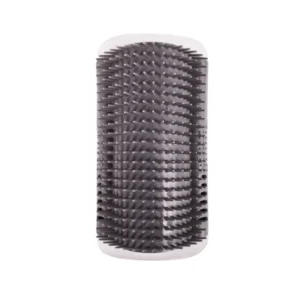 Cat Wall Corner Self Groomer Brush – Easy Install Massage & Soft Comb Scratcher (Grey, Blue)MSRP $1.98Login for wholesale pricing
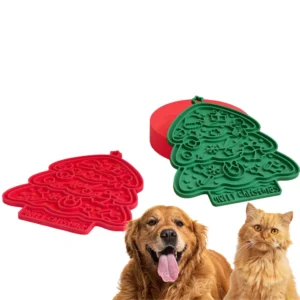 Christmas Tree-Shaped Slowly Non-Slip Silicone Pet Lick Mat | Wholesale Dog Lick MatsMSRP $10.99Login for wholesale pricing
 Dog Slow Feeder Palm Tree Silicone Food Divider with Suction 2 Colors Assorted | Wholesale Slow Feeder Dog BowlsMSRP $9.99 – $11.99Login for wholesale pricing