

Cat Water Fountains Dropship Supplier: Stocking the Recurring Hydration Aisle in 2026
Most independent pet retailers treat a drinking bowl as a one-time five-dollar sale. That assumption is exactly what makes the cat water fountains dropship supplier conversation worth having: a fountain is not a bowl, it is a small appliance with a filter, a pump and a cleaning routine attached — which means the customer comes back. GlobalPetIndex’s Market Intelligence feed has been tracking the same “installed base pulls consumables” pattern in the litter category, where the 2.5-million-plus installed self-cleaning boxes generate accessory demand every month rather than every year. Hydration hardware behaves the same way, only with a shorter consumable clock.
The demand is not speculative. US pet spending is projected at roughly $165 billion in 2026, up about 4.4% year over year, according to the APPA figures surfaced on GlobalPetIndex, while the index’s directory now spans 98,789 companies across 185 countries — deep enough that a buyer can shop for a factory instead of settling for whichever importer calls first. For a retailer sourcing a cat water fountains dropship supplier, that combination — rising household spend plus a wide supplier bench — is exactly the environment in which a narrow accessory line can win shelf space.
Why Cat Hydration Is the Quiet Recurring Category
Feline medicine has said the same thing for two decades: cats evolved as desert hunters, they feel thirst weakly, and they routinely run on the low end of healthy water intake. Chronic mild dehydration is implicated in the two conditions that cost owners the most money — urinary tract disease and kidney disease. A moving-water fountain does not cure anything, but it reliably lifts intake, because cats are drawn to running water by instinct. That single behavioural fact is what turns a fountain from a novelty gift into a repeat-purchase appliance.
Nowhere is that more visible than in the wider category build-out. GlobalPetIndex’s Sourcing Shortcuts currently lists 1,234 cat-product manufacturers and 1,664 pet food manufacturers worldwide, and the same directory’s cat-care listings keep filling out — evidence that factories have already tooled for this category and are competing for the same shelf. The buyers who win are not the ones with the cheapest opening order; they are the ones who understand that the fountain itself is the razor and the filter is the blade.
Three hardware realities follow from that. First, filters are a genuine consumable: most carbon or ion-exchange cartridges are rated for two to four weeks of use, so a single household can burn through fifteen to twenty a year. Second, pumps are a wear item — the impeller picks up hair and mineral scale and typically needs replacement within twelve to eighteen months, often sooner in hard-water regions. Third, the fountain body itself sits on the counter being splashed, so it is cleaned often and replaced when the plastic discolours. A retailer who stocks only the box loses all three of these revenue events; a retailer who stocks the box plus the consumable pair keeps the customer for the life of the appliance.
Vetting a Cat Water Fountains Dropship Supplier: Six Questions That Separate a Partner From a Packer
- Is the filter proprietary or generic? Proprietary cartridges protect your reorder margin, but they also lock customers in — and they lock you to one factory. Ask which common filter shapes the cartridge will fit, and whether a universal replacement is on the roadmap.
- What is the pump rated for? Ask for the flow rate, the rated voltage, and the noise figure in decibels. A fountain that hums at night generates returns; one measured under 40 dB does not.
- Which plastic, and is it food-contact grade? The reservoir, the drinking tray and the filter housing all touch drinking water. Ask for the resin specification in writing — ABS and food-grade polypropylene behave very differently once they are scratched.
- Is the unit USB or mains powered, and which plug standard ships? USB-C has become the safe default for international buyers; a UK or EU mains unit that ships with the wrong plug is dead stock.
- What do the packed dimensions and unit weight come to? Fountains are bulky relative to value, so dimensional weight drives the freight number. Do the maths per unit, not per carton.
- How fast can a reorder land? The entire thesis of this category is the repeat order. Treat stated lead time as part of the product spec, and ask what happens in Q4.
Margin Calculator: Six Fountain SKUs on One Counter
The table below models a realistic opening assortment using typical landed costs and mainstream street prices. The figures are illustrative and will move with your freight lane and currency, but the shape holds — and the last two rows are where the money actually lives.
| SKU | Landed unit cost | Typical retail | Gross margin | Reorder rhythm |
|---|---|---|---|---|
| 2L plastic fountain, entry | $7.90 | $29.99 | 74% | 12–18 months |
| 2.5L stainless-steel top fountain | $13.40 | $49.99 | 73% | 18–24 months |
| 3L wireless pump fountain | $16.80 | $64.99 | 74% | 18–24 months |
| Filter cartridge, 4-pack | $2.10 | $12.99 | 84% | 2–4 months |
| Replacement pump module | $4.30 | $19.99 | 78% | 12–18 months |
| Cleaning brush + sponge kit | $1.40 | $8.99 | 84% | 6–9 months |
Notice the asymmetry. The fountain body carries a healthy margin once, while the filter four-pack carries a better percentage and repeats every quarter. Bundle a fountain with a year of cartridges at launch and you convert a single sale into a subscription the customer renews without thinking about it. That is the whole reason to work with a specialist cat water fountains dropship supplier rather than a general merchandise wholesaler.
Import Compliance Checklist for Drinking Fountains (EU & US)
Anything that circulates water a pet drinks from is a regulated consumer product in both major markets. Confirm the following before placing a first order.
- EU GPSR: a responsible person established in the EU, plus traceability and a compliant label, is mandatory for consumer products sold into the union.
- EU LVD / EMC: any mains-powered fountain is electrical equipment. Confirm CE marking backed by a Low Voltage Directive and EMC file, and a Declaration of Conformity you can produce on request.
- EU REACH & food-contact: the wetted plastics fall under the plastics food-contact rules; check SVHC status and confirm the Declaration of Compliance covers the drinking tray.
- US Prop 65: California requires a warning unless exposure is demonstrably below the safe-harbour level; a factory test report is your evidence.
- US electrical safety: mains units should carry a recognised listing (UL or ETL) for the US market; USB-powered units sidestep much of this but still need a compliant adapter.
- Water hygiene claims: “antibacterial” and “purifies” are regulated assertions. “Circulates and filters debris” is a mechanical fact you can demonstrate. Soften what you cannot document.
- Records: keep the spec sheet, test reports, electrical file and supplier declaration together per SKU. That folder is what saves you during an audit or a customs query.
How to Start With Low MOQ and Private Label
- Pick two body formats, not six. Lead with one entry plastic fountain and one premium stainless-top model, each in the single best-selling size.
- Order a sample and live with it for a week. Run it overnight in a quiet room, time how long the water stays clear, and check how the plastic handles a vinegar soak.
- Negotiate the cartridge, not the fountain. A slightly higher unit cost with a flexible reorder quantity on filters is almost always the better deal.
- Ask for the smallest private-label trigger. A printed colour band or a woven label is enough to make a generic fountain yours without paying for custom tooling.
- Bundle the razor and the blade. Merchandise a “hydration corner” that pairs a fountain with a twelve-month cartridge supply and price it against the bare fountain.
- Set a reorder reminder before launch. Filter restock is a calendar event, not an impulse — the category only pays when the cartridges are never out of stock.
If you would rather not assemble that pipeline from a dozen factory emails, JustForPetStore exists to compress it: wholesale kits that let you open a category without a warehouse, a starter essentials kit for the first shelf, and a top wholesale products list to benchmark what is actually moving.
This Week’s Action List
- Shortlist two fountain bodies and request packed dimensions, unit weight and dB rating for each.
- Ask every candidate for the filter cartridge’s rated life and whether a universal replacement fits.
- Model freight on the stainless and wireless SKUs using your real lane, not the factory’s best-case number.
- Build one “hydration corner” bundle in your store or catalogue and price it against the single-SKU price.
- Check the GlobalPetIndex Market Intelligence feed for the next signal before committing to a larger buy.
FAQ
Is there really enough repeat demand to justify stocking fountains?
Yes — because the demand is recurring, not one-off. A fountain filter is rated for two to four weeks, so a single household can buy fifteen to twenty cartridges a year, and pumps need replacing within twelve to eighteen months. GlobalPetIndex’s tracking of the 2.5-million-plus installed smart-care devices describes a population that replaces accessories on a cycle; hydration hardware refreshes on a shorter cycle still.
What MOQ should I expect from a fountain factory?
It varies widely, from a few hundred units for a stock plastic model to several thousand for a custom-moulded or stainless-top design. The number to negotiate hardest is the reorder MOQ on filter cartridges — an opening order you can live with is worth less than a restock quantity you can actually afford every quarter, so treat flexible replenishment as part of the price.
Do fountains ship well for dropshipping?
Reasonably well, with one caveat. They are solid, non-perishable and immune to the cold-chain and shelf-life problems that make food hard to dropship, and filters are cheap to post. The caveat is dimensional weight: a fountain is bulky relative to its value, so watch the volumetric charge on larger models and keep the consumables — which ship flat and light — as the profitable tail.
How do I handle claims like “antibacterial” or “purifies the water”?
Only make claims you can document. “Circulates water and traps debris” is a mechanical fact you can demonstrate; “antibacterial” and “purifies” are regulated assertions that require test data in both the EU and the US. Ask your supplier for the supporting report, and if it does not exist, rewrite the copy to describe what the fountain physically does.
This article’s industry signals are cited from GlobalPetIndex public industry data, for procurement decision reference only; specific compliance is subject to the latest regulations of the destination country.
Ready to stock these ideas? Browse wholesale pet KITs →
Shop these pet categories
Wholesale pricing, no minimum order.
Related wholesale collections
Products mentioned here
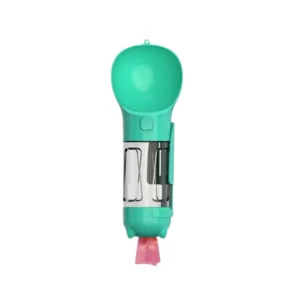 2 in 1 Dog Travel Bottle Dog Water Dispenser with Poop Bag Storage | Wholesale Dog Water BottlesMSRP $17.99Login for wholesale pricing
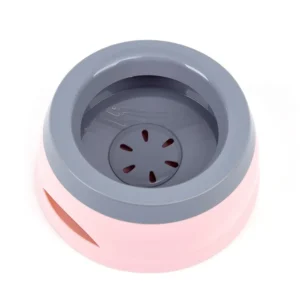 Anti-Slobber Cat Dog Water Dispenser Leak-Proof Drinking Pet Water Bowl | Wholesale Dog Water BottlesMSRP $12.99Login for wholesale pricing
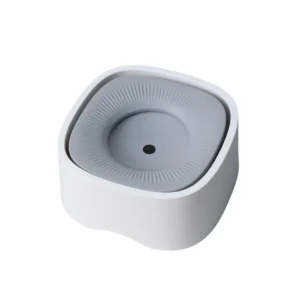 Cat Dog Water Dispenser Floating Dish No Spill Pet Water Bowl | Wholesale Dog Water BottlesMSRP $25.99Login for wholesale pricing
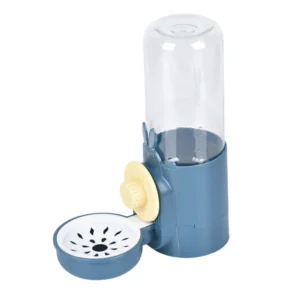 Detachable Hangable Automatic Durable Pet Waterer | Wholesale Dog Bowls & FeedersMSRP $16.99Login for wholesale pricing