

CBP Audit for Pet Importers: The Playbook | JustForPetStore
A CBP audit is a records review with a timeline you can plan around: an entrance conference before fieldwork, a closing conference after it, and a written report within 90 days of the closing conference, under 19 U.S.C. 1509 and 19 CFR Part 163. Your exposure concentrates in two places: the 30-calendar-day duty to produce entry records when CBP demands them, and the sampling plan you sign at the start. Here is how both work.
What is a CBP audit, and which importers get picked?
A customs audit is an evaluation by CBP of the records an importer must keep, conducted to confirm entries were correct, determine liability for duties and penalties, and check compliance with the laws CBP administers. The authority lives in 19 U.S.C. 1509(a), which lets CBP examine any record, including electronically generated data, with reasonable notice and records described with reasonable specificity, and to summon importers, their officers, and their recordkeepers. The audit program itself is run by CBP’s Regulatory Audit office in Charlotte, North Carolina.
Any importer can be selected, and small pet importers are not exempt. Selection often follows data patterns: declared values, HTS classifications, or country-of-origin profiles that deviate from what CBP sees for comparable goods. If you import dog feeding products, dog treats, or crates and kennels lines, the entries CBP compares against are your own filings, which is why the preparation section at the end of this guide matters more than the selection odds.
What happens first: the entrance conference?
Before the audit begins, CBP must inform you in writing of your right to an entrance conference, and it must give you a reasonable estimate of how long the audit will take, with a further estimate if that changes. At the entrance conference, under 19 CFR 163.11, the auditors explain the objectives of the audit, the records they will require, any sampling plan they intend to use, and the offsetting that may apply to any underpayments they find.
Treat that meeting as your first defense, not a formality. Bring the person who actually controls your entry documentation, not just whoever answers the phone. Ask three questions before it ends: which entries and time period are in scope, which records on the (a)(1)(A) list they will sample first, and who at your company is the single point of contact. An audit conducted through one organized contact moves faster and generates fewer misread documents than one conducted through a shared inbox.
Why is the sampling plan the highest-stakes hour of the audit?
Under 19 CFR 163.11, CBP has sole discretion over the audit’s time frame, scope, and whether statistical sampling is used. The plan itself gets discussed with you, and this is the trap: once your company accepts a sampling plan in writing, signed by an official with binding authority, you generally waive the right to later challenge the plan or its methodology. After acceptance, you can question calculation and clerical errors, but not the design of the sample.
Why does that matter? Because an audit’s findings are extrapolated from the sample. If the sample overweights your highest-value entries or your riskiest classification change, the projected duty loss inherits that skew, and the penalty math under 19 U.S.C. 1592 keys off the projected number. The disciplined response is to engage the plan before signing: understand the strata, ask how errors found in the sample will be projected, and if the plan looks wrong for your entry mix, say so in the discussion phase, when the discussion still counts. Once the signature dries, the methodology is settled.
How long does the audit take, and when do you see the report?
The statutory clock runs from the closing conference. Once on-site work ends, CBP schedules a closing conference to present preliminary results. The formal written report is due within 90 calendar days after the closing conference, unless CBP notifies you in writing of a delay and a new completion date. You receive a copy within 30 days after the report is completed. If no closing conference is held, you can request one in writing, and CBP must hold it within 15 days of receiving your request.
One important exception: the moment CBP converts the matter into a formal investigation, the closing-conference and report deadlines stop applying under 19 U.S.C. 1509(b)(5). That shift is visible and meaningful. While your case is an audit, you have procedural rights and a clock; once it becomes an investigation, the timeline belongs to the government. Staying cooperative, responsive, and documented is the practical way to keep an audit an audit.
What happens when CBP demands records mid-audit?
The core demand rule is 19 CFR 163.6: entry records must be produced within 30 calendar days of the demand, or within any shorter period CBP specifies. If you cannot make the deadline, you must request an extension before it expires, and an approved extension complied with protects you from penalty. A late request after the deadline does not.
The penalties for failure deserve respect. Under 19 U.S.C. 1509(g) and 19 CFR 163.6, willful failure to produce records can cost up to $100,000, or 75% of the appraised value of the merchandise, whichever is less, for each release of merchandise. Negligent failure runs up to $10,000, or 40% of appraised value, whichever is less, per release. In an audit covering hundreds of entries, per-release means the exposure compounds fast, and it exists independently of whether your entries were substantively correct. The defenses are narrow: records destroyed by an act of God, substantial compliance demonstrated by other evidence, or information already filed with and retained by Customs. Participating in a certified recordkeeping compliance program can convert a first non-willful violation into a written notice instead of a penalty.
Can overpayments offset what the audit says you owe?
Often, yes, and importers who do not raise their own overpayments leave money on the table. Under 19 U.S.C. 1509(b)(6), when calculating duty loss or penalties, overpayments and over-declarations on finally liquidated entries offset underpayments and under-declarations, provided the overpayments were not made for the purpose of violating the law. The offset also fails if the underpayment was knowing and intentional, and CBP’s Fines, Penalties and Forfeitures office decides whether an offset is disallowed.
The practical move is to run your own entry review before or during the audit and document every instance where you overpaid: entries where a ruling or reclassification should have produced a refund, or where values were declared high. Present those at the closing conference, in writing, tied to specific entry numbers. An offset does not erase a violation, but it shrinks the duty-loss base that penalty percentages are applied to, which can move a case an entire penalty tier.
What if the audit finds a violation of 19 U.S.C. 1592?
A CBP audit that ends in a finding of negligence, gross negligence, or fraud converts into a penalty claim under 19 U.S.C. 1592. The tiers are steep: for fraud, up to the domestic value of the merchandise; for gross negligence, up to the lesser of the domestic value or four times the duty loss, or 40% of the dutiable value where there is no duty loss; for negligence, up to the lesser of the domestic value or two times the duty loss, or 20%. Whatever the penalty, the lost duties themselves still have to be paid.
Two doors soften this, and the audit process feeds both. A prior disclosure, made before or without knowledge of a commenced investigation, caps the penalty dramatically, down to the lost duties plus interest in a negligence case. And any penalty claim can be petitioned for mitigation under 19 CFR Part 171, where the mitigating factors include the cooperation and remediation you demonstrated during the audit itself. That is the quiet strategic argument for being genuinely responsive in an audit: every document you produce on time and every fix you volunteer becomes part of the mitigation record if the case escalates.
How do you prepare so a CBP audit is boring?
Boring is the goal, and it is achieved through records. Importers must keep entry-related records for five years from the date of entry under 19 CFR Part 163, with shorter windows for a few categories, packing lists are generally 60 days, and drawback records run to the third anniversary of the payment date. Records must be retrievable on lawful request, which is a storage-and-organization standard, not a filing-cabinet suggestion; if your entry files live across a broker’s portal, your email, and a shoebox, start consolidating now, and give CBP 30 days’ written notice before switching to any alternative storage method.
Then run the self-audit you hope CBP never runs. Pull your last twelve entries and check four things against the source documents: declared value against the invoice, HTS classification against the product you actually received, country of origin against the marking, and any assists or royalties against the price you paid. Fix discrepancies through your broker before they become findings, and keep a short memo of what you checked. A low-MOQ sourcing program does not change your compliance obligations, but clean, single-supplier documentation with consistent entries makes the paper trail far easier to defend. If you want help getting your import documentation organized before an audit letter arrives, talk to our team.
Frequently asked questions
What is a CBP audit? A CBP audit is an evaluation of an importer’s records to confirm entries were correct, determine duty and penalty liability, and verify compliance, conducted under 19 U.S.C. 1509 and 19 CFR Part 163 by CBP’s Regulatory Audit office. It typically includes an entrance conference, fieldwork, a closing conference, and a written report.
How long does an importer have to respond to a records demand? Entry records must be produced within 30 calendar days of CBP’s demand, or a shorter period if CBP specifies one, under 19 CFR 163.6. Extension requests must be filed before the deadline; late requests do not protect you from penalties.
What is the penalty for not producing records? Willful failure can cost up to $100,000 or 75% of the merchandise’s appraised value, whichever is less, per release of merchandise. Negligent failure runs up to $10,000 or 40%, whichever is less, per release, under 19 U.S.C. 1509(g).
Can overpaid duties offset underpayments found in an audit? Yes. Under 19 U.S.C. 1509(b)(6), overpayments on finally liquidated entries offset underpayments when duty loss and penalties are calculated, unless the underpayment was knowing and intentional or the overpayment was made to violate the law.
How long after the closing conference does the audit report arrive? The written report is due within 90 calendar days of the closing conference, with a copy delivered within 30 days of completion. If CBP opens a formal investigation, those deadlines no longer apply under 19 U.S.C. 1509(b)(5).
Sources: 19 U.S.C. 1509 (Customs records and audit authority), https://www.law.cornell.edu/uscode/text/19/1509; 19 CFR Part 163 (Recordkeeping), https://www.ecfr.gov/current/title-19/chapter-I/part-163; 19 U.S.C. 1592 (Penalties for fraud, gross negligence, and negligence), https://www.law.cornell.edu/uscode/text/19/1592.
Ready to stock these ideas? Browse wholesale pet KITs →
Shop these pet categories
Wholesale pricing, no minimum order.
Products mentioned here
 Hidden Cat Litter Box Cabinet with Elevated Cat Lounge, Natural and WhiteMSRP $137.99Apply for wholesale pricing
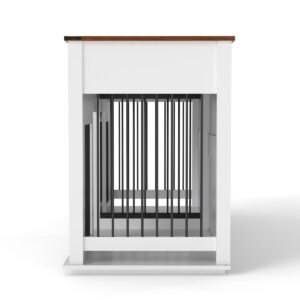 63″ Double Dog Crate Furniture with Two Drawers and Sliding DoorsMSRP $459.99Apply for wholesale pricing
 Woven Water Hyacinth Cat Pod Bed on Metal Tripod Base, BeigeMSRP $152.99Apply for wholesale pricing
 Rattan-Door Cat Litter Box Cabinet, 47″ Sideboard StyleMSRP $237.99Apply for wholesale pricing
Stock it as a wholesale KIT
Pre-bundled assortments built from this guide’s categories — one PO, one shipment, wholesale pricing.