

CBP Summons: What Pet Importers Must Do | JustForPetStore
A CBP summons is a legal demand, not a request. Issued under 19 U.S.C. 1509, it can compel an importer, its officers, or anyone holding its import records to appear, produce documents, and testify under oath. It is not a penalty case yet, and it is not a protest. It is an investigation tool, and the way a small importer responds in the first ten days often decides how the file ends.
What is a CBP summons and who can receive one?
It is the record-compulsion power behind a customs investigation or audit. The statute lets the agency examine records relevant to the correctness of an entry, to a person’s duty liability, to a penalty determination, or to compliance with the laws customs administers, and it allows a summons where those records sit with someone else.
The list of people who can be summoned is deliberately wide. It covers whoever imported or knowingly caused the import, whoever exported or transported or stored merchandise under bond, and whoever filed a declaration, entry, or drawback claim. It reaches officers, employees, and agents of those companies, any person who has possession, custody, or care of the records, and, in the statute’s catch-all, any other person the officer deems proper.
For a pet products importer that usually means three names: the owner of the business, the employee who signs entries, and the customs broker who filed them.
What has to be in the summons before you respond?
The summons has to tell you who is asking, where to appear, when to appear, and what to bring. Under 19 CFR Part 163, only an official at or above port director, Center director, field director of regulatory audit, or special agent in charge may issue one, and the document must name that officer with a title, address, and phone number.
The place of appearance cannot be more than 100 miles from where the summons was served, a limit written into both the regulation and the statute. The records must be described with reasonable specificity. That requirement cuts both ways: a summons that says “all import records since 2019” is a discussion to have with counsel, while a summons that lists entry numbers and invoice dates is one you can answer.
If a document arrives by email with no officer name, no address, and no date, treat it as a request for information and ask for the paperwork.
How is a summons served on a small company?
Service on an individual is personal delivery. Service on a corporation, partnership, or association is delivery to an officer, a managing or general agent, or any agent authorized by appointment or by law to receive service of process, which in practice is often your registered agent.
The certificate of service signed by the person who served it is prima facie evidence of the facts it states in an enforcement hearing, so a signature on a delivery receipt matters. Keep the envelope, the receipt, and the date.
If the summons arrives at a store rather than an office, the person at the counter should not guess. Hand it to the owner, note the time, and do not discuss the merchandise with anyone who calls before you have read the document.
What happens when your customs broker holds the records?
This is the part most small importers never hear about until it happens. If a summons goes to a third-party recordkeeper, which the statute defines as a customhouse broker, an attorney, or an accountant, and it seeks records of your transactions, the agency has to notify you.
The broker exception matters. A broker that is the importer of record on an entry is not a third-party recordkeeper for that entry, but a broker filing on your behalf usually is. Under 19 CFR 163.8, notice has to reach you no less than 10 business days before the date set for production or testimony, and it must include a copy of the summons and directions for staying compliance.
Those directions are your lever. You can give the summoned party a written direction not to comply, and mail a copy by registered or certified mail to that party and to the issuing officer no later than the day before the date set in the summons. Once that is done, no examination of the records may happen except with your consent or under an order from a federal district court, and you have a right to intervene in the enforcement proceeding.
How long do you have to produce the records?
The summons sets the date, and the regulation does not impose a fixed number of days. What it requires is a reasonable period, which is why the date on the document is the date you work to.
Do not confuse that with a written demand for entry records. Under 19 CFR 163.6, entry records must be produced within 30 calendar days of receipt of the demand, or a shorter period if the records are needed for an admissibility or release decision. An extension has to be requested before the due date and has to explain why, and a compliant extension means no penalty attaches to that period.
The practical rule for a small importer: a summons date is a hard deadline, a records demand is a 30-day clock, and both are shorter than the time it takes to reconstruct files from a broker portal, a bookkeeper, and a filing cabinet.
What if the records do not exist or are incomplete?
Produce what exists and say plainly what does not. A missing document is a recordkeeping problem; a manufactured document is a federal crime under 18 U.S.C. 1001. Sworn testimony taken under a summons is transcribed, and a copy is available on request, so everything you say is on the record.
The honest answer is usually a version of this: the commercial invoice and packing list are in the broker file, the purchase order is in the email archive, the payment record is at the bank, and the classification note for the last three entries was never written down. That answer is survivable. A file assembled after the fact is not.
If the gap is a record you were required to keep, remember that the retention rule is five years from the date of entry or from the date of the activity that created the record, with shorter windows for packing lists and longer ones for drawback claims. A five-year file is the cheapest defense in customs.
What are the penalties for ignoring a summons?
Two separate consequences, and only one of them is a fine. The first is enforcement: a summons that is not obeyed can be taken to a federal district court for an order compelling compliance, which is where the intervention rights and the stay provisions get litigated.
The second is the statutory penalty for failing to comply with a lawful demand for information. Under 19 U.S.C. 1509(g), a willful failure to maintain, store, or retrieve the demanded information carries a penalty of up to $100,000 per release of merchandise, or 75% of the appraised value of the merchandise, whichever is less. Negligent failure carries a lower ceiling, and the regulation repeats the same structure for record demands.
Read those numbers against a container of pet beds or a pallet of treats. The penalty is charged per release, not per investigation, which is why a missing file that covers a year of small entries can cost more than the duty at stake.
How should a small importer prepare before a summons arrives?
Build a one-page records map and keep it current: who holds the entry, who holds the invoice, who holds the payment, and where each one lives. Name the person who answers a records request, and give the broker written authority to release documents to that person.
Keep the entry file together for five years, including the classification rationale. A two-line note explaining why a product was entered under one tariff line and not another is worth more than an hour of reconstruction later, and it is the first thing an auditor asks for.
Then review the paper trail once a year. Pull three random entries, and see whether you can produce the invoice, the packing list, the entry summary, and the payment record in one afternoon. If you cannot, you have found the gap before someone else finds it.
What should you do in the first 48 hours?
Read the summons twice, calendar the date, and call your broker the same day to ask whether a copy went to them. Do not send records to anyone until you know what was asked for and who asked.
Then answer narrowly and in writing. Produce what the document requests, in the order it requests, with an index. If the request is broader than the investigation, say so in writing rather than ignoring it.
If your imports are a real share of revenue, get a customs attorney on the phone before the deadline, not after. The cheapest hour you will ever buy is the one spent before you answer.
For the sourcing side of the same relationship, start with a supplier that documents its shipments properly. Our low-MOQ wholesale range ships with commercial invoices and packing lists that survive a records review, whether the goods are dog treats, grooming tools, or general dog supplies. If you are building a first import file from scratch, send us the product list and we will tell you which documents to keep and for how long.
Sources: 19 U.S.C. 1509 (Legal Information Institute, Cornell Law School); 19 CFR Part 163, Recordkeeping (eCFR); 18 U.S.C. 1001.
Ready to stock these ideas? Browse wholesale pet KITs →
Shop these pet categories
Wholesale pricing, no minimum order.
Products mentioned here
 Elevated Heated Outdoor Cat House with 30W Waterproof Heating PadMSRP $128.99Apply for wholesale pricing
 Three-Tier Outdoor Cat Condo with Asphalt Roof and Five Access DoorsMSRP $284.99Apply for wholesale pricing
 Large Elevated Heated Cat House with Waterproof Pad and Insulated LiningMSRP $124.99Apply for wholesale pricing
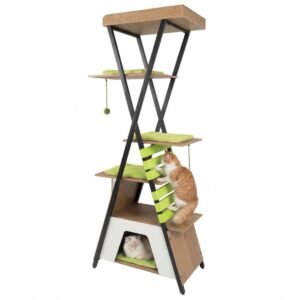 73″ Multi-Level Cat Tree with Condo, Top Perch and Scratching PadMSRP $228.99Apply for wholesale pricing
Stock it as a wholesale KIT
Pre-bundled assortments built from this guide’s categories — one PO, one shipment, wholesale pricing.