

Child Labor Laws for Pet Stores in 2027 | JustForPetStore
Federal child labor law lets you hire 14- and 15-year-olds only in approved, non-hazardous jobs with hard hour caps, sets 16 as the minimum age for general store work, and allows 16- and 17-year-olds to work any non-hazardous job with no federal hour limit. Seventeen hazardous occupation orders still apply, and civil penalties run up to $16,035 per minor affected. Here is how those rules land on a pet store floor.
What do federal child labor laws actually require in a pet store?
The Fair Labor Standards Act does not ban teen employment. It bans “oppressive child labor,” which 29 U.S.C. 212(c) defines through age and occupation, not through job title. The regulation that carries the definition, 29 CFR Part 570, builds three age bands that matter to a retailer.
Under 14: no employment in a store, with narrow exceptions for newspaper delivery and some agricultural work that do not apply to pet retail.
Ages 14 and 15: employment is allowed only in the occupations listed in 29 CFR 570.34 and only inside the hour limits of 29 CFR 570.35. Everything in 570.33 is off-limits regardless of parental permission or how short the shift is.
Ages 16 and 17: 29 CFR 570.2(a)(1) sets 16 as the general minimum age for non-agricultural employment, so any non-hazardous store job is open. The same section pushes the minimum age to 18 for occupations the Secretary of Labor has declared hazardous, which is where most pet store compliance failures come from.
One coverage note before anything else. FLSA enterprise coverage generally starts at $500,000 in annual gross sales under 29 U.S.C. 203(s)(1)(A), but individual employee coverage can pull a smaller store in even below that threshold. A one-location shop that buys wholesale stock across state lines should assume the law applies and plan accordingly.
What hours can a 14- or 15-year-old work in your store?
The caps in 29 CFR 570.35 are rigid and they reset on the school calendar, not on your payroll calendar.
Outside school hours only. No shift may overlap class time, including remote or hybrid class periods scheduled by the district.
Weekly and daily ceilings. In a week when the local public school requires attendance at least one day, the minor may work no more than 18 hours. In a week with no school at all, the ceiling is 40 hours. On a school day the limit is 3 hours, and Friday counts as a school day. On a non-school day the limit is 8 hours.
Clock windows. Work is confined to 7 a.m. to 7 p.m., extended to 9 p.m. from June 1 through Labor Day. A 15-year-old cannot close your store in November, and no signature on a permission slip changes that.
Duties are capped too. 29 CFR 570.34 permits cashiering, selling, shelf stocking, price marking, bagging, and carrying purchases to a customer’s car. 29 CFR 570.33 forbids operating or cleaning power-driven machinery, working on ladders or scaffolding, cooking on open flames, loading or unloading trucks, working in warehouses, and any off-site peddling.
Translated to a pet store: a 15-year-old can run the front register, front and face shelves, bag food, and hand out samples inside the store. They cannot run the floor buffer, climb to the top of the racking, take a pallet jack into the aisle, or work a booth at a weekend adoption event held in a parking lot.
Which back-room jobs are off-limits for 16- and 17-year-olds?
This is the part owners miss, because a 17-year-old looks like an adult on the schedule. The 17 hazardous occupation orders at 29 CFR 570.51 through 570.68 apply to every employee under 18, and four of them show up in ordinary pet retail.
Order 12, at 29 CFR 570.63, covers paper products machines, and the Department of Labor reads it to include cardboard balers and compactors. If your back room has a baler, no one under 18 touches it, not to load it, not to tie it, not to clear a jam.
Order 7, at 29 CFR 570.58, covers power-driven hoisting apparatus, which includes forklifts, skid steers, and high-lift order pickers. Receiving is not a job for a minor if freight arrives on pallets.
Order 10, at 29 CFR 570.61, covers power-driven meat processing machines. A self-serve raw feeding grinder or a meat slicer in a treat-prep corner falls inside that language.
Order 14, at 29 CFR 570.65, covers circular saws, band saws, and similar cutting equipment, which shows up in stores that cut custom crate liners or build display fixtures on site.
Driving appears in Order 2 at 29 CFR 570.52. A 17-year-old may drive on public roads only within a narrow set of conditions covering licence status, daylight only, vehicle size, seat belt use, and no towing, and every one of those conditions must hold on every trip.
Why does hiring “16 and up” still leave gaps?
Because federal law is a floor. Most states add hour caps, later-start rules, break requirements, and work permit systems for 16- and 17-year-olds, and a state rule that is stricter than the federal one controls. A store in a state that bars minors from working past 10 p.m. before a school day cannot schedule a 16-year-old to close on a Thursday, even though federal law permits it.
Recordkeeping is the second gap. Employers must keep the basic payroll record for every covered employee, and for anyone under 19 that record has to carry date of birth. Age certificates issued under state law are treated as proof of age, which is why the file folder matters: an owner who can produce a birth date and a permit is having a very different conversation with an investigator than one who cannot.
The third gap is the task list. Job descriptions rarely mention equipment. If a 17-year-old’s “closing duties” include “break down cardboard,” you have written a hazardous occupation into the job.
What does a child labor violation cost?
29 CFR Part 579 sets the civil money penalties. Section 579.1 currently lists a maximum of $16,035 for each minor employed in violation, and up to $72,876 for each violation that causes the death or serious injury of a minor under 18, with the higher figure doubling where the violation is repeated or willful. Those numbers are recalculated every January for inflation, so the 2027 figures will be slightly higher.
Penalties are assessed per minor, not per store, so a scheduling error that touches four teenagers is four violations. Under 29 CFR 579.5, a penalty becomes final if the employer does not contest it within 15 days of receiving the notice.
There is a second exposure that gets less attention. Under 29 U.S.C. 212(a), goods produced in an establishment where oppressive child labor was employed within 30 days before shipment may not be shipped in interstate commerce. For a retailer that ships online orders, that provision connects a back-room scheduling mistake to the order pipeline.
How should you schedule minors through the holiday rush?
Build the schedule around the school calendar rather than around the store calendar. Pull the district calendar for the six weeks covering Thanksgiving, winter break, and the return to class, mark every school day, and treat each marked day as a 3-hour ceiling for the 14- and 15-year-olds.
Then staff in blocks. Two short blocks beat one long shift, because a 15-year-old working 3 to 6 p.m. on a Tuesday can cover the after-school rush and still be gone before the evening dog-walking crowd. Save the 6 to 9 p.m. window for employees who are 16 or older and cleared under state rules.
Keep the equipment locked, not just prohibited. A baler key on a hook in the back room is an invitation. Remove the key when a minor is on the clock, and put the compactor behind a lock that only a shift lead opens.
Finally, write the task matrix before you post the job. One page, three columns for under 16, 16 to 17, and 18 and over, and a row for every task that appears on a closing checklist. If a task cannot be assigned to a 16-year-old, it should not appear on a shift sheet they can pick up.
What belongs in a one-page minor work policy?
Six items cover the practical risk: a copy of the birth certificate or state age certificate, a copy of the state work permit where one is required, the age-banded task matrix, a weekly hour log that is checked before the schedule is posted, a break and meal rule that matches state law, and a supervisor sign-off on any shift that runs past 7 p.m.
Add a seventh if you use scheduling software. Most tools will happily let a manager drag a 15-year-old into a Friday close. Set an age flag in the employee record so the system warns before the shift is published, rather than after payroll runs.
None of this is expensive. It is the kind of paperwork that takes an afternoon to build and that protects the store through every seasonal hiring cycle. If you are stocking up for the holiday season at the same time, our low-MOQ wholesale program and the dog care and hygiene range cover the categories most stores add staff for, and the training and enrichment shelf is where new hires usually need the most product coaching.
Can a 15-year-old run the register at a pet store?
Yes, within limits. 29 CFR 570.34 lists cashiering, selling, and bagging as permitted occupations for 14- and 15-year-olds, so a front-register shift is allowed. The constraints sit in 29 CFR 570.35: outside school hours only, no more than 3 hours on a school day, 18 hours in a school week, and no work after 7 p.m. outside the June 1 to Labor Day window.
Can a 16-year-old operate a cardboard baler?
No. The Department of Labor treats balers and compactors as paper products machines under Hazardous Occupations Order 12, 29 CFR 570.63, and that order applies to all employees under 18. Neither loading, nor tying, nor clearing a jam is permitted.
Do 17-year-olds have hour limits under federal law?
Not for non-agricultural work. 29 CFR 570.2 sets 16 as the general minimum age and imposes no federal hour cap on 16- and 17-year-olds. State law frequently does, and in a conflict the stricter rule applies, so the schedule has to be checked against the state statute before it is posted.
Do I need a work permit to hire a minor?
Federal law does not require one. Many states issue age certificates or work permits and require the employer to keep them on file, and federal rules treat a state certificate as proof of age, which supports a good-faith defense if an age question ever comes up. Keep a copy in the personnel file either way.
Sources: 29 U.S.C. 212 (Cornell LII); 29 CFR Part 570 (child labor regulations, orders and statements of interpretation); 29 CFR Part 579 (child labor civil money penalties); APPA industry trends for category context.
Ready to stock these ideas? Browse wholesale pet KITs →
Shop these pet categories
Wholesale pricing, no minimum order.
Products mentioned here
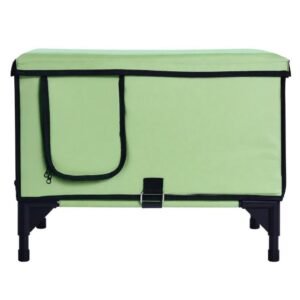 Elevated Heated Outdoor Cat House with 30W Waterproof Heating PadMSRP $128.99Apply for wholesale pricing
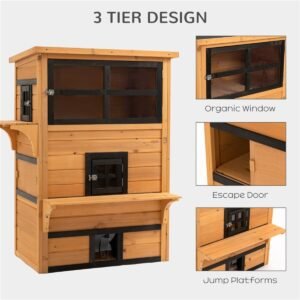 Three-Tier Outdoor Cat Condo with Asphalt Roof and Five Access DoorsMSRP $284.99Apply for wholesale pricing
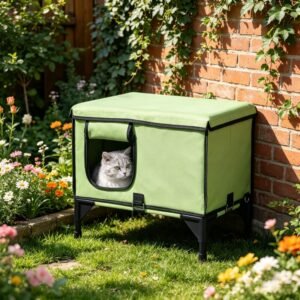 Large Elevated Heated Cat House with Waterproof Pad and Insulated LiningMSRP $124.99Apply for wholesale pricing
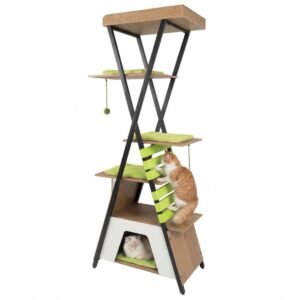 73″ Multi-Level Cat Tree with Condo, Top Perch and Scratching PadMSRP $228.99Apply for wholesale pricing
Stock it as a wholesale KIT
Pre-bundled assortments built from this guide’s categories — one PO, one shipment, wholesale pricing.