How Overseas Small and Medium Retailers Can Efficiently Conduct Scenario-Based One-Stop Procurement from Chinese Manufacturers
For an independent pet store owner in Ohio, a pet shop buyer in Manchester, or a small retail chain in Sydney, the hardest part of building a profitable shelf is rarely the selling — it is the buying. The default import playbook most retailers inherit is à-la-carte: find a chew toy here, a grooming glove there, a slow feeder somewhere else, then stitch five or six suppliers, three freight forwarders, and a spreadsheet of mismatched minimum order quantities (MOQs) into something resembling a purchase order. It works once. It does not scale. This article makes the case for a different model — scenario-based, one-stop procurement — and gives you a concrete framework and a 5-step adoption playbook you can run on your next buying cycle.
The Real Cost of À-La-Carte Importing
Before defining the alternative, it is worth being precise about why the traditional approach bleeds margin and time. The pain is not a single line item — it is a stack of small, compounding frictions.
Fragmented suppliers multiply your administrative load
Every new supplier is a new onboarding workflow: a new contract, a new payment rail, a new communication channel, a new QC expectation. A retailer carrying 120 SKUs sourced from 14 different factories is effectively managing 14 vendor relationships, each with its own lead time, defect rate, and reorder rhythm. That is 14 chances a month for something to slip.
High per-SKU MOQ wastes working capital
Manufacturers set MOQs to protect their production runs. Buy a single SKU loose, and you are often forced to take 500 or 1,000 units of that one item to hit the factory minimum — even if you only move 60 a month. The result: cash locked in slow inventory, and a warehouse corner that becomes a graveyard of over-ordered SKUs. We explore the negotiation side of this in our sister guide, pet-product MOQ negotiation with China manufacturers.
Logistics sprawl inflates landed cost
Ten small parcels from ten suppliers do not travel efficiently. You pay pick-and-pack fees repeatedly, absorb multiple origin-terminal charges, and lose the freight-rate advantages of a consolidated container. On lightweight, low-value pet accessories, fragmented shipping can add 15–30% to the product cost before a single unit reaches your door.
QC inconsistency creates returns and refunds
When each SKU comes from a different factory with different material standards, your “brand” on the shelf is actually a lottery. One batch of collars is fine; the next is stiffer, the stitching weaker. The customer does not blame the factory 6,000 miles away — they blame your store.
Slow time-to-shelf kills seasonal opportunity
Coordinating six suppliers means six production queues and six customs entries. If one is late, your holiday display opens half-empty. In pet retail, where seasonal peaks (back-to-school puppy season, Christmas, summer travel) are predictable but tight, a two-week delay can cost an entire quarter of category growth.
What “Scenario-Based Procurement” Actually Means
Scenario-based procurement is the discipline of buying by real-world use-case and shelf-set, not by individual product. Instead of asking “which 30 SKUs should I order?”, you ask “which 6 shopper scenarios do I want to win, and what complete bundle serves each one?”.
Concretely, a scenario is a moment in a pet owner’s life. Examples that sell reliably across US, EU, UK, AU, and CA markets:
- New-puppy starter — collar, leash, training pads, chew toy, stainless bowl, first-aid basics.
- Senior-dog wellness — joint supplement, soft chew, orthopedic mat, easy-grip bowl.
- Cat playground — scratching post, wand toy, catnip pouch, litter scoop, tunnel.
- Grooming station — brush, deshedding glove, nail clipper, shampoo, towel.
- Outdoor adventure — harness, portable water bottle, waste bag dispenser, cooling bandana.
The bundle is curated to be complete at the point of decision. A shopper walks in needing “stuff for my new kitten” and leaves with a single, coherent Kit — and you, the retailer, reordered the entire set as one line item. This is the model we build at JustForPetStore: curated, scenario-based pet store starter essentials kits sourced directly from vetted Chinese manufacturers and shipped as one consolidated order.
The Scenario Mapping Canvas: A Framework You Can Use This Week
To move from theory to a purchase order, use this four-quadrant canvas. Draw it on one page and fill it in for your store.
Quadrant 1 — Shopper Scenario
Name the moment. Be specific: “first-time cat owner” beats “cat products.” Specificity is what lets you curate tightly and avoid filler SKUs.
Quadrant 2 — Bundle Composition
List 4–8 SKUs that fully serve the scenario. Resist the urge to add a 9th “just in case” item — every added SKU is more MOQ, more QC surface, more capital.
Quadrant 3 — Margin & Velocity
For each SKU, estimate landed cost, retail price, and expected monthly units. A scenario is worth building only if the slowest-moving SKU in it still turns at least 2–3 times a year for you. For a deeper treatment of assortment math, see pet store assortment, margin, and inventory turnover.
Quadrant 4 — Reorder Trigger
Set a single reorder rule for the whole bundle (e.g., “reorder when Kit stock hits 20%”). One trigger, not eight. This is the operational payoff that makes scenario buying scale.
The canvas forces a discipline most retailers skip: it makes you prove that every SKU earns its place in a coherent shopper story rather than sitting on the shelf as a lonely orphan.
KIT vs. Loose-SKU: A Side-by-Side Comparison
The table below summarizes the structural differences between buying the same assortment as loose SKUs versus as a curated scenario Kit. The numbers are illustrative ranges drawn from typical SME import patterns, not guarantees.
| Dimension | Loose SKU (à-la-carte) | Scenario Kit (one-stop) |
|---|---|---|
| Suppliers to manage | 8–14 per 100 SKUs | 1 partner, multiple factories behind it |
| Effective per-SKU MOQ pressure | 500–1,000 units / SKU | Spread across bundle; lower effective entry |
| Freight model | Multiple small shipments | Consolidated container or pallet |
| Estimated logistics overhead | +15–30% on product cost | +5–12% on product cost |
| QC touchpoints | Per-SKU, inconsistent | Per-bundle, standardized |
| Reorder complexity | 8–14 separate POs | 1 bundle PO |
| Time-to-shelf (new set) | 4–8 weeks fragmented | 2–4 weeks coordinated |
| Working capital tied in slow SKUs | High | Lower, by design |
The comparison is not “Kits are magic.” It is that bundling by scenario removes the coordination tax that à-la-carte importing quietly charges you on every order. For the full economic breakdown, our sister article the economics of curated pet store kits runs the per-unit landed-cost math in detail.
A 5-Step Adoption Playbook for Your Store
You do not need to rip out your entire buying process overnight. Run scenario procurement as a pilot, prove the margin, then expand.
Step 1 — Audit your current SKU sprawl
Export your last 12 months of purchase orders. Count suppliers, count SKUs, and flag the 20% of SKUs that drive 80% of returns or dead stock. Those orphans are your first consolidation candidates. Most SME pet retailers discover they are managing 2–3x more supplier relationships than their revenue actually requires.
Step 2 — Pick three winning scenarios
Choose the three shopper moments your store already wins at the register — the ones customers ask for by need, not by product name. If “new puppy” and “cat play” and “outdoor dog” are your top three traffic drivers, build Kits around those first. For cat-heavy stores, the cat play kit is a ready-made starting point; for travel-season demand, the outdoor adventure kit maps cleanly to summer and holiday travel peaks.
Step 3 — Map each scenario to a curated bundle
Use the Scenario Mapping Canvas. Keep bundles to 4–8 SKUs. Confirm every SKU clears your margin-and-velocity bar from Quadrant 3. If a SKU fails the test, cut it — do not “maybe” it.
Step 4 — Consolidate sourcing and shipping
Move those three bundles to a one-stop partner or a small set of coordinated factories. The goal is a single freight consolidation point and a single QC standard. Track your logistics overhead before and after; most retailers see the 15–30% fragmented premium drop toward 5–12% within two cycles.
Step 5 — Reorder by bundle, not by SKU
Implement one reorder trigger per Kit. Train your buyer (or yourself) to treat the bundle as the atomic unit of inventory. This is where the time savings compound: instead of 24 monthly reorder decisions, you make 3.
Why This Matters More for SMEs Than for Big Box
Large retailers can absorb supplier fragmentation because they have procurement departments. You do not. For a small or medium pet store, every hour spent chasing a late factory is an hour not spent on the floor, with customers, growing the business. Scenario-based one-stop procurement is not just a cost lever — it is a focus lever. It lets a three-person shop buy with the coherence of a much larger operation.
It also de-risks your assortment. When a Kit is curated as a complete scenario, a weak SKU is buffered by the strong ones around it; the bundle still sells as a story. Loose orphan SKUs have no such buffer — they either sell alone or they die alone.
Common Objections, Answered
“Won’t a Kit force me to carry SKUs I don’t need?”
Only if you curate badly. The discipline in Step 3 exists precisely to cut SKUs that fail your velocity test. A good Kit is the minimum coherent set, not a warehouse dump. If a component does not earn its place, it is not in the bundle.
“I like choosing every SKU myself.”
You still choose — at the scenario level, which is the level that actually drives shopper decisions. You are trading the illusion of per-SKU control for the reality of per-scenario control, which is what customers respond to anyway.
“Isn’t one-stop just a middleman taking margin?”
A competent one-stop partner earns its spread by removing the coordination tax described above — consolidated freight, standardized QC, lower effective MOQ. Measure it by landed cost per unit and time saved, not by the existence of a margin. Our piece on choosing a reliable China pet supply-chain partner covers how to tell a value-adding partner from a pure arbitrageur.
Counting Your Coordination Tax: A Worked Example
To make the case concrete, run the numbers on a representative 80-SKU assortment bought two ways. Assume an average product cost of $2.20/unit and average monthly volume of 1,600 units across the assortment.
Loose-SKU model
- 80 SKUs sourced from 11 factories.
- Average MOQ 600 units/SKU → you must commit ~48,000 units of initial stock, of which roughly 30% (14,400 units) are slow movers you will not sell within two quarters.
- Logistics overhead at +22% → ~$0.48/unit added cost.
- 11 separate POs, 11 QC inspections, 11 customs entries per replenishment cycle.
- Estimated buyer hours: 18–24 hours per reorder cycle across follow-up, expediting, and defect handling.
Scenario-Kit model
- 80 SKUs reorganized into 12 scenario Kits (e.g., new-puppy, senior-dog, cat-playground, grooming-station, outdoor-adventure, dental-care, training-enrichment, small-pet-starter, travel-essentials, festive-gifting, anxiety-calming, hydration-wellness).
- Initial commitment drops because bundle MOQ spreads the entry: ~31,000 units total, slow-mover share falls to ~12% (3,720 units).
- Logistics overhead at +9% → ~$0.20/unit added cost, a $0.28/unit saving that compounds across every reorder.
- 12 bundle POs, one consolidated QC standard, 2–3 consolidated freight movements per cycle.
- Estimated buyer hours: 5–7 hours per cycle.
The arithmetic is not exotic: on 1,600 units/month, the logistics saving alone is roughly $448/month, or $5,400/year, before you count the reclaimed 12–17 buyer hours per cycle. For a three-person shop, that is the difference between a buyer who is firefighting suppliers and a buyer who is on the floor selling. The per-unit landed-cost mechanics behind this example are laid out in the economics of curated pet store kits.
Five Scenario Blueprints You Can Lift Today
If you want to skip the blank canvas, here are five battle-tested scenario structures that perform across US/EU/UK/AU/CA markets. Each lists a tight 5–7 SKU bundle.
Blueprint 1 — New-Puppy Starter
Adjustable collar, 1.2m training leash, washable puppy pads (30ct), textured teething chew, stainless non-slip bowl, soft crate mat. This is the highest-intent traffic scenario for pet stores and the backbone of the pet store starter essentials kit.
Blueprint 2 — Senior-Dog Wellness
Joint-support soft chew, orthopedic bolstersleep mat, raised easy-reach bowl, gentle grooming brush, paw-balmart. Lower velocity but high margin and strong loyalty repeat.
Blueprint 3 — Cat Playground
Sisal scratching post, feather wand, catnip pouch, enclosed litter scoop, collapsible tunnel. The cat play kit follows this exact logic and is a strong standalone or add-on.
Blueprint 4 — Grooming Station
Deshedding brush, nail clipper with safety guard, tear-stain wipe pack, pH-balanced shampoo, microfiber towel. High repeat purchase on consumables within the bundle.
Blueprint 5 — Outdoor Adventure
No-pull harness, collapsible silicone water bottle, waste-bag dispenser, cooling bandana, reflective ID tag. Maps to summer and holiday travel peaks; see the outdoor adventure kit.
Note the pattern: every blueprint pairs one durable hero item with 2–3 consumable or repeat-purchase companions. That structure is what makes a Kit turn quickly — the consumables pull the whole bundle back to the shelf.
Pitfalls in Kit Design (and How to Avoid Them)
Over-bundling
The temptation is to make the Kit “more valuable” by adding SKUs. Resist it. Every SKU past eight reintroduces the very MOQ, QC, and capital problems you are escaping. A Kit is a story, not a warehouse.
Ignoring regional preference
UK and EU shoppers lean toward different sizing and material expectations than US buyers; AU has strong outdoor/cooling demand. Curate bundles to your market rather than importing a generic global mix. A one-stop partner with export experience can flag these nuances during curation.
Letting price, not scenario, drive the bundle
It is easy to fill a Kit with whatever is cheapest at the factory. But a cheap SKU that does not belong in the shopper’s moment is dead weight. Anchor on the scenario first; price is a constraint you solve within the bundle, not the organizing principle.
Skipping the reorder trigger
The entire operational payoff depends on reordering by bundle. If you fall back to per-SKU reorders, you have built a Kit for show and kept à-la-carte pain for real. Set the trigger in Step 5 and hold the line.
The 90-Day Scorecard: What Good Looks Like
A pilot is only useful if you measure it. Track these five metrics at day 0 (baseline, à-la-carte) and day 90 (after three bundle cycles):
| Metric | Baseline (loose SKU) | Target after pilot |
|---|---|---|
| Active supplier relationships | 11 | 3–4 (or 1 partner) |
| Buyer hours / reorder cycle | 18–24 | 5–8 |
| Logistics overhead % | +22% | +9% or lower |
| Slow-mover share of stock | ~30% | ~12% or lower |
| Time-to-shelf for new set | 4–8 weeks | 2–4 weeks |
If your pilot moves even three of these five needles, scenario-based one-stop procurement has earned a permanent place in your buying process. If it does not, the likely cause is over-bundling or skipping the reorder trigger in Step 5 — revisit the Scenario Mapping Canvas before abandoning the model. The margin math that justifies the shift is expanded in our sister piece on the economics of curated pet store kits, and the upstream supplier work that pairs with it is covered in finding China pet manufacturers for direct import.
Ready to stock these ideas? Browse wholesale pet KITs →
Shop these pet categories
Wholesale pricing, no minimum order.
Related wholesale collections
Products mentioned here
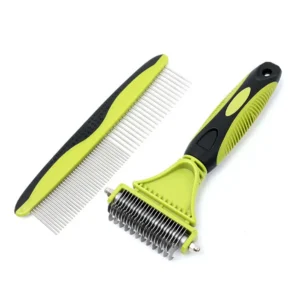 2-in-1 Pet Grooming Comb Set – Dual-Sided Deshedding & Dematting Tools for Dogs and CatsMSRP $6.29Login for wholesale pricing
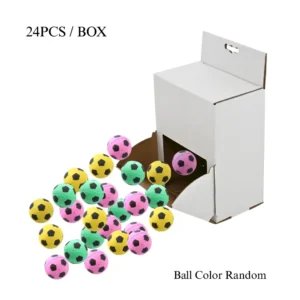 24-Pack Cat Toy Balls – Soft Latex Foam Soccer Ball Toys for Cats, Interactive Chase & Self-Play, Wholesale Pet SuppliesMSRP $8.89Login for wholesale pricing
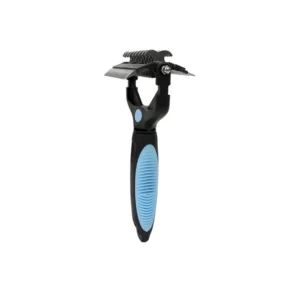 3-in-1 Pet Grooming Comb – Professional Detangling, Dematting & Deshedding Tool for Dogs & CatsMSRP $6.49Login for wholesale pricing
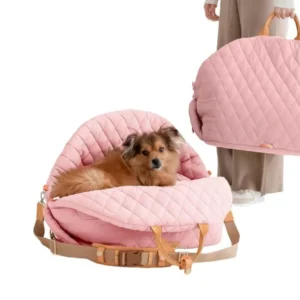 3-in-1 Small Pet Carrier Bag | Car Seat Booster, Travel Bed & Indoor Pet Bed for Dogs & CatsMSRP $21.89Login for wholesale pricing