How Overseas Independent Pet Store Owners Can Precisely Find Small and Medium Pet Manufacturers in China for Direct Procurement
Once you decide to import directly, the next question is the one that stops most first-time buyers cold: who do I actually buy from? China’s pet-supply manufacturing base is enormous, but “enormous” is not the same as “findable.” The factories that make reliable, reasonably-priced pet products for overseas retailers are real — but so are the trading companies that dress up as factories, the middlemen who add cost without adding value, and the listings that recycle stock photos from someone else’s production line. This guide shows you exactly where to look, how to prove a supplier is a genuine manufacturer, and how to weigh direct import against a one-stop partner.
Where the Real Manufacturers Hide
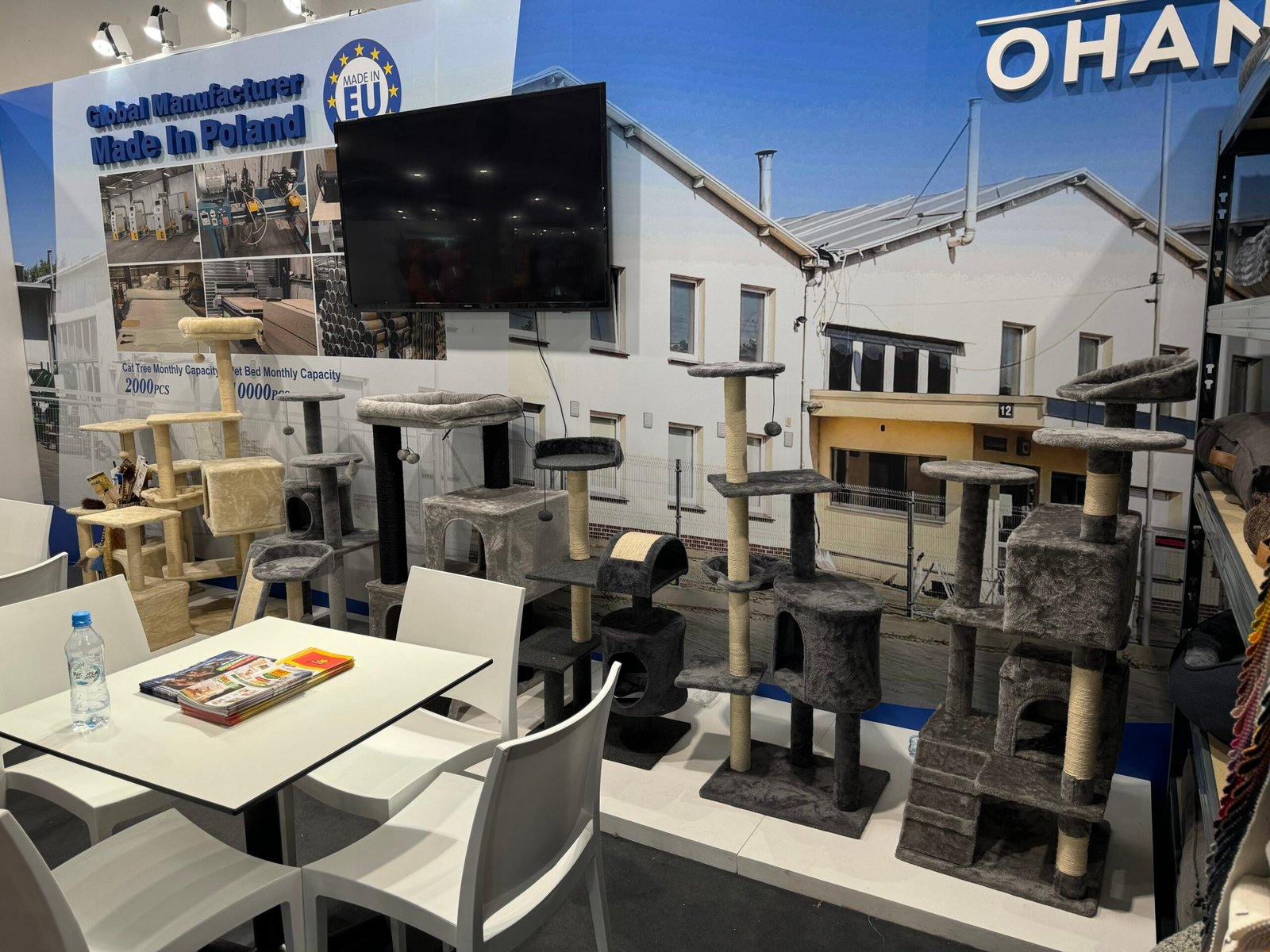
Finding a factory is less about a single magic website and more about working a short list of high-signal channels. Below are the channels that consistently surface genuine small and medium pet manufacturers.
Canton Fair (Guangzhou, twice yearly)
The Canton Fair is the largest trade show in China and a reliable hunting ground for pet-accessory and pet-care factories, especially in the home-and-gifts and consumer-goods phases. The value is not just the booths — it is that you can stand on a factory’s carpet, handle samples, and ask production questions face to face. Bring a shortlist and a scoring sheet; you will meet far more suppliers than you can follow up with.
China International Pet Show (CIPS)
CIPS is the pet-specific flagship. Because the entire audience is pet trade, the signal-to-noise ratio is far higher than a general fair. You will meet factories that specialize in aquatics, small-animal, dog/cat accessories, and grooming equipment — the exact categories independent retailers care about. CIPS also draws overseas buyers specifically, so exhibitors are used to export documentation and Incoterms.
Pet Fair Asia (Shanghai)
Pet Fair Asia is the other major pet-specific event and one of the largest in the Asia-Pacific region. It is strong for branded and OEM/ODM manufacturers alike. If your plan includes private-label or custom components, this is where many ODM-capable factories show their newest molds.
Regional manufacturing clusters
Geography concentrates capability. Knowing the clusters lets you target your search instead of boiling the ocean:
- Ningbo — strong in pet accessories, hardware-backed products (leashes, clips, bowls).
- Wenzhou — leather and synthetic collars, harnesses, and garment-style accessories.
- Yiwu — the world’s largest small-commodities market; excellent for high-variety, low-complexity pet items and fast sampling, though quality variance is wider.
- Shandong — larger-scale pet food, treats, and some textile and bedding production.
Searching “pet manufacturer + cluster name” on B2B platforms returns far more relevant results than a generic national search.
B2B platforms: use the Manufacturer filter
On Alibaba, switch to the Manufacturer / “Verified” tab and filter for “Manufacturer” rather than “Trading Company” in the supplier type. On Made-in-China, similarly use the “Audited Supplier” and “Manufacturer” flags. These filters are imperfect — some trading companies still sneak through — but they cut the initial list dramatically. Treat platform verification as a starting signal, not proof; the audit checklist below is what converts a lead into a supplier.
LinkedIn and factory-direct outreach
Many export managers and factory owners maintain LinkedIn profiles, especially younger, export-oriented SMEs. A targeted search (“pet products export manager Ningbo”) plus a short, specific message often reaches a decision-maker faster than a cold platform inquiry. Pair this with direct factory websites (many SMEs now run English sites) and you can build a warm pipeline before any trade show.
Factory vs. Trading Company in Disguise: The Audit Checklist
The single most expensive mistake in direct import is mistaking a trading company for a factory. Traders are not inherently bad — but you should know you are paying a layer. Use this checklist to separate the two.
1. Business license and legal entity
Request the supplier’s business license (营业执照). A genuine manufacturer’s scope of business will list production/manufacturing for pet or related goods. A trader’s license lists “sales,” “import/export,” or “distribution” — not manufacturing. Cross-check the company name on China’s public enterprise registry where possible.
2. Production floor video or live factory tour
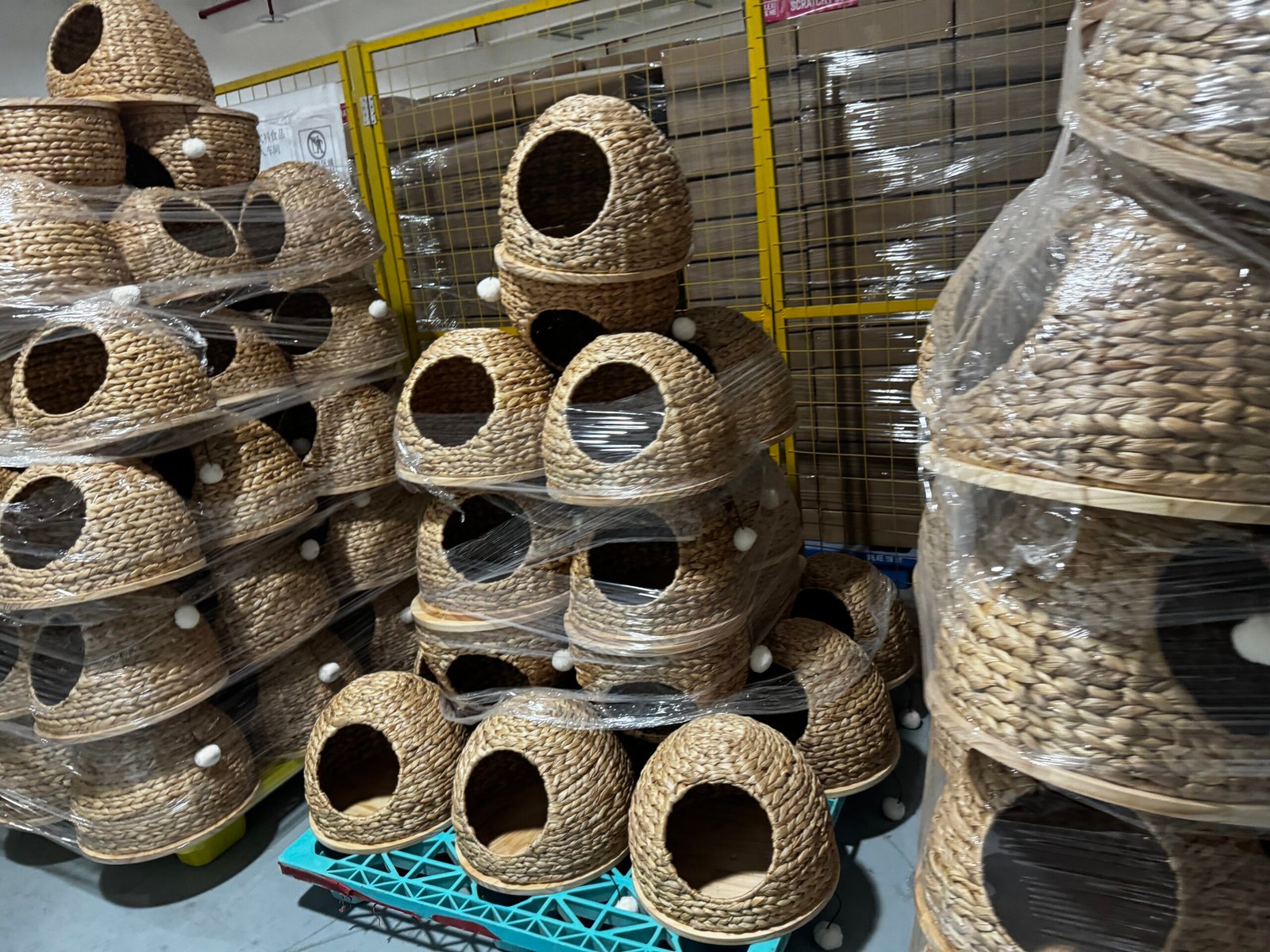
Ask for a recent, unedited walkthrough video of the production floor: machines running, workers, raw-material storage, finished-goods area. A trader will deflect (“our partner factory is confidential”) or send generic stock footage. A real factory can usually show you its line within a day. For higher stakes, commission a third-party inspection (SGS, TÜV, or a local QA agency) — a few hundred dollars that can save a container of defects.
3. MOQ and production logic
A genuine factory discusses MOQ in terms of production runs (e.g., “our extruder minimum is 2,000 units per SKU, but we can combine colors”). A trader often quotes suspiciously uniform, round MOQs across wildly different product types — a sign they are aggregating from multiple unrelated sources. Inconsistent MOQ logic across their catalog is a red flag. For negotiation tactics once you have a real factory, see pet-product MOQ negotiation.
4. Certifications relevant to your market
For the US, ask about FDA-relevant handling for anything ingestible and CPSIA where applicable; for the EU/UK, REACH and CE where relevant; for AU, relevant biosecurity and labeling rules. A serious export manufacturer can produce test reports (often from third-party labs) mapped to your destination market. A trader may promise “no problem, we can do certificates” without a clear lab trail. Our compliance deep-dive, pet-product compliance and safety standards, lists exactly which certificates matter per market.
5. Sampling process and mold/tooling ownership
A manufacturer can explain how a sample is made, how long tooling takes, and whether the mold is theirs or shared. They will typically charge a sample fee that is refundable against a production order. A trader either cannot explain the production path or quotes samples at parity with production (a sign they are just buying one unit to reship). Ask: “Who owns the mold?” A factory owns or builds it; a pure trader does not.
6. Reference customers (carefully)
Ask for 2–3 overseas reference buyers in non-competing regions. A confident manufacturer will provide them (with permission) or at least describe the export destinations and volumes. Total refusal, or only “we cannot disclose,” across every question, shifts the probability toward trader.
Direct Import vs. One-Stop Partner: The Tradeoffs
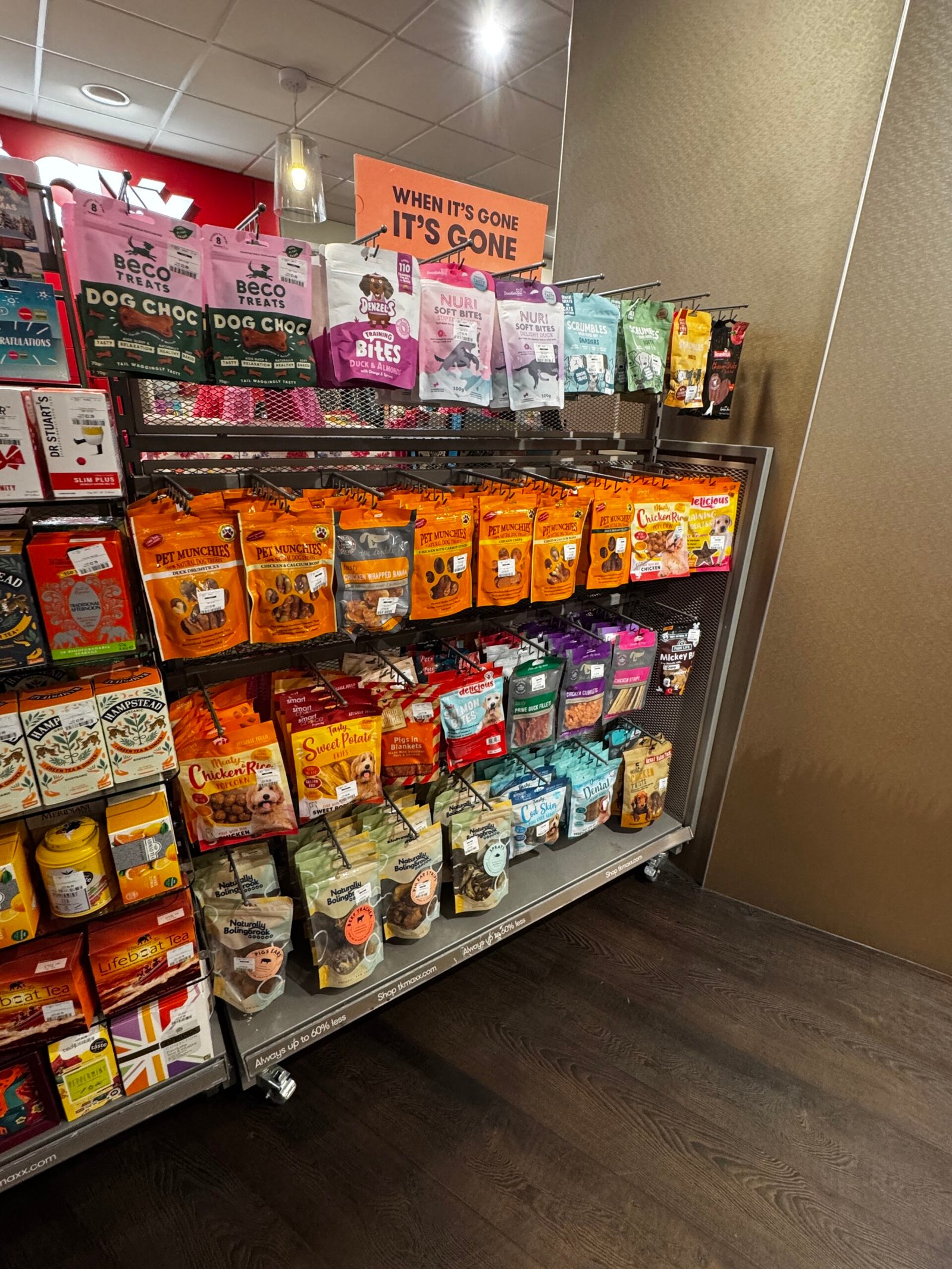
Finding and vetting factories is only half the decision. The other half is whether to manage the whole chain yourself or work with a curated one-stop partner. Neither is universally right; the answer depends on your volume, team, and risk appetite.
Direct import — pros
- Maximum unit-price control. You negotiate factory price with no intermediary spread.
- Direct relationship. You can specify materials, colors, and packaging precisely.
- Customization. Easier to develop private-label or unique SKUs when you talk to the factory directly.
Direct import — cons
- Supplier discovery and vetting is labor-intensive. The checklist above is real work, repeated per factory.
- You own logistics, customs, and QC. Fragmented shipments, brokerage, and defect resolution all land on your desk.
- Higher coordination risk. Multiple factories mean multiple failure points and slower time-to-shelf.
- Compliance is your responsibility. You must secure and verify each certificate for each market.
One-stop partner — pros
- Pre-vetted factories. The partner has already run the audit checklist so you do not repeat it.
- Consolidated shipping and standardized QC. One freight movement, one quality bar.
- Lower effective MOQ and simpler reordering. Bundles spread order quantity and reduce admin.
- Scenario curation. A partner like JustForPetStore can hand you a complete, shelf-ready Kit — for example the dental & joint wellness kit or the professional grooming kit — instead of ten loose SKUs.
One-stop partner — cons
- A margin layer exists. You trade some unit-price control for removed coordination cost — measure it by landed cost per unit, not by its mere presence.
- Less granular control. You specify at the scenario level, not the per-SKU production level.
- Custom development is slower through a partner than direct with a factory you manage.
Many retailers run a hybrid: direct-import their hero SKUs where they have leverage, and use a one-stop partner for the long tail of scenario bundles. A custom retail kit lets you blend your specified components with the partner’s curated base. The sister article scenario-based one-stop procurement explains how to structure that blend.
The Manufacturer Discovery Checklist (One-Page Version)
Print this and score every lead 1–5 before you invest a follow-up email:
| Signal | What “pass” looks like | Red flag |
|---|---|---|
| Supplier type | Listed as Manufacturer / Verified / Audited | Listed as Trading Company |
| Business license scope | Includes manufacturing of pet goods | Only sales / distribution |
| Factory video | Real, recent, unedited floor walkthrough | Stock footage or refusal |
| MOQ logic | Tied to production runs, varies by item | Uniform round MOQs across categories |
| Certificates | Third-party lab reports mapped to your market | Vague “we can provide anything” |
| Mold/tooling | Factory owns or builds the mold | Cannot explain production path |
| Sampling | Refundable sample fee, clear lead time | Sample = production price, no explanation |
| References | Provides non-competing overseas buyers | Total refusal on everything |
A lead scoring below 6 of 8 should not get a purchase order — at most a sample request. This discipline is what keeps first-time importers out of the classic trap of paying factory prices for trader service.
A Sample First-Contact Email
Most suppliers receive dozens of vague “I want to buy pet products, send catalog” messages. A specific, professional first contact stands out and pre-screens the responder. Adapt the template below:
Subject: Direct import inquiry —
for EU/UK pet retail, MOQ & catalog requestHello [Name],
We are an independent pet retailer based in [country] with [X] stores / [Y] monthly online orders. We are sourcing [specific category, e.g., durable dog chew toys and slow feeders] for direct import and are evaluating 3–4 manufacturing partners.
Could you confirm:
- Your company type — manufacturer or trading company — and your business license scope?
- MOQ per SKU and whether you can combine colors within a production run?
- Which export certifications you hold for the [EU/US/UK/AU] market (e.g., REACH, CE, FDA-handling, CPSIA)?
- Sample fee and lead time, and whether it is refundable against a production order?
- Do you own the molds/tooling for your standard SKUs?
Please also share a recent production-floor video if available. We reorder quarterly and value a stable, transparent supply relationship over the lowest one-time price.
Best regards,
[Your name], [Store name], [email], [website]
This email does three things at once: it signals you are a serious repeat buyer, it forces the supplier to reveal trader-vs-factory signals early, and it sets a transparency tone that filters out the evasive ones before you spend a dollar.
Logistics and Compliance: Don’t Forget the Back End
Finding the factory is the exciting part; clearing customs is the part that determines whether your “great price” survives contact with reality. Two reminders:
Logistics: Direct import means you manage freight forwarders, Incoterms (FOB vs. CIF vs. DDP), and last-mile delivery. Consolidation is your friend — a single container or LCL pallet beats ten parcels. The cost mechanics are detailed in importing pet products: logistics and costs.
Compliance: Each market has labeling, material, and (for ingestibles) handling rules. A real manufacturer helps you meet them; a trader often punts. Build compliance verification into the audit checklist above, not as an afterthought once the container is already at sea.
Reading a Factory’s Export History
Once a supplier passes the basic audit, the next step is judging whether they can actually serve your market reliably — not just produce. Three signals matter.
Destination-market experience
A factory that already ships to the US understands FDA-adjacent handling for ingestibles and CPSIA expectations for children’s-adjacent pet items; one with EU/UK volume understands REACH and CE documentation flows. Ask for the share of revenue by destination region. A factory doing 60% of its export to your region is lower-risk than one pivoting from domestic sales and learning your rules on your order.
Reorder rate of existing accounts
The strongest proof of a good factory is that its buyers come back. Ask: “What percentage of your overseas accounts have reordered more than twice?” A confident manufacturer knows this number. A trader will not, because they do not have stable accounts — they have one-off deal hunters.
Sampling-to-production consistency
Request photos of a buyer’s approved sample next to a unit from a recent production run. A real factory’s process control keeps them close; a subcontractor network produces drift. This single comparison reveals more about long-term quality than any certificate.
Negotiating Your First Order and Payment Terms
Direct import lives or dies on the first order. Use these conventions to protect your cash while building trust.
Payment structure
The standard pattern is 30% deposit with the proforma invoice and 70% against a bill of lading (B/L) copy or before container release, under a secure channel. Be wary of any “factory” demanding 100% upfront via irreversible method — that is a classic trader or scam pattern. Escrow or Alibaba Trade Assurance can bridge trust on order one.
Tooling and sample fees
Expect a sample fee (typically refundable against a production order) and, for custom items, a mold fee you should own outright — get written confirmation that the mold is yours and will not be used for other buyers without consent. For standard SKUs, there should be no mold fee at all.
Price breaks and order cadence
Rather than negotiating the absolute lowest price on a one-time 500-unit order, negotiate a price ladder tied to a quarterly cadence: “If I commit to 2,000 units/quarter for three quarters, what is the unit price?” Factories value predictable run-time more than a single large order, and cadence is exactly what scenario-based reordering (see the sister article on scenario-based one-stop procurement) is built to deliver.
Incerms clarity
Agree Incoterms in writing: FOB (you own freight from origin port), CIF (factory covers to destination port), or DDP (delivered duty paid to your door). The term decides who carries risk at each leg. Misunderstanding Incoterms is the most common source of “why is my landed cost double what I quoted” surprises.
Communication Red Flags
How a supplier writes is often the first tell. Watch for:
- Vague evasion on factory evidence — “we have partner factories” with no video, name, or location.
- Too-good pricing across dissimilar categories at identical margins — suggests aggregation, not manufacturing.
- Pressure to skip inspection or to use only their “preferred” cheap forwarder with no option to verify.
- Certificate promises without lab names — “we can make any certificate” is not the same as holding one.
- Inconsistent technical answers — different people giving different MOQ, material, or lead-time numbers across emails.
None of these alone is disqualifying, but two or more should move that lead to “sample only, no PO.”
A Regional Cluster Deep-Dive
To sharpen your search, match cluster to category:
- Ningbo: best for metal/webbing accessories — leashes, clips, carabiners, stainless and silicone bowls. Strong export infrastructure via Ningbo-Zhoushan Port.
- Wenzhou: best for leather and PU collars, harnesses, and apparel-style dog wear. Many family-run SMEs with flexible small runs.
- Yiwu: best for variety and speed on low-complexity items — toys, small accessories, grooming tidbits. Wider quality variance; sample hard before committing volume.
- Shandong: best for scale on pet food, treats, and some bedding/textiles. Higher MOQs but stronger compliance documentation for ingestibles.
Targeting the right cluster cuts your supplier shortlist from hundreds to a manageable dozen and improves the odds that a “Manufacturer” filter result is genuinely a factory.
When a One-Stop Partner Is the Smarter First Move
If you are a first-time importer with limited bandwidth, running the full discovery-and-audit pipeline on ten factories is a heavy lift. A curated one-stop partner effectively outsources the checklist in this article: they have already vetted factories, consolidated shipping, and standardized QC. You start with shelf-ready Kits — the dental & joint wellness kit, the professional grooming kit, or a custom retail kit — and learn the category while de-risking cash flow. Many retailers then graduate to selective direct import on hero SKUs once they understand their own velocity. Choosing that partner well is its own discipline, covered in how to choose a reliable China pet supply-chain partner.
Ready to stock these ideas? Browse wholesale pet KITs →
Shop these pet categories
Wholesale pricing, no minimum order.
Products mentioned here
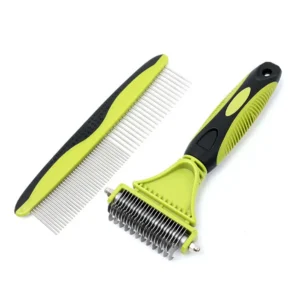 2-in-1 Pet Grooming Comb Set – Dual-Sided Deshedding & Dematting Tools for Dogs and CatsMSRP $6.29Login for wholesale pricing
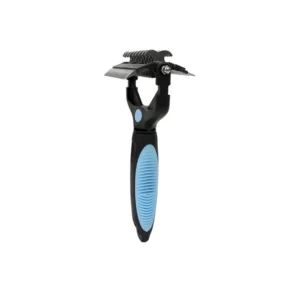 3-in-1 Pet Grooming Comb – Professional Detangling, Dematting & Deshedding Tool for Dogs & CatsMSRP $6.49Login for wholesale pricing
 3-in-1 Pet Grooming Set with Comb, Brush & Nail Clipper – Wholesale for Pet Shops(MOQ 32)MSRP $5.59Login for wholesale pricing
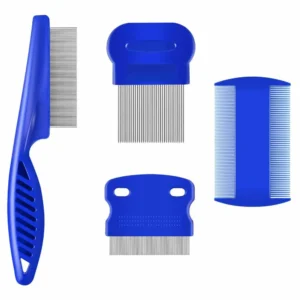 4 Pack Cat Flea Comb Set – Blue Grooming Tools for Long Hair Cats & Dogs | Wholesale Pet Grooming SuppliesMSRP $1.98Login for wholesale pricing