

Counterfeit Pet Products: CBP Import Rules | JustForPetStore
Counterfeit pet products are now a border problem every small importer should price into their risk math. In fiscal year 2025, U.S. Customs and Border Protection seized 78.4 million items bearing fake trademarks — worth $7.4 billion at genuine retail prices — more than double 2024. One suspect shipment can be detained, seized, and forfeited, with a civil fine up to the full genuine value. The rules are knowable, so here is what they say.
What counts as a counterfeit pet product at the U.S. border?
A counterfeit is merchandise bearing a mark that is indistinguishable from, or a colorable imitation of, a registered U.S. trademark. Under 19 U.S.C. 1526(a), it is unlawful to import foreign-made merchandise bearing a trademark owned by a U.S. person and registered with the USPTO — once that registration is recorded with CBP — unless you produce the trademark owner’s written consent at entry. Three practical points follow. The mark does not have to be on the product itself; it can be on the label, packaging, or wrapper. Consent cannot be assumed from a verbal supplier promise; it is a document presented at entry. And a counterfeit determination does not require intent: a shipment of honest-looking dog toys with a famous logo is seized the same way whether the importer knew or not.
How big is the counterfeit trade in 2026?
CBP’s FY 2025 Intellectual Property Rights fact sheet is blunt. Seizures reached 78.4 million items with a manufacturer’s suggested retail price of $7.4 billion had the goods been genuine, up from 32.3 million items and $5.4 billion in FY 2024 — the total quantity of seized goods more than doubled year over year. Seizures from China, Hong Kong, and Vietnam accounted for approximately 95 percent of the total, and the majority of seizures now occur in the commercial vessel environment, meaning containerized freight, not just express parcels. CBP also executed 88,167 alternative enforcement actions in the same year. The agency’s enforcement priorities name toys, apparel, electronics, and consumer products among the top seized categories — all categories a pet retailer imports, across dog and cat lines alike. The retail exposure does not end at the border, either: stores that unknowingly sell counterfeits face brand-owner civil claims and marketplace delistings even when customs never touched the shipment, which is why the buying process matters more than the paperwork.
What happens after CBP detains a shipment?
The process moves on a short clock. Under 19 CFR 133.21, when CBP suspects merchandise bears a counterfeit mark, it may detain the goods for up to 30 days while it investigates. The importer receives written notice within five business days of the detention decision and has seven business days to respond with information showing the goods are authentic. If the response is late or unpersuasive, CBP may show the trademark owner photos and samples of the goods, including serial numbers. Once CBP finds a counterfeit mark, the goods are seized, the trademark owner is notified, and after forfeiture the merchandise is destroyed — unless the owner consents and the goods are safe to relabel, in which case the mark is obliterated and the goods may be donated or auctioned. The importer’s ability to “fix” the entry is close to nil once the mark is found.
What fines does a first counterfeit seizure carry?
The civil penalty schedule in 19 U.S.C. 1526(f) is arithmetic, not discretion. For a first seizure, a person who directs, assists, or aids and abets the importation of counterfeit merchandise for sale faces a fine of up to the value the merchandise would have had if genuine, measured at MSRP. For a second seizure and every one after, the ceiling doubles: up to twice the genuine value. The fine is discretionary and stacks on top of any other civil or criminal penalty. Run the numbers for a small store: 500 fake plush toys that would retail at $20 apiece carry a genuine value of $10,000, so a first-offense exposure of $10,000 plus the loss of the goods, plus the freight already paid. The math inverts the appeal of a suspiciously cheap supplier: a 40 percent unit discount is not worth a fine equal to your entire gross margin on the shipment.
What are gray market goods, and how are they different?
Gray market goods are genuine merchandise bearing a real mark, made or authorized abroad, but imported without the U.S. trademark owner’s blessing. Counterfeits are fakes; gray market goods are real — and they are still restricted. Under 19 CFR 133.23, restricted gray market goods are refused entry and detained for 30 days, during which the importer can try to prove an exception: the mark was applied by a foreign owner under common ownership or control with the U.S. owner; the goods are not materially different from what the U.S. owner sells here; or, for goods that are materially different, they can enter with a conspicuous label stating the product is not authorized by the U.S. trademark owner and is physically and materially different. If none applies by the end of the detention window, the goods are seized. This distinction matters when a European brand’s products appear on a wholesale marketplace at prices too good to pass up.
How does CBP trademark recordation work?
Registration with the USPTO is not enough — for border enforcement, the mark must also be recorded with CBP through its e-Recordation program. Only marks on the Principal Register qualify. The fee is $190 per mark, or $190 per class for registrations covering multiple classes of goods, and the recordation stays valid as long as the USPTO registration is valid, including its 20-year term; renewals after a USPTO renewal cost $80. Recordation is what routes your brand into CBP’s targeting: the agency’s fact sheet states plainly that it prioritizes enforcement of trademarks and copyrights recorded through the e-Recordation program. Recorded brands can also request port-level training so officers know what the genuine article looks like — a benefit worth requesting if counterfeit copies of your SKUs have appeared in your market.
How do you vet suppliers against counterfeits?
Buy brand-name pet products only from the brand itself or from distributors you can verify on the brand’s authorized-reseller list, and get authorization letters for your file before the first container ships. Be suspicious of “factory overruns” and “unclaimed stock” of branded dog toys or accessories: genuine brand owners do not liquidate official production that way, and the story is a counterfeit tell. Price is the fastest screen — if landed cost sits far below the brand’s wholesale list, ask why, and treat a vague answer as an answer. Inspect samples against known-genuine product for stitch quality, material weight, packaging print registration, and batch coding, because counterfeit quality has improved enough to fool a photo. Keep every supplier declaration, PO, and communication; when CBP asks questions, the importer who can document a good-faith sourcing process is in a different negotiating position from one who cannot. For marketplace “wholesale” listings of name-brand goods, treat the seller’s account age, review history, and willingness to provide brand authorization as a single screen — all three should pass, and one failure is enough to walk away, because the cost of a bad container is never the purchase price alone.
What if CBP demands redelivery after release?
Sometimes the problem surfaces after the goods are already in your warehouse. Under 19 CFR 133.26, if CBP finds that released merchandise should have been detained under the trademark rules, it demands redelivery under the terms of your entry bond — the continuous or single-entry bond filed on CBP Form 301. Ignore the demand and the government pursues liquidated damages against the bond, which for a small importer often exceeds the value of the goods. The right response sequence: confirm the demand in writing, stop selling or moving the merchandise immediately, separate the affected lot from your sellable stock, and get professional help before the response deadline — the same petition and mitigation framework that applies to penalties also frames what a bond claim can be negotiated down to. A quiet return of the goods costs less than any fine you will ever negotiate.
Should you record your own private-label brand with CBP?
If you import products under your own house brand, yes — recordation is cheap insurance for exactly the seller this site serves. The sequence is fixed: register the mark with the USPTO first (CBP recordation requires a live Principal Register registration), then file the e-Recordation application with the required ownership and manufacturing information, paying $190 per mark or per class. From that point, CBP officers at every port can identify your mark as U.S.-owned and enforced, which matters because private-label pet products with a genuinely distinct brand story are precisely what counterfeiters copy once they see your products ranking in marketplaces. Building a house brand with low-MOQ sourcing and a recorded mark gives you both margin and a border defense. Questions about building a private-label program that clears customs cleanly? Contact us to talk sourcing.
Ready to stock these ideas? Browse wholesale pet KITs →
Shop these pet categories
Wholesale pricing, no minimum order.
Products mentioned here
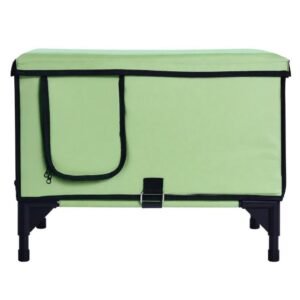 Elevated Heated Outdoor Cat House with 30W Waterproof Heating PadMSRP $128.99Apply for wholesale pricing
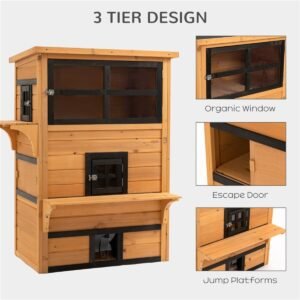 Three-Tier Outdoor Cat Condo with Asphalt Roof and Five Access DoorsMSRP $284.99Apply for wholesale pricing
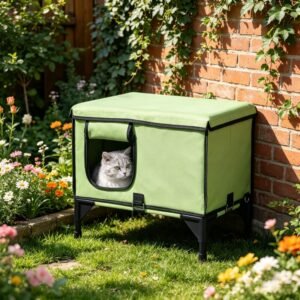 Large Elevated Heated Cat House with Waterproof Pad and Insulated LiningMSRP $124.99Apply for wholesale pricing
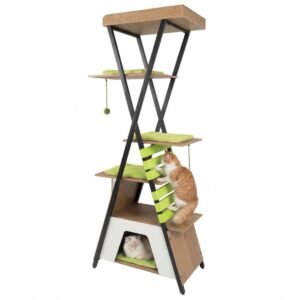 73″ Multi-Level Cat Tree with Condo, Top Perch and Scratching PadMSRP $228.99Apply for wholesale pricing
Stock it as a wholesale KIT
Pre-bundled assortments built from this guide’s categories — one PO, one shipment, wholesale pricing.