
Customs Assists: Declare Tooling Costs | JustForPetStore
A customs assist is anything you give a factory free or below cost that ends up in, or makes possible, the goods you import, and its value must be added to the price you declare. For pet private label that usually means molds, print plates, dies, samples, and design files. Undeclared tooling is one of the most common reasons a small importer gets an unexpected duty bill.
What is a customs assist in plain English?
It is a gift to your supplier, valued and taxed. If you pay for a mold and let the factory keep it, if you ship free components for assembly, or if you hand over artwork and packaging design produced overseas, you have contributed something of value to the production of the goods. The declared customs value is meant to reflect the full price of the merchandise, not just the invoice the factory sends. An assist is the gap between those two numbers. Read the statutory definition in 19 U.S.C. 1401a and the pattern becomes obvious: the law lists four things a buyer can supply, and pet private label routinely supplies all four.
Which four categories of buyer-supplied items count as assists?
The statute names them precisely, and the language is broad enough to catch ordinary small-brand behavior. First, materials, components, parts, and similar items incorporated into the imported goods, which covers free buckles, zipper pulls, and branded labels you ship to the factory. Second, tools, dies, molds, and similar items used in production, which is the mold for a crate panel or a bowl. Third, merchandise consumed in the production of the imported goods, the supplies that disappear into the process rather than into the product. Fourth, engineering, development, artwork, design work, and plans or sketches undertaken outside the United States and necessary for production, which is where packaging design and pattern making land. If you have ever paid a Chinese design studio to build a private-label bag layout, you have probably created an assist and may not have declared it.
Why does a private-label mold trigger an assist when the factory owns the machine?
Because ownership is not the test. The test is who supplied the item and whether it was supplied free or at reduced cost for use in producing goods exported to the United States. A common arrangement looks like this: you pay a tooling shop $8,000 for an injection mold, the mold ships to the factory, and the factory runs your crate panels on it. You never see the mold again. That is still an assist, because you supplied a tool used in production, and its value belongs in the customs value of the finished goods. The same logic applies when you pay half the mold cost and the factory pays the rest, which is why negotiated tooling splits need to be documented rather than remembered. 19 CFR Part 152 sets out the addition rules in 152.103(b) and the valuation rules in 152.103(d), and both apply to tooling whether or not you own the physical item.
How is an assist valued before it is added to the price?
The regulation gives you a method rather than a judgment call. For materials, components, and parts bought from an unrelated seller, the value is the cost of acquisition. For items you or a related party produced, it is the cost of production. Both include freight to the place of production, which is the line small importers forget: the ocean freight you paid to get a component to Shenzhen is part of the assist value. For tools, dies, and molds, the value is the acquisition cost or the production cost, and if the tool has already been used, the original cost has to be adjusted downward to reflect that use. Leased tooling is valued at the cost of the lease. Repairs and modifications can increase the value. Keep the supplier invoice, the freight invoice, and a simple depreciation note in one folder per tool, because reconstructing that file two years later is the expensive version of this task.
How do you spread the assist value across shipments?
Apportion it on a reasonable basis consistent with generally accepted accounting principles, and the regulation gives you four acceptable starting points when the entire expected production is exported to the United States. You can assign the whole value to the first shipment, which is the cleanest option if you want the duty event over with. You can spread it over the units produced as of the first shipment, over the total expected production, or over another GAAP method you can defend. The worked example in 152.103(e) is worth memorizing: a buyer provides a mold and contracts for 10,000 units, and when the first 1,000 units ship the factory has produced 4,000. The importer may apportion over 1,000, over 4,000, over 10,000, or over any other number that follows GAAP. Pick the method before the first entry, write it down, and apply it consistently, because switching mid-stream is what makes an auditor ask why.
What happens when design work is done in the United States?
It usually stays out of the customs value, and that is one of the few clean breaks in this area. Design and development work performed in the United States does not count as an assist if three conditions hold: the work is done by an individual domiciled in the United States, that person is acting as your employee or agent, and the work is incidental to other engineering or design work also performed in the United States. If your U.S. designer sketches a pet bed or a cat tree and a Chinese pattern maker turns it into production drawings, the U.S. portion is generally excluded while the overseas portion is not. When an assist was produced partly in the United States and partly abroad, the value to declare is the value added outside the United States. This is exactly the kind of split that a one-page allocation memo settles in advance and a shoebox of emails cannot settle after the fact.
When does a free sample or prototype become an assist?
When it is used to make the production goods rather than merely shown to a buyer. A pre-production sample the factory produces and sends you is a sales expense on their side, not your assist. But a sample you build, a 3D print you commission, a mold trial you pay for, or a set of hardware you ship so the factory can match a finish are contributions to production, and their value belongs in the entry. The practical test is simple: did this item help the factory make my goods? If yes, the cost goes into the assist file, even when the amount feels trivial. A hundred dollars of hardware per shipment is not worth a penalty conversation, and the record costs you ten minutes.
What documents does CBP expect to see?
At entry, the importer is responsible for the value declared, not the broker and not the factory. 19 U.S.C. 1484 requires an entry summary that states the value of the merchandise, and that signature is yours. In practice, keep four documents per assist: the purchase invoice or cost build-up, proof of payment, the freight or shipping cost to the production site, and the apportionment schedule showing how the value was spread. Add the mold drawing or design file reference so the item is identifiable later. Brokers will ask for this at set-up if you flag tooling in your onboarding sheet, and they will not ask again if you do not. Put a line on your entry checklist that says “new tooling this shipment” and answer it every time.
What happens if you cannot establish the value with sufficient information?
Transaction value falls apart. The regulation is blunt: an addition is made only when there is sufficient information to establish its accuracy and the extent to which it is not already included in the price, and if that information is missing, the transaction value is treated as one that cannot be determined. That pushes the entry toward another valuation method, which is slower, less predictable, and usually more expensive. This is the real cost of a casual tooling arrangement: not the duty on the mold, but the loss of the simplest valuation basis available. A $6,000 mold spread over 12,000 units adds fifty cents a unit to the declared value, which is a rounding error. The same mold with no paperwork can turn a routine entry into a review that costs more in broker time than the duty ever would.
How do assists interact with first sale and royalties?
They stack, and each one is a separate line rather than an alternative. The first sale rule lets you use an earlier sale price, typically the factory’s price to a trading company, as the basis of appraised value when the conditions are met. It does not remove the assist obligation: whatever you supplied still gets added. Royalties and license fees that you must pay as a condition of sale for export to the United States are added too, alongside packing costs and selling commissions. Two things stay out: charges for the right to reproduce the imported goods in the United States, and post-importation assembly, installation, or technical assistance with its related transport. If you are bundling a license fee into a private-label deal, decide early whether it is a condition of sale, because that answer changes the declared value on every entry for the life of the program.
None of this requires an attorney for a normal private-label program. It requires a folder per tool, a fixed apportionment method, and the discipline to add the value before the first shipment rather than after an audit letter. If you are building a private-label line and want the tooling handled on the supplier side, start with a low-MOQ program and confirm who owns the mold in writing, or talk to us about a program that ships from stock and skips tooling entirely.
Sources: 19 U.S.C. 1401a (definitions and valuation), 19 CFR Part 152 (152.102, 152.103), 19 U.S.C. 1484 (entry summary).
Ready to stock these ideas? Browse wholesale pet KITs →
Shop these pet categories
Wholesale pricing, no minimum order.
Related wholesale collections
Products mentioned here
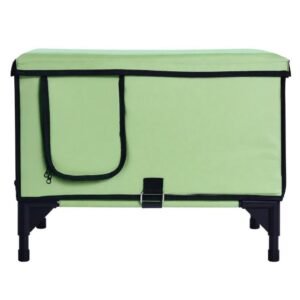 Elevated Heated Outdoor Cat House with 30W Waterproof Heating PadMSRP $128.99Apply for wholesale pricing
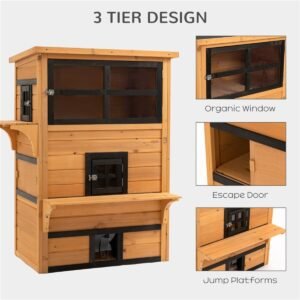 Three-Tier Outdoor Cat Condo with Asphalt Roof and Five Access DoorsMSRP $284.99Apply for wholesale pricing
 Large Elevated Heated Cat House with Waterproof Pad and Insulated LiningMSRP $124.99Apply for wholesale pricing
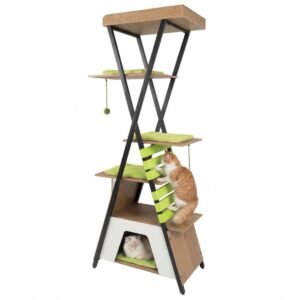 73″ Multi-Level Cat Tree with Condo, Top Perch and Scratching PadMSRP $228.99Apply for wholesale pricing
Stock it as a wholesale KIT
Pre-bundled assortments built from this guide’s categories — one PO, one shipment, wholesale pricing.