Eco Friendly Pet Products: What to Stock | JustForPetStore
Eco friendly pet products have moved from a niche shelf to a real sales driver, and independent stores are well positioned to capture it. The Pet Sustainability Coalition (PSC) reports that 62% of pet parents bought an environmentally friendly product in the prior month, versus 46% of non-pet owners, while NielsenIQ data shows more than $2 billion in U.S. sales from sustainability-certified products. Here is what to stock, where the margin is, and how to avoid greenwashing.
Why are eco friendly pet products selling in 2026?
The demand is real, measured, and concentrated among pet owners specifically. In its State of Sustainability in the Pet Industry outlook, the Pet Sustainability Coalition (PSC) cites a survey of more than 2,400 U.S. cat and dog owners finding that 73% believe people should take responsibility for addressing climate change, and 84% think companies share that responsibility. That belief converts to purchases: 62% of pet parents said they bought an environmentally friendly product in the prior month, compared with 46% of non-pet owners.
The sales data backs up the sentiment. At the 2026 Pet Summit, NielsenIQ data shared by the Pet Sustainability Coalition showed more than $2 billion in U.S. sales from sustainability-certified pet products in 2025 alone. Sustainability also over-indexes with pet-owning households, meaning the buyer who walks into your store is more likely than the average consumer to act on green values.
What has changed is that vague green labels no longer close the sale. PSC notes that pure sustainability-marketed products are starting to suffer on shelf amid economic uncertainty, while products that link health and sustainability are selling well. For an independent store, that is the opening: stock eco products with a concrete benefit — biodegradable waste bags, plant-based litter, natural grooming — and explain the benefit plainly.
Which eco friendly pet products should indie stores stock first?
Lead with the consumables your customers rebuy monthly, because that is where the repeat revenue and the strongest demand sit.
Waste bags and litter come first. Compostable and biodegradable waste bags and plant-based cat litters are the highest-frequency, lowest-risk entry point — customers need them every week, and the swap from conventional plastic is an easy, visible win. Natural grooming is second, and it rides the same premiumization wave as the rest of the category: NIQ found premium and super-premium pet shampoo growing 7.1% and 3.3% while value tiers declined, so a natural, ingredient-led shampoo sits exactly where shoppers are already trading up.
Recycled-material toys and accessories come third. Enrichment is a strong 2026 category — NIQ reports electronic toys up 27% and treat-dispensing toys up 15% year over year — and versions made from recycled or renewable materials add a story to a product that already sells. Finally, layer in sustainable pet food where you can, from responsibly sourced proteins to alternative ingredients, because protein sourcing is the single largest environmental impact in pet food, per PSC.
The ordering matters because it follows margin and frequency. Waste bags and litter are everyday, low-friction swaps a customer accepts on autopilot, so they build the habit. Grooming rides a premiumization wave NIQ has measured across the whole store — the health and beauty department is the fastest-growing at 9.2% — so a natural shampoo positioned beside a conventional one converts on the spot. Toys and accessories are where the story sells: a toy made from recycled ocean plastic, or a bed made from organic cotton and hemp, gives the customer something to tell a friend about, which is free marketing for your store.
Food is the slowest to flip, so treat it as a later layer rather than the entry point. Pet owners are extremely loyal to a food their pet already eats, and a switch to a sustainable protein or responsibly sourced formula happens over months, not weeks. Lead with the consumables and accessories that are easy to swap, and let sustainable food earn its shelf space gradually.
The key is breadth before depth. Start with a shallow but complete eco assortment across waste, grooming, toys, and food, then deepen whichever two categories move fastest in your market. Use a low-minimum supplier so you can test before you scale, because a dead shelf of green products is worse than no green shelf at all.
Do shoppers really pay more for sustainable pet products?
Yes — selectively. Sustainability is often the deciding factor when price expectations are met, rather than a blank check. PSC’s research finds affordability remains the primary barrier to buying sustainable goods, but once the price is comparable, the sustainable option frequently wins. That means the winning move is not to stock the most expensive eco SKU, but to close the price gap on the essentials and let the value story do the rest.
The categories with the clearest premium are the ones where the benefit is tangible. Biodegradable waste bags and plant-based litter carry modest premiums that customers accept because the environmental case is obvious. Grooming and food, where health and sustainability overlap, are where PSC says products are actually selling well on shelf. The lesson for pricing: anchor eco items close to their conventional equivalents, highlight the concrete benefit, and avoid positioning sustainability as a luxury markup.
For a small store, the economics also work in your favor. Many eco SKUs are lightweight and low-cost to ship, which protects margin, and private-label or exclusive eco lines give you a price point the big box cannot match. Stocking eco friendly pet products is not a discount play — it is a differentiation play that raises perceived value on categories you already carry.
How do you avoid greenwashing when you stock eco products?
Claim what you can prove, and only what you can prove. Greenwashing is now a legal and reputational risk, not just a marketing one, and shoppers — especially Gen Z and Millennial pet owners — are increasingly skeptical of vague claims.
Look for third-party verification on everything you bring in. Certifications and standards are the fastest signal of a substantiated claim, whether that is a recycled-content standard on packaging, an organic or ingredient-level certification on food, or a compostability certification on waste bags. Ask your supplier for the data behind any “eco,” “green,” or “natural” label, and skip anything that cannot produce it.
Watch the packaging and the claim together. PSC highlights the European Union’s Green Claims Directive, which now requires environmental claims to be accurate, substantiated, and often third-party verified, as a sign of where regulation is heading. Even if your store is U.S.-based, the brands you carry sell into multiple markets, and the standards are tightening everywhere. If you private-label, that obligation falls on you directly — so build the claim from the product up, not the marketing copy down. A verifiable eco claim is a sales asset; an unverifiable one is a liability waiting for a customer, a regulator, or a review to call it out.
When should you expand your eco assortment?
Timing matters as much as selection. Start with the essentials — compostable waste bags and plant-based litter — the day you decide to add an eco line, because those are the lowest-risk, highest-frequency swap and the clearest environmental win. Once those reorder reliably, layer in grooming and toys over the next one to two buying cycles, and let the sales data decide which SKUs deepen.
Seasonality still applies. Spring and summer favor outdoor, travel, and waste products, while fall and winter favor indoor enrichment and grooming. The Grand View Research outlook on pet care flags growing concern over climate change as a direct driver of sustainably produced and eco-friendly products, which means the underlying demand is structural rather than a fad — but it still moves to the same seasonal rhythm as the rest of your shelf, so plan the buy accordingly.
The strongest signal to expand is a reorder. If a plant-based litter sells through once, buy deeper the second time; if a recycled toy line sits, cut it and move that shelf space to natural grooming, where NIQ shows premium shampoo growing while value tiers decline. This test-and-scale rhythm is only affordable if you are not stuck with a case pack that did not move, which is exactly why a low-minimum supplier changes the economics.
Finally, expand the assortment together with your explanation. An eco shelf without a staffer who can say why the product is better — the material, the certification, the concrete benefit — is just a shelf of more expensive products. The stores that win in this category are the ones that stock the proof and train the story.
That sourcing discipline is the same one behind vetting any supplier before you commit to a case pack. For a deeper look at what is moving across the category, see our roundup of trending pet products for 2026 and our guide to the best-selling pet supplies of 2026. To start building the eco shelf, browse our grooming and pet toys ranges, and check our low-MOQ sourcing page to test green SKUs without a big first buy. Stocking eco friendly pet products well is a compounding advantage — the shoppers who care about them are loyal, repeat, and increasingly the majority.
Ready to stock these ideas? Browse wholesale pet KITs →
Shop these pet categories
Wholesale pricing, no minimum order.
Related wholesale collections
Products mentioned here
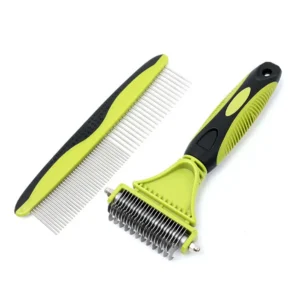 2-in-1 Pet Grooming Comb Set – Dual-Sided Deshedding & Dematting Tools for Dogs and CatsMSRP $6.29Login for wholesale pricing
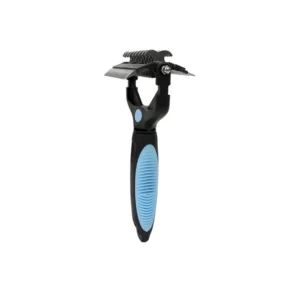 3-in-1 Pet Grooming Comb – Professional Detangling, Dematting & Deshedding Tool for Dogs & CatsMSRP $6.49Login for wholesale pricing
 3-in-1 Pet Grooming Set with Comb, Brush & Nail Clipper – Wholesale for Pet Shops(MOQ 32)MSRP $5.59Login for wholesale pricing
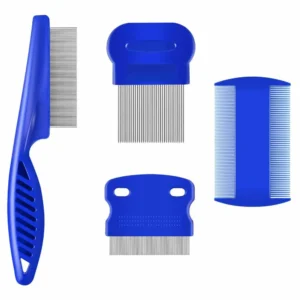 4 Pack Cat Flea Comb Set – Blue Grooming Tools for Long Hair Cats & Dogs | Wholesale Pet Grooming SuppliesMSRP $1.98Login for wholesale pricing