
The Economics of Curated Pet Store Kits: Why Scenario-Based Bundling Beats À-La-Carte Importing
Every independent pet retailer knows the headline math: buy low, sell higher, keep the difference. But the difference between a healthy store and a cash-starved one is rarely the unit margin — it is the operating cost and working capital buried inside how you source. This article quantifies a claim we make plainly: for a small-to-mid overseas retailer, importing a curated, scenario-based kit from a one-stop partner is economically superior to importing the same products as twenty loose SKUs bought à-la-carte. We will prove it with a worked numerical example using realistic figures, then break down the five cost levers — working capital, warehouse footprint, dead-stock risk, time-to-shelf, and picking/packing labor — that decide your real margin. If you have not yet read our guide to scenario-based one-stop procurement, read this first; it explains the sourcing model we are costing here.
The Hidden Cost of À-La-Carte Importing
À-la-carte importing means negotiating, ordering, shipping, clearing, and stocking each SKU as its own project. On a spreadsheet it looks cheapest because each line item shows the lowest ex-works price. In the warehouse and on the balance sheet, it is the most expensive way to run a small store. The reasons are structural:
- MOQ multiplication. Factories set minimum order quantities per SKU. To hit twenty different MOQs you must buy far more total volume than your shelf can move quickly — much of it in slow categories.
- Fragmented logistics. Twenty SKUs from different factories mean many shipments, many customs entries, many consolidation fees, and many inspection events.
- Dead-stock concentration. When you over-buy individual SKUs to clear MOQs, the laggards sit. Dead stock is a 100% loss on its landed cost.
- Time-to-shelf drag. Coordinating twenty timelines means your assortment goes live when the last SKU arrives — often weeks after the first.
- Labor overhead. Receiving, labeling, barcoding, and picking twenty unrelated SKUs costs disproportionate staff time per dollar of inventory.
A curated kit inverts these. By bundling components into one scenario (a “new dog owner” kit, a “dental wellness” kit), the partner absorbs MOQ, logistics, and QC centrally, and you receive one coordinated shipment engineered to sell through as a unit.
The Worked Numerical Example
Below are two ways to stock the same retail assortment — roughly twenty product components for a small pet store’s core dog category. All figures are illustrative but reflect realistic 2024–2025 B2B import conditions for EU/UK/US destinations (ocean LCL, 6.5% representative duty, commercial warehousing). Your real numbers will vary; the structure of the gap will not.
Scenario A — À-la-carte: 20 SKUs, each at a factory MOQ of 500 units = 10,000 units total. Blended ex-works $1.50/unit.
Scenario B — One curated kit: 400 kits, each containing 20 components = 8,000 units total. Because the partner blends volume across components, effective per-component volume is lower and the bundle is engineered around fast movers. Blended ex-works $2.05/unit (slightly higher per unit, reflecting curation and partner coordination — not hidden arbitrage).
| Cost component | À-la-carte (20 SKUs) | Curated kit (1 bundle) |
|---|---|---|
| Units purchased | 10,000 | 8,000 |
| Ex-works product cost | $15,000 | $16,400 |
| Freight & handling (consolidation) | $3,000 (many LCL/shipments) | $900 (1 shipment) |
| Import duties (6.5%) | $1,170 | $1,125 |
| Customs broker & docs (per entry) | $1,000 (20 entries) | $150 (1 entry) |
| QC inspection events | $1,000 (5 batches) | $250 (1 batch) |
| Warehousing (6 mo, @ $8/m²) | $1,920 (40 m²) | $864 (18 m²) |
| Dead-stock loss (unsold at landed cost) | $2,800 (15% of slow SKUs) | $500 (3% curated) |
| Picking / receiving labor (@ $25/h) | $750 (30 h) | $250 (10 h) |
| Total cost of goods + ops | $26,640 | $20,439 |
| Sellable units after dead stock | 8,500 | 7,760 |
| Effective cost per sellable unit | $3.13 | $2.63 |
| Retail revenue @ $6.00 avg | $51,000 | $46,560 |
| Gross margin | 47.8% | 56.1% |
Read that again: the kit’s product cost per unit is higher, yet its effective margin is 8.3 points better (56.1% vs 47.8%). The gap is manufactured entirely by lower operating cost and, above all, far lower dead-stock loss. The à-la-carte buyer paid for 10,000 units and only sold 8,500; the kit buyer paid for a tighter, faster-moving assortment and wasted almost nothing.
Lever 1 — Working Capital Tied Up
Margin percentage is a snapshot; cash flow is survival. In Scenario A, $26,640 is locked in inventory for roughly 180 days (slow SKUs linger). In Scenario B, $20,439 turns in about 90 days because the curated mix sells through faster. The opportunity cost of that tied capital at an 8% annual rate:
- À-la-carte: $26,640 × 8% × 0.5 yr = $1,066
- Kit: $20,439 × 8% × 0.25 yr = $409
That $657 annual difference on a single category is pure cash you could deploy on marketing, a second category, or simply as a buffer. Scale it across your whole store and working-capital efficiency becomes a strategic advantage, not an accounting footnote. Kits let you stock more scenarios with the same cash — the definition of inventory efficiency.
Lever 2 — Warehouse Footprint
Twenty loose SKUs at high MOQs need ~40 m² to store six months of buffer; one consolidated kit needs ~18 m². For a retailer paying commercial rent, that is a permanent saving, and it compounds: less space means less handling equipment, less insurance, less shrinkage. Curated kits arrive as coherent, planogram-ready bundles — you allocate shelf by scenario, not by chasing twenty partial cartons.
This matters most for retailers who also sell online. A kit is a single SKU in your e-commerce backend (one listing, one barcode, one pick path) even though it contains twenty components. That collapses your storage and fulfillment complexity per dollar of revenue.
Lever 3 — Dead-Stock Risk
Dead stock is the silent tax on à-la-carte importing. In our example, 15% of the loose-bought volume became unsellable — $2,800 of landed cost written off. The cause is mechanical: to clear a factory’s MOQ you buy 500 of a slow item you might sell 200 of in two quarters. Curated kits cut this to ~3% because the partner designs the bundle around validated, complementary fast movers (a leash with a harness with waste bags — items that sell together).
This is not guesswork. A one-stop partner sees sell-through data across many retailers and tunes kit composition accordingly. You inherit that intelligence instead of betting your cash on twenty isolated MOQ guesses. For seasonal plays, the holiday celebration kit is a ready-made example: a bundle timed to peak demand, not twenty decorations you must forecast individually.
Lever 4 — Time-to-Shelf
In à-la-carte importing, your assortment is only as fast as your slowest supplier. SKU #19 arrives three weeks after SKU #1, so the whole category launches late — and late means missed seasonal windows and stalled cash. A curated kit ships as one coordinated order with one ETA. Time-to-shelf drops from “whenever the last factory finishes” to a single, predictable date.
For a small team, this predictability is worth more than the marginal ex-works saving. You plan a launch, run one receiving event, and go live. The best-selling pet toy kit and the pet care hygiene kit are built precisely for this: open the carton, stock the shelf, sell.
Lever 5 — Picking, Packing & Receiving Labor
Labor does not scale linearly with SKU count — it scales worse. Twenty unrelated SKUs mean twenty receiving checks, twenty barcode/label applications, twenty put-away locations, and a picking path that fragments your team’s attention. In our example that is 30 staff-hours per restock cycle. A kit collapses this to 10 hours: one receipt, one label, one location. At $25/hour that is $500 saved per cycle, and the saving recurs every reorder.
Multiply across categories and restock frequency and labor becomes one of the largest, most overlooked advantages of bundling. Your staff sells and merchandises instead of wrangling cartons.
The Effective-Margin Verdict
Adding the operating savings and the working-capital effect to the gross-margin gap:
| Measure | À-la-carte | Curated kit | Kit advantage |
|---|---|---|---|
| Gross margin | 47.8% | 56.1% | +8.3 pts |
| Working-capital cost (annual) | $1,066 | $409 | −$657 |
| Warehouse cost (6 mo) | $1,920 | $864 | −$1,056 |
| Dead-stock loss | $2,800 | $500 | −$2,300 |
| Labor per cycle | $750 | $250 | −$500 |
The kit does not win because its products are cheaper — they are marginally pricier per unit. It wins because it deletes the costs that à-la-carte importing loads onto a small operation: fragmentation, dead stock, capital lock-up, and labor. For an independent retailer, that is the difference between a store that scales and one that drowns in its own inventory.
Why Kits Raise Effective Margin and Accelerate Sell-Through
Three mechanisms explain the durable advantage:
- Complementarity drives basket size. A scenario kit (“new puppy,” “dental wellness,” “travel”) sells as a solution, lifting units per transaction versus a single loose item. Higher basket value with one stocking event.
- Validated composition reduces misses. The partner’s cross-retailer data removes your worst MOQ bets. You stock what sells together, not what a factory forces you to over-buy.
- Operational simplicity compounds. One shipment, one inspection, one customs entry, one pick path. Every restock repeats the efficiency, so the margin gap widens over time, not narrows.
This is why we build kits around real retail scenarios rather than arbitrary price tiers. The economics only work when the bundle reflects how customers actually buy — which is exactly the principle behind scenario-based procurement.
When À-La-Carte Still Makes Sense
Honesty matters. À-la-carte is rational when: (1) you have very high, stable velocity on a single hero SKU and can clear a large MOQ without dead stock; (2) you are a large multi-store chain with your own import desk and warehouse network, where economies of scale flip the logistics math; or (3) you are testing a brand-new product with unknown demand and want minimal commitment. For the typical independent store owner importing from China, those conditions are the exception. If you do negotiate direct factory MOQs, our MOQ negotiation guide shows how to lower them — though a kit often achieves the same volume flexibility without the negotiation.
Sensitivity: What If Freight or Duty Spikes?
The kit advantage is not fragile — it widens when conditions worsen. Consider a freight shock that doubles ocean rates, or a duty increase from 6.5% to 10%. Under à-la-carte sourcing, twenty fragmented shipments each absorb the higher freight, and twenty customs entries each bear the higher duty and brokerage; the absolute cost gap grows because fragmentation multiplies the exposure. Under kit sourcing, one shipment and one entry absorb the shock once. In a doubled-freight scenario the à-la-carte freight line moves from $3,000 to $6,000 (a $3,000 hit) while the kit moves from $900 to $1,800 (a $900 hit) — the kit shields you from $2,100 of the increase on this category alone. Resilience, like margin, is structural.
Kit Composition Playbook: How a Good Partner Builds the Bundle
Not every bundle is a smart kit. A competent one-stop partner constructs kits in tiers:
- Anchor items — the high-velocity hero products that guarantee the kit sells (e.g., a durable chew or a leak-proof bowl).
- Support items — logical complements that raise basket value and utility (a matching mat, a cleaning tool).
- Impulse items — low-cost, high-delight add-ins that lift perceived value (a branded tag, a sample packet).
The price architecture matters too: a kit should be priced so the sum of parts appears slightly higher than the bundle, giving the retailer both a margin cushion and a customer-facing “value” story. Internally, the partner balances anchor volume against support/impulse margin so no component drags the bundle’s turn. This is category-management work most small retailers cannot do alone across twenty loose SKUs — another reason the kit’s effective margin stays high.
A 30 / 60 / 90 Day Plan to Switch to Kits
If you currently import à-la-carte, you do not need a risky overnight switch. A measured transition:
- Days 0–30: Audit your current SKUs; identify your top three scenarios by sell-through. Pick one best-selling pet toy kit or pet care hygiene kit as a pilot. Run the scorecard from Article 3 on the partner.
- Days 31–60: Place a low-MOQ pilot kit order. Measure time-to-shelf, defect rate, and early sell-through against your loose-SKU baseline.
- Days 61–90: If the kit beats your à-la-carte effective margin (as the model predicts), shift the next reorder category to kits and free the working capital you recover into a second scenario bundle.
Within a quarter you can convert your highest-volume categories to kits and keep à-la-carte only for the genuine hero SKUs that clear MOQs cleanly — the hybrid that maximizes both margin and control.
Addressing Common Objections to Kits
Buyers raise predictable objections; none survives scrutiny:
- “I lose assortment control.” You choose which scenario kits to stock and can still carry à-la-carte hero SKUs alongside them. Kits are an addition to your toolkit, not a surrender of it.
- “My customers want to pick individual items.” They do — and a kit is still individual items on your shelf. You simply receive and stock them as a pre-merchandised bundle, then sell components singly or as the set. The efficiency is in your back room, invisible to shoppers.
- “A kit ties me to one partner.” Reasonable caution, answered by the scorecard and pilot process in our partner-selection framework: qualify the partner first, then consolidate. Dependency on a vetted partner is safer than fragmentation across twenty unverified factories.
- “My volume is too small for kits.” Exactly the opposite — small volume is precisely where MOQ multiplication hurts most, and where a kit’s blended low MOQ delivers the largest relative relief.
Key Takeaways for the Store Owner
If you remember nothing else, remember this: your margin is decided by how you source, not just what you pay per unit. À-la-carte importing wins on a narrow ex-works line and loses on everything around it — freight fragmentation, customs entries, inspection events, warehouse space, dead stock, and labor. A curated kit reverses each of those. The worked example showed an 8.3-point gross-margin gain and thousands in annual operating savings on a single category; across a full store the recovered cash and freed space are the difference between treading water and growing. Start with one pilot kit, measure it against your current baseline, and let the numbers — not habit — drive the rest of your assortment.
Ready to stock these ideas? Browse wholesale pet KITs →
Shop these pet categories
Wholesale pricing, no minimum order.
Related wholesale collections
Products mentioned here
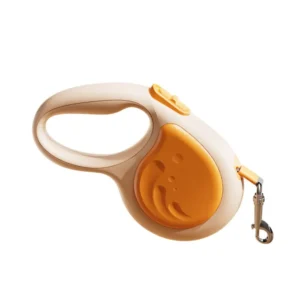 19.6 ft Outdoor Nylon Automatic Retractable Dog Leash – Heavy-Duty Pet Leash for Large and Small DogsMSRP $8.99Login for wholesale pricing
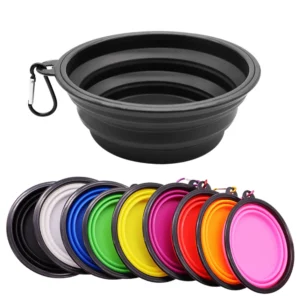 2 Pack Collapsible Silicone Dog Bowls – Portable Pet Food & Water Travel Bowl with CarabinerMSRP $1.78Login for wholesale pricing
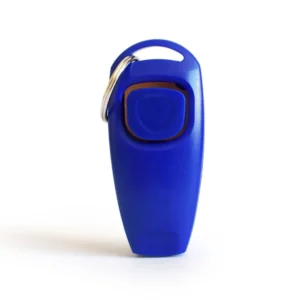 2-in-1 Dog Training Whistle & Clicker – Outdoor Pet Training Device, Factory-Direct Wholesale (MOQ 50)MSRP $2.18Login for wholesale pricing
 2-in-1 Pet Grooming Comb Set – Dual-Sided Deshedding & Dematting Tools for Dogs and CatsMSRP $6.29Login for wholesale pricing