Pet Product MOQs Decoded: How Chinese Manufacturers Structure Minimum Order Quantities — and How Retailers Can Negotiate Smarter Terms
If you have ever browsed a Chinese pet-supply catalog, fallen in love with a chew toy or a slow-feeder bowl, and then been stopped cold by a line that reads “MOQ: 1,000 pcs,” you are not alone. For independent pet store owners and small retail buyers, the minimum order quantity (MOQ) is the single most common wall between a great product idea and a profitable shelf. This article breaks down exactly why those numbers exist, the four ways manufacturers structure them, how scenario-based KIT bundling effectively lowers your per-SKU barrier, and — most importantly — the concrete negotiation tactics that actually move the needle. By the end you will have a reusable negotiation email, a MOQ comparison table you can drop into your own sourcing notes, and a clearer sense of when to walk away.
Why MOQs Exist in the First Place
A minimum order quantity is not arbitrary spite. It is a manufacturer’s break-even calculator expressed as a number. Every production run carries a cluster of fixed costs that do not scale with how many units you order — and factories recover those costs by spreading them across enough units. Understanding the three drivers below is the foundation of every negotiation you will ever run.
The Three Fixed-Cost Drivers Behind Every MOQ
1. Mold and tooling (setup) cost. Injection-molded items — a rubber chew, a plastic slow-feeder, a silicone lick mat — require steel or aluminum molds that can cost anywhere from a few hundred dollars for a simple shape to several thousand for a complex multi-cavity tool. The factory amortizes that mold across the units produced. Order 200 units and the mold cost alone adds a disproportionate surcharge to every piece; order 5,000 and it nearly disappears into the unit price. This is why hard-good MOQs are higher than soft-good MOQs.
2. Material lots and supplier minimums. Chinese component suppliers themselves have minimums. A fabric mill may sell fleece only by the roll; a stuffing supplier may sell only by the bale; a dye house may require a full color lot. A toy factory cannot buy half a roll of corduroy economically, so it builds the MOQ around what it must purchase upstream. If your order is smaller than the material lot, the factory eats the leftover — and it will not.
3. Production-line minimums and changeover time. Setting up a sewing line, a filling machine, or a packaging station takes labor hours that produce nothing. A factory running 20,000 units of one SKU absorbs that changeover efficiently; a factory running 150 units of your custom order spends the same changeover for a fraction of the output. Line minimums protect the factory’s effective hourly throughput.
The practical takeaway: MOQ is a function of your order’s share of fixed cost, not a personal rejection. Once you internalize that, every negotiation becomes a conversation about how to share or shrink those fixed costs — not about begging for a favor.
The Four Ways Manufacturers Structure MOQs
Not all MOQs are created equal, and the label “MOQ” on a quote can mean four very different things. Misreading which type you are dealing with is the most common — and most expensive — beginner mistake. Here is the taxonomy.
1. Per-SKU MOQ
This is the classic: “minimum 1,000 pieces of this exact item.” It is the strictest form because the factory allocates one production slot to one variant. If you want three colors, you may owe 1,000 of each. Per-SKU MOQs punish assortment-driven retailers who want to test many items in small quantities.
2. Per-Order MOQ
Some factories set a total order value or unit floor for the entire purchase order rather than per item. Example: “Minimum order US$3,000 or 3,000 units mixed across any SKUs.” This is friendlier to buyers who want variety, because you can spread the floor across ten different products at 300 units each.
3. Per-Color / Per-Size MOQ
Common in apparel, collars, leashes, and beds: the MOQ applies to each colorway or size. A “500 pcs per color” rule means a 3-color leash order is really a 1,500-piece commitment. Savvy buyers consolidate to fewer colors to keep the real commitment down.
4. Mixed-SKU MOQ
The most flexible structure, and the one scenario-KIT sourcing is built on: “Any mix of products from our catalog, minimum 100 units per style, 2,000 units total.” Mixed-SKU MOQs let a small retailer assemble a balanced assortment without betting the store on a single item. This is exactly the model JustForPetStore uses when building curated bundles such as the Dog Toy Collection Kit or the Cat Play Kit.
How Scenario KIT Bundling Lowers the Per-SKU Barrier
Here is the core insight that changes the math for small retailers: when you buy a mixed-SKU KIT, the factory’s fixed costs are spread across the whole bundle, not each individual item. That means the effective per-SKU barrier collapses.
Consider a realistic example. A solo pet shop wants to stock a rope-tug toy, a squeaky plush, a rubber chew, and a puzzle feeder. Standing alone, each has a 1,000-unit per-SKU MOQ — a 4,000-unit, four-product commitment that ties up roughly US$6,000–$10,000 in a single bet. By contrast, a curated Dog Toy Collection Kit built on a mixed-SKU minimum might require only 100–300 units per style against a 2,000-unit total order. You get the same four products on your shelf, but your cash is spread across a tested bundle rather than concentrated on unproven singles.
This is not just about price. It is about risk diversification. A single-SKU 1,000-unit order is a yes/no gamble on one product. A KIT is a portfolio: if the puzzle feeder underperforms, the rope tug and plush still move. For retailers building an assortment with healthy margin and inventory turnover, that diversification is the whole game. Our deeper breakdown of the economics lives in The Economics of Curated Pet Store Kits.
Six Negotiation Tactics That Actually Work
Negotiating MOQ is negotiation of fixed costs and future volume, not haggling over a sticker. These six tactics are ranked roughly by how reliably they produce a lower minimum.
1. Volume Commitments (The “Blanket PO”)
Instead of asking for a lower MOQ on one shipment, offer a committed volume across the year: “I can’t do 1,000 now, but I will take 3,000 across four quarterly shipments.” Factories love predictable capacity utilization. A rolling commitment often unlocks a 300–500 first-order minimum because they have already booked the downstream volume. Put the schedule in writing.
2. Shared Tooling / Mold Cost Split
If the barrier is a mold, ask to split the mold cost and own it (or have it held in your name). Paying US$400 toward a mold in exchange for a 300-unit first MOQ is often cheaper than the margin you would lose accepting a 1,000-unit minimum you cannot sell. This is especially relevant for custom or private-label items in a Custom Retail Kit.
3. Off-Season Production Slots
Factories in the pet category peak before Q4 holidays. Offer to take delivery in the slow months (typically February–April and July–August) and you are filling idle capacity they would otherwise discount anyway. Off-season flexibility is a legitimate bargaining chip that costs you nothing but timing.
4. SKU Consolidation
Reduce the number of colors and sizes. A “500 per color × 4 colors” requirement becomes “500 per color × 2 colors” the moment you drop two slow colors. Consolidation shrinks your real commitment without a single word of negotiation — and it simplifies your inventory story.
5. 阶梯 (Tiered) Pricing Acceptance
Agree to a higher unit price at the lower quantity in exchange for the lower MOQ, with a pre-agreed step-down once you cross a volume threshold. This is the cleanest win-win: the factory protects its margin on the small run, you protect your cash flow, and both sides have a clear path to better pricing. Document the tier breakpoints (e.g., 300 / 1,000 / 3,000 units) explicitly.
6. Bundle Into an Existing Production Run
If a factory already runs a similar item for another client, ask to piggyback your smaller order onto their run using shared materials. This is essentially what KIT sourcing does at scale — and it is why a Cat Play Kit can carry items with seemingly impossible standalone MOQs.
A Ready-to-Send Negotiation Email
Below is a template you can adapt. The structure matters: lead with realistic volume, name the constraint honestly, propose a specific alternative, and offer something of value (timing, future commitment, or mold share). Replace bracketed fields.
Subject: MOQ discussion — [Product name] for [Your Store Name]
Hi [Factory contact],
Thanks for the quote on . The unit price works for our retail model, but the 1,000-pc per-SKU MOQ is above what we can test in our first order. We are a [country] independent pet retailer with [X] storefronts / [online channel], and our plan is to build this into a repeating line.
To move forward, I’d like to propose one of these structures:
A) First order 300 pcs at [accept a tiered price of $X.XX], stepping down to $Y.YY at 1,000 pcs and $Z.ZZ at 3,000 pcs, with a second 700-pc order within 90 days;
B) Split the mold/tooling cost ([$amount]) with me owning the mold, in exchange for a 300-pc first MOQ;
C) Accept delivery in [off-season month] to fill your idle capacity.We expect annual volume of 3,000–5,000 pcs across this SKU once it proves out. Can you confirm which option works, or counter with your preferred structure? I can send a formal PO this week.
Best,
[Your name] — [Your Store Name]
Notice what this email does not do: it does not apologize, it does not beg, and it does not ask “can you do better?” It presents a concrete, factory-friendly alternative. That is the difference between a buyer who gets a yes and one who gets ghosted.
MOQ Comparison Table: What to Expect by Category
Use this as a planning benchmark. Numbers reflect typical ranges for vetted Chinese pet-supply manufacturers serving the B2B wholesale channel; your quoted MOQ will vary by factory, customization, and material. The “KIT-effective minimum” column shows the realistic per-SKU floor when the item is sourced inside a mixed-SKU bundle.
| Product category | Typical standalone per-SKU MOQ | Common structure | KIT-effective per-SKU min | Lever to negotiate |
|---|---|---|---|---|
| Plush squeaky toys | 500–1,000 pcs | Per-SKU / per-color | 100–200 pcs | Color consolidation |
| Rope & tug toys | 300–800 pcs | Per-SKU | 100–150 pcs | Shared material lot |
| Injection-molded chews | 1,000–3,000 pcs | Per-SKU (mold-driven) | 300–500 pcs | Mold cost split |
| Slow-feeder / puzzle bowls | 500–1,500 pcs | Per-SKU (mold-driven) | 200–400 pcs | Mold cost split |
| Collars & leashes | 300–500 per color | Per-color | 100–200 per color | Fewer colorways |
| Pet beds | 200–500 pcs | Per-size | 80–150 pcs | Size consolidation |
| Grooming tools | 500–1,000 pcs | Per-SKU | 150–300 pcs | Off-season slot |
| Apparel / clothing | 300–600 per color/size | Per-color/size | 100–200 per variant | SKU consolidation |
Read the table as a map, not a contract. The consistent pattern: hard goods (mold-driven) have the highest standalone MOQs and the biggest gap to their KIT-effective floor. That is precisely where bundling delivers the most relief.
When to Walk Away
Negotiation has a limit. Walk away — or defer — when: the factory refuses any documentation of tiered pricing and will only quote a take-it-or-leave-it 1,000+ minimum; the per-unit price at your achievable quantity pushes your retail margin below your category floor; or the MOQ requires cash outlay that exceeds one month of your inventory budget on a single untested SKU. A disciplined “no” preserves the capital you need to test the next, better-fit product. If you want the upstream context on finding partners worth negotiating with, start with How to Find China Pet Manufacturers for Direct Import and Scenario-Based One-Stop Procurement from China Manufacturers.
Reading the Quote: What the MOQ Line Really Tells You
A factory quote is not a price list — it is a risk statement. The MOQ line, in particular, encodes three things most buyers skim past. Train yourself to read it like a detective.
Is the MOQ “firm” or “negotiable”?
Many quotes print a MOQ in bold but will quietly accommodate 60–70% of it for a repeat customer. The tell is language: “MOQ 1000 pcs (negotiable for stable partners)” signals flexibility; “STRICT MOQ 1000, no exception” signals a mold or material-lot hard floor. Match your tactic to the signal — negotiate against the first, consolidate against the second.
Is the MOQ per item or per material?
A subtle but costly ambiguity: some factories quote “MOQ 500 pcs” meaning 500 of the same mold family, allowing color or size swaps within that 500. Others mean 500 of each finished variant. Clarify in writing which applies before you build a purchase order, or you may discover your “500-unit” commitment is actually 1,500 across three colors.
What does the MOQ imply about the factory’s scale?
A very low MOQ (e.g., 100 pcs, no questions) can mean a trading company reselling from a marketplace rather than a real manufacturer — fine for sampling, risky for consistency. A very high MOQ (5,000+) usually means a large dedicated line best suited to established retailers. The mid-band (300–1,000 with negotiation room) is the sweet spot for growth-stage pet shops, and it is where a vetted platform like scenario-based one-stop procurement adds the most value by pooling you with other buyers.
MOQ, Cash Flow, and Your Real Commitment
The MOQ number is not the cost — the cash it locks up is. Before accepting any minimum, run a three-line commitment check so you know what you are actually risking.
Step 1: Compute the Cash Outlay
Multiply the negotiated first-order quantity by the tiered unit price, then add the freight and any tooling split. Example: 300 plush toys at a US$1.85 tier price = US$555; plus US$180 LCL freight; plus a US$200 mold split = US$935 total first-order cash. That is your real bet, not the 1,000-unit headline.
Step 2: Estimate Storage and Turn
Divide the quantity by your expected monthly sell-through. If you move 60 of that toy per month, 300 units is a 5-month supply — comfortable. If you move 20/month, it is a 15-month supply — a red flag that the MOQ exceeds your velocity. Tie this to your assortment margin and inventory turnover plan before committing.
Step 3: Stress-Test the Downside
Ask: if this SKU sells at half the forecast, how many months of cash are trapped, and what is the clearance cost to exit? A disciplined buyer caps any single untested SKU at one month of inventory budget. MOQ negotiation exists precisely so you can fit good products inside that cap instead of being forced to over-commit.
Ready to stock these ideas? Browse wholesale pet KITs →
Shop these pet categories
Wholesale pricing, no minimum order.
Related wholesale collections
Products mentioned here
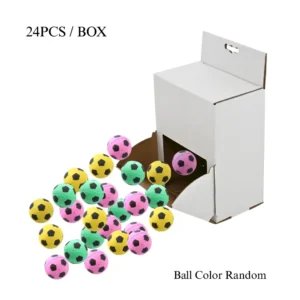 24-Pack Cat Toy Balls – Soft Latex Foam Soccer Ball Toys for Cats, Interactive Chase & Self-Play, Wholesale Pet SuppliesMSRP $8.89Login for wholesale pricing
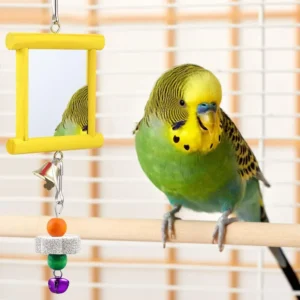 4-Pack Acrylic Parrot Toys with Mirror & Beak Grinding Accessories – Colorful Bird Cage Toys for Parrots and CockatielsMSRP $5.89Login for wholesale pricing
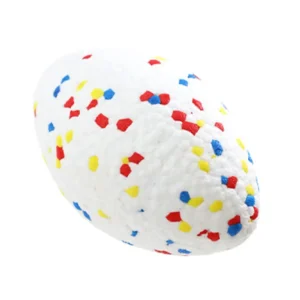 5 Inch Durable Rugby Floating Dog Ball – Chew & Fetch Water Toy for DogsMSRP $4.29Login for wholesale pricing
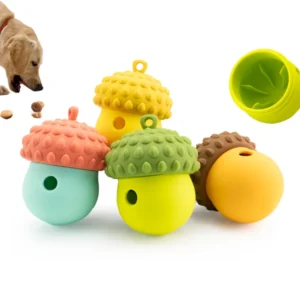 Berry-Shaped Silicone Dog Treat Dispensing Slow Feeder Toy – Durable Chew & Interactive Training Ball(MOQ 24)MSRP $3.56Login for wholesale pricing