
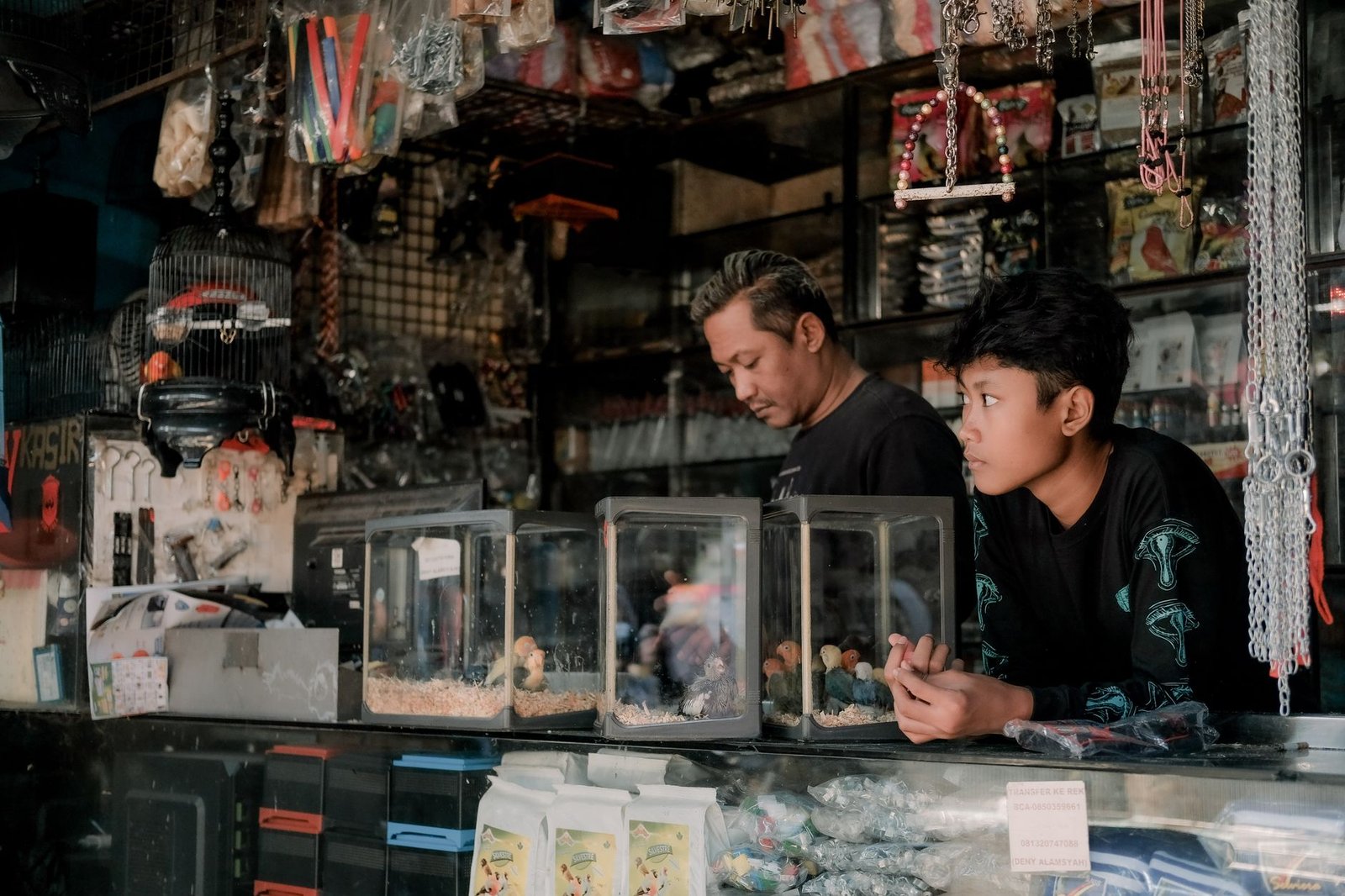
A Family Pet Store’s 3-Generation Playbook for Beating Online Competition
In an era when everyone insists “Amazon killed the pet shop,” the Romano family is quietly proving otherwise. Their independent pet store has served the same mid-size town for 47 years — across three generations — and last year posted its most profitable result ever. This family pet store success story isn’t about out-discounting the internet. It’s about out-caring it. Here’s the playbook, in their own words.
Three Generations, One Shelf Philosophy
The store opened in 1979 as a 600-square-foot aquarium shop. Grandfather Lou added birds, then small animals, then dog and cat food as the neighborhood changed. His daughter Maria expanded into grooming in the 1990s. Her son Tony — the third generation — took the helm in 2016 and faced the question that terrifies every legacy retailer: how do you stay relevant when a phone delivers anything in two days?
Tony’s answer was uncomfortable at first. “We stopped trying to be the cheapest,” he says. “We doubled down on being the most useful.” The family codified a shelf philosophy that still governs buying today:
- Every product earns its place by solving a problem a real customer asked about.
- If we can’t explain why it’s better, we don’t carry it.
- We stock for our town, not a national average.
That third rule is why their retail starter kit mix looks different from a chain’s. A town with older dog owners gets joint supplements front and center; a town near a lake gets water-safe gear. Curation is the antidote to the internet’s endless, anonymous shelf.
The Community Moat
The Romanos built what no algorithm can replicate: relationships. Tony estimates 60% of their customers have been in at least once a month for over a decade. “We know the dogs by name,” he says. “When Biscuit’s owner lost her job, we quietly set aside food. She’s still a customer four years later.”
They turned the store into a hub:
- A monthly adoption event with the local shelter — drove 300+ new visitors a month.
- A “new pet parent” class every Saturday — free, 20 minutes, no purchase required.
- A community board for lost pets, sitters, and local services.
None of these directly sold product, but all of them made the store the default destination. “The internet can’t hug your kid when their hamster dies,” Maria says simply. That emotional anchoring is the family pet store’s real competitive moat.
The Curation Engine: Kits as a System
Tony modernized the buy without losing the philosophy. He replaced ad-hoc ordering with a kit-based system:
- A best-sellers kit kept the proven core always in stock.
- A seasonal kit rotated displays four times a year for freshness.
- A gift kit turned holidays into the store’s biggest weeks.
- Display kits arrived shelf-ready, so a two-person team could refresh the floor in an hour.
“Kits let us act like a big retailer with a small brain,” Tony laughs. “We’re not genius buyers. We just trust proven bundles and add our local twist.” This is the heart of the family pet store success story: systems that preserve institutional knowledge across generations instead of rebuilding it each decade.
The Numbers Behind the Longevity
The store’s trajectory defies the “legacy retail is dying” narrative:
| Year | Revenue | Notes |
|---|---|---|
| 2016 (Tony takes over) | $510,000 | Grooming-heavy, flat growth |
| 2019 | $640,000 | Kit system adopted |
| 2022 | $780,000 | Community events scaled |
| 2025 | $910,000 | Most profitable year ever |
Gross margin held at 36–38% throughout — healthy for a full-line independent. The growth came not from discounting but from frequency: customers visited more often because the store kept giving them reasons to return.
What They Learned About E-Commerce
The Romanos don’t hate online — they use it. “We tell customers to buy bulky 40-lb food bags online if they want,” Tony says. “We’ll match price on the small bag and win on everything else.” Their strategy:
- Concede the commodity. Let the internet win on the cheapest, heaviest, lowest-margin item.
- Win the consultative sale. Food sensitivities, training, aging pets — these need a human.
- Be the pickup point. They accept online returns for some brands, pulling foot traffic through the door.
This “coopetition” mindset neutralized the threat. The store stopped competing where it couldn’t win and dominated where it always could: trust.
Mistakes Across the Generations
The playbook wasn’t free of error:
- 1990s over-expansion. Maria opened a second location that failed in 18 months. Lesson: community is location-specific; you can’t franchise a relationship.
- 2017 tech denial. Tony resisted a point-of-sale system for a year, losing inventory visibility. A $400/month tool would have paid for itself in reduced shrinkage.
- 2020 panic. During lockdown they nearly cut the event calendar. Instead they moved classes online — and gained customers from neighboring towns.
The Playbook, Summarized
For any independent retailer staring down the algorithm, the Romano family pet store success story offers a durable template:
- Curate for your town, not the world. A local shelf beats a global catalog.
- Build a community moat. Events, classes, and genuine care compound over decades.
- Systematize with kits. Preserve knowledge across generations via proven bundles.
- Concede commodities, win consultations. Let the internet have the heavy stuff.
- Stay useful, not cheap. Price is the weakest reason to shop; trust is the strongest.
Retailers wanting to build the same local advantage can start with a custom retail kit tailored to their neighborhood’s actual pets and owners — the same logic the Romanos use, just accelerated.
The Takeaway
Three generations, one lesson: the internet is a better warehouse, but a worse neighbor. The family pet store that wins is the one that shows up, remembers your dog’s name, and stocks the thing you didn’t know you needed. That’s not nostalgia — it’s a defensible business model, and the Romanos’ books prove it.
About the Author
This multi-generational case study was compiled by Scott, Founder of JustForPetStore, from interviews with family-run pet retailers in our community. We share enduring operator playbooks so the next generation starts ahead.
Ready to stock these ideas? Browse wholesale pet KITs →
Shop these pet categories
Wholesale pricing, no minimum order.
Products mentioned here
 19.6 ft Outdoor Nylon Automatic Retractable Dog Leash – Heavy-Duty Pet Leash for Large and Small DogsMSRP $8.99Login for wholesale pricing
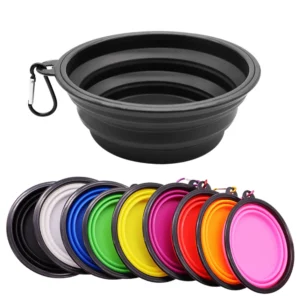 2 Pack Collapsible Silicone Dog Bowls – Portable Pet Food & Water Travel Bowl with CarabinerMSRP $1.78Login for wholesale pricing
 2-in-1 Dog Training Whistle & Clicker – Outdoor Pet Training Device, Factory-Direct Wholesale (MOQ 50)MSRP $2.18Login for wholesale pricing
 2-in-1 Pet Grooming Comb Set – Dual-Sided Deshedding & Dematting Tools for Dogs and CatsMSRP $6.29Login for wholesale pricing