
From Manufacturer to Storefront: The Advantages of Small-Batch Pet Supply Procurement

Many small pet retailers struggle with traditional wholesale models that require large orders and create inventory risks. Thanks to manufacturer-direct sourcing and small-batch procurement, small businesses can now access flexible supply chains that reduce risk and improve cash flow.
This article explains why small-batch buying is advantageous, how platforms like justforpetstore.com empower retailers, and practical tips for successful procurement.
The Pain Points of Traditional Pet Product Wholesale
High Minimum Order Quantities (MOQs)
Large minimum orders force retailers to tie up capital and stock products that may not sell.
Overstock and Cash Flow Strain
Unsold seasonal products lead to losses and inventory waste.
Multiple Middlemen Costs
Distributors add markups, shrinking profit margins for small shops.
Benefits of Small-Batch Procurement

Lower Inventory Risk
Buy smaller quantities to avoid overstocking, especially for trend-driven or seasonal items.
Safe Product Testing
Introduce new items with small orders, gauge customer response, then reorder best-sellers.
Improved Cash Flow
Order only what you need, freeing capital for other business needs.
Quick Market Response
React promptly to seasonal spikes or viral products without committing to large stock.
Why Manufacturer-Direct Platforms Are a Game Changer
Factory Pricing
Eliminate distributor markups and improve retail margins.
Consistent Quality Control
Direct relationships ensure consistent product standards and packaging.
Streamlined Sourcing
Platforms like justforpetstore.com consolidate multiple manufacturers, simplifying purchasing across product categories.
How to Implement Small-Batch Procurement Successfully
Start with Core Essentials
Focus on steady sellers like leashes, grooming tools, and basic treats before expanding.
Use Data to Guide Reordering
Track sales and reorder popular items with low MOQ from your supplier.
Leverage Seasonal Buying
Order seasonal or holiday products closer to demand peaks in small batches.
Build Supplier Relationships
Communicate with manufacturers for customization and private-label options.
Case Example: Small Pet Store Success with Small-Batch
A boutique pet store in Berlin:
- Reduced inventory by 40%.
- Increased product range by 67%.
- Improved seasonal sell-through with timely small orders.
Conclusion
Small-batch procurement combined with manufacturer-direct sourcing revolutionizes small pet retailers’ operations. It minimizes financial risks, increases agility, and helps stores compete effectively.
👉 Join justforpetstore.com today for low-MOQ, factory-direct pet supplies and streamline your sourcing!
Why Small-Batch Changes the Math
Traditional wholesale forces a bulk commitment before you’ve proven demand. Small-batch procurement flips that: you buy a small test quantity, learn what your customers actually reorder, then scale only the winners. The result is less dead stock and healthier cash flow.
A Small-Batch Sourcing Playbook
- Identify candidate SKUs from trend data and local demand.
- Order at minimum to validate shelf performance (4–8 weeks).
- Track sell-through by unit and by week, not by gut feel.
- Reorder winners, drop laggards before they become clutter.
Negotiating MOQs Without Leverage
You don’t need enterprise volume to get good terms. Lead with a clear plan: “I’ll test 20 units, and if velocity holds, I’ll reorder monthly.” Suppliers who serve small retailers—like factory-direct platforms—are built for exactly this.
Quality Control Essentials
- Pre-shipment check: request photos or a sample of the exact batch.
- Material verification: match dyes, fabrics, and certifications to the listing.
- Packaging review: retail-ready packaging reduces your handling time.
Logistics That Don’t Surprise You
Confirm lead time, incoterms, and whether the supplier drops to your door or to a freight forwarder. Factory-direct often means shorter, more predictable replenishment than layered distributors.
Small-Batch vs Bulk: A Quick Comparison
| Small-Batch | Bulk | |
|---|---|---|
| Cash tied up | Low | High |
| Risk of dead stock | Low | High |
| Speed to test trends | Fast | Slow |
| Unit margin | Slightly lower | Higher |
Frequently Asked Questions
Is small-batch more expensive per unit?
Often marginally, but the lower risk and faster validation usually beat the bulk discount on items that don’t sell.
How many SKUs should I test at once?
Start with 5–10 per category so you can compare without overwhelming shelf space or working capital.
Can small-batch work for seasonal goods?
It’s ideal—order a short run, validate the spike, and reorder only if the trend holds into next season.
Related Guides
See our 2025 trends guide and wholesale KITs to apply small-batch thinking immediately.
Demand Forecasting for Small Shops
You don’t need software—you need a habit. Keep a simple sheet: SKU, weekly units, and a 4-week moving average. When the average trends up for two weeks, that’s your reorder trigger. Small-batch sourcing means the trigger can be tiny and still profitable.
Building a Supplier Scorecard
- Lead time: does “2 weeks” mean 2 weeks?
- Defect rate: track returns attributed to quality.
- Communication: do they answer pre-shipment questions?
- Flexibility: will they do a 20-unit test run?
Score suppliers quarterly; concentrate volume on the top two or three.
Kitting as a Small-Batch Strategy
A KIT is small-batch procurement with the merchandising already done. Instead of guessing which three toys sell together, you buy a pre-assembled, retail-ready bundle and reorder the whole line as one SKU. It shrinks your decision count while raising basket size.
The Cash-Flow Math, Made Simple
Suppose a bulk buy locks $3,000 in 300 units of one toy. A small-batch buy puts $300 into 30 units, leaves $2,700 free, and if 28 sell in a month, you reorder 60—not 300. You’ve validated demand and kept capital liquid. The slight per-unit premium is cheap insurance against a misfire.
More Frequently Asked Questions
How many suppliers should a small store use?
Two to four focused partners beat a dozen thin relationships—you get better terms and service.
What if a small-batch test flops?
That’s the point: you lost $300, not $3,000, and learned what your market won’t buy.
Can I apply small-batch to private label?
Yes—start with a 50-unit private-label run, validate, then scale. Low MOQ makes experimentation affordable.
Start Small, Scale Winners
Pair this playbook with our 2025 trends guide and the wholesale KIT catalog.
A Sample-Request Workflow That Saves Money
Before a test order, request a single paid sample of the exact batch. It costs a little but confirms material, stitching, and packaging—preventing a 50-unit mistake. Log sample results in your supplier scorecard.
A Defect-Handling SOP
- Photograph the defect on arrival; don’t reship to customers.
- Notify the supplier within the agreed window.
- Agree on replacement, credit, or discount for the next order.
- Adjust the supplier scorecard so the pattern is visible.
Scaling from Test to Staple
When a test SKU hits your reorder trigger three times, graduate it: negotiate a slightly better price at higher volume, give it permanent shelf space, and fold it into a KIT. That’s how a 20-unit experiment becomes a dependable staple.
More Frequently Asked Questions
Should I pay for samples?
Yes—treat the sample cost as insurance against a bad bulk buy.
What defect rate is acceptable?
Under ~2% for soft goods is normal; above that, revisit the supplier or the QC step.
How fast should a test graduate?
If it reorders within 60 days twice, it’s earned a permanent slot.
Make Small-Batch Your Default
Use the small-batch playbook with our wholesale KITs to turn testing into tidy, low-risk growth.
A Worked Example: From Test to Staple
Imagine a $400 small-batch experiment on a new slow feeder:
- Month 1: buy 40 units at $6 landed; retail at $17. Sell 34 in 5 weeks.
- Month 2: reorder 80 at $5.40 (volume break); sell 71.
- Month 3: graduate to staple: 150 units, permanent shelf slot, folded into a KIT.
You risked $240, validated demand, and built a $1,200/month line—without ever tying up $3,000 in a blind bulk buy.
When Small-Batch Is the Wrong Tool
Be honest about limits: for true commodities with stable, high velocity (basic collars, standard leashes), a modest bulk buy can beat repeated small orders on unit cost. Use small-batch where uncertainty is high—new trends, private label, seasonal—and bulk where demand is proven.
Building the Feedback Loop
- Capture every “customer asked for X” note at the register.
- Review the list monthly; promote repeats to test orders.
- Test at low MOQ; track weekly velocity.
- Graduate, bundle into KITs, or cut—decisively.
Final Word
Small-batch procurement is a habit, not a one-time tactic. The stores that institutionalize it—scorecards, samples, fast graduation—outgrow competitors who still place annual bulk bets. Use our wholesale KITs to make the habit effortless.
Key Takeaways for Small-Batch Buying
- Test at low MOQ; scale only what reorders.
- Keep a supplier scorecard; concentrate on top partners.
- Use KITs to shrink decision count and lift basket size.
- Protect capital—don’t bulk-buy uncertainty.
- Institutionalize the feedback loop; it compounds.
One More Question
What’s the biggest small-batch mistake?
Treating it as a one-time tactic instead of a habit. The win isn’t one good test—it’s a store that always buys the next SKU with evidence, not hope.
Next step: pair this playbook with the wholesale KITs and reseller program to make small-batch your default.
A Closer Look: The Psychology of Small Orders
Small-batch buying isn’t only financial—it’s psychological permission to experiment. When the downside of a wrong bet is thirty units instead of three hundred, buyers try more, learn faster, and ultimately build sharper instincts. Large bulk commitments, by contrast, breed caution: buyers hedge, avoid novelty, and let the assortment stagnate. The stores that thrive in volatile categories are the ones that made experimentation cheap and frequent. Treat every test order as tuition, not risk—each one teaches you something about your market that no forecast could. Over a year, a dozen small tests outperform a single large gamble because the small tests are self-correcting.
Supplier Relationships as a Growth Lever
As your small-batch habit matures, your best suppliers become partners, not vendors. They’ll alert you to a new material, hold a slot for your reorder, or co-develop a private-label SKU. That relationship is itself a competitive moat—competitors can copy your products, but not your supplier trust built over repeated fair, low-MOQ dealings. Protect it with prompt communication and predictable reorders, and it will return the favor in lead time and flexibility when you need it most.
Measuring Success Honestly
Define a small-batch win before you order, not after. A win might be “sells 25 of 30 within six weeks” or “reorder within two months.” Writing the bar down removes hindsight bias and makes graduation decisions automatic. Stores that skip this step rationalize losers and starve winners—the exact opposite of disciplined growth. Keep the bar visible in your scorecard, review monthly, and let the data, not opinion, decide the next buy.
Put the playbook to work with the wholesale KITs and the reseller program.
Common Small-Batch Myths
Three myths hold stores back. “Low MOQ means low quality”—false; it reflects flexible sourcing, not cut corners. “Bulk is always cheaper”—only if the unit sells; dead stock is the most expensive inventory you own. “Small-batch is only for startups”—false; mature retailers use it to test every new SKU before committing. Dispelling these unlocks a calmer, more profitable buying rhythm where experimentation is cheap and failure is small. The stores that internalize this stop fearing trends and start exploiting them, turning uncertainty into a steady stream of validated winners rather than occasional lucky hits.
Closing Thought
Small-batch procurement is a habit that compounds. Start it with the wholesale KITs and the reseller program, and let evidence—not hope—drive every order.
The 30-Day Small-Batch Starter Plan
If you’re new to small-batch buying, this simple plan removes the overwhelm. Days 1–7: export last quarter’s sales, mark your top ten staples, and list three categories you suspect you under-serve. Days 8–14: request samples from two suppliers for one under-served SKU and score them on lead time, quality, and communication. Days 15–21: place a low-MOQ test order of the winner and create a weekly velocity tracker. Days 22–30: review early sales, decide to reorder or cut, and document the lesson in your scorecard. By day thirty you’ll have converted guesswork into a repeatable routine—and you’ll have real data instead of intuition guiding the next buy. Repeat monthly and the habit compounds into a self-correcting, low-risk assortment.
Get started via the wholesale KIT catalog and the reseller program.
Why This Matters Now
Supply chains have never been more flexible or more volatile. Small-batch procurement is the operating system for that reality: it lets an independent store move at the speed of trend without the exposure of a warehouse full of yesterday’s bet. Adopt it early, and 2026’s surprises become opportunities instead of write-offs.
Begin with the wholesale KIT catalog and the reseller program.
Ready to stock these ideas? Browse wholesale pet KITs →
Shop these pet categories
Wholesale pricing, no minimum order.
Related wholesale collections
Products mentioned here
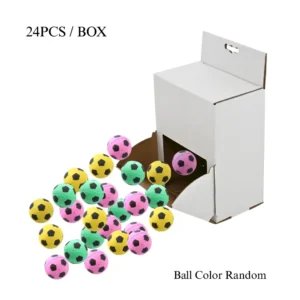 24-Pack Cat Toy Balls – Soft Latex Foam Soccer Ball Toys for Cats, Interactive Chase & Self-Play, Wholesale Pet SuppliesMSRP $8.89Login for wholesale pricing
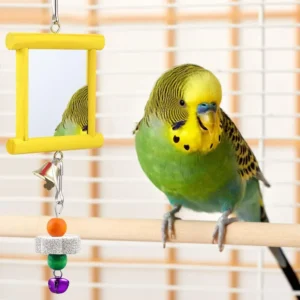 4-Pack Acrylic Parrot Toys with Mirror & Beak Grinding Accessories – Colorful Bird Cage Toys for Parrots and CockatielsMSRP $5.89Login for wholesale pricing
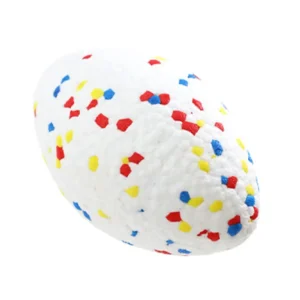 5 Inch Durable Rugby Floating Dog Ball – Chew & Fetch Water Toy for DogsMSRP $4.29Login for wholesale pricing
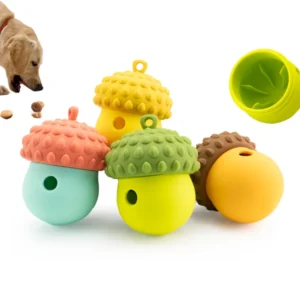 Berry-Shaped Silicone Dog Treat Dispensing Slow Feeder Toy – Durable Chew & Interactive Training Ball(MOQ 24)MSRP $3.56Login for wholesale pricing