
FSVP for Pet Food Importers: A 2026 Guide | JustForPetStore
FSVP for pet food importers means one written program per foreign supplier, held by the U.S. importer before the food is offered for entry. Under the FDA’s Foreign Supplier Verification Programs regulation at 21 CFR Part 1, Subpart L, you need a hazard analysis, documented approval of each supplier, verification activities and a nine-digit DUNS number transmitted with every entry line. Missing pieces stop shipments at the port.
Who counts as the FSVP importer for a pet food shipment?
The FSVP importer is not necessarily the brand or the factory. Under 21 CFR 1.500, the importer is the U.S. owner or consignee of the food at the time of entry. If there is no U.S. owner or consignee at that moment, the importer becomes the U.S. agent or representative of the foreign owner or consignee, as confirmed in a signed statement of consent to serve in that role.
That definition catches more small businesses than most owners expect. A pet store that buys treats directly from an overseas manufacturer and is named as the consignee on the entry paperwork is the FSVP importer, even if a broker files the entry and even if the shipment is small. A retail buyer who imports through a domestic distributor with its own customs entry is usually not the importer, because the distributor is the U.S. owner of the goods at entry. The practical question to answer before ordering is simple: whose name sits on the entry as consignee?
What has to be in an FSVP for pet food or pet treats?
FDA treats pet food, treats, chews and animal supplements as animal food, and the written program required by 21 CFR Part 1, Subpart L follows a fixed sequence of documents. A qualified individual develops it (21 CFR 1.503(a)), and the file contains the following items.
| Requirement | Citation | What it means for a small importer |
|---|---|---|
| Hazard analysis | 21 CFR 1.504 | Written identification of hazards that require a control, per product |
| Supplier evaluation and approval | 21 CFR 1.505(a), 1.505(b) | Documented performance and risk review, plus written approval of each supplier |
| Written procedures | 21 CFR 1.506(a), 1.506(b) | Import only from approved suppliers; defined verification activities |
| Verification records | 21 CFR 1.506(e) | Evidence the activities happened, dated and signed |
| Corrective actions | 21 CFR 1.508 | Documented fixes when a verification activity fails |
| Records access | 21 CFR 1.510(b)(2) | Offsite storage is allowed if records can be produced within 24 hours |
An importer that is also a receiving facility with a supply-chain program under 21 CFR Part 117, Subpart G for human food or Part 507, Subpart E for animal food is treated as compliant with FSVP, apart from the identification requirement in 21 CFR 1.509. Most independent importers are not receiving facilities, so they build the file from scratch.
Do you need a DUNS number to import pet food?
Yes. Under 21 CFR 1.509(a), every entry line of food subject to FSVP must carry the importer’s name, email address and a unique facility identifier recognized by FDA when the entry is filed with U.S. Customs and Border Protection. The identifier FDA recognizes is the nine-digit Dun and Bradstreet DUNS number, transmitted through ACE as the PG19 entity identifier and entity number, with the name in PG19 and the email in PG21.
A temporary allowance that let filers transmit the code UNK instead of a DUNS number was withdrawn, and since July 24, 2022 importers must supply a valid DUNS number. The FDA’s guidance on providing an acceptable unique facility identifier confirms that CBP will reject an entry line of food subject to the rule when the DUNS number is missing or malformed. The number is location specific and must match your U.S. location, so if you already hold a DUNS number for your store or warehouse, use that one and keep it consistent across entries.
What happens at the port if that data is missing?
The entry line is rejected by ACE before an FDA reviewer ever sees it, which means the shipment waits while you fix data rather than documents. That is recoverable within a day. The expensive version of the problem is a poor FSVP inspection.
FDA publishes its enforcement position through Import Alert 99-41, which covers detention without physical examination of human and animal foods imported from foreign suppliers by importers who are not in compliance with the FSVP regulation. The alert was refreshed on October 2, 2026. Importing food without an FSVP that meets section 805 of the Federal Food, Drug, and Cosmetic Act is prohibited outright by section 301(zz), and FDA can refuse admission under section 801(a)(3).
A March 27, 2026 warning letter shows the shape of a typical finding. FDA cited an importer of pork femur bones, beef products and rawhide for failing to provide a hazard analysis under 21 CFR 1.504, failing to evaluate and approve foreign suppliers under 21 CFR 1.505(a) and 1.505(b), and failing to establish written verification procedures under 21 CFR 1.506(b). The letter also rejected the importer’s assumption that a food safety systems recognition arrangement applied, noting that the arrangement in question does not cover articles of food for animals.
Which pet food imports are exempt from FSVP?
The exemptions are narrow, and the filing codes matter as much as the rules. Food imported for research or evaluation is exempt under 21 CFR 1.501(c) when the entry carries the declaration required by 21 CFR 1.501(c)(4), and the filer transmits the RNE code instead of the FSVP entity role. Where FDA has said it intends to exercise enforcement discretion, filers use FSX. Where FSVP applies, the code is FSV.
If none of the three codes is transmitted for an FDA-regulated food entry, ACE rejects the line. That is why a broker asking how to code your shipment is really asking whether you have an FSVP in place. Most small pet imports of ordinary treats and kibble fall squarely under FSV; the exemption most likely to apply to an independent retailer is research or evaluation material, and it comes with the requirement that the food is not sold or distributed to the public.
How often does an FSVP have to be reviewed or audited?
The program is not a one-time document. Supplier approvals are re-evaluated on a risk basis under 21 CFR 1.505(c) and 1.505(d), and verification activities must be conducted before the first shipment from a supplier and periodically afterwards. Where a hazard could cause serious adverse health consequences or death and the foreign supplier controls it, the default verification activity is an onsite audit before initial import and at least annually thereafter, under 21 CFR 1.506(d)(2). A written determination can substitute other activities or a longer audit interval, but the reasoning has to be documented.
Practical trigger points for a review are simple to remember: a new product, a new foreign supplier, a new facility for an existing supplier, a change in the supplier’s process, an adverse test result, or a recall. Each of those events should produce a dated page in the file. FDA expects records to be produced within 24 hours of a request under 21 CFR 1.510(b)(2), so a folder that takes a week to assemble is not a program.
How does FSVP differ from facility registration and prior notice?
They are three separate duties, and importers routinely conflate them. Facility registration applies to the facility that manufactures, processes, packs or holds the animal food, and foreign facilities must renew their registration with FDA during the biennial window from October 1 to December 31 of each even-numbered year; 2026 is an even year, so that window is open now. Prior notice applies to the shipment and must be filed with FDA before arrival, with lead times of two hours by road, four hours by air or rail and eight hours by water, under the rules in 21 CFR Part 1, Subpart I.
FSVP is the importer’s own obligation. It does not transfer to the factory, and a supplier saying “we are FDA registered” answers the registration question only. A registration number that lapses blocks prior notice as well, because prior notice must reference an active registration, which is why the biennial window is worth a calendar reminder even when your supplier handles its own filing.
What does FSVP compliance cost a small importer?
For a small pet retailer importing a handful of treat SKUs from one or two suppliers, the direct costs are a DUNS number, which Dun and Bradstreet provides at no charge through its standard process, and the time to write and maintain the file. If you cannot write the hazard analysis yourself, the cost is a few hours of a qualified consultant’s time per product family, not per shipment.
The ongoing cost is the discipline of keeping it current. Budget one short review each time a supplier, product or test result changes, and keep the file in a single location that matches the DUNS number you transmit at entry, since FDA investigators look there. The downside you are insuring against is a detained shipment, which is far more expensive than the paperwork.
What does a first FSVP look like for a small pet store?
Start with the least complicated product you import and build the file around it. Confirm the foreign supplier is registered, obtain its registration number, write a one-page hazard analysis covering pathogens, allergens and chemical or physical hazards for that product, record the supplier evaluation and approval, and state the verification activities you will run. Then transmit your DUNS number on the next entry and keep the entry confirmation with the file.
Once one product is documented, extending the file to a second treat line takes an hour rather than a week. Importers who handle this well tend to be the ones who also keep landed cost under control, because both skills come from the same habit: knowing exactly what is in the box, who made it and what the paperwork says. Our low-MOQ wholesale program is built for small opening orders, and you can contact us for documentation and specification sheets on dog treats, dog food and feeding accessories and cat feeding products before you place an import order.
Sources: FDA Foreign Supplier Verification Programs regulation, 21 CFR Part 1, Subpart L, via the Electronic Code of Federal Regulations; FDA guidance on providing an acceptable unique facility identifier for the FSVP regulation (April 2022); FDA Import Alert 99-41 (published October 2, 2026); FDA warning letter MARCS-CMS 720186 (March 27, 2026).
Ready to stock these ideas? Browse wholesale pet KITs →
Shop these pet categories
Wholesale pricing, no minimum order.
Products mentioned here
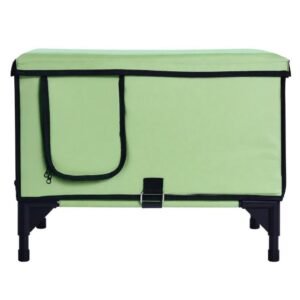 Elevated Heated Outdoor Cat House with 30W Waterproof Heating PadMSRP $128.99Login for wholesale pricing
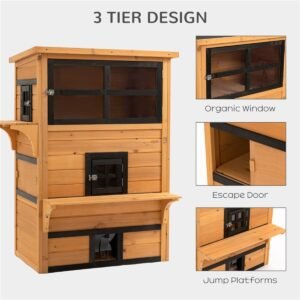 Three-Tier Outdoor Cat Condo with Asphalt Roof and Five Access DoorsMSRP $284.99Login for wholesale pricing
 Large Elevated Heated Cat House with Waterproof Pad and Insulated LiningMSRP $124.99Login for wholesale pricing
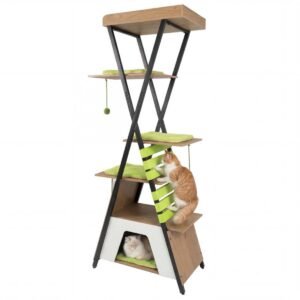 73″ Multi-Level Cat Tree with Condo, Top Perch and Scratching PadMSRP $228.99Login for wholesale pricing
Stock it as a wholesale KIT
Pre-bundled assortments built from this guide’s categories — one PO, one shipment, wholesale pricing.