
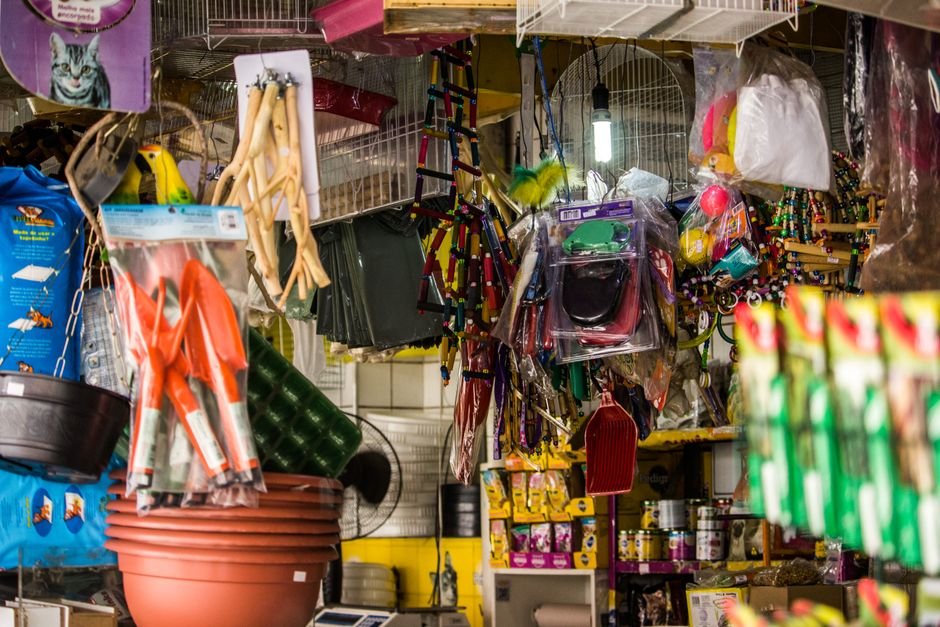
How to Stock Your First Pet Store Shelf: A Beginner’s Buying Guide with KITs
Opening a Pet Store? The Shelf Is Where It Begins
If you are about to open your first pet store, or you have just opened one, the single most intimidating question is not “where do I find customers” — it is “what on earth do I put on the shelves?” Walk into any pet trade show and you will see thousands of SKUs: leashes, chews, groomers, supplements, apparel, tech gadgets, and seasonal novelties. For a first-time retailer, that abundance is paralyzing. Buy too much of the wrong thing and you strangle your cash flow. Buy too little and your shelves look empty and untrustworthy.
This guide exists to remove the guesswork. Instead of building your assortment product by product from a blank spreadsheet, you will learn to build your first profitable shelf using curated KITs — pre-assembled, margin-checked product bundles designed specifically for independent pet retailers. By the end of this article you will know exactly how to stock your first shelf, what to buy first, what to skip, and how to grow from there.
Why Stocking Your First Shelf Feels So Hard
The difficulty is not a lack of products. It is a lack of signal. As a new store owner you do not yet know which chews dogs in your neighborhood actually prefer, which collar colors sell in spring, or whether cat owners want premium litter or budget bulk. Every purchasing decision carries risk, and risk compounds when you are placing minimum orders across dozens of individual items.
There are three classic traps first-time pet retailers fall into:
- The “buy everything” trap. You order a little of everything, tie up thousands of dollars, and discover half of it does not move for months.
- The “cheapest supplier” trap. You chase the lowest unit price, only to hit a high minimum order quantity (MOQ) that forces you to over-commit to a single SKU.
- The “my favorite product” trap. You stock what you personally like rather than what your local market actually buys.
Each trap is really the same problem: you are making sourcing decisions without proof. Curated KITs flip that dynamic. They hand you a bundle that has already been merchandised, priced, and validated for small retailers — so your first shelf is profitable by design, not by luck.
What Exactly Is a KIT?
A KIT is a ready-made assortment of complementary pet products bundled into one shelf-ready unit. Think of it as a “starter pack” for a specific retail moment: a Dog Starter KIT, a Cat Starter KIT, a Holiday Gift KIT, a Display KIT for impulse buys. Instead of choosing 40 individual items, you choose one KIT that already contains 40 items selected by people who understand pet retail margins.
The benefits for a first-time store are concrete:
- Lower risk. One KIT replaces dozens of separate bets, so a slow category costs you one decision instead of twenty.
- Faster setup. A KIT arrives as a coherent assortment — you unpack, place, and sell. No spreadsheet gymnastics.
- Built-in margin. KITs are assembled with target retail prices and healthy markups already calculated.
- Smaller minimums. Because the bundle is the unit, you can start with a fraction of the volume a traditional wholesaler would demand.
Step 1: Define Your Store Concept Before You Buy Anything
Before ordering a single KIT, write down, in one sentence, who your store serves. Examples:
- “A neighborhood dog-focused shop for walks, training, and treats.”
- “A family pet store covering dogs, cats, and small animals.”
- “A boutique for premium cat owners and gift buyers.”
Your concept decides which KITs you open with. A dog-walk concept should lead with a Dog Starter KIT and a leash-and-collar KIT. A boutique should open with a Gift KIT and a Cat KIT. You do not need to serve everyone on day one — you need to serve your specific customer better than the big-box store down the road.
Step 2: Pick Your First KIT (Start With the Anchor)
For almost every new pet store, the right opening move is a Retail Starter KIT. It is the anchor of your first shelf: a balanced mix of the highest-turn pet essentials. Pair it with one secondary KIT that matches your concept (a Cat KIT, a Dog KIT, or a Gift KIT).
A practical opening formula for a small footprint:
- 1 Retail Starter KIT (your anchor assortment)
- 1 concept KIT (dog, cat, or gift, depending on your store)
- 1 Seasonal or Holiday KIT if the calendar supports it
That is three purchasing decisions, not three hundred. Three decisions get you a credible, full-looking shelf with real merchandising logic behind it.
Step 3: Plan Your Shelf Layout for the Way People Shop
A KIT is not just inventory; it is a layout plan. When your first KIT arrives, place it as a coherent block rather than scattering pieces across the store. Shoppers read “themed” shelves faster than random ones. A Dog KIT belongs together: collars near leashes, chews near treats, toys in the same eyeline.
Use the classic retail rule of three heights: tall items at the back, mid items in the center (eye level sells best), and small impulse items at the front lip. Even a single KIT, displayed with intention, looks like a curated destination rather than leftover stock.
Step 4: Set Price Points and Protect Your Margin
One of the quiet advantages of KITs is that they arrive with margin guidance. As a rule of thumb for pet retail:
- Everyday consumables (chews, waste bags, litter): 30–40% markup.
- Accessories (collars, leashes, bowls): 50–60% markup.
- Gifts and novelty: 60–100% markup.
Do not compete on price with online giants for commoditized items. Compete on advice, convenience, and the experience of walking into a store that clearly knows pets. Your first shelf should make a shopper think “these people curate, they do not just stock.”
Step 5: Add a Few Complementary Singles
Once your KIT anchor is in place, add a small number of singles that the KIT implies but does not fully cover. If your Dog KIT is strong on walking gear, add a couple of best-selling treat flavors as replenishment hooks. If your Cat KIT is strong on toys, add a premium litter as a basket-builder. Keep this list short — five to ten singles, not fifty. The KIT does the heavy lifting; singles fill the gaps.
Common Mistakes First-Time Owners Make
- Over-ordering variety. Depth on a few proven items beats width on a hundred unknowns.
- Ignoring turn speed. Fast-turn consumables fund your slow-turn novelties. Balance them.
- Skipping the planogram. A thoughtful layout sells more from the same inventory.
- Chasing trends too early. Let a KIT carry the trend risk; you validate with singles later.
A Real-World Example: The Three-KIT Opening
Imagine a 600-square-foot neighborhood shop. The owner picks a Dog-focused concept, opens with a Retail Starter KIT, adds a Dog KIT, and — because it is late October — a Holiday Gift KIT. Three decisions, roughly a weekend of setup, and the store opens with a confident dog aisle, a gift display by the register, and a starter wall that says “we know dogs.” Within six weeks the owner knows exactly which chews turn fastest and which collar colors sell, and only then adds a short list of proven singles. Compare that to the owner who opens with 200 random SKUs and spends the first two months deciphering chaos. The KIT owner is already profitable; the other is still learning what not to buy.
Working With Suppliers: What to Ask Before You Commit
Even when you start with KITs, you will eventually talk to suppliers directly. Ask four questions every time: What is the true minimum order (not the “starting” minimum)? How long is lead time, and is it stable seasonally? What is the return or defective policy? And can they provide product images and descriptions you can reuse on your shelf cards and social posts? A supplier who answers clearly and quickly is worth a slightly higher unit cost than one who is vague. With KITs, much of this is handled for you up front, which is exactly why they are the right place to begin.
Reading Your First Month of Sales
Your first month is a data goldmine, not a verdict. Watch three numbers: sell-through rate (how fast each KIT moves), basket size (how many items the average shopper carries to the counter), and repeat rate (how many customers return within 30 days). High sell-through on a KIT confirms your concept. A growing basket size means your layout is working. A rising repeat rate means you are earning trust. You do not need fancy software — a notebook and a weekly 15-minute review will reveal patterns fast enough to act on. Let the data tell you which single to add next, rather than guessing.
How to Reorder and Scale
The beauty of starting with KITs is that reordering is simple. When a KIT sells through, you reorder the whole bundle — no painful line-by-line analysis. As you learn your local demand, you graduate from KITs to a hybrid: KIT anchors plus a growing list of proven singles. Many successful independent pet stores run 60–70% KIT inventory even years later, because it protects margin and frees the owner to focus on customers instead of spreadsheets.
Your First Shelf, Built on Proof Not Guesswork
Stocking your first pet store shelf does not require a buyer’s intuition you have not earned yet. It requires a smart starting system. Curated KITs give you that system: validated assortments, protected margins, and minimums small enough for a first store. Define your concept, anchor with a Retail Starter KIT, add one concept KIT, lay it out with intention, and protect your price points. That is a shelf a customer trusts — and a business you can actually sleep at night owning.
Ready to see the assortments? Browse our Retail Starter KITs and Best-Sellers KITs, or build your own with our Custom Retail KIT tool. Your first profitable shelf is closer than you think.
Ready to stock these ideas? Browse wholesale pet KITs →
Shop these pet categories
Wholesale pricing, no minimum order.
Related wholesale collections
Products mentioned here
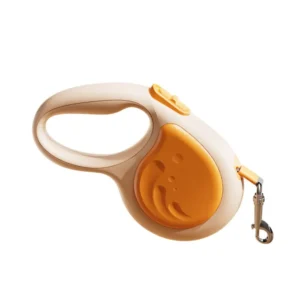 19.6 ft Outdoor Nylon Automatic Retractable Dog Leash – Heavy-Duty Pet Leash for Large and Small DogsMSRP $8.99Login for wholesale pricing
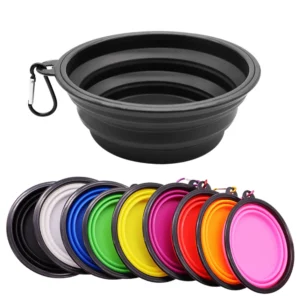 2 Pack Collapsible Silicone Dog Bowls – Portable Pet Food & Water Travel Bowl with CarabinerMSRP $1.78Login for wholesale pricing
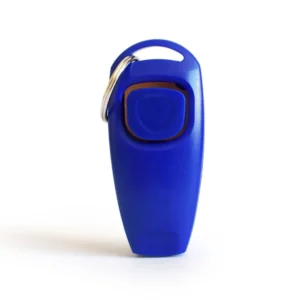 2-in-1 Dog Training Whistle & Clicker – Outdoor Pet Training Device, Factory-Direct Wholesale (MOQ 50)MSRP $2.18Login for wholesale pricing
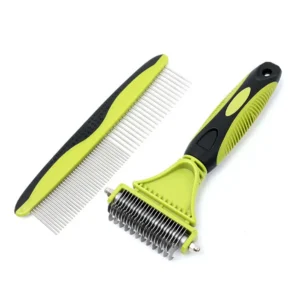 2-in-1 Pet Grooming Comb Set – Dual-Sided Deshedding & Dematting Tools for Dogs and CatsMSRP $6.29Login for wholesale pricing