

HTS Code for Pet Products: 2026 Guide | JustForPetStore
An HTS code is the ten-digit number that tells U.S. Customs and Border Protection what your product is and what it owes. Get it wrong and you either overpay duty on every shipment or underpay and face a penalty later. The classification is driven by material, construction, and function — not by the category name your supplier uses. Confirm it before you place the order, not after the container lands.
What is an HTS code and why does it matter for pet products?
The Harmonized Tariff Schedule of the United States is the official schedule of duty rates maintained by the U.S. International Trade Commission and published at hts.usitc.gov. The first six digits are international; the last four are U.S.-specific and determine the actual rate you pay.
Classification drives four things you feel directly: the duty rate, whether additional Chapter 99 trade-remedy duties apply, whether other agencies (FDA, USDA APHIS, CPSC) have a say, and whether your entry gets flagged for exam. It also determines your landed cost, which is the number that decides whether a margin works at all.
The part that surprises new importers is that the code follows the physical product, not the marketing. A “pet bed” can classify under furniture headings if it has a wood frame, or under textile furnishings if it is a cushioned textile item. A feeder with a pump and electronics classifies differently from a gravity feeder with no moving parts. Two products sitting on the same shelf in your store can owe very different duty.
Keep the paperwork. Under 19 CFR 163.4, records supporting an entry are generally retained for five years from the date of entry, which means your classification file — product spec sheet, supplier photographs, broker’s written opinion, and any ruling reference — should live next to the SKU, not in an email thread nobody can find later. A tidy file is also what makes a later CBP inquiry a five-minute conversation instead of a project.
How do you find the right HTS code for a pet product?
Work from facts, then confirm. A defensible sequence looks like this:
- Write the physical description. Material composition by weight, construction method, dimensions, whether it has electronics, a motor, or a battery, and how it is packaged for retail.
- Search the HTS by heading. Start with the chapter that matches the material or function — textiles, plastics, metal, machinery, or prepared animal feed — then narrow to the subheading whose text matches your description most literally.
- Read the chapter and subheading notes. Legal notes exclude and include products in ways the heading titles do not convey.
- Cross-check against published rulings. Search CBP’s CROSS ruling database for the same or a similar product. Prior rulings are the cheapest expert opinion you will ever get.
- Confirm with a broker or a binding ruling before you commit real money, especially on a product you plan to reorder every quarter.
Do not accept a supplier’s HTS code as authoritative. Many factories copy a code from a previous shipment without checking whether it fits, and the legal liability for classification sits with the importer of record — you.
When two headings both look plausible, the General Rules of Interpretation decide between them: the most specific description wins over the more general one, and for goods that could fall under two headings, classification follows the material or component that gives the product its essential character. That is the reasoning that puts a pump-driven fountain in a machinery heading rather than a plastics one. Ask your broker which rule they relied on — if they cannot say, the classification has not actually been reasoned through.
Ask the factory for a specification sheet and photographs of the actual production sample before you start.
What do recent CBP rulings say about pet products?
Two published rulings from 2026 show how literal the process is.
Pet costume — ruling N358088, issued February 12, 2026. A costume of 100 percent polyester with a foam-lined headpiece was classified under HTS 4201.00.6000, which covers saddlery and harness for any animal, including leads, muzzles, dog coats and the like, of other material. The general rate of duty was 2.8 percent ad valorem. Note the logic: the product landed in an animal-harness heading, not in a textile apparel heading, even though it is worn.
Pet treats — ruling N362504, issued July 7, 2026. Three chicken-based products — freeze-dried breast cubes, a lickable chicken paste in squeeze tubes, and chicken-wrapped rawhide sticks — were all classified under HTS 2309.10.0090, “preparations of a kind used in animal feeding: dog or cat food, put up for retail sale: other.” The general rate of duty was free. Materials and processing differed substantially across the three items, and all three landed in the same subheading because the function and retail packaging controlled.
Both rulings carry the same caveat CBP prints on every one: under 19 CFR 177.9(b)(1), the holding applies only to the specific facts and merchandise described, and if your facts differ you should request a new ruling under 19 CFR 177.2. Treat rulings as strong guidance, not as blanket permission.
Which duties and fees stack on top of the HTS rate?
The general rate in the HTS is only the first layer.
- Chapter 99 trade remedies. Section 301, Section 232, and IEEPA-based actions are reported with separate Chapter 99 numbers layered on top of your base classification. These change frequently, and the HTS general rate tells you nothing about them.
- Merchandise Processing Fee. CBP’s MPF is 0.3464 percent of entered value, subject to a per-entry minimum and maximum — $33.58 to $651.50 for fiscal 2026, effective October 1, 2025. On a small shipment the minimum can dominate.
- Harbor Maintenance Fee. 0.125 percent of value on ocean shipments arriving at a designated port.
- Other agency requirements. Pet food and treats may involve FDA and, for animal-derived ingredients, USDA APHIS. Anything marketed for children or with electronic components may pull in CPSC or FCC obligations.
CBP publishes operational guidance for current trade remedies through its Cargo Systems Messaging Service, which is worth checking before every entry when remedy programs are in flux.
When should you request a binding ruling?
Request one when three conditions line up: you plan to reorder the SKU repeatedly, the classification is genuinely ambiguous, and the duty difference between the two candidate codes is material to your margin. A $200 broker conversation that resolves a 15-point duty spread on a product you will import for years is not a cost, it is an investment.
Skip it when the product is a one-time test buy of three units. For a first order, ask your broker to classify on the entry, keep the entry summary on file, and revisit if the SKU earns a reorder. Building your evidence base as volume grows is the sane approach for a small shop.
What mistakes cost small importers the most?
Classifying by product name. The single most common error, and it is how a “pet bed” ends up in the wrong heading with a rate several points off.
Accepting the factory’s paperwork. Declarations on a commercial invoice are not a defense. If the entry is wrong, the importer of record pays the difference and possibly a penalty.
Ignoring packaging and set composition. A retail set with two different products raises set-classification questions. A product that ships with a battery, a pump, or a printed manual can move headings.
Forgetting the fee layer. Small importers budget for duty and forget MPF and HMF, then wonder why landed cost missed the estimate by a few percent.
Skipping country-of-origin marking. Under 19 U.S.C. 1304, imported goods must be marked to indicate to the ultimate purchaser the country of origin, and pet products with removable retail packaging need the marking on the article itself. Fixing marking failures at a warehouse after arrival is far more expensive than specifying it in the purchase order.
Reusing a code across a product line. Each SKU deserves its own look, especially across your smart electronics and basic pet toys ranges, where the inclusion of electronics changes the analysis entirely.
How does classification fit a low-MOQ buying strategy?
Classification work is fixed cost — roughly the same effort whether you import 50 units or 5,000. That is exactly why small, frequent orders benefit from getting it right once and reusing the answer.
When you buy through a low minimum order quantity program, put the confirmed HTS code and duty stack into your SKU record at the first order. Every reorder then inherits a known landed cost, and your margin math stops being a guess. Keep the ruling number, the entry summary, and the broker’s written classification next to the SKU.
It also changes how you compare suppliers. Two quotes that look 8 percent apart on unit price can invert once duty, MPF, HMF, and volumetric freight are applied — so compare landed, not unit. If you want help pressure-testing a landed cost before you commit, talk to our sourcing team or start from the wholesale catalog where reorder-friendly quantities are built in.
Sources: U.S. International Trade Commission, Harmonized Tariff Schedule of the United States (hts.usitc.gov); U.S. Customs and Border Protection CROSS rulings N358088 (February 12, 2026) and N362504 (July 7, 2026); CBP Cargo Systems Messaging Service and merchandise processing fee guidance; 19 CFR 177.2 and 177.9(b)(1).
Ready to stock these ideas? Browse wholesale pet KITs →
Shop these pet categories
Wholesale pricing, no minimum order.
Related wholesale collections
Products mentioned here
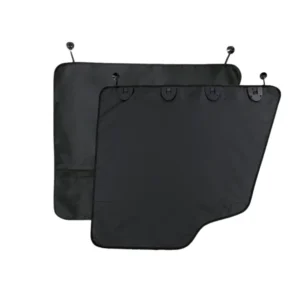 2 Pack Scratch-Proof Durable Oxford Car Door Cover for Dogs | Wholesale Dog Car Door ProtectorsMSRP $26.09Login for wholesale pricing
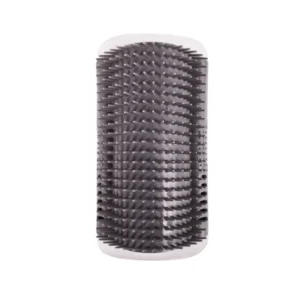 Cat Wall Corner Self Groomer Brush – Easy Install Massage & Soft Comb Scratcher (Grey, Blue)MSRP $1.98Login for wholesale pricing
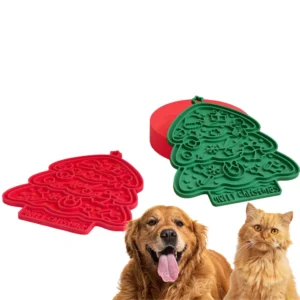 Christmas Tree-Shaped Slowly Non-Slip Silicone Pet Lick Mat | Wholesale Dog Lick MatsMSRP $10.99Login for wholesale pricing
 Dog Slow Feeder Palm Tree Silicone Food Divider with Suction 2 Colors Assorted | Wholesale Slow Feeder Dog BowlsMSRP $9.99 – $11.99Login for wholesale pricing