

Interactive Dog Toys: 2026 Stocking Guide | JustForPetStore
Interactive dog toys are the fastest-moving part of the toy shelf because they solve a problem owners actually complain about: boredom, chewing and energy with nowhere to go. Grand View Research values the global pet toys market at $11.6 billion in 2026, with dog toys holding over half of it. Stock three formats, price across three tiers, and rotate a quarter of the shelf monthly.
What counts as an interactive dog toy?
An interactive dog toy is any toy that requires the dog to act on it to get a result. That definition covers four families:
- Puzzle and treat-dispensing toys. The dog nudges, rolls or slides a compartment to release food. These are the highest-repeat category because owners refill them daily.
- Tug and fetch toys with a mechanic. Bungee, throw-launchers and two-handle tug designs put the owner back in the game.
- Motion and sound toys. Balls that roll unpredictably, and plush with squeakers or crinkle material.
- Lick mats and slow feeders. Technically feeding tools, but merchandised next to toys and bought for the same reason: occupying a dog.
The common thread is engagement, not electronics. Most independent stores sell far more treat-dispensing rubber and puzzle feeders than app-connected gadgets, and the gadgets carry a higher return rate.
How big is the interactive dog toys market in 2026?
Scale first, then category. Per Grand View Research, the global pet toys market was valued at $10.6 billion in 2025 and is projected to reach $11.6 billion in 2026 and $22.4 billion by 2033, a compound annual growth rate of 9.9% from 2026 to 2033. Within that, the dog segment held the largest pet-type share at 52.2% in 2025, and chew toys were the largest product segment at 25.4%. Hypermarkets and supermarkets led distribution at 42.1%, which is precisely why independent stores cannot win on breadth and have to win on curation.
Interactive products get measured more narrowly by research firms that track electronic and enrichment devices as their own category; one such forecast, published in January 2026, sized the dog interactive toys market at $268.62 million in 2026, growing at roughly 8.55% annually. Treat the two figures as different definitions of the same shelf, not as competing estimates of one number.
Why do interactive dog toys outsell basic plush?
Three commercial reasons, all of which show up in a small store’s numbers.
They get consumed. A plush toy is bought once. A treat-dispensing toy is bought once and then refilled with food or spread hundreds of times, and it gets replaced when it wears out. That is a replacement cycle, not a one-off.
They justify a higher ticket. Owners will pay more for a toy described as solving a behavior — chewing the skirting board, barking when left alone, eating too fast — than for a toy described as “a toy”. Language on the shelf tag matters more than the product here.
They photograph well. Puzzle toys and slow feeders fill with colorful food and get shared. Per the American Pet Products Association (APPA), U.S. pet industry spending reached about $158 billion in 2025 and was projected to reach about $165 billion in 2026 across roughly 95 million pet-owning households — a large, engaged base that discovers products socially.
Which interactive dog toys should a small store stock first?
If you are building the category from a low base, buy in this order.
- Treat-dispensing rubber toys, two sizes. The workhorse. Stock small/medium and large, and refill-friendly shapes.
- Puzzle feeders, two difficulty levels. Beginner and intermediate only. Advanced puzzles frustrate dogs and come back as returns.
- Lick mats and slow feeders. Cheap, high margin, and they attach to an existing food purchase.
- Tug toys with a bungee or handle. Durable, easy to demo, good gift price point.
- One or two electronic or novelty items. Not for margin — for conversation. Restock only if it sells twice.
Buy every format in two size bands — small and medium together, and large on its own. Size is the single most common reason a toy comes back, and a dog that cannot fit its mouth around a dispenser will simply ignore it.
Then stop. The temptation is to carry a little of everything; the discipline is depth on the five formats that turn. Keep the shelf legible: one facing per format per size, stacked vertically so a customer can read the whole category in one pass.
How should you price and merchandise interactive dog toys?
Run three tiers and label them plainly: good (under $12), better ($12–$25) and best ($25 and up). Most independent stores find the middle tier carries the strongest gross margin in dollars while the entry tier drives trial.
Merchandising rules that work on a small footprint:
- Demo one. A single open puzzle feeder with kibble in it outsells a neat row of boxed units.
- Merchandise by problem, not by material. “For dogs who eat too fast” converts better than “silicone feeder”.
- Cross-merchandise with food. Put lick mats and slow feeders beside wet food, and treat dispensers beside treats.
- Bundle at the counter. Toy plus treat bag plus a refill suggestion builds basket size without discounting.
You can build the whole assortment from the dog toys range, then extend into training and enrichment once you know which formats turn. Slow feeders sit naturally next to dog care and hygiene consumables, and cat owners buy the same puzzle concept from the cat toys shelf — worth a small adjacent bay.
What safety checks matter before stocking dog toys?
Pet toys are not covered by a single federal toy safety mandate in the United States, which means the retailer carries the reputational risk. Before you put a line on the shelf, run four checks.
- Chew honesty. A toy marketed for “aggressive chewers” should be named for a material and a size, not just a claim. Rubber compounds and nylon behave very differently.
- Small parts and squeakers. Squeakers that can be extracted and swallowed are the most common complaint. Check that they are enclosed in a stitched or moulded pocket.
- Fill and stuffing. Plush toys should have no loose fill that a dog can pull out in clumps.
- Traceability. Every SKU should map to a factory and a batch, so you can act if a customer reports a failure.
Buy the first order on low MOQ, sell it, and only then scale the reorder. A toy that survives a month of real dogs in your own customers’ homes is worth more than a supplier’s spec sheet.
How much inventory should a small store tie up in dog toys?
Treat toys as a fast-turning accessory category, not a seasonal bet. A workable starting rule for a shop under 2,000 square feet is 8–12% of accessory inventory value in the interactive dog toy family, split roughly 40% dispensers and puzzles, 25% lick mats and slow feeders, 20% tug and fetch, and 15% novelty.
Reorder on a four-week cycle for the top five SKUs and an eight-week cycle for everything else. Anything that has not sold in eight weeks goes into a clearance bin; a toy bin by the counter is one of the highest-converting displays in the store and it also clears the shelf.
New formats arrive every cycle, and the cheapest way to see them is a trade show floor. Global Pet Expo remains the largest North American launch venue for pet products, and walking it once with a buy list is usually cheaper than three bad assortments bought blind.
Are interactive dog toys safe for aggressive chewers?
Some are, and the label should tell you which. Interactive toys are engagement products first; durability depends on material and size, not on the word “interactive”. For heavy chewers, choose dense rubber or nylon in a size rated above the dog’s weight, avoid thin-walled puzzles with sliding parts, and tell customers plainly that no toy is indestructible and that supervised use matters.
Do interactive dog toys actually reduce boredom?
They give a dog something to do, which is what owners mean by boredom. Food-release puzzles and lick mats extend the time a dog spends working on a meal and are widely used by owners to occupy dogs left alone for short periods. They are enrichment, not treatment — a dog with severe separation distress needs a behavior professional, not a toy.
What margin should a pet store expect on dog toys?
Independent pet retailers typically plan on keystone or better — roughly 50% gross margin and up — on accessory toys, with entry-price impulse items at the lower end and puzzle feeders and slow feeders at the higher end. Electronic toys carry a lower margin after returns and warranty handling, so keep them as a small share of the buy.
How often should a pet store refresh its toy assortment?
Rotate about a quarter of the toy shelf every month and re-rank the whole category quarterly. Interactive toys have short novelty cycles: a format that sells out twice is a permanent line, and a format that sits eight weeks is a clearance candidate. Keep the winners deep and the experiment thin.
Sources: Grand View Research, Pet Toys Market Size, Share And Trends Report (2025 base year, 2026–2033 forecast); American Pet Products Association (APPA) State of the Industry; Global Pet Expo; dog interactive toys market forecast published January 2026.
Ready to stock these ideas? Browse wholesale pet KITs →
Shop these pet categories
Wholesale pricing, no minimum order.
Related wholesale collections
Products mentioned here
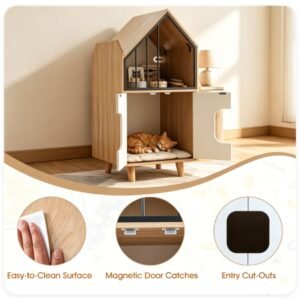 Hidden Cat Litter Box Cabinet with Elevated Cat Lounge, Natural and WhiteMSRP $137.99Login for wholesale pricing
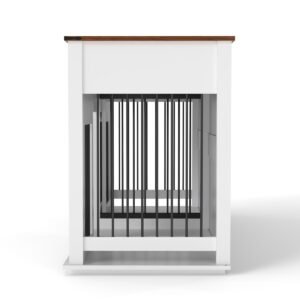 63″ Double Dog Crate Furniture with Two Drawers and Sliding DoorsMSRP $459.99Login for wholesale pricing
 Woven Water Hyacinth Cat Pod Bed on Metal Tripod Base, BeigeMSRP $152.99Login for wholesale pricing
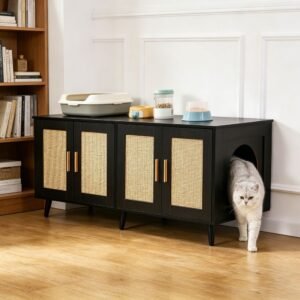 Rattan-Door Cat Litter Box Cabinet, 47″ Sideboard StyleMSRP $237.99Login for wholesale pricing