

Lacey Act Pet Products: Import Rules 2026 | JustForPetStore
A wooden cat tree, a bamboo bird perch or a wicker pet basket can be held at the border for a paperwork problem rather than a safety one. Under the Lacey Act, importers of certain plant and wood products must file a declaration naming the scientific plant name, the value, the quantity and the country of harvest. Per APHIS, Phase VII took effect December 1, 2024. If you import wooden pet goods, this belongs on your clearance checklist.
What is the Lacey Act declaration, and who administers it?
The Lacey Act combats illegal trafficking of wildlife, fish and plants, and it makes it unlawful to import into the United States any illegally harvested plant or plant product. The declaration requirement is a separate, paperwork obligation layered on top of that prohibition: it forces the plant content of an import to be identified at entry so that illegally harvested material cannot move anonymously. Think of it as a content disclosure for the plant material inside a finished consumer product.
Per APHIS, three agencies administer the Act: APHIS, the National Marine Fisheries Service, and the U.S. Fish and Wildlife Service. APHIS is responsible for collecting declarations for imported plants and plant products and for defining the scope of plant materials that require one. The statutory basis is 16 U.S.C. 3372(f), which makes it unlawful to import any plant unless the person files upon importation a declaration containing the scientific name of any plant contained in the importation, a description of the value and the quantity including the unit of measure, and the name of the country from which the plant was taken.
Which pet products are actually in scope?
Anything that contains plant material and lands in a listed tariff line. For pet retailers and importers that means the wood-heavy end of the catalog: wooden cat trees and scratching posts, sisal-wrapped posts and cardboard scratchers, bamboo and rattan pet furniture, wicker or seagrass pet baskets and beds, wooden bird perches and bird toy parts, wooden small-animal hutches and chew blocks, paper and paperboard packaging sold as product, and any toy with a wooden handle or wooden component.
Not everything that looks like wood counts, and not everything plant-based is in scope. Per 16 U.S.C. 3372(f)(3), the declaration requirement does not apply to plants used exclusively as packaging material to support, protect or carry another item, unless the packaging material itself is the item being imported. That carve-out is why a wooden crate around a shipment is treated differently from a wooden crate sold as a pet bed. The test is what you are importing, not what the factory used.
What four conditions trigger the declaration requirement?
Per the APHIS declaration requirements, you need to file a declaration only if all of the following apply to your product or shipment: it contains plant material; it is classified under an APHIS-listed Harmonized Tariff Schedule code; it is imported as a formal entry; and it falls under one of the listed entry type codes. All four are cumulative, so failing any one removes the requirement. This is the part most small importers get wrong in both directions: some file declarations they do not owe, and others assume that a small shipment is exempt when it is not.
Because the trigger turns on the HTS code, the classification you already put on the entry summary is the deciding input. That makes this a classification problem as much as an agriculture problem. Before your next purchase order, look up the code you intend to use in the APHIS product lookup, which can be searched by HTS chapter, heading, article or effective date, and save the result with the supplier file. Recheck after any redesign that changes the material mix of a product.
When do you not need one?
Per APHIS, you do not need to file if at least one of the following is true: the shipment is free of plant material; it is hand-carried in personal baggage or arrives via international mail; it contains finished products not classified in an APHIS-listed HTS code, even if some materials used to create the product might otherwise require a declaration; it is imported as an informal entry; it will not remain in the United States, covering in-bond movements and carnets; it meets the de minimis requirement; or it falls in an exempt product category.
The exempt categories are common cultivars and common food crops, scientific specimens for lab or field research only, and plants that will remain planted or will be planted or replanted. There is an important exception: if the product is a protected product, it requires a declaration even if it would otherwise be exempt. Do not self-certify your way out of this. The exclusion list is specific, and the finished-product and informal-entry exclusions are the two most commonly misapplied by small importers.
What information must the declaration contain?
The statute sets the core three: scientific name of any plant contained in the importation, including genus and species; a description of the value of the importation and the quantity including the unit of measure; and the name of the country from which the plant was taken. Per APHIS, the practical data set is larger: description of shipment, value of the product, quantity of the plant in metric units of measure, name of the country from which the plant was taken, importer name and address, consignee name and address, HTS code, bill of lading, container number, Manufacturer Identification Code, and the name and contact information for the importer of record or their agent.
The statute also handles the two cases where the truth is genuinely unknown. Where the species used to produce a plant product varies and the species is unknown, the declaration shall contain the name of each species that may have been used. Where the plant is commonly taken from more than one country and the country is unknown, the declaration shall contain the name of each country from which the plant may have been taken. Per APHIS, special use designations provide relief for products made from composite, recycled, reused or reclaimed materials, and for plant products made before the Lacey Act amendments.
What should you ask your supplier for before you ship?
Ask for the declaration data set as a line item on your purchase order, not as an afterthought at the port. In practice that means: the genus and species of every plant material in the product, or the applicable special use designation; the country of harvest for each; the quantity in metric units; the HTS code you will both declare; the Manufacturer Identification Code; and a signed statement that the material was legally harvested. If a factory cannot produce the species list, that is a sourcing signal, not just a paperwork delay.
Build the request into the same conversation as price and minimum order quantity. If you are buying through a low minimum order quantity program to test a wooden cat tree or scratcher line, ask whether the supplier has filed declarations for that product before and whether they can supply the data with the invoice. A first-time importer who discovers the requirement after the container has sailed is the one who pays demurrage while the paperwork is reconstructed.
How do you file, and when?
Only the importer of record or their agent, such as a customs broker, may file, and a broker filing on behalf of a client needs power of attorney from the importer of record. The importer of record and their agent assume responsibility for the accuracy and truthfulness of the information. Per APHIS, the declaration should be filed at the time the shipment lands in United States jurisdiction, but most importers file in the Automated Commercial Environment using the Lacey Act Message Set before the shipment arrives.
ACE is the primary method. The Lacey Act Web Governance System, LAWGS, is APHIS’s web-based alternative, and it is the option for imports into Foreign Trade Zones, which ACE does not yet support, as well as for large XML uploads. If you file customs information in ACE and the declaration in LAWGS, you must indicate that in ACE using disclaimer code C. One change to note: as of January 1, 2026, APHIS no longer accepts paper submissions of the PPQ 505 or 505B form, so filers who used paper in the past must move to ACE or LAWGS.
What happens if you file late, or file wrong?
Contact APHIS rather than waiting to be contacted. Per APHIS, if you did not submit a declaration in time, you should provide the number of declarations that were not filed, the associated entry numbers, and the dates the shipments arrived, and the agency will discuss options, which may include retroactively filing in LAWGS or, depending on the circumstances, submitting a paper declaration form. Volunteering the error is always cheaper than having it found in a review.
The penalties are set by statute. Per 16 U.S.C. 3373, a person who knowingly violates the declaration or false labeling provisions may be assessed a civil penalty of not more than $10,000 for each violation, while a person who violates the marking or declaration provisions without that knowledge may be assessed a civil penalty of not more than $250. Each violation is a separate offense. On the criminal side, knowingly violating the declaration provision is punishable by a fine under title 18 or imprisonment for not more than five years, or both, where the offense involves importation or plants with a market value greater than $350, and by up to one year otherwise.
Seizure is the part that hurts a small business most. USDA forfeiture rules at 7 CFR part 356 set the procedure: where seized property is appraised at more than $10,000, the agency mails notice of seizure and refers the matter to the U.S. Attorney for judicial forfeiture; where it is valued at $10,000 or less, the agency proceeds administratively, posting notice for 21 days, and a person claiming the property must file a claim and a $250 bond within 20 days of posting. A container of wooden cat furniture can clear that threshold easily, and the cash tied up in it does not come back quickly.
How does this change landed cost and lead time?
It adds a data-collection step that has to happen before booking, not after. The realistic cost is not a government fee; it is the days spent chasing a species list from a factory that has never been asked for one, plus broker time to key the declaration, plus the risk of a hold if the data is inconsistent with the entry. Build two things into your sourcing process: a supplier questionnaire that collects the declaration fields at quotation stage, and a broker instruction that confirms the declaration is filed before arrival rather than at landing.
For small importers the practical lesson is to buy from partners who already do this. Ask whether the supplier exports regularly to the United States, whether they know the HTS code for the finished product, and whether they can provide plant material data on the invoice. This article is general information about federal requirements, not legal advice, and the scope of listed tariff lines changes by phase, so verify the current product list with APHIS or a licensed customs broker before each new program. If you are building a wooden or plant-based line, contact our team about documentation support, and review the cat toy and cat supply ranges we ship.
Ready to stock these ideas? Browse wholesale pet KITs →
Shop these pet categories
Wholesale pricing, no minimum order.
Related wholesale collections
Products mentioned here
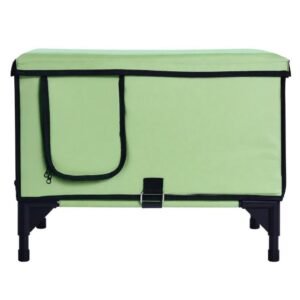 Elevated Heated Outdoor Cat House with 30W Waterproof Heating PadMSRP $128.99Login for wholesale pricing
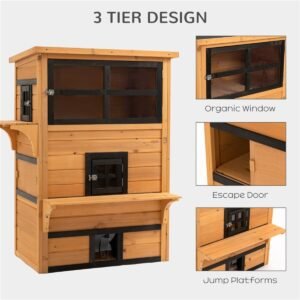 Three-Tier Outdoor Cat Condo with Asphalt Roof and Five Access DoorsMSRP $284.99Login for wholesale pricing
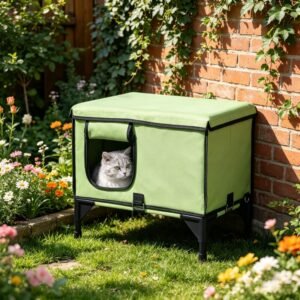 Large Elevated Heated Cat House with Waterproof Pad and Insulated LiningMSRP $124.99Login for wholesale pricing
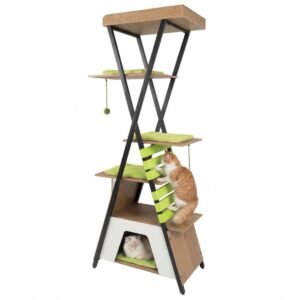 73″ Multi-Level Cat Tree with Condo, Top Perch and Scratching PadMSRP $228.99Login for wholesale pricing
Stock it as a wholesale KIT
Pre-bundled assortments built from this guide’s categories — one PO, one shipment, wholesale pricing.