

Orthopedic Dog Beds: 2026 Stocking Guide | JustForPetStore
Orthopedic dog beds are worth stocking in 2026 because they sell on a health story rather than a price story, and because bulkiness protects them from pure online competition. Per Grand View Research, beds and sofas were the largest product segment of the global pet furniture market at 38.1% of 2023 revenue. Carry two tiers, demo the foam in person, and lead with size and cover.
Why should a small pet store stock orthopedic dog beds?
Three reasons, and none of them is “the category is trending.”
The margin spread is wide. A bed is one of the few pet products where the same shelf can hold a $35 item and a $150 item with no customer confusion, because buyers are shopping for a health outcome rather than comparing unit prices. That spread is where an independent store makes its rent.
Bulk is a moat. Market researchers describe shipping bulkiness as a structural challenge in the pet beds category. What is a problem for an e-commerce seller is an advantage for you: freight cost per unit punishes the pure online player, while your customer walks out with the bed under their arm and pays nothing for delivery.
The sale is advisory. Owners buying for an older dog want to be told what to choose. That is exactly the interaction a chain cannot replicate at scale and a local shop does every day. Per Grand View Research, orthopedic designs are increasingly positioned for senior dogs and dogs with joint conditions, and those buyers ask questions before they swipe a card.
How big is the dog bed market in 2026?
Read the numbers with care, because the definitions differ.
Grand View Research values the global pet furniture market at $1.7 billion in 2023, estimates $1.8 billion for 2026 and forecasts $2.4 billion by 2030, a CAGR of 4.9% from 2024 to 2030. North America held a 40.5% revenue share in 2023. Within that market, the beds and sofas segment was the largest at 38.1% of 2023 revenue, supermarkets and hypermarkets led distribution at 46.9%, and the dog application was forecast to post the fastest segment CAGR at 4.9% through 2030.
OG Analysis, published through Research and Markets, sizes the global pet beds market at about $6 billion in 2026 and forecasts $9.9 billion by 2034, roughly 6% a year. It lists orthopedic memory foam, washable covers and premiumisation among the demand drivers, and names price competition, commoditisation, variable quality, shipping bulkiness and rapid imitation of premium designs as the category’s main challenges.
Those two figures are not inconsistent — they are measuring different things. Grand View Research’s “pet furniture” is a narrower basket than “pet beds” as OG Analysis defines it. Use both as directional evidence that the category is growing in the mid single digits, and do not build a buying plan on the headline number itself.
For channel context, Grand View Research’s pet hard goods analysis puts the wider market at $74.5 billion in 2024, $83.1 billion in 2026 and $104.0 billion by 2030, with North America at a 45.3% share and brick-and-mortar distribution at about 82.25% of 2024 revenue. Physical stores still move the majority of hard goods. Per the American Pet Products Association (APPA), total U.S. pet industry spending reached roughly $158 billion in 2025 and was projected to reach roughly $165 billion in 2026.
Which orthopedic dog bed price tiers should you carry?
Three rungs, and no more than four to six physical SKUs on the floor.
- An entry foam bed. This is the gift and first-apartment purchase. It should look like a bed, not like a mat, and it should come in a size that fits a crate.
- A mid-tier memory foam bed. Your workhorse, and the one that should hold the most inventory dollars. This is where the orthopedic claim has to be backed by a real foam specification.
- One premium bed you can demo. A single floor model above your mid tier, sold with a cutaway or a removable cover the customer can unzip. It exists to make the mid tier look reasonable.
Set the actual price points from your own sales data and your rent, not from a national average. The structural point is the ladder: two adjacent prices make people choose, three make them trade up, and four with no visible difference make them leave.
What sizes and styles of orthopedic dog beds should you stock?
Size by weight, not by breed label. Breed names are marketing; a 60-pound dog needs a certain foam depth whether it is a lab, a boxer or a mixed rescue. Build the ladder around four weight bands — up to 20 pounds, 20 to 50, 50 to 90, and 90-plus — and stock the two bands that match the dogs your customers actually bring in. Ask your grooming and food customers what they feed; bag size will tell you the weight distribution of your catchment area faster than a survey will.
Style follows sleeping position. Curled sleepers want a donut or a high bolster; sprawled sleepers want a flat mat with room to stretch; leaners want a bolster on one side only. Stocking all three styles in one size is usually a better use of floor space than stocking one style in four sizes.
One detail that matters specifically for older dogs and is easy to miss when ordering: entry height. A tall bolster wall is a step an arthritic dog has to climb. Look for a lowered front edge or a cut-down entry on the senior models, and call it out on the shelf tag — it is the kind of specification that makes a customer choose your bed over a cheaper one online.
What should you check before buying orthopedic dog beds wholesale?
The word “orthopedic” is unregulated in this category, which means the specification sheet is the product.
- Foam density and thickness. Ask for density in kg/m³ and thickness in centimetres. If a supplier cannot give you either number, you are buying a marketing claim.
- Layer construction. A single slab of foam is a pillow. Multi-layer construction — a support base with a comfort layer on top — is what a joint-support claim actually rests on.
- Cover system. Removable, machine-washable, and ideally with a waterproof liner between the cover and the foam. Covers are the number one reason a bed comes back.
- Non-slip base. Older dogs slide. A bed that skates across a hardwood floor gets returned.
- True dimensions. Suppliers size beds inconsistently. Measure the sleep surface, not the shipping carton, and write the measurement on the shelf tag.
- Packed volume. Beds are sold by weight but shipped by volume. Ask whether the unit ships compressed and vacuum-packed or boxed at full loft, then work out freight per landed unit, because this single variable can swing your margin more than the unit price does.
- Certifications. Ask what the foam and fabric are certified against. Material-safety certifications matter more here than anywhere else in the store, because the product sits in a bedroom.
- Order size. Test a bed line with a small first order before committing to a carton. JustForPetStore’s low-MOQ program exists so a shop can prove one size sells before stocking four.
How do you merchandise orthopedic dog beds in a small store?
Floor space is the constraint, so the bed has to earn its square footage twice.
Put one bed on the floor, unboxed, and let dogs lie on it. A dog choosing a bed sells more beds than any sign you can write. Keep a foam cutaway next to it so the customer can see the layers rather than reading about them.
Merchandise by life stage, not by brand. Create a senior-pet zone that puts beds next to mobility aids and joint support products, because the buyer shopping for one is almost always shopping for the others. That single adjacency typically lifts attachment rate more than a discount does.
Train one staff script with three questions: how old is the dog, how much does it weigh, and how does it sleep — curled, sprawled or against a bolster? Those three answers pick the size and the style, and they turn a browsing visit into a fitted sale.
Finally, sell the second cover. A spare washable cover is a low-cost attachment, it solves the single biggest complaint about beds, and it turns a one-time purchase into a reason to come back.
Plan for the returns before you need the policy. Beds are bulky, and a returned bed is expensive to ship back and awkward to resell if the cover was used. Decide in advance whether you will accept returns on opened bedding, whether the floor model is sold as-is at a discount at season end, and whether a customer with a genuine foam complaint gets a replacement cover rather than a whole bed. Writing those three rules down costs ten minutes and saves an argument in December.
Ready to build the ladder? Start with the dog beds and mats range, add a cat bed or furniture piece if your cat households are growing, and anchor the display inside your broader dog assortment. Travel formats from dog walking and travel round out the section for customers who want the same comfort in the car.
Ready to stock these ideas? Browse wholesale pet KITs →
Shop these pet categories
Wholesale pricing, no minimum order.
Related wholesale collections
Products mentioned here
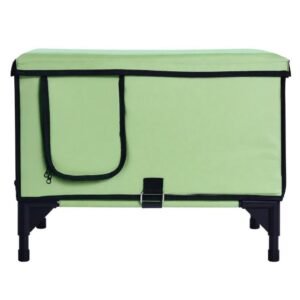 Elevated Heated Outdoor Cat House with 30W Waterproof Heating PadMSRP $128.99Login for wholesale pricing
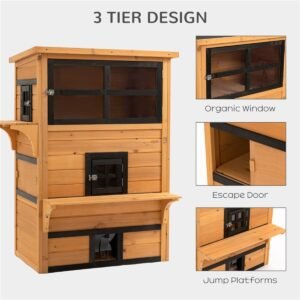 Three-Tier Outdoor Cat Condo with Asphalt Roof and Five Access DoorsMSRP $284.99Login for wholesale pricing
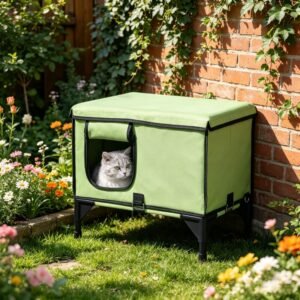 Large Elevated Heated Cat House with Waterproof Pad and Insulated LiningMSRP $124.99Login for wholesale pricing
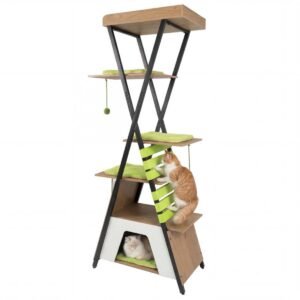 73″ Multi-Level Cat Tree with Condo, Top Perch and Scratching PadMSRP $228.99Login for wholesale pricing