

Pet Calming Products: What to Stock 2026 | JustForPetStore
Pet calming products deserve a permanent shelf, not a seasonal endcap. Demand is driven by separation, travel and noise rather than by holidays, so the category repeats all year. Stock four to six formats, price in three visible tiers, refuse any SKU whose label promises to treat anxiety, and reorder refills on a reminder cycle. That is the entire plan, and it works in a one-door shop.
What counts as a pet calming product?
The aisle is wider than most owners realize. Pet calming products include ingestible soft chews and supplements, pheromone diffusers and their refills, sprays and mists, calming collars, pressure wraps and anxiety shirts, and the non-ingestible behavioral tools that occupy an anxious animal — lick mats, puzzle feeders and chew outlets.
Two things separate this category from a supplement shelf. First, the buyer usually arrives with a symptom and a deadline: the dog barks all day, the cat hides when guests come, the flight is Friday. Second, most items need a second purchase to work as intended. A diffuser without a refill is a one-month product, and a wrap that is never washed is a one-season product. Both facts shape how you buy.
Owners rarely use the word “calming” either. They say the dog destroys the door frame, or that the cat will not eat after a move. Train staff to translate the complaint into a format before they reach for a box.
How big is the pet calming products market in 2026?
The published estimates are large and they disagree, which is itself a lesson in how to read market research. Fortune Business Insights valued the global pet calming products market at $18.55 billion in 2025, projected $19.70 billion for 2026 and $31.83 billion by 2034, a 6.18 percent compound annual growth rate, with North America holding 39 percent of 2025 revenue, dogs about 53 percent of demand, and snacks and treats about 39 percent of product mix. Straits Research put 2025 at $17.45 billion, 2026 at $18.53 billion and 2034 at $29.99 billion, a 6.2 percent CAGR, with North America at 41.2 percent, calming chews and oral supplements at 34.7 percent, and natural or nutraceutical ingredients at 30 percent.
Use those numbers for direction, not for a budget. The two firms draw the category boundary differently, so a single headline figure should never justify a purchase order. What survives across both reports is the shape of the opportunity: chews and oral supplements lead, natural positioning is gaining, and online is the fastest-growing channel — Straits Research projects e-commerce at a 10.4 percent CAGR, faster than any other route to market.
That last point is the one that should change your buying. If the fastest growth is online, your shelf cannot win on availability alone. It has to win on immediacy and advice: the customer whose dog is trembling tonight cannot wait two days for a parcel.
Context on the demand side comes from the American Pet Products Association, which reported U.S. pet industry spending of $158 billion in 2025 and projects $165 billion for 2026 across roughly 95 million pet-owning households, with dog ownership at 53 percent of households and cats at 39 percent. About 22 percent of owners said they trimmed pet spending in 2025. Calming is a category that survives that trim, because the buyer is solving a problem rather than indulging a whim.
Which calming formats should a small store stock first?
Carry six lines, not twenty SKUs. Each line should answer a different trigger, because customers shop the trigger.
- Soft chews and calming supplements. The volume line and the one that reorders. Carry one established formula and one value tier, and keep both in a size a small dog can finish in a month.
- Pheromone diffusers and refills. The device is the entry; the refill is the annuity. Never stock a device without at least two refill cycles behind it.
- Sprays and mists. Travel-size and crate-size bottles are the impulse buy at the counter. They also solve the customer who will not wait for a diffuser to work.
- Calming collars. A passive format for the owner who forgets dosing. Sell it with a clear replacement interval.
- Pressure wraps and anxiety shirts. The highest-margin line and the easiest to demonstrate, because the customer can feel the fabric.
- Behavioral outlets. Lick mats, slow feeders and durable chews give the animal something to do with the stress. Merchandise these beside your dog training and enrichment range rather than in a supplement aisle, because the buyer is shopping for a distraction, not a dose.
Add two adjacency lines and the section starts selling itself. Travel anxiety belongs with carriers, crates and harnesses in your dog walking and travel range, and cat-specific pheromone work belongs in your cat range, not buried behind dog chews. Handling stress also matters: a nervous animal still needs nail care, so keep calming sprays near grooming tools as a second reason to buy.
What margin can an independent store expect?
Calming products reward the retailer who understands where the repeat is. Chews typically land in a 35 to 45 percent gross margin band and reorder monthly. Diffuser devices run lower, around 25 to 35 percent, but refills carry 40 to 50 percent and recur on a fixed calendar. Wraps and shirts can exceed 45 percent because they are textile, sized and hard to price-compare. Sprays sit around 40 to 50 percent at small sizes.
Price in three visible tiers so the customer can self-select without a conversation. An entry tier under $20 catches the uncertain first-time buyer. A core tier between $25 and $60 is where most volume lands. One premium demonstrator above $70 gives the range credibility without tying up cash in inventory.
Bundle rather than discount. A wrap plus a spray plus a chew trial size beats 15 percent off any single item, because discounting a problem-solving category trains customers to wait for the markdown. Attach a reorder reminder at the counter — a card with the refill date, or a text if you run one — and the second purchase stops depending on the customer’s memory.
Which ingredients should you look for — and which claims should you avoid?
Fortune Business Insights describes the formulating trend as a shift toward chamomile, valerian root, hemp derivatives, L-theanine and melatonin as alternatives to pharmaceutical options. For a buyer, that translates into a simple discipline: read the panel, and prefer suppliers who publish a batch-specific certificate of analysis rather than a single sample report for an entire product line.
Claims are where independent retailers get hurt. Describe what a product is and what owners observe — soft chew, 60 count, chicken flavor, pheromone diffuser covering up to 700 square feet. Do not say it cures anxiety, treats separation disorder or replaces veterinary care. When a customer describes self-injury, refusal to eat for more than a day, or aggression, refer them to a veterinarian. That referral costs you nothing and protects the relationship.
Can you legally sell CBD calming chews?
This is the question that most often catches small retailers out, and the answer is narrower than the packaging suggests. In a warning letter issued to Holista LLC, doing business as HolistaPet, and posted by the FDA on April 7, 2025, the agency concluded that CBD added to animal food is a food additive under section 201(s) of the Federal Food, Drug, and Cosmetic Act and is subject to section 409. Because CBD is not approved for use in any animal food, the agency found the products adulterated, naming CBD Dog Treats for Anxiety, CBD Calming Chews for Dogs and CBD Calming Chews for Cats among them.
The National Animal Supplement Council separately flagged warning letters posted the same day to three companies — House of Alchemy (CBD Dog Health), Hamet Love (MycoDog), Bailey’s Wellness (Bailey’s CBD) and Holista (HolistaPet) — for marketing unapproved new animal drugs. The trigger was not the ingredient alone. It was claims indicating the products were intended to diagnose, cure, mitigate, treat or prevent disease in animals, which under the FD&C Act makes them new animal drugs requiring an approved application, conditional approval or index listing.
Practically, that means three checks before you list a hemp SKU. Ask for a current, batch-specific certificate of analysis showing cannabinoid content and contaminant screening. Reject any product whose own marketing says it treats or cures anxiety, because that is the language that generated these letters. And confirm your state’s rules, which vary and which can also restrict what a veterinarian is permitted to recommend.
How much should you buy for a first order?
Treat calming as a test-and-scale category. Six to twelve units per chew SKU, four to six diffuser devices with two refills each, and three sizes per wrap is enough to read real demand in about six weeks without committing cash to a category you have not sold before. Keep the opening order small enough that a slow line does not trap working capital.
This is exactly where low minimum order quantities matter. A supplier that lets you buy twelve rather than 120 turns a category launch into an experiment instead of a bet, and it lets you reorder the winner before the season turns. If you want to trial a calming range without a container-level commitment, start with our low-MOQ buying option.
Track sell-through by trigger, not by SKU. If noise-related items outsell separation items in your store, that tells you something about your neighborhood that no national report will.
How should you merchandise pet calming products to drive repeat purchases?
Merchandise by trigger, not by brand. A single bay organized under three headings — home alone, travel, and noise — outsells a shelf organized by manufacturer, because it lets a customer find her own problem in under ten seconds.
Build a seasonal calendar, because triggers are predictable. Return-to-office and back-to-school drive separation complaints in September. Thunderstorm season drives noise complaints through spring and summer. Holiday travel and visitors drive crate, carrier and guest-related stress in November and December. Set the endcap four weeks ahead of each, and put refills at eye level next to devices so the second purchase is visible at the first one.
Give staff one question that opens the conversation: “What does your pet do when it happens?” The answer sells the format, and it is something a search box cannot do. If you want help building a first calming order sized for a single location, talk to our sourcing team and we will map it to your floor space.
Calming is one of the few categories where an independent store has a structural advantage. The buyer is stressed, the need is immediate, and the product only works with guidance. Stock it tightly, price it in tiers, keep the claims clean, and the refills will do the rest.
Ready to stock these ideas? Browse wholesale pet KITs →
Shop these pet categories
Wholesale pricing, no minimum order.
Related wholesale collections
Products mentioned here
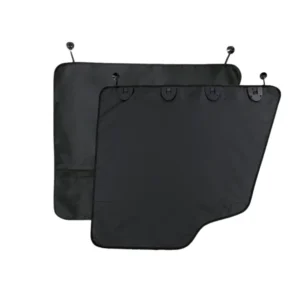 2 Pack Scratch-Proof Durable Oxford Car Door Cover for Dogs | Wholesale Dog Car Door ProtectorsMSRP $26.09Login for wholesale pricing
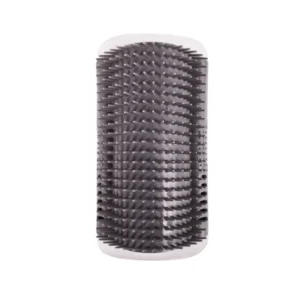 Cat Wall Corner Self Groomer Brush – Easy Install Massage & Soft Comb Scratcher (Grey, Blue)MSRP $1.98Login for wholesale pricing
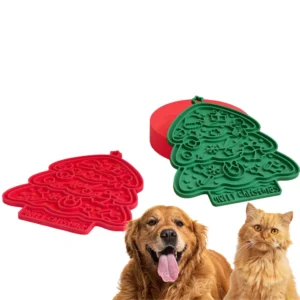 Christmas Tree-Shaped Slowly Non-Slip Silicone Pet Lick Mat | Wholesale Dog Lick MatsMSRP $10.99Login for wholesale pricing
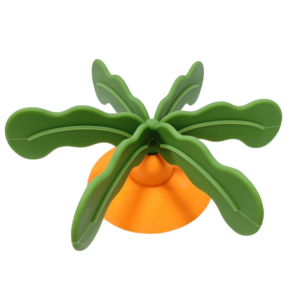 Dog Slow Feeder Palm Tree Silicone Food Divider with Suction 2 Colors Assorted | Wholesale Slow Feeder Dog BowlsMSRP $9.99 – $11.99Login for wholesale pricing