
Pet Enrichment Products: 2026 Stock Guide | JustForPetStore
Pet enrichment products are one of the few categories still pulling shoppers into physical stores. NielsenIQ reports electronic pet toys up 27% and treat-dispensing toys up 15% year over year while overall in-store pet sales fell 1.4%. Stock a three-tier ladder of puzzles, dispensers and chew formats, demonstrate them on the floor, and reorder only on measured sell-through rather than on a supplier’s case minimum.
What counts as a pet enrichment product?
Enrichment is not a synonym for toys. A toy is something a dog destroys. An enrichment product is something a pet works on, usually for food or scent, and it has a defined job: slow the meal, extend the chew, add a problem to solve, or give a cat somewhere to scratch and hide. That job is what you sell, and it is what a marketplace listing cannot explain.
Four families cover most of the shelf. Food-motor products include lick mats, slow feeders, treat-dispensing balls and snuffle mats. Chew products include durable rubber, natural chews and refillable chew holders. Sensory and scratch products serve cats, including scratchers, hideaways and catnip formats. Training-adjacent products include target sticks, treat pouches and clickers.
The practical test is simple. If a customer asks how to use it, it belongs in enrichment and on your floor. If the answer is obvious from the packaging, it is a commodity and it will be price-shopped against a phone.
Why is enrichment growing when other categories drift online?
The channel data explains it. NielsenIQ reports U.S. pet care sales of $95.1 billion over the past year, up 5.5%, but in-store sales fell 1.4% while online grew 14.1%. In-store share dropped to 52%, and shoppers who only buy in store now account for just 9.6% of dollars.
Inside that shift, enrichment is moving the other way. NielsenIQ finds electronic toys up 27% and treat-dispensing toys up 15%, and describes enrichment as becoming its own category rather than a sub-line of toys. Per Grand View Research, the global pet toys market was $10.6 billion in 2025 and is estimated at $11.6 billion in 2026, reaching $22.4 billion by 2033 at a 9.9% CAGR, with soft toys growing at about 10.7% and online as the fastest channel at roughly 11.1%.
That combination is the whole argument. The categories moving online are the ones with no questions attached. Enrichment has questions attached, and questions are the one thing an independent store can answer better than an app.
How much shelf space should enrichment get?
Give it a fixed home and a moving one. The fixed home is four to six linear feet in the main aisle, organized by job rather than by brand, with signage for each of the four families. The moving home is a table near the register where you rotate one featured product every two weeks, always with a filled demo unit next to it.
Organization by job matters more than organization by species. A customer looking for “something to keep my dog busy while I am on a call” does not want to walk to the dog aisle and decode brands. Put the slow feeder, the lick mat and the dispensing toy next to each other with a card that says what each one fixes.
Do not bury the category behind bulk food or leashes. Enrichment is a planned purchase for some customers and a rescue purchase for others, and both need to see it without asking. If shelf space is tight, take it from duplicated commodity accessories rather than from this category.
Which enrichment products should you stock first?
Build a starter ladder of eight to twelve SKUs, one or two per rung, and let sell-through decide what expands. Rung one is a lick mat, because it is cheap, washable and works for dogs and cats. Rung two is a treat-dispensing ball in two sizes. Rung three is a slow feeder bowl. Rung four is a snuffle mat. Rung five is a durable refillable chew. Rung six is a cat scratcher or hideaway.
Add two premium SKUs at the top of the ladder, such as an electronic or app-connected puzzle, but stock them shallow until you know the demand. NielsenIQ’s 27% growth in electronic toys is real, and it is also the rung where a customer will check a marketplace price before buying, so it needs a demo and a service story rather than depth.
Keep the dog training and enrichment range as your anchor assortment, and fill gaps from the wider dog toys and cat toys ranges rather than opening new supplier accounts for one item.
How should you price pet enrichment products?
Use three visible price tiers and make the difference between them obvious. An entry tier around $9.99 to $14.99 covers lick mats and basic dispensers, a mid tier around $19.99 to $29.99 covers slow feeders, snuffle mats and durable chews, and a premium tier above $34.99 covers electronic puzzles and large multi-part sets.
Price by replacement cycle, not by cost multiple alone. A $12 lick mat that a customer replaces twice a year is worth more to you than a $30 electronic toy sold once, and it is far easier to reorder. Keep blended gross margin on the category above your store average by attaching consumables: the mat needs treats, the dispenser needs refills, the scratcher needs catnip.
Never compete on the entry tier. If a marketplace sells the same basic dispenser for less, stock a different one, or bundle it with a treat bag and a card so the comparison stops being item against item.
What safety checks should you apply before selling enrichment items?
Enrichment products go in a mouth, so treat them like a product that will be chewed, not like a decorative item. Check four things on every new SKU before it reaches the shelf: size guidance from the manufacturer, material description, cleaning instructions, and whether the product has small parts that can separate.
Then set your own store rules and print them. Recommend supervision for the first few sessions. Do not present any product as indestructible, because none is. Tell customers to retire a chewed item once it cracks or loses pieces, and to match size to the animal rather than to the price. Ask staff to repeat the same three sentences on every enrichment sale.
Keep this section free of health promises. Enrichment is about behavior and activity, not treatment. If a customer describes a medical or behavioral problem, the right answer is a referral to their veterinarian, not a product claim.
How do you demo enrichment products in a small store?
One table, one filled unit, one sentence. Set a lick mat with a thin layer of wet food or yogurt-style treat, a dispenser loaded with kibble, and a snuffle mat with a few pieces hidden, then let customers and their dogs try them during weekend hours. The demo converts because the product explains itself in ten seconds.
Write the sentence on a card next to each item. For a lick mat: “Spread, freeze, and give it when you need fifteen minutes.” For a snuffle mat: “Hide breakfast and let the nose do the work.” For a slow feeder: “Turns a two-minute meal into ten.”
Staff the demo table at peak hours only, and restock it daily. A demo unit that is empty, sticky or missing pieces does more damage than no demo at all, because it tells the customer the product is high maintenance.
Which pets and households are underserved by enrichment?
Cats, small dogs and seniors. Grand View Research notes cat toys growing at about 9.7% CAGR through 2033, yet most stores still give cats a fraction of the enrichment space that dogs get, usually in the form of a single wand toy. Per the American Pet Products Association, U.S. pet industry spending reached $158 billion in 2025 and is projected to reach $165 billion in 2026, with 95 million households owning a pet, so the household base is not the constraint.
Small-breed households need smaller versions, because a standard dispenser that is too heavy will not roll for a ten-pound dog. Senior pets need lower-effort formats: softer chews, shallow lick mats and scratchers placed at floor level rather than tall towers.
Multi-pet households are the most underserved of all. They need two of everything, which is a simple upsell that a product page cannot deliver. Ask “how many pets?” on every enrichment sale and you will find the average basket rising without a discount.
How should you buy enrichment without tying up cash?
Buy for the test, not for the year. The mistake stores make with enrichment is committing to a case of twelve of one puzzle because the unit price looks good, then discovering that customers in their town wanted a different format. Enrichment is a category with high SKU-level variance, so variance belongs on the supplier’s shelf, not yours.
Order six to twelve units per new SKU, put them on the floor for two weeks, and measure sell-through before reordering. Anything above 60% sell-through in that window gets doubled. Anything below 25% gets cut at the next review, not carried into next season.
Order enrichment test quantities at low minimum order quantity so the trial costs less, and if you want help building a starter ladder for your store format, talk to our sourcing team about factory-direct pricing.
Sources: NielsenIQ, Paws for Thought: Why Your Pet Aisle Is Bleeding Cash to the Internet (August 27, 2026); Grand View Research, Pet Toys Market (2026-2033); American Pet Products Association, 2026 State of the Industry Report.
Ready to stock these ideas? Browse wholesale pet KITs →
Shop these pet categories
Wholesale pricing, no minimum order.
Related wholesale collections
Products mentioned here
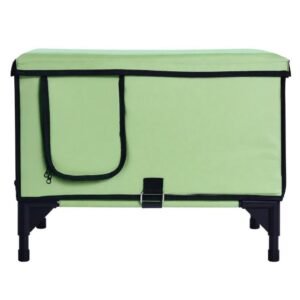 Elevated Heated Outdoor Cat House with 30W Waterproof Heating PadMSRP $128.99Login for wholesale pricing
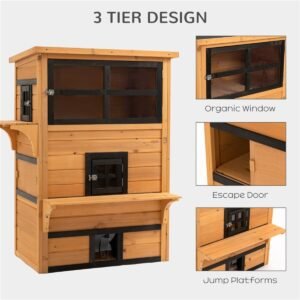 Three-Tier Outdoor Cat Condo with Asphalt Roof and Five Access DoorsMSRP $284.99Login for wholesale pricing
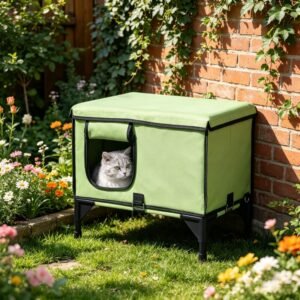 Large Elevated Heated Cat House with Waterproof Pad and Insulated LiningMSRP $124.99Login for wholesale pricing
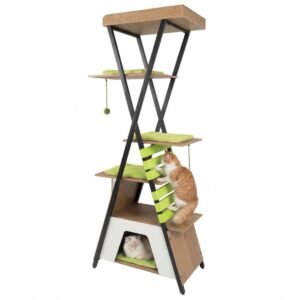 73″ Multi-Level Cat Tree with Condo, Top Perch and Scratching PadMSRP $228.99Login for wholesale pricing
Stock it as a wholesale KIT
Pre-bundled assortments built from this guide’s categories — one PO, one shipment, wholesale pricing.