

Pet Grooming Supplies: 2026 Stocking Guide | JustForPetStore
Pet grooming supplies are one of the few aisles where a customer comes back before the product runs out, and the category is still growing. Per Grand View Research, the global pet grooming products market was worth about $15.6 billion in 2025, is estimated at about $16.5 billion in 2026 and is forecast to reach about $24.8 billion by 2033, a 6.0% CAGR. Shampoo and conditioner alone account for more than half of category revenue.
How big is the pet grooming products market in 2026?
The headline number and the regional number tell slightly different stories, and you should plan against the regional one. Globally, Grand View Research puts pet grooming products at roughly $15.6 billion in 2025, $16.5 billion in 2026 and $24.8 billion by 2033, growing at a 6.0% CAGR from 2026 to 2033. North America held the largest regional share at about 45.1% of 2025 revenue, and the United States was the largest single country market. Asia Pacific is the fastest-growing region.
For a shop in the United States, the more useful cut is the North America outlook, which estimates the regional market at about $7.02 billion in 2025, about $7.42 billion in 2026 and about $10.87 billion by 2033, a 5.6% CAGR. That is slower than the global rate, which is the honest picture for a mature market: growth is coming from trading up and from frequency, not from new households discovering shampoo.
Channel mix matters just as much as growth. The same research puts the offline channel at about 74.4% of global grooming product revenue in 2025. Independent pet retail and grooming salons are inside that 74.4%, and it is the reason this category still belongs on your shelf rather than being conceded to marketplaces.
Context on the demand side comes from the American Pet Products Association (APPA), which reported U.S. pet industry spending of about $158 billion in 2025 and projected about $165 billion for 2026. Grooming sits inside APPA’s “other services” line — boarding, grooming, insurance, training, sitting and walking — which ran about $14.3 billion in 2025 and is projected at about $14.9 billion for 2026. That line is services, not retail product, but it is the clearest available proxy for how much households are spending on being groomed, and it moves with the same customer.
Why do shampoos and conditioners dominate the grooming aisle?
Because they are consumed, and everything else in the aisle is bought once. Grand View Research puts shampoo and conditioner at about 54.2% of global grooming product revenue in 2025, with shears and trimming tools and combs and brushes making up the balance. In North America, shampoo and conditioner is both the largest segment and the fastest-growing one.
Consumable means repeat. A customer who finds a shampoo that works for a dog with itchy skin buys it every four to eight weeks for the life of the dog, and they buy it from wherever they found it. A brush is bought once every two or three years, often as a gift or a first-puppy purchase. Both have a place on the shelf, but only one of them produces a standing appointment with your revenue.
The sub-segments inside shampoo are where independent stores win. Coat type, skin condition, puppy versus adult, waterless versus rinse, hypoallergenic, oatmeal, medicated, deodorizing, whitening — a big box carries the middle of that list and a marketplace carries all of it with no advice attached. Your advantage is knowing which one to put in a customer’s hand.
Two cautions. First, avoid any claim that a cosmetic shampoo treats a disease; that is a drug claim, and it is not yours to make. Second, treat “medicated” and “hypoallergenic” as label terms you explain honestly rather than promises you underwrite, and send anything that looks like a skin infection to a veterinarian.
What pet grooming supplies should an independent store stock first?
Build the range in three tiers and resist the temptation to open with all of them.
Tier one is the every-week consumable: two or three shampoos covering general purpose, sensitive skin and a deodorizing or whitening option, plus a conditioner or detangling spray. Add wipes, because wipes are the highest-frequency, lowest-consideration grooming item in the store and they rescue muddy-paw season. A core range drawn from dog grooming and cat grooming and care will cover most of what walks through the door.
Tier two is tools with real turnover: a slicker brush, a pin brush, a comb, nail clippers in two sizes, styptic powder, and a nail grinder for the customers who have given up on clippers. Keep one mid-priced clipper or trimmer for home maintenance between salon visits, and be honest that it is not a full groom in a box.
Tier three is the attachment business: ear cleaner and daily hygiene items, tear-stain remover, paw balm, coat spray, toothbrush and enzymatic toothpaste, and a drying towel or two. These are small, giftable, and they ride along with the shampoo purchase.
Resist carrying a professional shear set unless you serve working groomers. Blades and shears are the wrong kind of inventory for a general pet shop: high unit cost, slow turn, and a customer who will blame the tool rather than the technique.
What grooming trends should shape your 2026 range?
Grand View Research attributes category growth to pet humanization, rising awareness of coat and skin health, and product innovation, and each of those shows up on a shelf in a specific way.
Formulation is the first. Owners are asking for natural, hypoallergenic and coat-specific products rather than one general-purpose bottle, and they are asking for it by name. Carry a recognizable natural line and be able to explain the difference between it and the value bottle in one sentence. If the only answer you have is “this one costs more,” you will lose the sale to a phone.
Tool design is the second. Quiet and low-vibration clippers for anxious dogs, ergonomic brushes, and waterless or no-rinse formats for cats and for dogs that hate baths are all responses to the same problem: the grooming happens at home now, and the owner is the one doing it. Stock the version that makes a home groom survivable and you sell to a customer who would otherwise skip it.
Packaging is the third, and it is cheaper to act on than it sounds. Refill sizes, recycled or recyclable packaging and clear ingredient labelling are cheap signals that read as premium without changing the product.
Two things are not trends and should not be stocked as if they were: CBD grooming products, which carry real regulatory exposure, and anything making a therapeutic claim. Neither belongs in a general pet shop’s range.
How should you price grooming supplies against online and big-box?
Do not try to win on the identical SKU. The same 16-ounce bottle is on a marketplace at a price you cannot match, and matching it trains your customer to compare you on that one item forever.
Instead, price in three lanes. Carry a known national brand at a fair price so price-checkers find something legitimate. Build your margin in an own-brand or distributor-brand line the customer cannot cross-shop. And put the real effort into bundles — shampoo plus conditioner plus wipes at a price that reads as a saving without discounting any single item.
Frequency beats ticket size here. A grooming auto-ship or reminder program, a “buy five washes, get the sixth” card, or a simple note in the customer profile of what they use and when they bought it will do more for this aisle than any promotion. If you groom in-house, the retail sale belongs at the end of the appointment, when the groomer can say what they actually used on that dog.
Which grooming tools justify shelf space beyond shampoo?
Shelf space is the scarce thing, so rank by turns per square foot, not by margin percentage.
Deshedding tools earn their space because the need is seasonal, obvious and urgent. Nail care earns it because owners are afraid of it and will pay for confidence. Ear and eye care earns it because those are the two problems owners notice first. Dental earn it because veterinary guidance pushes daily care and the product is cheap to hold.
What does not earn space: novelty grooming gadgets with no repeat purchase, single-purpose electric devices that will be returned, and any tool that needs a demonstration you do not have time to give. If a product needs sixty seconds of explanation to sell once, it is a poor use of a shelf that could hold something that sells itself every week.
Merchandise by problem, not by brand. A block of shelf labelled “itching and scratching,” another labelled “shedding,” another labelled “puppies” outsells a wall organised by supplier every time, because the customer arrives with a problem and a brand-blind layout. Test anything new with low minimum order quantities before you give it permanent shelf space, and ask our team for a grooming starter range sized to a small floor.
Sources: Grand View Research, Pet Grooming Products Market (2026–2033) and North America outlook; American Pet Products Association (APPA) 2026 State of the Industry.
Ready to stock these ideas? Browse wholesale pet KITs →
Shop these pet categories
Wholesale pricing, no minimum order.
Related wholesale collections
Products mentioned here
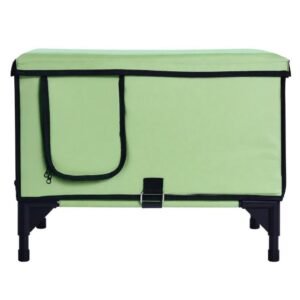 Elevated Heated Outdoor Cat House with 30W Waterproof Heating PadMSRP $128.99Login for wholesale pricing
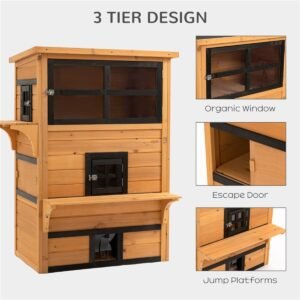 Three-Tier Outdoor Cat Condo with Asphalt Roof and Five Access DoorsMSRP $284.99Login for wholesale pricing
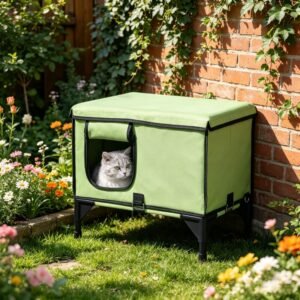 Large Elevated Heated Cat House with Waterproof Pad and Insulated LiningMSRP $124.99Login for wholesale pricing
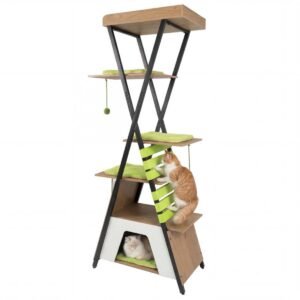 73″ Multi-Level Cat Tree with Condo, Top Perch and Scratching PadMSRP $228.99Login for wholesale pricing