

Pet Product Fulfillment USA: The Nine-Point 3PL Scorecard
GlobalPetIndex now counts 26,474 manufacturers and 4,734 retailers inside 113,454 companies across 156 countries, and its market board shows Amazon US third-party pet brands growing 108% year on year against 34% for first-party (Source: GlobalPetIndex). Put those two lines together and the conclusion is uncomfortable: goods are not scarce, shelves are not scarce, and the 400 metres between your back room and the customer’s door is where the margin now dies. That is why pet product fulfillment USA is no longer a back-office chore — it is the largest single cost line an independent pet retailer can still control.
A store that negotiates 6% off a USD 40 case wins USD 2.40. The same store loses USD 3.10 every time a 2.1 lb order is billed at 4 lb because nobody chose the box. One is a quarterly win celebrated in a supplier email; the other happens forty times a week and never appears in a spreadsheet.
What +108% third-party growth actually measures
Three readings of the same number:
- Volume, not value. More than 54M pet units a year move on Amazon US — roughly 148,000 a day. Each one is a pick, a box and a label. The fastest-growing seller class is the one that owns no building, so pick-and-pack capacity is the binding constraint, not product.
- The brand layer is thin. 3,942 brands against 26,474 factories means most “brands” are one or two people who outsource manufacturing, warehousing and shipping. Their entire operation is a listing and a payment account.
- Chains buy the economics. 1,103 chain stores against 4,734 retail entities means the volume sits in hands that own distribution centres. An independent cannot match that cost per parcel — but can rent it.
The sourcing problem was solved years ago; the 26,474 factories are one search away. The shipping problem was not, because it is priced in cubic inches and negotiated in minimums.
Why pet product fulfillment USA is a cost-per-order problem
Three variables decide your cost per order, and only one of them is the carrier’s fault.
Billable weight. US domestic parcel pricing divides cubic inches by 139. A 10 × 8 × 6 inch carton is 480 cubic inches, so it bills at 3.45 lb and rounds up to 4 lb — for a 2.1 lb product. You are paying for 1.9 lb of air on every order, and no carrier will negotiate that away. Only a smaller box will.
The box you chose in 2024. A 9 × 6 × 4 carton is 216 cubic inches, bills at 1.55 lb and rounds to 2 lb. Two pounds of billable weight, saved permanently, with a die-cut change. Multiply by 2,000 orders a year and it is a month of rent.
The minimum monthly. This is where small stores get hurt. A 3PL quoting USD 3.95 per pick and pack plus a USD 850 monthly minimum is quoting USD 3.95 at 215 orders and USD 9.62 at 88 orders. The rate card is honest; the volume assumption behind it is yours to check.
Add peak surcharges from October to January, storage billed per pallet position rather than per cubic foot, and a returns process that costs USD 4–6 per unit, and the gap between a good and a bad fulfillment decision is wider than any wholesale discount you will negotiate this year.
One USD 34.99 order, four ways to ship it
Same product, same 2.1 lb parcel, same zone 4 destination, landed cost USD 12.40 in-house or through a 3PL, USD 16.10 through a feed. Contribution is revenue minus landed cost minus fulfillment.
| How it ships | Orders/mo | Pick & pack | Materials | Postage | Storage & receiving | Returns & software | Cost/order | Contribution |
|---|---|---|---|---|---|---|---|---|
| Back-room bench, own staff | 150 | $3.40 | $0.95 | $9.80 | $0.55 | $0.28 | $14.98 | $7.61 |
| 3PL, tier 1 | 150 | $3.95 | $0.85 | $9.55 | $0.72 | $0.68 | $15.75 | $6.84 |
| 3PL, tier 2 | 600 | $2.95 | $0.85 | $9.55 | $0.45 | $0.38 | $14.18 | $8.41 |
| 3PL, tier 3 | 1,800 | $2.35 | $0.80 | $9.30 | $0.34 | $0.30 | $13.09 | $9.50 |
| Dropship feed | any | $1.75 | $0.00 | $8.90 | $0.00 | $0.60 | $11.25 | $7.64 |
Read the last row against the first. The dropship feed is cheaper per order than in-house — until you notice its contribution is USD 7.64 against USD 7.61, because the 30% unit-cost penalty eats the entire fulfillment saving. Dropship does not make you money; it removes the cash requirement. That is a financing choice, not a margin one.
The 3PL only truly wins past roughly 450 orders a month, when tier pricing clears the minimum and pick costs fall below what your own staff cost per minute. Below 250 orders, the back room usually wins on cash and on control — and loses on weekends.
Location beats the rate card
Where the warehouse sits moves postage more than its pick fee does. One facility in the middle of the country averages zone 4 from most US destinations; two facilities on the coasts put roughly 60% of orders in zone 2–3, which on a 4 lb parcel is about USD 1.10 less per order — USD 2,200 a year at 2,000 orders, against roughly USD 1,400 of duplicated receiving and safety stock. Run that trade against your own postcode mix before you compare pick rates. A cheap pick fee in the wrong state is the most common pet product fulfillment USA mistake an independent store makes, and it is invisible on the quote sheet.
Nine tests that separate a 3PL from a storage unit
Ask all nine before signing. Two failures are disqualifying: no per-SKU inventory feed, and no written exit term.
| Test | Answer from a real operator | Answer from a landlord |
|---|---|---|
| DIM divisor and packaging rights | “139, and you may approve a smaller carton.” | “Carrier decides. Box is what it is.” |
| Receiving accuracy | “Counted on camera, variance report within 24 hours.” | “We go by the carton count.” |
| Storage billing unit | “Per bin, capped, monthly cube report.” | “Per pallet, four-pallet minimum.” |
| Peak surcharge pass-through | “Capped share of published rates, 30 days’ notice.” | “Market rate at time of ship.” |
| Lithium and liquids | “Trained staff, UN38.3 on file, no Class 9 returns.” | “We ship anything you send.” |
| Returns disposition | “Photographed, graded, restock or write-off in 48 hours.” | “Returns held for your pickup.” |
| Inventory feed | “15-minute sync, per SKU, includes allocated and inbound.” | “Nightly CSV, sometimes.” |
| Lot and expiry control | “Lot captured at pick, FEFO enforced.” | “We don’t track lots.” |
| Exit terms | “30-day termination, transition support, your data out.” | “12-month auto-renew, 90-day notice.” |
Test seven is the one that costs you sales rather than money. A nightly CSV means you oversell on Saturday and refund on Monday; a 15-minute feed means you can run a promotion without guessing.
The compliance file a 3PL cannot supply for you
- FDA food facility registration. A warehouse that holds pet food or treats is a food facility under 21 CFR Part 1 Subpart H, and imports need prior notice under Subpart I. Ask for the registration number, not a reassurance.
- State feed registration and label approval. The brand owner registers the label; a 3PL that repacks, relabels or splits cases without a licensed facility creates an unregistered product.
- Lot codes and date marking. Chain buyers will ask for lot-level recall traceability in writing. If the 3PL cannot capture a lot at pick, you cannot answer a recall notice inside 24 hours.
- Prop 65. The warning must be on the product or listing before it enters the bin. No warehouse will add a label for you, and “the supplier said it’s fine” is not a defence.
- GPSR 2023/988. Since 13 December 2024 an EU-established responsible operator must be named on the product or listing. A US 3PL shipping direct-to-consumer into the EU gives you none.
- Packaging EPR. Germany’s VerpackG registration and France’s Triman marking follow the party that puts the pack on the market — including the poly mailer the 3PL chooses.
- Insurance and bailment. Warehouse legal liability covers the operator’s negligence, not your stock. Ask for a certificate and carry your own contents or stock-throughput cover.
- Lithium and liquids. UN38.3 test summaries for anything with a cell, Class 9 handling for returns, and trained staff for limited-quantity liquids. Many 3PLs quietly refuse the returns half.
- Origin marking. 19 CFR 134 requires the country of origin on the retail carton before it is stored. A 3PL receiving unmarked cartons has received a liability, not inventory.
How to start at 60 units and 20 orders a day
- Run the math at your real order count first. Under 250 orders a month, a bench in the back room usually beats a 3PL once the minimum monthly is counted.
- Send 60 units across six SKUs in one bin, not a pallet. Ten units each is enough to test pick accuracy, packaging and damage rate at a cost you can absorb.
- Run a receiving test you control. Short-ship two SKUs and substitute one. A real operator reports the variance before you ask; a landlord reports nothing.
- Force a peak day. Push twice your normal volume and watch whether the 14:00 cut-off holds. Peak season is not the time to discover the answer.
- Trigger one return and one damage claim. Time the resolution and read the disposition photos. This is the process that decides your review score.
- Keep the customer-facing layer. Your packing slip, your returns address, your domain on the tracking email. Then negotiate a 30-day exit before you scale into their minimums.
This week’s action list
- Pull the last 30 days: order count, average actual weight, average billable weight. The gap is your first refund.
- Measure your most-used carton and its DIM weight. Then price a carton two inches smaller.
- Ask three 3PLs for the DIM divisor, storage unit and minimum monthly in writing — not on a call.
- Request the FDA registration number and the insurance certificate from the one you like best.
- Check who owns the tracking email and the returns address on every order you shipped last month.
FAQ
What does pet product fulfillment cost per order in the US?
For a 2 lb parcel to zone 4, expect USD 13–17 all-in: USD 2.35–3.95 pick and pack, USD 9.30–9.80 postage, USD 0.15–0.45 storage and receiving allocation, and a returns reserve. Billable weight, not product weight, sets the postage line.
At what volume does a 3PL beat packing in-house?
Roughly 400–500 orders a month. Below 250, a monthly minimum of USD 850 adds USD 3–9 to every order and wipes out the labour saving. Above 1,200, tier pricing wins clearly, mostly on peak-season labour you would otherwise hire temporarily.
Can a 3PL store pet food and treats?
Only if it is a registered food facility. Ask for the FDA registration number, pest-control records, lot tracking and prior-notice handling for imports. A warehouse that also repacks or relabels needs a licensed facility, because repacking changes the label of record.
Does a US 3PL let me sell into the EU?
It lets you ship there; it does not make you compliant. GPSR requires an EU-established responsible operator on the product or listing, and packaging EPR registration sits with you. Budget an EU fulfilment partner or an authorised representative before you take the first order.
The shipping terms page explains how a mixed carton is consolidated before it ever reaches a 3PL, the wholesale kits show what a first order actually looks like in cartons, and the reseller programme prices at unit level so the fulfillment math starts from a landed cost you can check. Behind both, 26,474 manufacturers indexed on GlobalPetIndex and the leaderboards on its rankings hub are the reason a 60-unit order is negotiable at all. Windows are closing fast: CIPS opens in Guangzhou on 12 November, London Vet Show on 19 November, MEGAZOO Autumn on 20 November.
This article’s industry signals are cited from GlobalPetIndex public industry data, for procurement decision reference only; specific compliance is subject to the latest regulations of the destination country.
Ready to stock these ideas? Browse wholesale pet KITs →
Shop these pet categories
Wholesale pricing, no minimum order.
Related wholesale collections
Products mentioned here
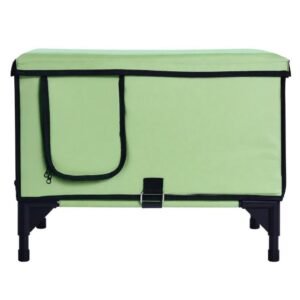 Elevated Heated Outdoor Cat House with 30W Waterproof Heating PadMSRP $128.99Apply for wholesale pricing
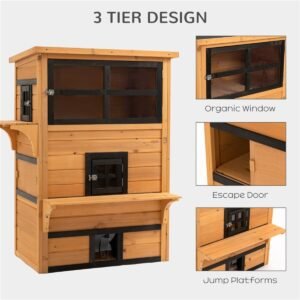 Three-Tier Outdoor Cat Condo with Asphalt Roof and Five Access DoorsMSRP $284.99Apply for wholesale pricing
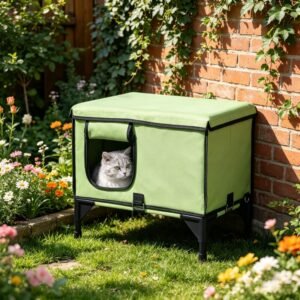 Large Elevated Heated Cat House with Waterproof Pad and Insulated LiningMSRP $124.99Apply for wholesale pricing
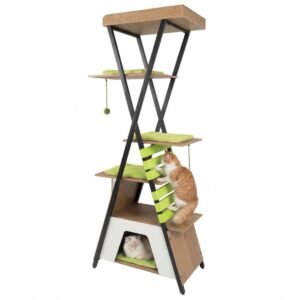 73″ Multi-Level Cat Tree with Condo, Top Perch and Scratching PadMSRP $228.99Apply for wholesale pricing
Stock it as a wholesale KIT
Pre-bundled assortments built from this guide’s categories — one PO, one shipment, wholesale pricing.