

Pet Stocking Stuffers That Sell in 2026 | JustForPetStore
Pet stocking stuffers work as a category when every item costs between $5 and $30 and can be picked up with one hand. The American Pet Products Association estimates that 55% of dog owners buy a Christmas gift for their dog at an average of $29.80, and 41% of cat owners spend about $30.70. Those averages tell you exactly where to aim your price points this December.
What price should a pet stocking stuffer sit at?
Treat the roughly $30 average gift as your ceiling and build three tiers under it. Put consumables and single chews at $5 to $10, enrichment and grooming accessories at $10 to $20, and durable or multi-part gifts at $20 to $30. That structure matches how the data behaves: APPA’s holiday gift guide, reported by Pet Age, puts the average dog gift at $29.80 and the average cat gift at $30.70, so a customer who buys three items at $9.99 spends $29.97 and lands almost exactly on the national average.
That is the real argument for stocking stuffers. They do not need to be expensive, they need to be stackable. A shopper who came in for a bag of food leaves with a chew, a lick mat and a bag of treats, and the transaction ends at the same total as a single premium purchase with none of the resistance.
Which pet stocking stuffers sell best under $30?
Sort the shelf by job rather than by species, because that is how owners shop in December. The four that reliably turn are consumables, enrichment, comfort and grooming.
Consumables are the easiest add-on: single chews, a bag of a treat the store does not normally carry, a limited-ingredient pack. They are low risk for the customer, they sell through fast, and they never require a size decision. Enrichment covers the whole family of problem-solving products, from dog toys and cat toys to snuffle mats and puzzle feeders, and it is the category Pet Age identifies as the one that has changed most in recent years, because owners now read play as part of behavioural health rather than as entertainment.
Comfort products work for the owner, not the pet: a blanket, a bed cover, a new collar. Grooming basics close the set, because a nail clipper, a brush or a travel-size shampoo solves a problem the customer already has. Put treats and enrichment items on adjacent fixtures so a customer buying one sees the other.
Why is wellness outselling novelty this year?
Because owners are being deliberate with discretionary money, and wellness gives them a reason. Pet Age’s holiday trend reporting describes purpose-driven spending replacing impulse buying, with functional treats, dental chews, calming products and limited-ingredient recipes moving into holiday assortments alongside traditional novelty toys. The same reporting notes that customers are willing to buy fewer but more premium gifts, and that they increasingly ask why an item is worth its price.
The numbers behind that shift come from APPA’s 2026 State of the Industry Report, which projects U.S. pet industry spending of $165 billion in 2026 after $158 billion in 2025, with supplies, live animals and over-the-counter medicine rising from $34.4 billion to $35.6 billion. APPA also found that 22% of pet owners spent less on their pets in 2025, up 10 points from 2024, while about half held spending flat. Fewer, better gifts is exactly what that combination produces.
How many stocking stuffer SKUs should a small store carry?
Enough to fill one fixture well and no more. A workable rule for an independent shop is three tiers multiplied by four jobs, which gives twelve to fifteen core SKUs, plus one or two novelty items per tier for impulse appeal. Anything beyond that splits your buying budget and leaves you with nine variations of the same chew in January.
Choose the twelve by velocity, not by preference. If an item did not sell through in a normal month, it will not sell through in a holiday month either. Keep the novelty items cheap enough that unsold units are a rounding error rather than a clearance problem, and reorder only the items that sold out before the middle of December.
How should you split the fixture between dog and cat stuffers?
Follow the households, not your personal preference. APPA’s 2026 State of the Industry Report puts dog ownership at 53% of U.S. households, roughly 71 million, up from 51% the year before, and cat ownership at 39%, about 53 million, up from 37%. That is a working ratio close to four dog households for every three cat households, so a twelve-SKU fixture naturally becomes six or seven dog items, four cat items, and one or two for small animals or birds.
Where the split gets more interesting is inside the cat section. APPA attributes cat ownership growth to Gen Z and Millennial buyers, and reports that 65% of pet-owning households now keep more than one pet. Those two facts push cat stuffers toward multi-cat practicality: a second litter scoop, a treat ball, a wand toy, a window perch bracket, or anything that helps in a two-cat home. Cat buyers in this group also respond to design, which is why cat items support a slightly higher price point than the same function in dog sizes.
Resist the temptation to run the fixture at a straight 50/50 split. Dog owners come in more often and buy more items per visit, and the dog side of the display should be the fuller one on the last weekend before the holiday, when the fast-moving sizes start to disappear.
What inventory mistakes cost independent stores money in December?
Four of them, and none are about buying the wrong product.
The first is overbuying novelty. Novelty items have the shortest selling window of any category on the shelf: after the holiday they are unsellable at full price. Cap novelty at a small share of the fixture and treat unsold units as a planned expense, not a surprise. The second is underbuying consumables. Treats, chews and refill items are the only part of the fixture that keeps selling through the last week, and running out of them in mid-December means sending a customer to a competitor for the exact item they came back to buy.
The third is discounting before the peak. Cutting prices in the first week of December trains customers to wait, and it removes the margin you need to cover the labor this season adds. NRF’s forecast of 4.2% growth for November and December assumes customers do spend, and its chief economist notes that spending will be uneven across income groups, with higher-income households doing more of the discretionary buying. Discount for the last three days, not the first three weeks.
The fourth is failing to assemble gift sets early. A bundle of three stuffers selling for one price takes time to build, tag and merchandise, and it is the single easiest way to lift the average transaction. Build ten sets in late November, see whether they move, and build more only if they do.
How do you merchandise stuffers for impulse buying?
Put them where the customer is already waiting or already spending. The counter and the queue line convert best because the decision takes four seconds and requires no comparison. A free-standing bin near the register beats a beautifully styled shelf at the back of the store by a wide margin in December.
Three execution rules matter more than display design. Keep every item in its tier so prices read at a glance without a scanner. Keep the fixture full, because a half-empty bin signals that the good things are gone. And group by job, not by brand, so a customer who says “something to keep her busy” can be pointed at one section instead of four.
When should holiday stocking stuffer stock be on the floor?
Aim to have the fixture set by the first week of November and full before Thanksgiving, because NRF defines the holiday season as November 1 through December 31 and forecasts a 4.2% increase in November and December retail sales this year, to about $1.013 trillion. That is a bigger season than last year, and it is shared across every retailer in your trade area.
Order consumables and low-cost items first, since they sell through fastest and are the cheapest to reorder. Hold back a portion of your budget for a mid-December top-up on whatever is clearly working, and buy that reorder on a low-MOQ wholesale basis so you are not sitting on inventory in February.
How do you protect margin on low-ticket items?
Low-ticket items carry a hidden cost: labor. If a $9.99 item takes the same 20 seconds to ring, bag and restock as a $40 item, its margin per minute is far worse, which is why stuffers only work when they travel in multiples or attach to a bigger basket.
Two fixes work. First, price at psychological breakpoints and hold the line, rather than discounting a $9.99 item to $7.99, which converts a modest margin into a thin one. Second, bundle deliberately: build a three-item gift set at a single price that lands close to that $30 APPA average, and merchandise it next to the singles. The bundle raises the average transaction without asking the customer to evaluate three separate prices. Then measure attachment rate, meaning the share of holiday transactions with two or more lines, and treat that as your success metric for the whole fixture.
Finally, plan the buying and the staffing together. If you are testing stuffer categories for the first time, you can contact us for line sheets and case quantities before you commit shelf space.
Sources: American Pet Products Association holiday gift data as reported by Pet Age and APPA’s 2026 State of the Industry Report; Pet Age 2026 holiday gift trend analysis; National Retail Federation 2026 winter holiday forecast.
Ready to stock these ideas? Browse wholesale pet KITs →
Shop these pet categories
Wholesale pricing, no minimum order.
Related wholesale collections
Products mentioned here
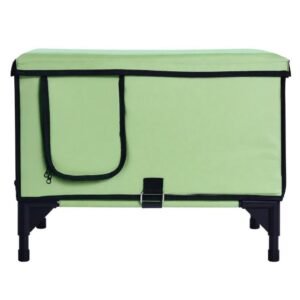 Elevated Heated Outdoor Cat House with 30W Waterproof Heating PadMSRP $128.99Login for wholesale pricing
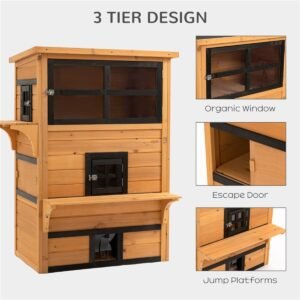 Three-Tier Outdoor Cat Condo with Asphalt Roof and Five Access DoorsMSRP $284.99Login for wholesale pricing
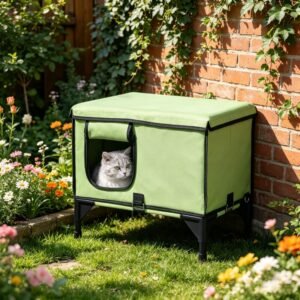 Large Elevated Heated Cat House with Waterproof Pad and Insulated LiningMSRP $124.99Login for wholesale pricing
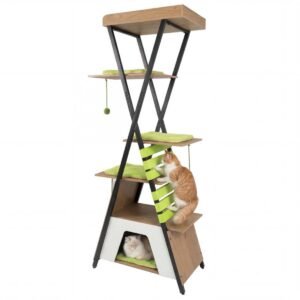 73″ Multi-Level Cat Tree with Condo, Top Perch and Scratching PadMSRP $228.99Login for wholesale pricing
Stock it as a wholesale KIT
Pre-bundled assortments built from this guide’s categories — one PO, one shipment, wholesale pricing.