

Pet Store Background Checks: FCRA Rules | JustForPetStore
Pet store background checks are governed by the Fair Credit Reporting Act, and the sequence matters more than the report itself: a standalone written disclosure, signed authorization, a copy of the report plus a summary of rights before you decide, and a separate adverse action notice after. Merge or skip any step and a screening fee can turn into a statutory claim of $100 to $1,000 per applicant, plus attorney fees.
What does the FCRA require before you run a check?
Section 1681b(b)(2)(A) sets two conditions, and both apply to a three-person shop exactly as they apply to a chain. First, before the report is procured, you must give the applicant a clear and conspicuous disclosure in writing, “in a document that consists solely of the disclosure,” stating that a consumer report may be obtained for employment purposes. Second, the applicant must authorize the procurement in writing, and that authorization may sit on the same document. The word “solely” is where most small retailers fail. A disclosure buried in an application packet, printed on the back of an at-will statement, or padded with a liability release and a drug-test consent is not a standalone document. Read the full text at 15 U.S.C. 1681b before you reuse last year’s form.
Why does the order of the disclosure matter so much?
Because the statute fixes the sequence, not just the content. The disclosure must be made “at any time before the report is procured,” which means the form cannot arrive with the offer letter after you have already pulled the report. In practice the clean sequence is: conditional offer, then disclosure and authorization, then order. Getting this backwards is the single most common self-inflicted error in seasonal hiring, and it is the kind of error that looks harmless until a rejected applicant’s attorney asks for your file and finds a report dated two days before the signed consent. Keep the signed form, timestamp it, and store it with the report. If you screen through a consumer reporting agency, that agency will also ask you to certify that you complied with this paragraph and that you will not use the report in violation of equal employment opportunity law, so the paperwork you sign with the vendor is a second place your process gets audited.
What must you do before rejecting an applicant?
You must give the applicant a chance to correct the record, and the statute is specific about what that package contains. Under 1681b(b)(3)(A), before taking any adverse action based in whole or in part on the report, you provide a copy of the report itself and a written description of the consumer’s rights under the FCRA. This is the pre-adverse action step, and it exists so a candidate can dispute a mismatched record, an old charge, or a name collision before the decision becomes final. The statute does not name a number of days to wait, which surprises owners who expect a fixed clock; the working practice is roughly five business days, long enough to be a genuine opportunity to respond and short enough to keep a seasonal hire on schedule. Document the date you sent the package and the date you decided. If the applicant disputes and the agency corrects the file, you have to reassess on the corrected report, not on the original.
Do you need a second letter after the decision?
Yes, and it is a different document from the pre-adverse package. Once the decision is final, 15 U.S.C. 1681m requires an adverse action notice telling the applicant that the decision was based in whole or in part on a consumer report, naming the consumer reporting agency with its address and telephone number, stating that the agency did not make the decision and cannot explain it, and explaining the right to obtain a free copy of the report and to dispute its accuracy. Two letters, two purposes: the first gives the candidate a chance to be right, the second tells them why they were turned down and who to call. Stores that send only the second letter skip the correction window; stores that send only the first never close the loop. Both belong in the same file, and both should be templated once so a busy December does not produce an improvised version.
Which checks fall outside the FCRA?
Not every piece of information you collect is a consumer report, and the distinction saves real money. Under 15 U.S.C. 1681a(y), a communication made to an employer in connection with an investigation of suspected misconduct relating to employment is excluded from the definition, provided it is not used to investigate creditworthiness and is not shared outside a narrow list of recipients; after an adverse action based on it, you owe the employee a summary of the nature and substance of the communication. Reference calls you make yourself to a former manager, notes from your own interview, and observations from a working interview are likewise not consumer reports. Drug testing and motor vehicle records run on separate statutes. The line that matters: anything you buy from a third-party screening firm about a candidate’s character, reputation, or mode of living is almost certainly a consumer report, and the FCRA steps apply.
How much exposure does one sloppy form create?
More than most owners assume, because damages are counted per consumer. A willful violation carries actual damages or statutory damages of $100 to $1,000, plus punitive damages and attorney fees, per 15 U.S.C. 1681n; a negligent violation carries actual damages and fees under 1681o. Now multiply by headcount. A store that hires forty seasonal staff with one defective disclosure form built forty potential claims, and because the form is identical for every applicant, the case is easy to plead as a class. The limitations period is the earlier of two years after discovery or five years after the violation, so a form drafted in 2022 can still be live in 2027. The commercial lesson is unglamorous: the form is the risk, not the report. Have one reviewed once, then freeze it.
What records should you keep, and for how long?
Keep the disclosure, the signed authorization, the report, the pre-adverse package with its send date, and the final notice, for every applicant you screened, hired or not. Federal equal employment opportunity rules require employment records to be kept for at least one year, and state agencies and insurers often ask for longer, so a two-year default is safer and costs nothing but a folder. Disposal is its own obligation: 15 U.S.C. 1681w requires proper disposal of consumer information, which in a small store means shredding rather than recycling and deleting scanned PDFs from shared drives and the front-desk computer. Write the retention rule into your hiring checklist so the file closes the same way every time, and purge on a schedule you can prove, because “we shred things” is not a defense if three-year-old reports are still sitting in a drawer.
What do state laws add on top of the federal rules?
Layers, and they are not uniform. Fair-chance, or ban-the-box, laws in many states and cities delay when you may ask about criminal history, often until after a conditional offer, which changes the order of your whole process. Several states restrict what a screening firm may report at all, California’s reporting rules limit older convictions and arrests that did not lead to conviction, and New York requires an individualized assessment of the conviction’s relationship to the job before you may deny. Salary history bans affect a different field on the same application. None of this overrides the federal steps; it stacks on them. The practical approach for a store hiring across a state line, or hiring remote staff, is to build the strictest applicable version of the process and use it everywhere, rather than maintaining three variants nobody can keep straight.
What does a workable holiday hiring checklist look like?
Seven boxes, in this order. Confirm the position and the conditional offer in writing. Hand over the standalone disclosure and collect the signed authorization. Order the report and log the date. Review it against the job’s actual requirements, not against a feeling. If the report is clean, confirm the hire and file everything. If it is not, send the copy plus the rights summary, wait about five business days, reassess any dispute, then send the final notice and log the decision date. One owner, one form version, one date log. A store running this sequence can screen a seasonal crew in a week without a single improvised step, and the same file will satisfy an agency letter, an insurer’s audit, and a plaintiff’s demand letter.
Where should a small pet store start this month?
Start with the form, because it is the cheapest thing to fix. Pull the disclosure you used last season and read it as if you were the applicant: is it one document, is the report language clear, is the authorization on the same page, and is there anything in it that is not a disclosure? Then write the two letters, pre-adverse and adverse, and put the five-day wait on the calendar. After that, the process is mostly discipline, and discipline is what lets a small store hire fast in December without carrying a compliance problem into spring. The same logic applies to the rest of the operation: know the rule, write the step down, and stop re-deciding it under pressure. Once the hiring file is clean, spend the saved attention on the floor, where dog care and hygiene and dog assortment decisions actually move revenue. If you are restocking for the season, our low-MOQ wholesale program lets you test categories without a pallet commitment, and you can contact the JustForPetStore team with your headcount and volume for a plan that fits.
Ready to stock these ideas? Browse wholesale pet KITs →
Shop these pet categories
Wholesale pricing, no minimum order.
Products mentioned here
 Hidden Cat Litter Box Cabinet with Elevated Cat Lounge, Natural and WhiteMSRP $137.99Apply for wholesale pricing
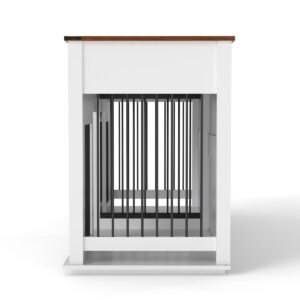 63″ Double Dog Crate Furniture with Two Drawers and Sliding DoorsMSRP $459.99Apply for wholesale pricing
 Woven Water Hyacinth Cat Pod Bed on Metal Tripod Base, BeigeMSRP $152.99Apply for wholesale pricing
 Rattan-Door Cat Litter Box Cabinet, 47″ Sideboard StyleMSRP $237.99Apply for wholesale pricing
Stock it as a wholesale KIT
Pre-bundled assortments built from this guide’s categories — one PO, one shipment, wholesale pricing.