

Pet Store Email Marketing: 4 Flows to Run | JustForPetStore
Pet store email marketing works when the message is triggered by what a customer actually did, not by your calendar. Build four automations first: a welcome series for new subscribers, a replenishment reminder timed to the bag of food they bought, a post-purchase cross-sell, and a win-back for lapsed buyers. Per Litmus, retail, e-commerce and consumer goods report the highest email return of any industry measured, at 45:1.
What should pet store email marketing actually do?
An independent shop does not need a “brand newsletter.” It needs three jobs done reliably: get a first-time buyer back for a second visit, get the reorder in before the food bowl is empty, and wake up the customer who has not walked in for two months. Everything else is decoration.
Email is the only channel where you own the audience. A social post reaches whoever the platform decides to show it to; an email reaches the inbox of everyone who asked to hear from you. That is why the channel keeps out-returning paid social and search in published benchmarks, and why it is worth an hour a week of your time even when your list is only a few hundred names.
The mechanics are simple once you separate two things. A campaign is a message you schedule and send to a list. A flow is a message triggered by a behavior — someone subscribes, buys, abandons a cart, or goes quiet. Per Klaviyo’s 2026 benchmark report, which analyzed data from more than 183,000 brands, automated flows generated about 41% of email revenue from just 5.3% of sends. That is ecommerce data from one platform, not neighborhood pet shop data, so treat it as direction rather than a target. The direction is the point: leverage lives in triggered messages, not in a monthly blast you have to remember to write.
The same reporting put the average click-through rate for one-off campaigns at 1.69%, against 5.58% for automated flows. If your program is built entirely on scheduled sends, you are choosing the weaker half of the channel.
Which four flows should you build first?
Build them in this order, because each one is easier than the last once the first is live.
1. Welcome series (three emails). Trigger on signup. Email one goes out immediately: who you are, what to expect, and one reason to come in — a first-bag discount, a free nail check, or a fitting service. Email two on day three: your three most-restocked categories and how to pick between them. Email three on day seven: one opinionated recommendation, such as how you size a harness or which dog walking and travel gear you actually stand behind. New subscribers are at peak attention, so this series does more work per send than anything else you will write.
2. Replenishment reminder. This is the flow that fits pet retail better than any other category. Food, litter, treats and supplements run out on a schedule you can predict. If a customer buys a 30-pound bag, set a reminder around day 24 and let them reorder in two clicks; a 6-pound bag gets a shorter window. Tag the product at the POS with its days-of-supply so the trigger is automatic rather than remembered.
3. Post-purchase cross-sell. Two weeks after a purchase, recommend the thing that goes with it. A bed sells a care and hygiene item; a crate sells a mat; a collar sells a lead. Keep it to one product and one reason.
4. Win-back. Anyone who has not bought in 60 to 90 days gets a two-email sequence: what is new since they were in, then a genuine comeback offer. After that, suppress them. A smaller clean list outperforms a big stale one, because inactive addresses drag deliverability down for everyone else.
How do you collect addresses without breaking the rules?
Collect consent, not addresses. Per the FTC’s CAN-SPAM rule, commercial email needs accurate header and sender information, a subject line that is not deceptive, a valid physical postal address, a clear opt-out mechanism that you honor, and disclosure that the message is an advertisement. Do not buy lists, do not pre-check a signup box, and do not add someone to marketing because they gave you an email at the register for a receipt.
What works at the counter: a tablet at checkout with a single question and a short form; a QR code printed on receipts; a card in every bag; and a “puppy and kitten club” that parents genuinely want to join. Then tag at signup. A customer who tells you they have a large breed, a cat with a sensitive stomach, or a dog that pulls on the leash has just handed you the segmentation you need for the training and enrichment aisle.
Ask for one extra field only. Two is fine. Six is where signup rates fall off a cliff.
How often should a small pet store send?
Roughly once a week for campaigns, plus whatever the flows fire on their own. Weekly beats monthly because the list stays warm and you never have to reintroduce yourself. Flows run continuously regardless, which is the whole argument for building them first.
Keep every send to one idea. A pet store email that tries to announce a new food line, promote a grooming special and remind people about a vaccine clinic gets skimmed and deleted. One idea, one link, one obvious next step.
Seasonality gives you free content: flea and tick in spring, travel and hydration in summer, coats and indoor enrichment in winter, and gifting in December. Write those four once and reuse them every year with updated products.
Which numbers matter if open rate is broken?
Open rate is no longer trustworthy on its own. Per MailerLite’s 2025 benchmarks, drawn from 3.6 million campaigns across 181,000 accounts, the median ecommerce open rate was 32.67%, the click-through rate 1.07%, and the click-to-open rate 4.01%. MailerLite and Klaviyo both call out that Apple Mail Privacy Protection inflates reported opens by pre-fetching tracking pixels, so click-based metrics are what survive.
Track four things monthly: click-to-open rate, revenue per email sent, unsubscribe rate, and repeat-purchase rate among subscribers versus non-subscribers. The last one is the number that actually tells you whether the program is doing its job. If your list is big enough, hold back a random 10% of subscribers from a campaign for a quarter and compare their spend against the group that received it — that gap is what the email caused, rather than what the platform credited to it.
What does it cost, and when does it pay back?
Litmus reported from its State of Email research that for every $1 spent on email, 35% of companies see $10 to $36 back, 30% see $36 to $50, and 5% see more than $50. Retail, e-commerce and consumer goods showed the highest return of any industry measured at 45:1. Read those with two caveats Litmus itself publishes: the figures are self-reported, and 21% of marketing leaders said they do not measure email return at all, down from 36% in 2023. Of those who do measure, 41% use direct revenue attribution while 59% lean on engagement metrics.
Do your own arithmetic over 90 days, because a single big send distorts a month. Add every cost: platform subscription, any design help, and your time at what you would pay someone else. Pull email-attributed revenue from both your sending platform and your POS or analytics, and use the lower of the two.
As an illustrative example only: a list of 1,200 subscribers with four flows and one monthly newsletter might generate roughly 4,000 sends a month. At a 1.5% click-to-order rate that is 60 orders, and at a $42 average ticket about $2,520 in attributed revenue against a platform cost of perhaps $50 to $150 plus your time. Those are made-up numbers for the arithmetic, not benchmarks — run them on your own data.
Does email still matter when owners are cutting back?
Yes, and arguably more. Per the American Pet Products Association (APPA), dog ownership reached 71 million U.S. households in 2025, about 53% of all households and up 4% year over year, even as owners became more deliberate about where pet dollars go; veterinary care accounted for 29% of dog-owner spending and food 27%. More pets, flat-to-cautious wallets: that is exactly the environment where a reminder that arrives before the bowl is empty wins the sale instead of the supermarket.
Independent shops also have an advantage chains cannot copy — you know the dog’s name. An email that opens with the right product for that dog is the digital version of the conversation you already have at the counter. If you are rebuilding a category after a slow season, restock at low minimum order quantities and use email to move it rather than committing to a full case.
Frequently asked questions
Do I need permission before emailing a customer?
For marketing, yes — use opt-in consent. The FTC’s CAN-SPAM rule also requires accurate sender information, a non-deceptive subject line, a valid physical postal address, ad disclosure, and a working opt-out you honor. Transactional messages such as order confirmations are treated differently, but do not use a receipt as cover for marketing.
How many subscribers does a pet store need before email is worth it?
A few hundred is enough to learn. Flows do the work at small scale because they fire on behavior, not volume, so a 300-person list with a working welcome series outperforms a 3,000-person list with no automation. Grow the list at the counter and at every event.
Should the welcome email include a discount?
An offer helps convert the first purchase, but it does not have to be a discount. A free service — a fitting, a nail trim, a portion check — costs you less than margin and is harder for a competitor to match on price alone.
Which platform should a single-store shop choose?
Pick the one that connects to your POS or ecommerce system, because segmentation is the whole game and manually moving lists between tools is where small programs die. Start on the free tier, build the four flows, and only upgrade when attribution reporting is the thing holding you back.
Sources: Litmus, The ROI of Email Marketing; Shopify, Email Marketing Statistics for Ecommerce (2026), citing Klaviyo’s 2026 benchmark report of more than 183,000 brands and MailerLite’s 2025 benchmarks of 3.6 million campaigns; American Pet Products Association 2026 Dog Report.
Ready to stock these ideas? Browse wholesale pet KITs →
Shop these pet categories
Wholesale pricing, no minimum order.
Related wholesale collections
Products mentioned here
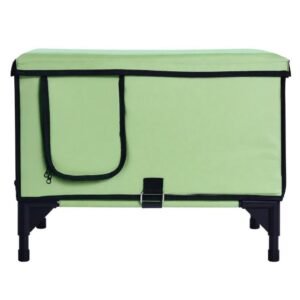 Elevated Heated Outdoor Cat House with 30W Waterproof Heating PadMSRP $128.99Login for wholesale pricing
 Three-Tier Outdoor Cat Condo with Asphalt Roof and Five Access DoorsMSRP $284.99Login for wholesale pricing
 Large Elevated Heated Cat House with Waterproof Pad and Insulated LiningMSRP $124.99Login for wholesale pricing
 73″ Multi-Level Cat Tree with Condo, Top Perch and Scratching PadMSRP $228.99Login for wholesale pricing
Stock it as a wholesale KIT
Pre-bundled assortments built from this guide’s categories — one PO, one shipment, wholesale pricing.