

Pet Store Gift Cards: 2026 Holiday Guide | JustForPetStore
Pet store gift cards are the highest-return fixture in a small shop’s holiday plan, because gift cards are the most-requested holiday gift in America again in 2026: 47 percent of holiday shoppers want to receive one, more than clothing, per the National Retail Federation. The program costs almost nothing, holds no inventory risk, brings cash in before products leave the shelf, and turns December gift-buyers into January foot traffic.
Why should a pet store sell gift cards this holiday season?
The National Retail Federation forecasts retail sales of $1.013 trillion across November and December 2026, up 4.2 percent over 2025, and its annual holiday survey — conducted by Prosper Insights & Analytics between October 1 and 7, 2026 among 8,094 U.S. adults — found that gift cards top the wish list at 47 percent, ahead of clothing and accessories (44 percent), books and other media (25 percent), and personal care or beauty items (24 percent). For a pet store, that ranking is the whole argument. A gift card to your store converts a dog-owner aunt buying for a cat-parent niece into a guaranteed first visit, and it prices the gift exactly at a denomination you choose. The NRF holiday survey data makes the point plainly: gift cards have been the most-wanted category for years, and no pet-specific gift category comes close.
How do gift cards fit a holiday shopper on a tighter budget?
Affordability is the defining theme of the 2026 season: 56 percent of holiday shoppers say the state of the economy will affect their holiday spending plans. Among those shoppers, 43 percent plan to shop for sales more often, 31 percent will comparison shop online more often, and 29 percent will use coupons more often, per the NRF holiday survey. A gift card is the budgeting tool that matches that mood — the giver caps the spend at a fixed amount and hands the choice to the recipient. Stocking a $25 gift card next to a display of dog treats and cat toys gives a budget-capped shopper a complete gift in one stop, and 43 percent of holiday shoppers planned to start browsing and buying before November even began, so your card program should be live before Thanksgiving weekend, not after.
What are the federal rules for store gift cards?
Gift cards sold by a pet store are regulated financial products under the Credit CARD Act of 2009, implemented through Regulation E. Under the Federal Reserve’s final rule (12 CFR 1005.20), funds on a gift certificate, store gift card, or general-use prepaid card must remain valid for at least five years after the card is issued or after funds are last loaded. Dormancy, inactivity, or service fees are restricted to three conditions: at least one year of no activity, no more than one such fee in any calendar month, and clear disclosure of the fee on the card itself. The Federal Reserve gift card rule summary also prohibits charging a fee to replace an expired card or refund a remaining balance when the underlying funds are still valid. States layer their own unclaimed-property rules on top, so track dormant balances rather than treating them as found money.
How should you merchandise gift cards in a small pet store?
Gift cards fail when they are invisible, so treat the card rack as a product display, not a drawer behind the register. Place it at eye height within arm’s reach of the checkout, with a small sign: “Give them exactly what they want.” Cross-merchandise cards against your strongest giftable categories — a card tree beside dog toys and cat toys answers the shopper who does not know the pet’s size, species quirks, or diet. Offer three denominations — $25, $50, and $100 — which matches the way gift budgets cluster, and let staff round up: a $50 card plus a $12 plush toy is a $62 basket instead of a $50 one. Train every employee on a one-line script at the register, because a spoken suggestion converts at a multiple of a sign.
Should your pet store offer digital gift cards?
Yes, and 2026 makes the case for you. NRF’s survey shows online remains the leading shopping destination for the holidays, with 53 percent of holiday shoppers planning to shop online, and digital cards ride that behavior: they need no plastic, no shelf space, and no theft risk, and they can be sold up to the minute your store closes on December 24. Email delivery also captures the customer’s address for your remarketing list, which a plastic card does not. A simple setup — digital cards sold through your point-of-sale or a lightweight e-gift platform, plus a printed card at the register — covers both the planner who buys in November and the emergency shopper at 4 p.m. on Christmas Eve. Digital cards also solve the distance problem that physical stores otherwise lose by default: a grandmother three states away who has never heard of your shop can buy one from your website at 11 p.m., and the recipient — her neighbor, who lives in your trade area — walks in to redeem it. That is out-of-market marketing you did not pay for. The same five-year validity and fee rules apply to digital cards, so apply one terms template to both formats and have your POS treat them identically at redemption.
What happens to unredeemed balances after the holidays?
Redemption is the point, not the problem. Much of the gift card traffic you sell in December comes back across your threshold in January and February, typically paired with an additional out-of-pocket spend, because a shopper holding a $50 card rarely leaves with exactly $50 of product. That post-holiday traffic lands in the slowest quarter of the pet retail calendar, which is precisely when you want it. Book gift card sales as a liability, not revenue, and set aside the cash to cover redemptions rather than spending it on inventory you cannot replace. Balances that go unclaimed for years eventually fall under your state’s unclaimed property (escheat) rules, which typically require handing the dormant funds to the state after a statutory period — so keep a simple register of card numbers, balances, and issue dates from day one.
How do gift cards affect a small store’s holiday cash flow?
Gift cards move cash into the business weeks before the cost of goods leaves it. For a store running lean holiday inventory on low minimums from low-MOQ wholesale suppliers, that float is real: a $5,000 December in card sales funds a January restock order made after you see what actually redeemed. Handle it with discipline. Reserve a portion of card proceeds against expected redemptions, reconcile card redemptions daily during December and January, and watch the liability account so your bookkeeper is never guessing. A practical reserve is the redemption rate from last holiday season applied to this year’s card sales — if you have no history, ask your POS vendor for category benchmarks or simply reserve half. The worst pattern is treating card cash as a December bonus and then scrambling in January when redemptions arrive against shelves your suppliers need two to six weeks to refill. The best pattern is the reverse: card sales in December become your January purchase order, placed the first week of the month, arriving as redemption traffic peaks.
What mistakes do pet stores make with gift cards?
The recurring failures are all cheap to avoid. Cards hidden behind the counter, where no shopper sees them. No denominations, forcing staff to hand-key amounts and slow the line. No printed terms, which puts you on the wrong side of the disclosure requirements for any fee you might ever charge. Selling cards whose funds expire early, which federal rules prohibit for the five-year window. Failing to reconcile, which turns a liability account into a mess your accountant bills extra to untangle. And skipping the email capture on digital cards, which forfeits the one channel you can market in January. Two quieter failures compound over years: never asking buyers who the card is for, which costs you the chance to steer the redemption basket, and never reviewing card performance at all — denominations sold, average redemption, and share of redemptions that added a purchase above the balance are three numbers your POS can already report, and they tell you whether the program is a fixture or furniture. None of these require budget to fix — they require a checklist and five minutes of staff training.
How do you launch a gift card program this week?
Start with the sales channel you already have: most modern point-of-sale systems issue and redeem gift cards natively, and paper gift certificates remain legal and functional if your POS does not. Print or configure cards with the disclosures the rule requires — funds valid at least five years, any fee terms stated clearly — and set your three denominations. Put the display at the register, brief the staff on the script, and announce the program in the email and text messages you already send, timed against Small Business Saturday and the December rush. Track sales, redemptions, and average redemption basket for eight weeks, then reload the program for Valentine’s Day and birthdays, because pet owners gift year-round. If you want the same economics on the product side — a tight holiday assortment without overstock — review the starter assortments in the wholesale catalog or contact the JustForPetStore team for a buy list sized to your shelf space.
Ready to stock these ideas? Browse wholesale pet KITs →
Shop these pet categories
Wholesale pricing, no minimum order.
Products mentioned here
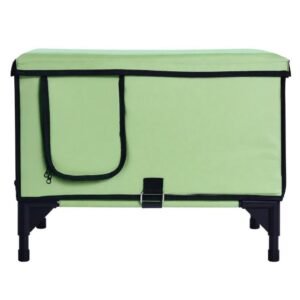 Elevated Heated Outdoor Cat House with 30W Waterproof Heating PadMSRP $128.99Apply for wholesale pricing
 Three-Tier Outdoor Cat Condo with Asphalt Roof and Five Access DoorsMSRP $284.99Apply for wholesale pricing
 Large Elevated Heated Cat House with Waterproof Pad and Insulated LiningMSRP $124.99Apply for wholesale pricing
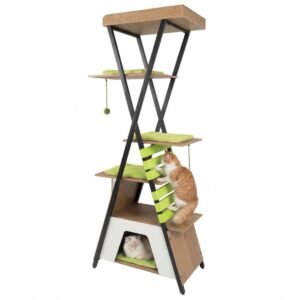 73″ Multi-Level Cat Tree with Condo, Top Perch and Scratching PadMSRP $228.99Apply for wholesale pricing
Stock it as a wholesale KIT
Pre-bundled assortments built from this guide’s categories — one PO, one shipment, wholesale pricing.