

Pet Store Gift Cards: 2026 Setup Guide | JustForPetStore
Pet store gift cards are the highest-margin item you will sell in December, and the legal side is simpler than owners expect. Federal law limits expiration dates and inactivity fees, a modern POS issues a card in under a minute, and the cash arrives now while redemption arrives in January. Set denominations that match a real basket, activate every card at the register, and carry unredeemed balances as a liability. Do that and the program funds January.
Why do gift cards matter more for a pet store in Q4?
Gift cards sit at the top of the holiday wish list again. The National Retail Federation reported in its 2026 holiday survey, conducted October 1 to 7 among 8,094 U.S. adults with a margin of error of plus or minus 1.1 percentage points, that 47% of holiday shoppers want to receive gift cards, ahead of clothing at 44%, books and other media at 25%, and personal care items at 24%. NRF separately forecasts November and December retail sales of $1.013 trillion, up 4.2% over 2025.
Pet spending gives you a second tailwind. The American Pet Products Association puts U.S. pet industry sales at $158 billion in 2025 and projects $165 billion for 2026, across roughly 95 million U.S. households with a pet. Demand is not your problem in December. Reach is.
What a gift card really buys an independent store is a January visit from someone who has never shopped with you. Compare that with what you currently pay for a click, a mailer, or a sponsored post, and the card starts to look like the cheapest acquisition channel you own.
What does federal law say about gift card expiration dates?
The rule lives in the federal gift card statute, 15 U.S.C. 1693l-1, implemented through the Consumer Financial Protection Bureau’s Regulation E at 12 CFR 1005.20. The default is blunt: it is unlawful to sell or issue a store gift card that is subject to an expiration date. There is one narrow exception. A card may carry an expiration date if the date is not earlier than five years after the date on which funds were last loaded to the card, and if the terms of expiration are clearly and conspicuously stated.
For an independent pet store the practical answer is simple: do not print an expiration date at all. If you insist on one, understand that the five-year clock runs from the last load rather than from the original sale, and that the terms have to be visible on the card itself.
It also helps to know what the law counts as a store gift card: an electronic promise, plastic card, or other payment code or device that is redeemable at a single merchant or an affiliated group of merchants sharing the same name, mark, or logo, issued in a specified amount, purchased on a prepaid basis, and honored on presentation for goods or services. A closed-loop pet store card fits that definition squarely.
When can a pet store charge a dormancy or inactivity fee?
Almost never, and almost never worth it. Under 15 U.S.C. 1693l-1 it is unlawful to impose a dormancy fee, inactivity charge, or service fee unless four conditions are met at the same time: there has been no activity on the card during the 12-month period ending on the date the fee is imposed; the disclosure requirements have been met; no more than one fee is charged in any given month; and any additional requirements the Bureau establishes through rulemaking are satisfied.
The disclosure half is where small operators trip. If a fee is even possible, the card itself must state clearly and conspicuously that a dormancy fee, inactivity charge, or service fee may be charged, the amount of that fee, how often it may be assessed, and that it may be assessed for inactivity. The buyer must also be told before the card is purchased, whether the sale happens in person, over the internet, or by telephone. The Bureau’s implementing rule sits at 12 CFR 1005.20.
A store selling a few hundred cards a year has no reason to run that gauntlet. The fee is small, the disclosure obligation is permanent, and one complaint on a neighborhood page costs more than the fee ever returns.
Which cards fall outside the federal gift card rules?
Several products you might issue are carved out of the definition and escape the expiration and fee limits. Loyalty, award, or promotional gift cards, as defined by the Bureau, are excluded. So is a card that is reloadable but not marketed or labeled as a gift card or gift certificate. Paper-only certificates, including tickets and event credentials, sit outside the definition as well, along with cards used solely for telephone services, cards not marketed to the general public, and cards redeemable only for admission to an event or venue at a particular location.
That distinction matters for the promotion you are most likely to run. A “buy $50 in gift cards, get a $10 bonus card” offer creates a promotional card rather than a purchased one, and a paper holiday certificate is treated differently from a plastic card. Keep the two apart in your POS so the accounting and the rules stay clean, and ask your accountant before you print anything that reads like a coupon.
How should you set denominations and the holiday offer?
Match the card to a real basket rather than to a round number. Pull your average ticket from the POS for the last eight weeks, then set three fixed amounts around it plus a custom option. If your average ticket is $34, sell $25, $50, and $75. A $100 card in a store with a $34 ticket asks a customer to gift money that will not be spent in one visit.
Then choose the mechanic carefully. A storewide percentage-off event hands margin to shoppers who were buying anyway. A bonus card does the opposite: spend $50 on cards in December and receive a $10 promotional card valid from January 5 through February 28. You have bought a January visit at a known cost, and the recipient still has the original $50 to spend.
Restrict the bonus card in the system: one per transaction, fixed valid dates, and no cash redemption. Train the floor to say the valid dates out loud, because a customer who arrives on March 1 with a dead bonus card is a customer you have annoyed for nothing.
How do gift cards show up in your books?
A gift card sale is not revenue. It is a liability you owe the cardholder, and it becomes revenue when the card is redeemed for goods. If you run the year with card sales sitting in income, your December looks profitable and your January looks broken, and neither number is true.
Track four figures every week: cards issued, cards redeemed, outstanding liability, and average spend above card value at redemption. A simple spreadsheet or a standard POS report is enough. The last figure is the one that decides whether the program is worth running. If the average redemption brings $62 of merchandise against a $50 card, the card is doing its job.
Unredeemed balances are a separate question. Whether and when you can recognize breakage, and what your state expects for abandoned property, depends on state rules and your accountant’s judgment. Do not spend the float as profit before you have asked.
How do you keep gift card fraud out of a small store?
Most gift card fraud is boring and preventable. Never display live cards on a rack. Keep a dummy display and hold stock behind the counter, because a rack card can be bought at a store that activates at the shelf, or have its number and PIN copied and drained before the buyer ever loads value onto it.
Activate only at the register, at the moment of sale, and let the receipt prove it. Inspect packaging for tamper evidence on every card you receive, and reconcile the card liability report daily during December rather than monthly. Train staff on the phone script: nobody reads card numbers to a caller, nobody accepts gift cards as payment for an invoice or a fine, and any request like that goes straight to the owner.
If you sell online, treat card delivery the way you treat cash: unique codes per order, no shared links, and a confirmation email that shows the balance and the card number only to the buyer.
Where should you actually sell them in a small store?
Two places, both obvious and both often empty: the register and the stocking-stuffer zone. Put a card holder in the impulse area next to small dog toys and single-ingredient treats, because a gift card is the easiest add-on a shopper will make all season.
Then say it out loud. One sentence at checkout, “we do gift cards if you are shopping for someone with a dog or a cat,” converts better than a sign. Add the offer to your Google Business Profile post and your website, and take a stack to two or three nearby employers that buy staff gifts in December.
If your cat assortment is thinner than your dog set, a gift card is also the cleanest way to serve the cat owners you cannot fully merchandise for yet. They redeem in January, you watch what they ask for, and the next order gets built on evidence instead of a guess.
What should you do with leftover balances in January?
Run a redemption push rather than a discount. Send one email or text to every buyer whose card has not been redeemed, remind them of the balance, and attach a reason to come in now: a winter assortment event, a free nail trim clinic, or early access to a new low-MOQ assortment you brought in for the season.
Then measure three numbers: redemption rate, average spend above card value, and the share of redeemers who had never shopped with you before. Most stores never check the third one, which is the one that decides whether the program grows the business or simply moves December revenue into January.
Close the loop with your accountant before you file. Unredeemed balances may carry state abandoned-property obligations, and the liability you recorded in December still has to be reconciled. If you want help building the January assortment those cards will be spent on, contact the JustForPetStore team with your store size and target price points.
Sources: National Retail Federation, 2026 holiday consumer survey (October 1-7, 2026, 8,094 adults, +/-1.1 points) and 2026 holiday sales forecast; 15 U.S.C. 1693l-1 (Cornell LII); 12 CFR 1005.20 (eCFR); American Pet Products Association, 2026 State of the Industry. This article is general information, not legal or accounting advice.
Ready to stock these ideas? Browse wholesale pet KITs →
Shop these pet categories
Wholesale pricing, no minimum order.
Products mentioned here
 Hidden Cat Litter Box Cabinet with Elevated Cat Lounge, Natural and WhiteMSRP $137.99Login for wholesale pricing
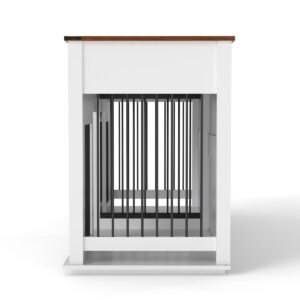 63″ Double Dog Crate Furniture with Two Drawers and Sliding DoorsMSRP $459.99Login for wholesale pricing
 Woven Water Hyacinth Cat Pod Bed on Metal Tripod Base, BeigeMSRP $152.99Login for wholesale pricing
 Rattan-Door Cat Litter Box Cabinet, 47″ Sideboard StyleMSRP $237.99Login for wholesale pricing
Stock it as a wholesale KIT
Pre-bundled assortments built from this guide’s categories — one PO, one shipment, wholesale pricing.