

Pet Store Holiday Staffing Plan for 2026 | JustForPetStore
A pet store holiday staffing plan starts about eight weeks before your first peak weekend, and it starts with one number: the labor hours your busiest week needs versus the hours your current team can work. The National Retail Federation expects U.S. retailers to hire 325,000 to 375,000 seasonal workers for the 2026 holidays, so you will be competing for the same small pool. Here is how a single-store owner plans it.
How many seasonal workers should a pet store hire?
Start with your own two previous holiday seasons, not an industry average. Compare weekly revenue and transaction counts from late November and December against a normal September week. The difference is the demand your current team cannot absorb inside its normal schedule, and that gap is the thing you are trying to staff.
Our method: divide the extra weekly labor hours by the hours one seasonal associate will reliably work, then add a buffer. If your peak week needs 190 hours more than your team can cover and a seasonal hire can work 24 hours a week, that is eight people on paper. Add one more for no-shows, which run higher among temporary staff than among permanent staff. A five-person neighborhood shop often lands at two or three seasonal hires; a store that also runs grooming or a self-serve wash may need five.
What do this year’s holiday numbers mean for a small store’s budget?
The National Retail Federation forecasts that November and December retail sales in 2026 will grow 4.2% over 2025, reaching $1.013 trillion. Last year’s comparable period rose 3.1% to $972 billion, so the forecast assumes faster growth rather than a flat season. NRF counts this as the twelfth consecutive month of overall retail sales growth heading into the holidays.
Retailers are still hiring cautiously. NRF expects between 325,000 and 375,000 seasonal hires, in line with the roughly 356,000 added last year, and its chief economist describes a K-shaped household picture in which higher-income families keep spending while lower-income households pull back. For a pet store that means December will not be uniform. Expect the first weekend of the month and the ten days before the holiday to carry the season, with a soft midweek floor in between.
Wages are the other half of the budget. The U.S. Bureau of Labor Statistics reports retail trade employment of 15,479,900 in September 2026, up 5,800 from August, with average hourly earnings of $26.38 and average weekly earnings of $807.23. A year earlier the weekly figure was $766.34, so the same roster costs roughly 5.3% more this December than last. Dividing weekly by hourly earnings gives about 30.6 hours a week, which is the part-time reality you are scheduling around.
When should you start hiring seasonal pet store staff?
Eight to ten weeks before your first peak weekend, which for most U.S. stores means the second week of October. That timing is driven by the hiring pool rather than by paperwork: every retailer in town is recruiting from the same group of students, retirees and second-job applicants, and the reliable ones accept an offer within days.
Write the ad before you need it, keep it short, and be specific about dates, hours and pay. “Holiday help, flexible” attracts nobody. A posting that says seasonal pet care associate, November 9 to January 3, 20 to 28 hours a week including Saturdays, at a stated hourly rate, attracts people who can actually work your season. Interview for reliability and availability, because product knowledge can be taught in a week and a cancelled shift cannot be undone.
What does the extra coverage actually cost?
Run the math both ways before you decide. Using the September 2026 retail average of $26.38 an hour, one seasonal associate working 24 hours a week for eight weeks is about 192 hours, or roughly $5,065 in wages before payroll taxes.
Covering those same 192 hours with two existing full-timers on overtime costs more. At the federally required time-and-a-half rate for hours over 40 in a workweek, the total is about $7,598, roughly $2,500 above hiring a seasonal associate. Those totals are our arithmetic on published BLS averages; substitute your own wage rates and hours. The gap is why holiday hiring is not automatically the expensive option, and why running a permanent team short through December is the choice that quietly costs more.
How do you build a holiday schedule that survives December?
Block the schedule before you hire, not after. Mark your three highest-traffic weeks, then assign your strongest full-timers to the shifts that need judgement: opening, closing and the Saturday rush. Give seasonal associates the mid-day and mid-week shifts where mistakes are cheap and supervision is close.
Then lock two rules in writing. Publish the schedule two weeks out and treat shift swaps as a documented transaction rather than a favor. Ask for holiday time-off requests by a single deadline and answer every request on the same day, even when the answer is no. A schedule published late is a common reason seasonal staff stop showing up, and a no-show on the last Saturday before the holiday costs more than any premium you could have paid.
How do you train a seasonal hire in their first week?
Narrow the job. A seasonal associate needs four things: how to greet and hand off, where everything lives on the floor, how to ring a sale and process a return, and the two or three product questions your customers ask most. Everything else can wait until January.
Pair each seasonal hire with one experienced employee for their first three shifts and pay for that time. Give them a one-page sheet on your top sellers in the dog care and hygiene aisle, the cat section and the dog toy shelf, since those are the three places customers ask the most questions. Then write one rule for anything involving live animals, medications or diet advice: escalate to a manager. That rule protects the customer, the pet and your liability, and it removes the largest source of avoidable mistakes in the busiest month of the year.
Do you need to extend store hours for the holidays?
Only if the hours pay for themselves, and most independent pet stores find that they do not. Before you add a Sunday or push closing to 8 p.m., estimate the sales that window will produce and divide by the labor cost of covering it. A two-person evening shift at $26.38 an hour for four hours costs about $211 in wages before taxes, so the window needs to clear roughly $500 in sales at a typical pet-supply margin just to break even on labor.
The better use of holiday hours is usually concentration, not extension. Keep your existing hours and put every trained body on the floor during the windows that already work: the first two hours after opening on weekends and the 4 p.m. to 7 p.m. block on weekdays, when commuting customers actually shop. If you do extend, extend on a single designated late night and promote it for three weeks so customers learn the pattern.
Industry context supports the conservative approach. The American Pet Products Association (APPA) reported U.S. pet industry expenditures of $158 billion in 2025, up 3.7%, and projects $165 billion for 2026, with supplies, live animals and over-the-counter medicine rising from $34.4 billion to $35.6 billion. APPA also found that 22% of pet owners spent less on their pets in 2025, a 10-point increase over 2024, while about half held spending flat. Extra hours add fixed labor cost to a customer base that is being more deliberate about discretionary purchases, so protect the good hours before you add new ones.
Should you pay holiday premiums or keep it simple?
Pay something visible, and pay it on the days you actually need it. A small differential on the Thanksgiving weekend, the day before the holiday and the last Saturday before it costs far less than understaffing those shifts, and it is easy to explain to the whole team.
If you cannot raise rates, sell the shift differently: guaranteed minimum hours for the season, first pick of shifts next year, an employee discount, or a completion bonus paid after the season closes. The completion bonus is the strongest of these because it pays for attendance rather than for showing up on day one.
How do you stop December from becoming a January problem?
Track two numbers per seasonal hire: shifts worked against shifts scheduled, and sales per hour after week three. Anyone above your store average on both should be offered a permanent or returning role before the season ends, in writing and with a start date. Anyone who misses shifts should not be invited back, and saying so early is kinder than silence.
Keep a one-page record of who returned, who sold well, and how many hours your peak week actually required. Next October, that page is your staffing plan. Stores that rebuild it from scratch every year pay the tuition twice.
Finally, plan the assortment and the roster together. A holiday display you cannot restock is a display that sells out on day three, which is why independent shops start holiday buying in the same weeks they start hiring. Our low-MOQ wholesale program lets you test a new line in small quantities so holiday stock does not become January clearance, and you can contact us for line sheets before you commit shelf space.
Sources: National Retail Federation 2026 winter holiday forecast and seasonal hiring outlook (October 15, 2026); U.S. Bureau of Labor Statistics, Employment Situation Table B-3, September 2026; American Pet Products Association 2026 State of the Industry Report.
Ready to stock these ideas? Browse wholesale pet KITs →
Shop these pet categories
Wholesale pricing, no minimum order.
Products mentioned here
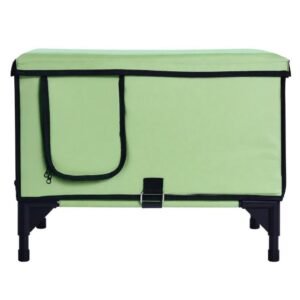 Elevated Heated Outdoor Cat House with 30W Waterproof Heating PadMSRP $128.99Login for wholesale pricing
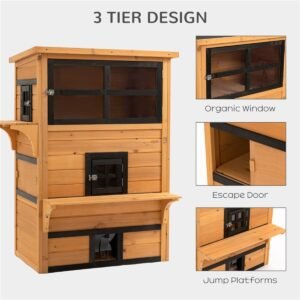 Three-Tier Outdoor Cat Condo with Asphalt Roof and Five Access DoorsMSRP $284.99Login for wholesale pricing
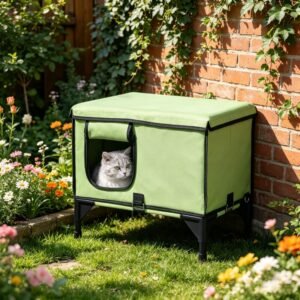 Large Elevated Heated Cat House with Waterproof Pad and Insulated LiningMSRP $124.99Login for wholesale pricing
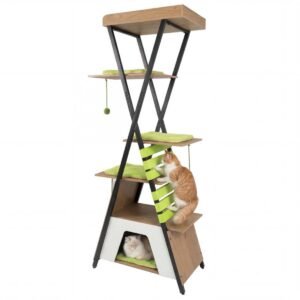 73″ Multi-Level Cat Tree with Condo, Top Perch and Scratching PadMSRP $228.99Login for wholesale pricing
Stock it as a wholesale KIT
Pre-bundled assortments built from this guide’s categories — one PO, one shipment, wholesale pricing.