

Pet Store Layout: Shelf Resets That Sell | JustForPetStore
Most small pet stores lose sales to a shelf, not to a competitor. NielsenIQ’s 2026 pet retail read shows in-store sales down 1.4% while online grew 14.1%, and the categories still gaining on a physical shelf are the ones shoppers want to see, smell, or ask about. A workable pet store layout puts those categories where traffic already flows, moves price-shopped basics out of prime space, and can be reset in four hours.
What does the 2026 data say about in-store demand?
Total U.S. pet care sales reached $95.1 billion over the past year, up 5.5%, according to NielsenIQ’s pet retail analysis. That headline hides the part that matters to a shop floor: in-store sales fell 1.4% while online rose 14.1%, and in-store share of the category dropped 3.6 points to 52%. Shoppers who buy only in a store now account for 9.6% of dollars, down 6.5 points in a year, while shoppers who use both channels account for 87% of category dollars. Read that again, because it changes what a shelf is for. Your store is no longer the only place your customer buys pet food. It is the place where they decide what to try, and the shelf is where that decision gets made or lost. The American Pet Products Association puts total U.S. pet spending at $158 billion for 2025 and projects $165 billion for 2026, with supplies, live animals and OTC medicine moving from $34.4 billion to $35.6 billion.
Why does shelf position matter more than a new sign?
Because signage gets a customer into the aisle and layout decides whether they leave with one item or three. NielsenIQ’s data splits the store into two kinds of categories. The ones still growing in physical stores are fresh dog food, cat treats, and pet supplements, all of which reward inspection: a shopper wants to read the label, squeeze the bag, or ask a question. The ones growing online instead of in store are pet bowls, accessories, and dry dog food, which are easy to compare by photo and spec. That split is a merchandising instruction. Give prime space to the categories where a knowledgeable person standing nearby creates the sale, and give the commodity basics a clean, findable, unglamorous position. A store that gives its best four feet of shelving to dry food is competing on the one thing it cannot win, and hiding the one thing it can.
Which categories deserve your best shelf space?
Fresh and frozen food, cat treats, supplements, and health and beauty. Health and beauty care is now the fastest-growing department in the store at 9.2%, ahead of household care, and the premium tiers are doing the growing: premium and super-premium dog shampoo is up 7.1%, cat shampoo up 3.3%, while moderate and value tiers are down as much as 10.3%. Enrichment behaves the same way. Electronic toys are up 27% year over year and treat-dispensing toys up 15%. Those numbers describe a shopper who will pay more for a product that looks like it does something specific. So the premium end of dog care and hygiene belongs at hand height with a shelf talker that explains the difference between two products, not stacked behind a value brand that a big-box store sells for less. Put the category where a customer can pick the product up.
How many SKUs should one bay hold?
Fewer than most independent stores carry. A four-foot bay with four shelves holds roughly 24 to 36 facing positions comfortably, and a workable rule is three to four facings for a proven bestseller, two for a steady mover, and one for a new item on trial. Anything below one facing per week is not assortment, it is storage you pay rent on. The temptation is to add another brand whenever a customer asks, which is how a shelf ends up with nine almost-identical bags of the same treat and no clear recommendation. Choose a house recommendation per subcategory, give it the most facings, and let the second and third options be visibly different rather than marginally cheaper. A customer standing in front of 30 well-chosen SKUs will decide. A customer standing in front of 60 will ask an assistant, and if the assistant is busy, they will photograph the shelf and buy online later.
Where should treats, supplements, and fresh food sit?
Treats belong in two places, and neither is a single home. The main set goes next to the food aisle, because a treat purchase is an add-on to a food purchase, and the secondary set goes near the register at a low price point for impulse. The dog treats shelf is the highest-frequency add-on in most stores, so treat the checkout as a second display rather than a dumping ground. Supplements belong beside the food they support, not in a separate wellness corner, because a shopper buying senior dog food is already thinking about joints. Fresh and frozen belong at the back of the store with clear sightlines from the entrance, which forces a walk past the rest of the assortment and signals that this is a destination category worth the trip. Cat products deserve their own run rather than a token endcap: a cat owner who has to hunt is a cat owner who orders online.
What belongs at eye level and what belongs on the bottom shelf?
Eye level, roughly 48 to 60 inches, is the most expensive real estate in the store and should hold the highest-margin items a customer can pick up without help. That is where premium grooming, dental, and enrichment go. The bottom shelf should hold heavy, low-margin, high-volume goods that customers already know they want: litter, pee pads, large bags of food, crates. Nobody needs to be persuaded to buy litter, and nobody wants to lift it from above waist height. The top shelf handles light, bulky, or seasonal stock that a customer will ask about. One more rule that gets ignored: keep the same category in the same vertical block rather than spreading it horizontally, because shoppers scan down, not across, and a category that runs across four feet at knee height reads as one product line instead of a destination.
How do you build a planogram a small team can maintain?
Make it one page and make it visual. Photograph the finished bay from directly in front, print it, and write the SKU count per facing in the margin. Keep the sheet in a binder at the counter, not in a folder on a laptop nobody opens during a shift. Then write two rules the whole team knows: nothing gets added to a bay without removing something, and the photo is the standard, not the intention. Review the planogram twice a year, not monthly, because frequent small resets destroy the muscle memory that makes a shelf shoppable. Between resets, a ten-minute weekly walk with the photo in hand catches the real problem, which is almost always depth: one facing sold down to two units while the backup sits in the stockroom.
What is the four-hour reset sequence?
Block the time before opening or after closing, and work in this order. Hour one: pull everything off the bay and clean it, because dirt is the reason customers assume the product is old. Pull expired and damaged stock at the same time and record it, since a reset is the only reliable moment to catch shrink. Hour two: set the new facings with shelf labels in place before product goes back, so nobody improvises placement. Hour three: fill to the plan, front-face everything, and put overstock in the stockroom with a note of what belongs where. Hour four: walk the store from the entrance as a customer would, check sightlines, and fix anything that requires a customer to turn around. Photograph the finished bay the same day. A reset done in a rush at 9 a.m. with customers in the aisle produces a shelf that half the team will undo by the end of the week.
How do you measure whether the reset worked?
Compare four weeks before and four weeks after, and compare units rather than dollars, because a price change will flatter a bad result. Track units per SKU per week, units per transaction, and gross margin per linear foot of the bay. If the store has a POS that reports by category, pull the category report rather than guessing from the register tape. Expect a two-week settling period while customers relearn where things are, which is why a one-week comparison tells you nothing useful. The honest test is whether the SKUs you promoted now sell more than the SKUs you demoted, after four weeks, at the same price. If the answer is no, the shelf was not the problem and the assortment was.
What are the most common reset mistakes?
Five, and they repeat. Giving the best space to whatever arrived in the last delivery, because new feels like progress. Cutting facings on bestsellers to fit a new brand, which trades a sure sale for an experiment. Resetting without pulling dead stock, which means the new plan is built on top of the old problem. Leaving the planogram in a drawer so the shelf drifts back within a month. And treating the reset as a one-person job, which guarantees the rest of the team does not know where anything lives. Fix the fifth one first: a shelf only works if every person on the floor can walk a customer to the product in under thirty seconds.
If you are rebuilding an aisle for spring, start with a low-MOQ wholesale order so the reset adds a category without adding a pallet of risk, and test the plan on the cat toy or cat feeding sets where a small change is easy to read in the numbers.
Sources: NielsenIQ, “Paws for Thought: Why Your Pet Aisle Is Bleeding Cash to the Internet” (August 27, 2026); American Pet Products Association, industry trends and stats.
Ready to stock these ideas? Browse wholesale pet KITs →
Shop these pet categories
Wholesale pricing, no minimum order.
Related wholesale collections
Products mentioned here
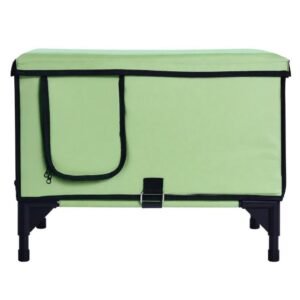 Elevated Heated Outdoor Cat House with 30W Waterproof Heating PadMSRP $128.99Apply for wholesale pricing
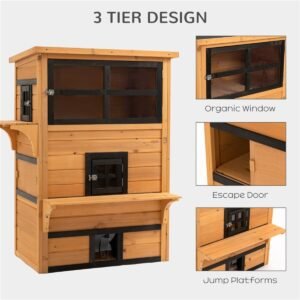 Three-Tier Outdoor Cat Condo with Asphalt Roof and Five Access DoorsMSRP $284.99Apply for wholesale pricing
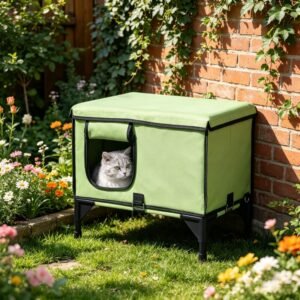 Large Elevated Heated Cat House with Waterproof Pad and Insulated LiningMSRP $124.99Apply for wholesale pricing
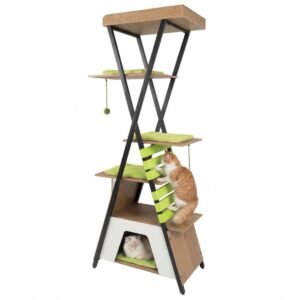 73″ Multi-Level Cat Tree with Condo, Top Perch and Scratching PadMSRP $228.99Apply for wholesale pricing
Stock it as a wholesale KIT
Pre-bundled assortments built from this guide’s categories — one PO, one shipment, wholesale pricing.