
Pet Store Omnichannel Strategy | JustForPetStore
Running a small pet shop does not mean copying Amazon. Your advantage is local trust, product knowledge, and the ability to hand a customer the right food today. A practical pet store omnichannel strategy comes down to four moves: make inventory visible everywhere, let shoppers reserve online and pick up in store, keep expert advice at the center of the experience, and build simple post-purchase reorder habits. Done modestly, that is enough.
What does omnichannel actually mean for a single-location pet store?
Omnichannel is not a software category. For a shop with one address and a handful of staff, it means three things: a customer can see whether you have an item before driving over, the item is genuinely there when they arrive, and the person who sold it can help with what the dog eats next month.
Everything else is decoration. Large chains and pure online retailers win on assortment and delivery speed. You win on assets they cannot copy: same-day possession, advice from someone who has met a thousand itchy dogs, and a relationship that makes a customer message you instead of searching.
A useful model: your website is not a second store, it is a window into the one you have. Every feature should either remove a wasted trip or increase the chance of a second purchase.
Why are pet shoppers splitting their spending between your aisle and the internet?
According to NielsenIQ’s 2026 pet aisle analysis, U.S. pet care sales reached $95.1B over the past year, up 5.5%. Inside that growth, in-store dollars fell 1.4% while online rose 14.1%. The finding that matters more: nearly 70% of shoppers bought both online and in store, and those omnichannel shoppers accounted for 87% of category sales. Store-only shoppers represented 9.6% of sales and online-only shoppers 3.3%.
NielsenIQ reads the same shift from a different angle in its Retail 2030 look at pet stores, so keep the two readings separate rather than blending them: 65% of buyers shop across channels and drive close to 85% of spend. That report also found nearly a third of buyers say immediate need gets in the way of buying online — exactly the gap a local shop fills. It frames the future store as three roles at once: fulfillment center, product showroom, and experience for pet plus owner.
The American Pet Products Association reported U.S. pet industry spending of $158B in 2025 with a 2026 forecast of $165B, across 95M pet-owning households. APPA also reported that 22% of owners reduced pet spending in 2025 while about half kept spending unchanged. Read together: the category grows, but a real slice of households is trimming. Convenience is what keeps you on the untrimmed side of that line.
Which products belong on your shelf and which belong online?
NIQ’s pet aisle analysis separates categories by where the trip works best. Fresh dog food, cat treats, and supplements still favor stores, where staff can explain a formula and the customer leaves with it now. Bowls, accessories, and dry dog food have moved online.
That maps cleanly onto a small-store plan:
- Keep deep on the shelf: fresh dog food, cat treats, supplements, and anything needing a conversation about use, life stage, or a picky eater.
- Keep thin on the shelf, deep online: heavy dry food bags, standard bowls and feeders, and commodity accessories where price comparison is brutal and advice adds little.
- Use the shelf as a showroom: durable pet toys and connected devices like smart electronics sell better once touched; you then fulfill from a small reserve or a supplier.
The rule of thumb: if an item needs explaining, it earns shelf space. If it only needs shipping, one floor sample plus an honest online quantity is enough.
How accurate does inventory need to be before you promise pickup?
You do not need perfect. You need honest. A practical starting target is 95% accuracy on the 50–100 SKUs you actually promise online. Above that line you can publish quantities; below it, show “usually in stock” and confirm by message.
Five steps that get you there:
- Choose a promise list. Start with 40–60 fast movers plus your consultative categories. Do not publish the whole catalog.
- Count on a fixed rhythm. Cycle-count the promise list weekly; do a full physical count monthly. Put the count where staff already work, not in a spreadsheet nobody opens.
- Make corrections cheap. If fixing a wrong quantity takes a laptop, it will not happen. Make it one or two taps on a phone.
- Reconcile deliveries the same day. Most inaccuracy comes from receiving, not theft.
- Set a buffer house rule. For example, stop showing “in stock” at two units or fewer so a promise never fails.
A missed pickup costs more than a lost sale: it costs the reason the customer chose a local shop.
How do you launch reserve-online, pick-up-in-store without a dev team?
Call it reservation, not checkout. You are not building a payment gateway; you are letting someone hold an item.
The minimum viable version:
- A simple catalog with current availability for the promise list.
- A “Reserve for pickup” action that sends name, item, quantity, and a pickup window to one inbox.
- A staff-owned queue, checked at open, mid-day, and one hour before close.
- A hold shelf with dated slips. A sensible house rule is a 48-hour hold, then the item returns to the floor.
- Payment at the counter, so your POS stays the system of record and you avoid double-entry inventory problems.
Serve pickups at the counter, not a locker. That handoff is the highest-value ninety seconds in the model: confirm the food transition, ask how the new treat went, mention the reorder date.
Where do associates fit when customers already researched online?
NIQ gives you the answer: fulfillment center, showroom, and experience are three different staff behaviors, and a small team can train all three.
- Fulfillment: pick, hold, and pack accurately. Own the promise-list counts.
- Showroom: know the three questions that decide a sale — species and size, life stage, and what failed last time.
- Experience: run something that cannot ship, such as harness fitting, a treat sampling table, or a monthly nail-care clinic.
Give each associate one channel responsibility per shift rather than asking everyone to do everything. Then write down the answers you repeat most often. Those become your product pages and your FAQ, which is the cheapest omnichannel content you will ever produce.
How does a first purchase become a reorder?
Food and supplements are consumable, so the reorder is the business. The simplest mechanism beats the cleverest app.
- Capture the consumption clock at purchase. “This bag lasts about five weeks” goes on the receipt and in the follow-up message.
- Send one reminder, not five. A single message a few days before estimated run-out, with a reserve link.
- Make the link go straight to a held bag from the promise list. Friction is the enemy.
- Keep a short note on special cases: sensitive stomach, chicken allergy, the cat who only eats the gravy. That note is your moat.
- Re-earn the trimmed household. APPA reported 22% of owners cut pet spending in 2025, so a smaller multi-buy or a “we’ll hold your usual” often keeps the trip.
What does a 30-day rollout look like?
Week 1 — Decide and count. Choose the promise list of 40–60 SKUs. Do a full count. Fix the obvious receiving gaps. Publish nothing yet.
Week 2 — Make it visible. Put availability on those SKUs. Add the reserve action. Write the hold window somewhere staff actually see it.
Week 3 — Train the handoff. Run pickups through the counter. Practice the three questions. Name one queue owner per shift. Start cycle counting.
Week 4 — Start the clock. Add reorder reminders for the first cohort. Do the first monthly reconciliation, review what broke, and shrink the promise list if you must.
Do not buy hardware in month one. Use what you already own and spend only where a step is genuinely blocking.
Which KPIs are worth tracking at this size?
Track five, weekly, on one page:
- Pickup promise kept — reservations filled from stock as promised. House rule: investigate anything under 95%.
- Inventory accuracy on the promise list — cycle-count variance. House rule: under 5% is workable.
- Reserve-to-pickup conversion — reservations that become paid pickups. Watch the trend.
- Attach rate at handoff — pickups that also add a consultative item.
- Reorder rate — customers who return for the same consumable inside the expected window.
These are internal house rules and practical starting targets, not industry benchmarks. Set them, review monthly, and adjust against your own baseline.
How do you avoid overinvesting?
The classic small-store failure is buying an enterprise stack for a one-door problem. A few guardrails:
- No custom development until the manual process has run cleanly for 30 days.
- No marketplace expansion until pickup promises are reliable.
- No new category depth without a test. Order small first — a low minimum order quantity program lets you trial a line without a pallet in the stockroom.
- No channel you cannot staff. An unanswered message queue is worse than no channel.
- Stop at diminishing returns. If a feature has not moved one of the five KPIs in a quarter, retire it.
If you want a second pair of eyes on your promise list or hold policy before you begin, talk to our team — we work with independent stores on exactly this.
Frequently asked questions
Do I need a full ecommerce site to run a pet store omnichannel strategy?
No. You need accurate availability on a short promise list and a way to reserve it. A simple catalog with a reserve action and payment at the counter is enough; full checkout can come later.
Which products should stay in store and which should sell online?
NIQ’s pet aisle analysis found stores still win for fresh dog food, cat treats, and supplements, where advice and immediacy matter, while bowls, accessories, and dry dog food have shifted online. Keep consultative categories on the shelf and publish honest quantities for the rest.
How accurate should inventory be before I promise pickup?
Aim for roughly 95% accuracy on the SKUs you publish — a practical starting target, not an industry benchmark. Below it, show “usually in stock” and confirm manually.
What if only one or two people work each shift?
Name one queue owner per shift, count only the promise list, and keep the hold window short. At this size, omnichannel is a set of habits rather than headcount, and a smaller honest list always beats a larger unreliable one.
Ready to stock these ideas? Browse wholesale pet KITs →
Shop these pet categories
Wholesale pricing, no minimum order.
Related wholesale collections
Products mentioned here
 2 Pack Scratch-Proof Durable Oxford Car Door Cover for Dogs | Wholesale Dog Car Door ProtectorsMSRP $26.09Login for wholesale pricing
 Cat Wall Corner Self Groomer Brush – Easy Install Massage & Soft Comb Scratcher (Grey, Blue)MSRP $1.98Login for wholesale pricing
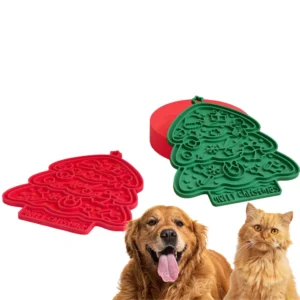 Christmas Tree-Shaped Slowly Non-Slip Silicone Pet Lick Mat | Wholesale Dog Lick MatsMSRP $10.99Login for wholesale pricing
 Dog Slow Feeder Palm Tree Silicone Food Divider with Suction 2 Colors Assorted | Wholesale Slow Feeder Dog BowlsMSRP $9.99 – $11.99Login for wholesale pricing