

Pet Store Pricing Strategy for 2026 | JustForPetStore
Raising prices is not your problem — raising them blindly is. Pet prices overall are now 32.5 percent above 2019 levels, while pet supplies have risen only 13.7 percent, so customers read supply prices as fixed. Build a three-tier price ladder for every core line, hold your entry price, put increases into the middle tier, and let service and bundle selling lift the ticket. Review prices monthly against cost, not annually against instinct.
What is happening to pet prices right now?
The headline number is milder than it was a year ago, and it hides a split that matters more than the average. Total U.S. pet prices rose 3.2 percent year over year in August 2026, slightly below the 3.4 percent national consumer inflation rate, according to Petfood Industry, reporting John Gibbons’ monthly tracking of U.S. Bureau of Labor Statistics data. Within that total, the picture diverges sharply: the pet products segment ran at 1.9 percent annually, up from 1.7 percent in July, while services climbed to 4.8 percent from 4.5 percent.
Month to month, the trend actually reversed for most of what you sell. Between July and August, total pet prices rose 0.05 percent, but pet food fell 0.1 percent, pet supplies fell 0.4 percent and pet services fell 0.4 percent. The increase was carried almost entirely by veterinary care, which rose 1.1 percent in a single month. That detail is worth repeating at the counter: when a customer says prices are out of control, most of what they are feeling is the vet bill, not your shelf.
Cumulative inflation is where real resistance comes from. Total pet prices now sit 32.5 percent above 2019 and 27.7 percent above 2021. Pet supplies are the sole exception in the data: at 13.7 percent cumulative since 2019, they are the only segment still below 24.5 percent. Owners have absorbed large increases in food and care, and their tolerance for higher prices on discretionary goods is thinner than the headline suggests.
Why have pet supplies barely moved while pet food has soared?
Because food is non-negotiable and supplies are not. Analysis of the same BLS series found that since 2019, cat food prices have risen 39.3 percent compared with 32.3 percent for dog food, a gap that reflects how much of the increase in pet food has been absorbed rather than traded away. Food has a floor under demand; a toy, a bed or a decorative collar does not. When a household budget tightens, those are the items that get cut or delayed.
Retail prices for pet food have also reset permanently. The consumer price index for pet food and treats reached 194.485 in August 2026 against 155.686 in January 2020 — an increase of about 24.9 percent, per Petfood Industry. During the entire preceding decade, January 2010 to January 2020, the same index rose only 8.8 percent. Nearly three times as much price growth landed in six years as in the ten before them, and none of it went back.
For a pricing strategy, the conclusion is uncomfortable but useful. You have very little room to pass costs through on discretionary supplies, because shoppers simply skip them. You have slightly more room on everyday consumables, because those purchases are habitual — but you lose them permanently if you push too far.
How should a small pet store build a price ladder?
Every core line should have three visible options: a defensible entry, a core option where most of your volume lands, and one premium choice that gives the range credibility. Three is the magic number because two forces a trade-off between cheap and expensive, while four makes the decision tiring. Price the entry item where a hesitant first-time buyer will say yes without thinking, put your margin in the middle, and let the top item sell rarely but signal quality.
Anchor those tiers at round, memorable numbers rather than at a fixed markup formula. If your entry is under ten dollars, your core sits somewhere in the high teens to twenties and your premium clears thirty-five, customers can navigate the shelf without a conversation. Uniform margins across tiers look tidy in a spreadsheet and lose money in a store, because your cheap line will undersell on volume and your premium line will undersell on credibility.
Show unit price — price per ounce, per pound, per count — on shelf labels for anything with variable pack sizes. Owners compare on their phones, and unit pricing is the most honest way to show that a bigger bag is genuinely cheaper. This is also how you defend against a buyer who assumes that the largest pack is always the best value.
Keep the entry tier in stock even when it sells at a thin margin. Once the cheapest option disappears, shoppers conclude the store got expensive, and that impression survives long after the item returns.
Should you match online prices?
Match selectively, never universally. Pick the ten to fifteen recognizable national SKUs that customers actually look up while standing in your aisle, price those at or near what the large online retailers charge, and accept a lower margin on them. They are traffic, not profit.
Everything else should be sold on the things the internet cannot deliver: immediacy, advice, and formats the big boxes do not bother with. A same-day purchase, a size recommendation, and a staff member who can say “this brand ran hard last summer in dogs that chew through everything” will beat a two percent difference on a screen. Bundling beats discounting, too — a leash with a collar and a travel bowl at full price protects margin far better than twenty percent off one item.
Where does private label fit in a pricing strategy?
Private label is your defence against price comparison, and it is where your middle tier should eventually live. In a pricing analysis published by Petfood Industry, Gibbons identified the shift toward online purchasing and private label as the primary pressure on pet food sales, pointing to the number of exhibitors offering OEM services at Global Pet Expo 2025, SuperZoo 2025 and Global Pet Expo 2026.
That matters because a price a customer cannot compare is a price you control. Use your own-label or low-distribution products as the “better” option in each ladder: better margin for you, no visible online equivalent, and a reason for the customer to come back to you rather than to a search result. Start with one line you have strong repeat on — everyday consumables in dog treats and food or a staple in cat supplies — rather than attempting a full own-brand range at once. Low minimum orders make this a test rather than a commitment, which is exactly why our low-MOQ option exists for stores that want to trial twelve units before they buy twelve cases.
When should you raise prices, and by how much?
Review on reorder, not on a calendar. Every time landed cost moves, re-price that line before the new stock hits the shelf, so the margin you think you are making is the margin you actually earn. A simple internal rule works: if landed cost rises more than five percent, adjust the retail price at the same time; if it rises less, absorb it and watch the trend.
Raise the middle and premium tiers first, and hold the entry price as long as you can, because the entry item is what shoppers remember. Three small increases of three percent over a year are far less noticeable than one jump of nine percent, and they keep you closer to real cost. If a supplier switches pack size instead of raising price, re-price rather than silently passing through a smaller bag — customers discover shrinkage, and they remember it longer than they remember a price rise.
Say it plainly when asked. “Freight went up on this line, so the price moved” is a complete answer, and it preserves trust in every other price you have not touched.
What margin should an independent pet store aim for?
Treat margin as a role rather than a target. Assign each category a job: traffic builders run thinner by design, core consumables carry the average, exclusives and services carry the premium. Then measure two numbers — your initial markup when you set the price, and your maintained margin after markdowns, shrinkage and discounts. The gap between those two is where most independent stores quietly lose the money they thought they had earned.
Budget markdowns deliberately. A planned two to four percent of sales set aside for clearance, damaged stock and loyalty redemptions is cheaper than surprise discounting in slow months, and it keeps the price ladder intact when pressure arrives. Track sell-through monthly; a line sitting at ninety days of stock is a pricing problem as often as a buying problem.
Demand context supports the effort involved. Per the American Pet Products Association, U.S. pet industry spending reached $158 billion in 2025 and is projected to reach $165 billion in 2026, but roughly 22 percent of owners said they trimmed pet spending during the previous year. Those two facts are why guessing is expensive: demand is real and growing, while willingness to absorb another increase is not.
If you want a second opinion on where your ladders sit before the next reorder cycle, talk to our sourcing team — we see landed costs across hundreds of lines and can tell you which of yours are out of line.
Ready to stock these ideas? Browse wholesale pet KITs →
Shop these pet categories
Wholesale pricing, no minimum order.
Related wholesale collections
Products mentioned here
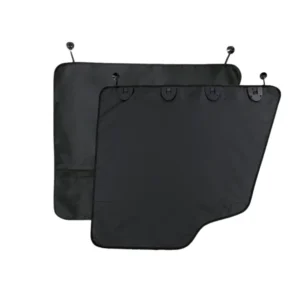 2 Pack Scratch-Proof Durable Oxford Car Door Cover for Dogs | Wholesale Dog Car Door ProtectorsMSRP $26.09Login for wholesale pricing
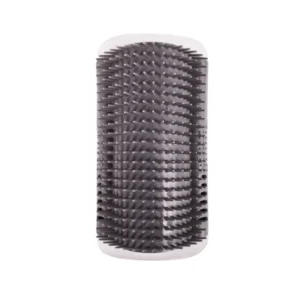 Cat Wall Corner Self Groomer Brush – Easy Install Massage & Soft Comb Scratcher (Grey, Blue)MSRP $1.98Login for wholesale pricing
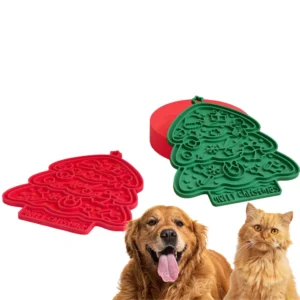 Christmas Tree-Shaped Slowly Non-Slip Silicone Pet Lick Mat | Wholesale Dog Lick MatsMSRP $10.99Login for wholesale pricing
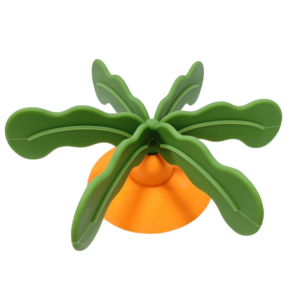 Dog Slow Feeder Palm Tree Silicone Food Divider with Suction 2 Colors Assorted | Wholesale Slow Feeder Dog BowlsMSRP $9.99 – $11.99Login for wholesale pricing