

Pet Store Tax Deductions: IRS Rules 2026 | JustForPetStore
Pet store tax deductions are not a loophole; they are the ordinary cost of running the shop, claimed against the income that cost produced. Rent, payroll, freight, card fees, insurance and the inventory you resell all count, but only when your books can prove them. Per the IRS, a small business may use any recordkeeping system that clearly shows income and expenses. This guide maps the write-offs independent pet retailers most often miss.
What counts as a deductible expense for a pet store?
A deductible expense is a cost of carrying on your trade, not a personal cost and not money you spent to acquire something that will last for years. That third bucket matters, because shelving, grooming tables, delivery vans and POS hardware are generally recovered over time rather than written off in the month you bought them. Sorting those three buckets correctly is most of the job, and it is the part that changes your bill rather than just your paperwork.
Per the IRS, Publication 334, Tax Guide for Small Business, is the general reference for sole proprietors and statutory employees who report business income on Schedule C, and its current revision is for 2025. Owners who incorporated should look at the corporate rules instead. One practical note for anyone working from older checklists: the IRS has discontinued Publication 535, Business Expenses, whose last revision was for 2022, and now maps each of its chapters to current publications. If a blog post or bookkeeping template you use still cites Pub 535, treat it as a historical reference and re-check the underlying rule.
Which everyday store costs are deductible?
The recurring costs of keeping the doors open are the easiest category, and they are also the easiest to lose track of because they hit a card or a bank account automatically. Rent and utilities, payroll and the employer side of payroll taxes, payment processing and merchant fees, business insurance, advertising and local marketing, professional fees, software and POS subscriptions, bank fees, business licenses, packaging and shipping supplies, and the freight you pay to get stock to the store are all ordinary operating costs of a retail pet business.
The rule that saves owners the most money is a boring one: put every one of those on a dedicated business account and a dedicated business card. Per the IRS, for most small businesses the business checking account is the main source for entries in the business books, which means a clean separation between personal and business spending does more for your deduction support than any filing trick. When a cost is genuinely split between business and personal use, only the business portion belongs on the return, and the split needs to be reasonable and documented at the time rather than reconstructed months later.
How do inventory and cost of goods sold work?
Inventory is the category where small retailers most often get it backwards. Merchandise you buy to resell is not deducted when you pay the invoice. It becomes a deduction as cost of goods sold when the item is sold, which means your year-end inventory count directly changes your taxable income. A store that quietly let its stockroom grow all year has, in effect, deferred expenses into a pile of unsold product.
That is why the physical count and the purchase records have to agree. Per the IRS, purchases are the items you buy and resell to customers, and your supporting documents should identify the payee, the amount paid, proof of payment, the date incurred, and a description of the item showing that the amount was for purchases. A combination of documents may be needed to substantiate all elements of a single purchase, which for an importer usually means the commercial invoice plus the payment record plus the freight documentation. If you are buying in smaller quantities to test new lines, keep those low minimum order quantity programs inside the same inventory system rather than treating them as samples or expense items.
Can you deduct a home office or storage space?
Sometimes, and the tests are stricter than most owners expect. Per the IRS, Publication 587, Business Use of Your Home, covers the deduction including the use requirements, and it is the right reference before you claim anything. A room used regularly and exclusively for bookkeeping, ordering and storing inventory is a very different fact pattern from a spare room that also holds a guest bed, or a garage that is half business storage and half family storage. Mixed-use space usually fails.
The same logic applies to a storage unit rented off site. If it exists only to hold business inventory and records, the rent is a business cost. If half of it holds personal items, only the business portion is, and you should be able to explain how you arrived at the split. Keep the lease, the payments, and a note about what is stored there, because the deduction is small enough that many owners claim it loosely and then cannot support it when asked.
Can you deduct the vehicle you use for supplier runs and deliveries?
Yes for the business portion, but only with records. Per the IRS, Publication 463, Travel, Gift, and Car Expenses, covers travel, gift and car expenses, and it explains what you must be able to prove. Driving to a warehouse club for store supplies, running cases between locations, and making local deliveries are business use. Commuting from home to the store generally is not. The distinction is the trip, not the car.
The practical fix is a mileage log kept at the time, whether that is an app or a notebook in the glovebox, recording date, destination, business purpose and miles. A card statement showing fuel purchases does not establish business use, and neither does a memory reconstructed at year end. If you claim a vehicle, also keep the purchase records, because the vehicle itself is an asset with its own depreciation and basis records rather than a simple expense.
How do fixtures, shelving and equipment get deducted?
As assets, which are recovered over time, not in the month of purchase. Per the IRS, assets are the property such as machinery and furniture that you own and use in your business, and you must keep records to compute annual depreciation and the gain or loss when you sell them. The record set is specific: when and how you acquired the asset, purchase price, cost of any improvements, any Section 179 deduction taken, depreciation taken, casualty losses such as fire or storm losses, how you used the asset, when and how you disposed of it, the selling price, and the expenses of sale.
Most of that list is generated naturally if you keep the invoice and the payment proof together in a folder per asset, digital or paper. The items owners lose are the improvements and the disposal, and both change the number. A shelving run you extended, a tank you retrofitted, or a delivery van you sold all need their own paperwork. Publication 946, How To Depreciate Property, is the IRS reference for depreciation, and Form 4562 is where depreciation and amortization are reported.
What records does the IRS expect you to keep?
A system that clearly shows income and expenses, plus the documents behind it. Per the IRS guidance on what kind of records you should keep, you may choose any recordkeeping system suited to your business, and it should include a summary of your business transactions ordinarily made in your books. Electronic accounting software is fine; all requirements that apply to hard copy books and records also apply to electronic records. The business checking account is the usual source of entries.
The supporting documents break into families. For gross receipts, keep cash register tapes, deposit information for cash and credit sales, receipt books, invoices, and Forms 1099-MISC. For purchases and for expenses, keep canceled checks or other proof of payment, cash register tape receipts, credit card receipts and statements, account statements and invoices. Per the IRS, each expense document should identify the payee, the amount paid, proof of payment, the date incurred, and a description of the item or service showing that the amount was a business expense. Organize by year and type, because an orderly shoebox beats a clever system you will not maintain.
How long should you keep those records?
Longer than most owners assume. Per the IRS, there are specific employment tax records you must keep, and you should keep all records of employment for at least four years. That covers the payroll side of a pet store with even one or two employees, and it is a separate obligation from the records that support your income and deduction items. For retention of the other records, and for the rules on starting a business and keeping records generally, the IRS points to Publication 583.
Two habits make this painless. First, scan or photograph receipts at the moment of purchase and file them by month, so the paper is a backup rather than the only copy. Second, close each month before you open the next: reconcile the business account, confirm the inventory purchases posted, and confirm payroll records are complete. A store that does a 30-minute monthly close does not do a weekend of archaeology in April, and it catches missing deductions while the receipts still exist.
Which write-offs do pet stores most often miss, and when should you get help?
The most common misses are small recurring items that never get their own folder: card processing fees, freight and duty on imported stock, packaging and shipping supplies, damaged or expired inventory written down, trade show and supplier meeting travel, employee uniforms, software subscriptions, and business bad debts from wholesale accounts that never paid. None of these are exotic, but each one needs the same proof as rent.
Get professional help when the facts change faster than your bookkeeping: you incorporate, you take on a partner, you buy a building, you add employees in more than one state, or you start importing directly. Those moves change which forms and which rules apply, and a planning conversation before the transaction costs less than a correction after it. This article is general information about federal rules, not tax advice, and state and local rules sit on top of everything described here. If you want to compare how other independent retailers structure their buying while you plan, browse the dog, cat and care and hygiene ranges, or talk to our team about wholesale terms.
Ready to stock these ideas? Browse wholesale pet KITs →
Shop these pet categories
Wholesale pricing, no minimum order.
Related wholesale collections
Products mentioned here
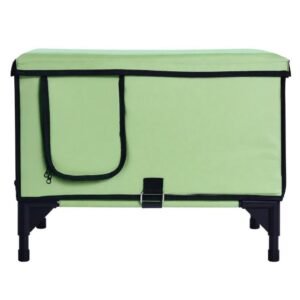 Elevated Heated Outdoor Cat House with 30W Waterproof Heating PadMSRP $128.99Login for wholesale pricing
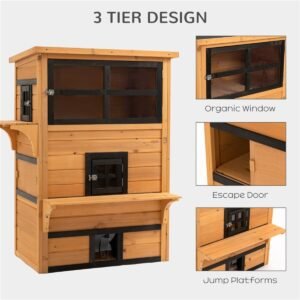 Three-Tier Outdoor Cat Condo with Asphalt Roof and Five Access DoorsMSRP $284.99Login for wholesale pricing
 Large Elevated Heated Cat House with Waterproof Pad and Insulated LiningMSRP $124.99Login for wholesale pricing
 73″ Multi-Level Cat Tree with Condo, Top Perch and Scratching PadMSRP $228.99Login for wholesale pricing
Stock it as a wholesale KIT
Pre-bundled assortments built from this guide’s categories — one PO, one shipment, wholesale pricing.