
Pet Store Upselling: 7 Add-Ons That Sell | JustForPetStore
Pet store upselling means adding one relevant item to a purchase the customer already decided to make. Done properly it adds roughly $2 to $4 to an average ticket without discounting anything. NielsenIQ puts the average in-store pet-care transaction at $22.34, so one well-chosen add-on moves a ticket by 10% or more. Here is what actually works on a small shop floor.
What does upselling actually mean in a pet store?
Upselling in an independent pet store is not talking someone into a bigger version of what they asked for. It is finishing a job the customer already came in to do. A shopper buying a 30-pound bag of food also needs something to scoop it with, somewhere to store it, and a way to keep the bowl clean. A shopper buying a leash is about to walk a dog in weather. A shopper buying a cat bed is about to deal with hair on it. Each of those is a genuine gap, and naming the gap is the entire technique.
There are two moves and they are not the same. Trading up means selling the better version of the same item: the larger bag, the stainless bowl instead of plastic, the harness instead of the collar. Adding on means selling a companion item that makes the first one work. Both belong on your floor, but they need different scripts and different placement, and mixing them up is why most upselling attempts fall flat.
How much is a pet store transaction worth right now?
Start from the benchmark instead of your gut. NielsenIQ reported U.S. pet care sales of $95.1 billion for the 52 weeks ending July 27, 2026, up 5.5% in value, made up of 2.1% more units and 3.3% higher prices. Within that, in-store sales fell 1.4% while online grew 14.1%, and digital channels now hold 48% of category revenue.
The number that matters for your floor is smaller. NielsenIQ puts average in-store spending per trip at $22.34, up $0.45 from the year before, while the share of households buying pet care online rose from 67.7% to 74.2%. Only 9.6% of category dollars now come from shoppers who buy exclusively in store, down 6.5 percentage points, while customers who shop both channels account for roughly 87% of dollars.
Read that as a basket problem, not a traffic problem. You are unlikely to win many new pairs of feet through the door this year. You can win a larger share of the $22.34 that is already being spent in front of you.
Which add-ons sell best beside the food aisle?
Food is the anchor trip and it should carry the most add-ons. NielsenIQ lists fresh dog food, cat treats, pet supplements and wet cat food among the sub-categories growing fastest inside physical stores, while pet bowls, accessories and dry dog food are growing online instead. The pattern is simple: people come in for what they want to ask about, and they order what they already know.
So build the add-on set around questions, not around margin. Next to dog food put a scoop and a sealed storage bin, because open bags are the most common complaint customers raise. Next to dog treats put a chew that addresses the reason the owner is buying treats in the first place. Next to cat toys put a refill of the thing that gets destroyed first.
Keep each add-on under about a third of the anchor item’s price. A $6 add-on on a $22 ticket barely registers as a decision. A $20 add-on does, and it gets refused.
How do you upsell without sounding like a salesperson?
Ask one question, then attach. “What are you feeding at the moment?” produces an answer you can work with. “Can I add anything?” produces nothing. The question has to be about the pet rather than about the purchase, and it has to be asked before the item is scanned.
Then hand the customer the item instead of pointing at it. A product in the hand is evaluated on usefulness; a product on a shelf is evaluated on price. Put the add-on on the counter while you are bagging, not while you are ringing.
One rule protects the whole program: never attach a health claim. Staff can say what a product is for and what other customers use it for. They cannot say what it will do for a specific animal. Anything that sounds like a medical answer goes to a manager or to the customer’s veterinarian. That rule keeps the program out of the category that gets small retailers into trouble, and it keeps the recommendation credible.
What is the difference between upselling and bundling?
A bundle is a fixed set at a fixed price: a new-puppy kit with a collar, a bowl, a toy and a training pad, priced below the sum of the parts. An upsell is one item added to a decision already made. Bundles need a sign and a shelf; upsells need a person and a script.
Use bundles for the two moments when a customer does not yet know what they need: a new pet, and a gift. Use upsells for the routine trip where they do. Bundles also give you a defensible price anchor at a time when shoppers are comparing every line against a phone, which is why they matter more in the fourth quarter than in February.
Be careful with the arithmetic. A bundle only works if every item in it is something you would stock anyway, and if the discount comes off the retail price rather than off your margin floor.
Should add-ons go at the counter or on the shelf?
Split them by decision speed. The counter is for items under roughly $15 that are familiar, consumable and easy to say yes to: treats, waste bag rolls, a chew, a travel bowl, a seasonal token. The shelf next to the anchor product is for add-ons that need a sentence of explanation, such as a storage bin, a grooming tool or a supplement.
The rule that actually lifts attach rate is proximity. An add-on placed within arm’s reach of the product it completes sells several times better than the same item on an endcap, because the customer is still holding the problem it solves.
What kills it is clutter. A counter with eleven products on it converts worse than a counter with three, because shoppers stop reading. Rotate three add-ons every two weeks and keep the rest behind the counter where staff can produce them at the right moment.
How do you train staff to upsell in one week?
Give people six anchor products and one add-on per anchor. That is the whole sheet, one page, taped inside the register. Anything longer does not get read on a Saturday.
Spend ten minutes at open for five days running the six pairs out loud. Staff do not need more product knowledge, they need the sentence, and the sentence is the same every time: ask about the pet, name the gap, hand over the item.
Then measure the behaviour rather than the sales total. Track how often each of the six add-ons was attached to its anchor, and post the number where the team can see it. Do not pay commission on add-ons unless you also cap it; commission on a single category produces pressure on customers, and customers feel it. A small weekly team goal, met or missed together, keeps the tone right.
What should you measure to know if upselling is working?
Three numbers, weekly, from your point of sale. Items per transaction, which tells you whether add-ons are landing at all. Attach rate on the six anchor SKUs, which tells you whether the sheet is being used. And gross margin dollars per ticket, which tells you whether you are selling the right add-ons rather than just more cheap ones.
Watch the third one hardest. A program that lifts items per transaction by 8% but shifts the mix toward low-margin consumables can leave the average ticket flat or worse. Margin dollars per ticket is the number that decides whether the program stays.
NielsenIQ’s 2026 read on the category is that loyalty is conditional and recalculated on every trip, and that neighborhood pet retail is trusted but often perceived as expensive. Upselling that adds a genuinely useful item reinforces the trust. Upselling that pads the bill confirms the price perception you are trying to escape.
Does upselling change during the holidays?
Yes, and in one specific way: gift buyers are buying an occasion, not a pet need. The add-on that works in July, such as a scoop for the food they just bought, does nothing in December. What works instead is a price ladder, three bundled gifts at three clear price points, and a gift receipt.
Context matters here. The American Pet Products Association (APPA) reported U.S. pet industry spending of $158 billion in 2025 and projects $165 billion for 2026, with supplies, live animals and over-the-counter medicine rising from $34.4 billion to $35.6 billion. APPA also found that 22% of pet owners spent less on their pets in 2025, ten percentage points more than the year before. Shoppers are still buying gifts, but they are buying fewer and cheaper ones, so keep the holiday add-on under about $15 and make the ladder obvious.
How do you keep the add-on shelf stocked without tying up cash?
An add-on program dies when the best seller is out of stock for three weeks, which is what happens when you buy a full case of six unfamiliar SKUs to start. Buy small, measure for a month, then reorder the two that moved.
That is the reason our low-MOQ wholesale program exists: you can put two or three units of a new add-on on the shelf, learn whether customers take it, and only then commit to a case. If you want line sheets before you decide, contact us and tell us which anchor categories you are building around.
One last discipline: every add-on gets a review date. If it has not attached to at least one in ten relevant transactions after a month, pull it and try another. The shelf is the scarcest thing you own.
Sources: NielsenIQ, Paws for Thought: Why Your Pet Aisle Is Bleeding Cash to the Internet (52 weeks ending July 27, 2026); NielsenIQ, Pet Care 2026: Still on the Leash, Not on the Chopping Block; American Pet Products Association, 2026 State of the Industry Report.
Ready to stock these ideas? Browse wholesale pet KITs →
Shop these pet categories
Wholesale pricing, no minimum order.
Related wholesale collections
Products mentioned here
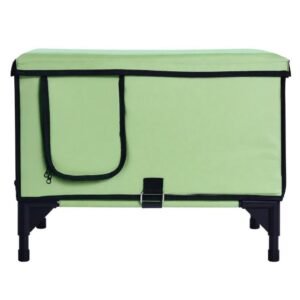 Elevated Heated Outdoor Cat House with 30W Waterproof Heating PadMSRP $128.99Login for wholesale pricing
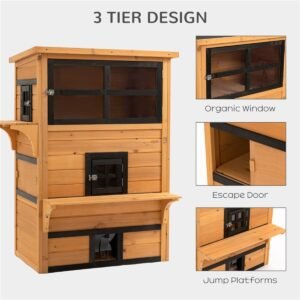 Three-Tier Outdoor Cat Condo with Asphalt Roof and Five Access DoorsMSRP $284.99Login for wholesale pricing
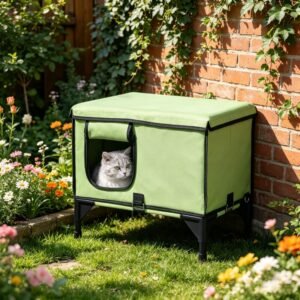 Large Elevated Heated Cat House with Waterproof Pad and Insulated LiningMSRP $124.99Login for wholesale pricing
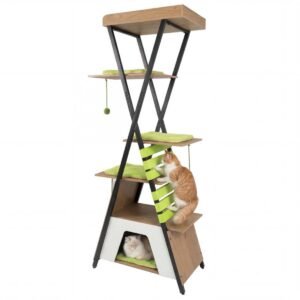 73″ Multi-Level Cat Tree with Condo, Top Perch and Scratching PadMSRP $228.99Login for wholesale pricing
Stock it as a wholesale KIT
Pre-bundled assortments built from this guide’s categories — one PO, one shipment, wholesale pricing.